Mount Everest is the highest point on Earth — and one of the most extraordinary natural landmarks in human history. Rising 8,848.86 metres above sea level on the border of Nepal and Tibet, it has captivated explorers, scientists, and adventurers for centuries.
But Everest is more than just a number. Behind the altitude record lies a mountain packed with surprising science, rich mythology, remarkable human stories, and facts that most people have never heard.
- Official height: 8,848.86 metres (29,031.7 feet) — confirmed by a 2020 survey
- Location: Border of Nepal and the Tibet Autonomous Region of China
- Mountain range: The Himalayan Mountains
- First summited: 29 May 1953 by Sir Edmund Hillary and Tenzing Norgay Sherpa
Whether you are planning a trek, researching for a project, or simply curious about the world's most famous mountain, this guide covers every essential Mount Everest fact you need to know.
Basic Mount Everest Information: Location, Height, and Geography
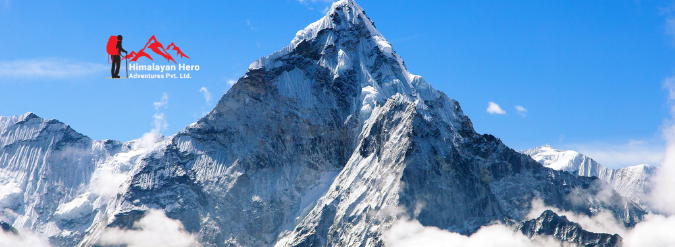
Mount Everest sits in the Mahalangur Himal sub-range of the Himalayan Mountains, straddling the border between Nepal to the south and the Tibet Autonomous Region of China to the north. The summit itself sits on the Nepali side of the border.
The mountain is known by different names in different cultures. In Nepali it is called Sagarmatha — meaning "Goddess of the Sky." In Tibetan it is called Chomolungma — meaning "Mother Goddess of the Universe." The name Everest was given by the Royal Geographical Society in 1865, honouring British surveyor Sir George Everest.
- Nepali name: Sagarmatha ("Goddess of the Sky")
- Tibetan name: Chomolungma ("Mother Goddess of the Universe")
- English name: Everest — named after surveyor Sir George Everest in 1865
- Coordinates: 27.9881° N, 86.9250° E
- Nearest major city: Kathmandu, Nepal (approximately 160 km southwest)
What Is the Summit of Mount Everest?
The summit of Mount Everest is the absolute highest point on the surface of the Earth — the very top of the mountain where the peak narrows to a point small enough for only a few people to stand at once. In mountaineering, "summit" refers to reaching this highest point, not just arriving at Base Camp.
Reaching the Everest summit is considered the pinnacle of high-altitude mountaineering. It sits in what climbers call the Death Zone — above 8,000 metres — where oxygen levels are so low that the human body cannot function indefinitely without supplemental oxygen. Most climbers use bottled oxygen above Camp III at 7,200 metres.
- Everest summit altitude: 8,848.86 metres (29,031.7 feet)
- The summit sits in the "Death Zone" — above 8,000 metres
- Oxygen at the summit: approximately one-third of sea level oxygen levels
- Only a handful of people can stand on the summit simultaneously
- Weather at the summit: wind speeds can exceed 280 km/h during jet stream events
How Long Does It Take to Climb Mount Everest?
A full Mount Everest climbing expedition takes between 6 and 9 weeks from arrival in Nepal to return. This is not 6–9 weeks of continuous climbing — the majority of that time is spent acclimatising, waiting for weather windows, and making strategic rotations up and down the mountain.
Most commercial expeditions depart Kathmandu in late March or early April for the spring climbing season. The summit push typically happens in mid to late May, when the jet stream briefly lifts from the upper mountain and creates a narrow window of calmer weather. The autumn season (September–October) is a secondary window, though fewer climbers attempt it.
- Full expedition duration: 6–9 weeks
- Base Camp to summit: 3–5 days of active climbing during the summit push
- Acclimatisation rotations: climbers ascend and descend multiple times before the final push
- Primary summit window: mid-May (spring season)
- Secondary window: September–October (autumn season)
- Fastest ascent on record: 10 hours 56 minutes (Lhakpa Gelu Sherpa, 2003)
20+ Interesting and Mind-Blowing Mount Everest Facts
These are the Mount Everest facts that surprise most people — from geological records to human achievements that push the boundaries of what seems possible.
The Mountain Is Still Growing
Everest grows by approximately 4 millimetres every year due to the ongoing collision of the Indian and Eurasian tectonic plates — the same geological process that formed the entire Himalayan range roughly 50–60 million years ago.
The Height Was Officially Updated in 2020
For decades, the official height of Everest was listed as 8,848 metres. In 2020, a joint Chinese and Nepali survey using GPS and gravimetry technology revised the official height to 8,848.86 metres — the most precise measurement ever recorded.
- The 2020 survey added 86 centimetres to the previously accepted height
- The revision used advanced GPS satellite technology and snow depth measurements
- The new height is now officially recognised by both Nepal and China
More Than 300 People Have Died on Everest
Over 300 climbers have lost their lives on Everest since attempts began in earnest in the 1920s. The majority of deaths occur in the Death Zone above 8,000 metres. Approximately 200 bodies remain on the mountain — the extreme cold and altitude make recovery almost impossible in most cases.
The First Woman to Summit Was in 1975
Japanese mountaineer Junko Tabei became the first woman to reach the summit of Everest on 16 May 1975 — 22 years after the first ascent. She went on to become the first woman to climb the Seven Summits.
Apa Sherpa and Phurba Tashi Sherpa Share the Record for Most Summits
Both have summited Everest 21 times — the record for the most ascents of any individual. Nepali Sherpas hold the majority of Everest summit records across almost every category.
- Over 6,000 successful summits have been recorded as of 2024
- More than 300 fatalities on record since the 1920s
- The most common causes of death avalanche, falls, altitude sickness, and exposure
- The South Col route (Nepal side) and the North Ridge (Tibet side) are the two primary routes
- Over 40 different routes to the summit have been attempted in total
Everest Has a Traffic Problem
In peak season, the Hillary Step — a near-vertical rock face just below the summit — can create queues of climbers waiting to ascend and descend. In 2019, a photograph of hundreds of climbers queued on the ridge went viral and triggered a major discussion about Everest commercialisation and permit limits.
The Mountain Was Not Recognised as the Highest Until 1856
It was not until the Great Trigonometrical Survey of India in 1852–1856 that Peak XV (as it was then known) was calculated to be the highest mountain on Earth. Prior to that, Kangchenjunga was believed to hold the title.
- Peak XV was renamed Everest in 1865
- The first survey calculating its height was led by Radhanath Sikdar
- The calculation was remarkably accurate given the technology of the time
Facts About the Himalayan Mountains
Mount Everest does not stand alone — it is part of the Himalayan mountain range, the greatest and youngest mountain system on Earth. Understanding the Himalayas puts Everest in its proper geological and geographical context.
The Himalayas stretch approximately 2,400 kilometres across five countries: Nepal, India, Bhutan, China, and Pakistan. The range was formed when the Indian tectonic plate collided with the Eurasian plate roughly 50–60 million years ago — a collision that is still ongoing, which is why the mountains continue to grow.
- The Himalayas span 2,400 km across five countries
- Formed 50–60 million years ago by the collision of the Indian and Eurasian plates
- The range contains 14 mountains over 8,000 metres — all of them in Asia
- The Himalayas influence the monsoon weather patterns of the entire South Asian subcontinent
- Rivers fed by Himalayan glaciers provide water to over 1 billion people
The Himalayan range contains all 14 of the world's "eight-thousanders" — peaks exceeding 8,000 metres. These include K2, Kangchenjunga, Lhotse, Makalu, and Cho Oyu, all within proximity of Everest in the Mahalangur Himal sub-range.
Mount Everest Myths and Legends
The world's highest mountain has always attracted as much mythology as it has mountaineers. Some of these stories have persisted for over a century — and a few are more grounded in reality than others.
The Yeti
The Yeti — a large, ape-like creature said to inhabit the high Himalayas — is the most famous myth associated with the Everest region. Known in Nepali as Yeti or Abominable Snowman, sightings and large footprints have been reported by mountaineers and locals for generations. DNA analysis of supposed Yeti hair samples in 2017 found they matched known bear species — specifically the Himalayan brown bear and Tibetan brown bear.
- The Yeti legend is deeply embedded in Sherpa and Tibetan folklore
- First popularised in Western media by British expedition reports in the 1920s
- 2017 DNA analysis: all tested samples matched known bear or other animal species
- The myth remains culturally significant regardless of its scientific status
The Misconception That Everest Is the Hardest Mountain to Climb
One of the most persistent Mount Everest myths is that it is the most technically difficult mountain to climb. It is the highest — but not the hardest. K2, Annapurna I, and Kangchenjunga all have significantly higher fatality-to-summit ratios. Annapurna I has historically had a fatality rate of around 25–30% — far higher than Everest's rate of approximately 1–2% in recent decades.
The Misconception That You Need to Be an Elite Athlete
With the growth of commercial expeditions, many people believe that only elite athletes summit Everest. In reality, thousands of trekkers reach Everest Base Camp every year without technical climbing skills. Among guided summit attempts, a wide range of ages and backgrounds are represented — the oldest person to summit was 80-year-old Yuichiro Miura of Japan in 2013.
Why Is Mount Everest So Famous?
Of all the natural wonders on Earth, few have captured human imagination as completely as Everest. Its fame rests on several interlocking factors — scientific, historical, cultural, and psychological.
First and most fundamentally: it is the highest point on Earth. That singular fact gives it an absolute status that no other mountain can claim. The human drive to reach the highest, the most extreme, the most challenging — Everest represents the ultimate expression of that instinct.
The 1953 first ascent by Hillary and Tenzing transformed Everest from a geographical record into a global cultural symbol. It was announced on the morning of Queen Elizabeth II's coronation, and the news spread around the world as a symbol of human achievement and possibility.
- Highest point on Earth: the definitive superlative that drives global fascination
- 1953 first ascent: one of the most celebrated achievements in exploration history
- Cultural significance: sacred to both Sherpa and Tibetan communities
- Global media presence: more documented and photographed than any other mountain
- Commercial accessibility: thousands of people trek to Base Camp every year, bringing Everest into personal reach
Today, Everest represents something beyond mountaineering. For the Sherpa communities of the Khumbu, it is Sagarmatha — a sacred mountain that is both provider and protector. For the global trekking community, the 14-day journey to Base Camp is one of the most accessible bucket-list adventures on the planet. For climbers, the summit remains the ultimate high-altitude test.
Frequently Asked Questions About Mount Everest
What is the official height of Mount Everest?
The official height of Mount Everest is 8,848.86 metres (29,031.7 feet) above sea level, as confirmed by a joint Chinese-Nepali survey completed in 2020. This updated the previously accepted figure of 8,848 metres.
Where is Mount Everest located?
Mount Everest is located on the border between Nepal and the Tibet Autonomous Region of China, in the Mahalangur Himal sub-range of the Himalayan Mountains. The summit lies on the Nepali side of the border.
How dangerous is climbing Everest? The overall fatality rate for Everest summit attempts has fallen significantly in recent decades to approximately 1–2% of summit attempts. The greatest risks are avalanche, falls, extreme cold, and High Altitude Cerebral or Pulmonary Oedema (HACE/HAPE). The Death Zone above 8,000 metres remains inherently dangerous regardless of equipment or experience.
What does the Everest summit mean in mountaineering?
In mountaineering, "summiting" Everest means physically reaching the highest point of the mountain at 8,848.86 metres. It is considered the ultimate achievement in high-altitude climbing — not to be confused with reaching Everest Base Camp, which is a trekking achievement at 5,364 metres and requires no technical climbing skills.
Is Mount Everest still growing?
Yes. Mount Everest grows by approximately 4 millimetres per year due to the ongoing tectonic collision between the Indian and Eurasian plates. However, it also loses height periodically due to erosion and seismic events — the 2015 Nepal earthquake is estimated to have reduced the summit height by approximately 2.5 centimetres.
How many people have reached the summit of Everest?
As of 2024, more than 6,000 successful summit ascents have been recorded by over 4,000 individuals. Some climbers have summited multiple times — Appa Sherpa and Phurba Tashi Sherpa both hold the record with 21 summits each.
The Mountain That Defines Human Ambition
Mount Everest facts tell only part of the story. The mountain's true significance lies in what it represents — the intersection of geology, human endurance, cultural heritage, and the universal drive to go further than what seems possible.
From the Sherpa communities who have called the Khumbu home for generations, to the hundreds of thousands of trekkers who journey to Base Camp each decade, Everest occupies a place in global consciousness that no other mountain comes close to matching.
For those who want to experience the Everest region firsthand, the 14-day Everest Base Camp Trek brings you to 5,364 metres — standing at the foot of the world's highest mountain, in one of the most extraordinary landscapes on Earth.
Explore our 14-Day Everest Base Camp Trek and plan your journey to the foot of Everest.