Everest-Base-Camp-Trek-14-days
Trip Duration
14 Days
Location
Everest Region (Khumbu)
Grading
Moderate
Best Season
Sept-Oct-Nov / March April May
Max Altitude
5545m
Starts from
Kathmandu
Ends at
Kathmandu

Everest Base Camp Trek 14 Days With Two Acclimatization Days

The Everest Base Camp Trek 14 Days is a classic Himalayan adventure through the Khumbu region of Nepal, taking you from Lukla to the legendary Everest Base Camp at 5,364 meters. This carefully paced itinerary includes two acclimatization days in Namche Bazaar and Dingboche, where you hike to higher elevations during the day and return to sleep at a lower altitude. These stops give your body valuable time to adjust before continuing toward Everest Base Camp.

The trek also takes you to Kala Patthar at 5,545 meters, one of the best viewpoints for Mount Everest and the surrounding Himalayan peaks. The Nuptse ridge partly hides Everest's summit from Base Camp, while Kala Patthar offers a clearer mountain panorama. Our package includes Lukla flights, a licensed guide, teahouse accommodation, and trek meals, with the Everest Base Camp Trek 14 Days price starting at US$1,499 per person.

Trek at a Glance

Detail Information
Duration 14 days, including 11 days on the trail
Route Kathmandu → Lukla → Namche Bazaar → Tengboche → Dingboche → Lobuche → Gorak Shep → Everest Base Camp → Kala Patthar → Lukla → Kathmandu
Everest Base Camp 5,364 m (17,598 ft)
Highest Point Kala Patthar, 5,545 m (18,192 ft)
Difficulty Moderate to challenging
Walking Per Day 5–8 hours, approximately 130 km (81 miles) round trip
Acclimatization Days 2, at Namche Bazaar and Dingboche
Best Seasons March to May and September to November
Group Size Private trek or small groups of 2–12 people
Guide & Porters Government-licensed guide and 1 porter for every 2 trekkers
Accommodation 3-star hotel in Kathmandu and teahouses during the trek
Meals Breakfast, lunch, and dinner during the trek; breakfast in Kathmandu
Flights Return flights between Kathmandu and Lukla
Price From US$1,499 per person
Deposit 10% deposit to secure your booking

Trek highlights

  • Stand at Everest Base Camp, 5,364 meters above sea level.
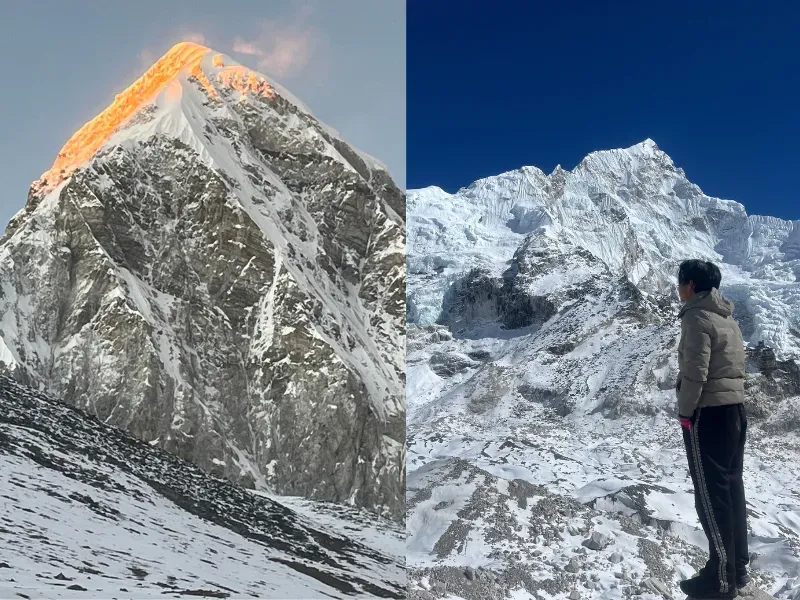
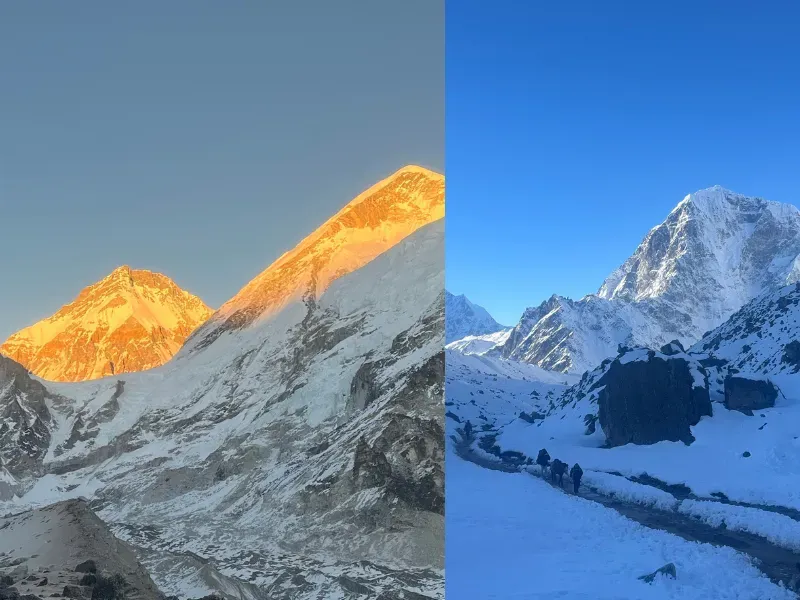
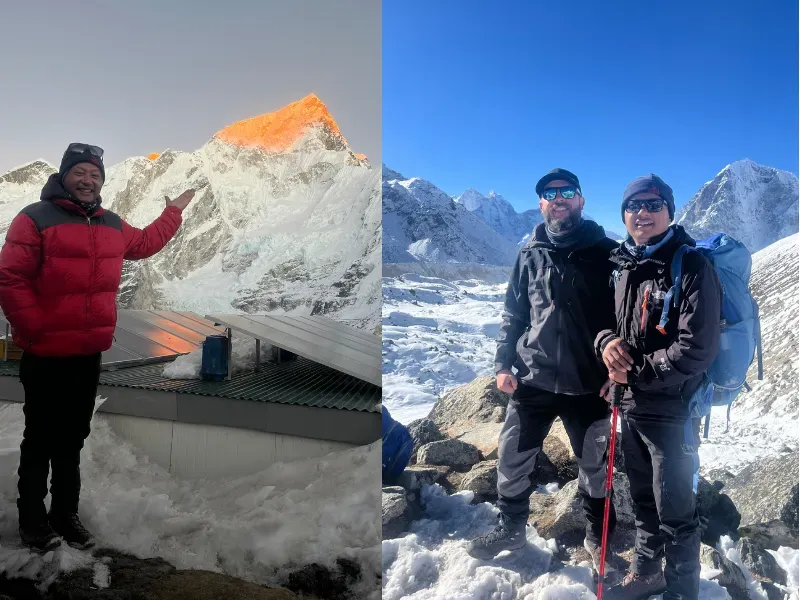
  • Watch sunrise turn Everest gold from Kala Patthar at 5,545 meters.
  • Fly into Lukla, one of the world's most famous mountain airstrips.
  • Cross the Hillary Suspension Bridge high above the Dudh Koshi River.
  • Rest two nights each at Namche Bazaar and Dingboche to acclimatize.
  • Visit Tengboche Monastery, the largest monastery in the Everest region.
  • Pass Sherpa villages, prayer walls and yak trains along the trail.
  • Finish with a farewell dinner and a trek achievement certificate.


How Does the Everest Base Camp Trek 14 Days Help You Acclimatize?

The Everest Base Camp Trek 14 Days is designed to increase sleeping altitude gradually and includes two acclimatization days at Namche Bazaar and Dingboche. You spend two nights at each stop, with a higher daytime hike followed by a return to the same teahouse to sleep. This “climb high, sleep low” approach gives your body more time to adjust as the air becomes thinner.

Altitude sickness can occur when you ascend too quickly and your body does not have enough time to adapt to lower oxygen levels. The itinerary builds in extra time before reaching Everest Base Camp at 5,364 m, while the descent after the high point gives your body a chance to recover.

Day Overnight Stop Sleeping Altitude What Happens
2 Phakding 2,610 m Fly to Lukla and take a short walk down the valley
3 Namche Bazaar 3,440 m First major climb through the Khumbu Valley
4 Namche Bazaar 3,440 m Acclimatization hike to Everest View Hotel at 3,880 m
5 Tengboche 3,867 m Walk through forest trails and visit Tengboche Monastery
6 Dingboche 4,410 m Continue above the tree line
7 Dingboche 4,410 m Acclimatization hike toward Nagarjun Hill at about 5,080 m
8 Lobuche 4,940 m Trek along the glacier-side trail
9 Gorak Shep 5,164 m Visit Everest Base Camp at 5,364 m
10 Pheriche 4,240 m Hike to Kala Patthar at sunrise, then descend
11 Namche Bazaar 3,440 m Long descent through the Khumbu Valley
12 Lukla 2,860 m Final walking day before the flight back

Want to understand altitude adaptation in more detail? Read our guide on how to acclimatize for Everest Base Camp.

Who Leads the Everest Base Camp Trek and What Happens If You Feel Unwell?

A government-licensed, English-speaking trekking guide leads every Everest Base Camp Trek. Your guide sets a suitable pace, checks how you are handling the altitude, and can adjust the daily plan if you feel unwell. One porter carries the main luggage for every two trekkers, allowing you to walk with a lighter daypack. The package covers food, accommodation, guide and porter salaries, and their insurance. Your guide also carries a group first-aid kit, while our Kathmandu team is available 24/7 for support.

What Happens If You Feel Unwell?

Tell your guide immediately if you develop symptoms such as headache, nausea, poor sleep, dizziness, or loss of appetite. Mild altitude symptoms can occur during the trek, but worsening symptoms should never be ignored. Do not continue climbing if your condition gets worse; descending to a lower altitude may be necessary, and severe altitude illness requires immediate medical attention.

Emergency helicopter evacuation is not included in the trek price. We strongly recommend travel insurance that covers high-altitude trekking and helicopter evacuation in Nepal. Before your Everest Base Camp Trek, check your policy carefully to make sure it covers the activities and elevations on your itinerary.

Read our guide to travel insurance for Nepal treks for more information.

Why Trek to Everest Base Camp?

The Everest Base Camp Trek is one of the world's most iconic trekking adventures because it combines breathtaking Himalayan scenery, rich Sherpa culture, and the unforgettable experience of standing at the foot of the world's highest mountain. It is much more than reaching a destination. Every day on the trail brings new landscapes, welcoming mountain villages, ancient monasteries, and a deeper appreciation for life in the high Himalayas. For many trekkers, it's a dream that stays with them long after they return home.

Unlike many mountain trails, the journey to Everest Base Camp offers a complete Himalayan experience. From crossing suspension bridges above rushing rivers to walking through rhododendron forests and glacial valleys, the scenery changes constantly. The well-established teahouse network, experienced local guides, and strong trekking infrastructure also make this challenging adventure accessible to anyone with reasonable fitness and proper preparation.

Stand Beneath the World's Highest Mountain: Take in unforgettable views ofMount Everest, Lhotse, Nuptse, Ama Dablam, Thamserku, and Pumori as you trek through the Khumbu region. The panoramic scenery from Kala Patthar is a moment you'll never forget.

Experience the Unique Sherpa Culture: Explore traditional Sherpa villages, visit centuries-old monasteries, and enjoy genuine mountain hospitality. Every stop along the trail offers a deeper connection to the local culture.

Walk Through a UNESCO World Heritage Site: Hike through Sagarmatha National Park, where towering peaks, ancient forests, glaciers, and unique wildlife create one of the world's most spectacular mountain landscapes.

Challenge Yourself and Celebrate a Personal Achievement: Reaching Everest Base Camp at 5,364 meters is a rewarding accomplishment that reflects your determination, patience, and careful preparation.

Enjoy a True Himalayan Adventure: From the scenic flight to Lukla to crossing suspension bridges and staying in cozy teahouses, every day brings new landscapes, unforgettable views, and lasting memories.

Where is Everest Base Camp?

Everest Base Camp is located in Nepal's Khumbu Region within Sagarmatha National Park, a UNESCOWorld Heritage Site. Sitting at an altitude of 5,364 meters (17,598 feet), it serves as the main starting point for climbers attempting to summit Mount Everest from the south side.

The base camp lies at approximately 28.0043° N, 86.8570° E, surrounded by towering Himalayan peaks and the Khumbu Glacier. Although it appears close to Mount Everest, the summit itself is not visible from Base Camp because it is hidden behind the massive Nuptse ridge.

Everest Base Camp Trek Map

The Everest Base Camp Trek map shows the classic route from Kathmandu to Lukla, Phakding, Namche Bazaar, Tengboche, Dingboche, Lobuche, Gorak Shep, and Everest Base Camp. The route also includes Kala Patthar, the trek’s highest point at 5,545 meters, before descending through Pheriche and Namche Bazaar to Lukla. The map helps trekkers understand the route, major villages, altitude changes, and acclimatization stops along the journey.
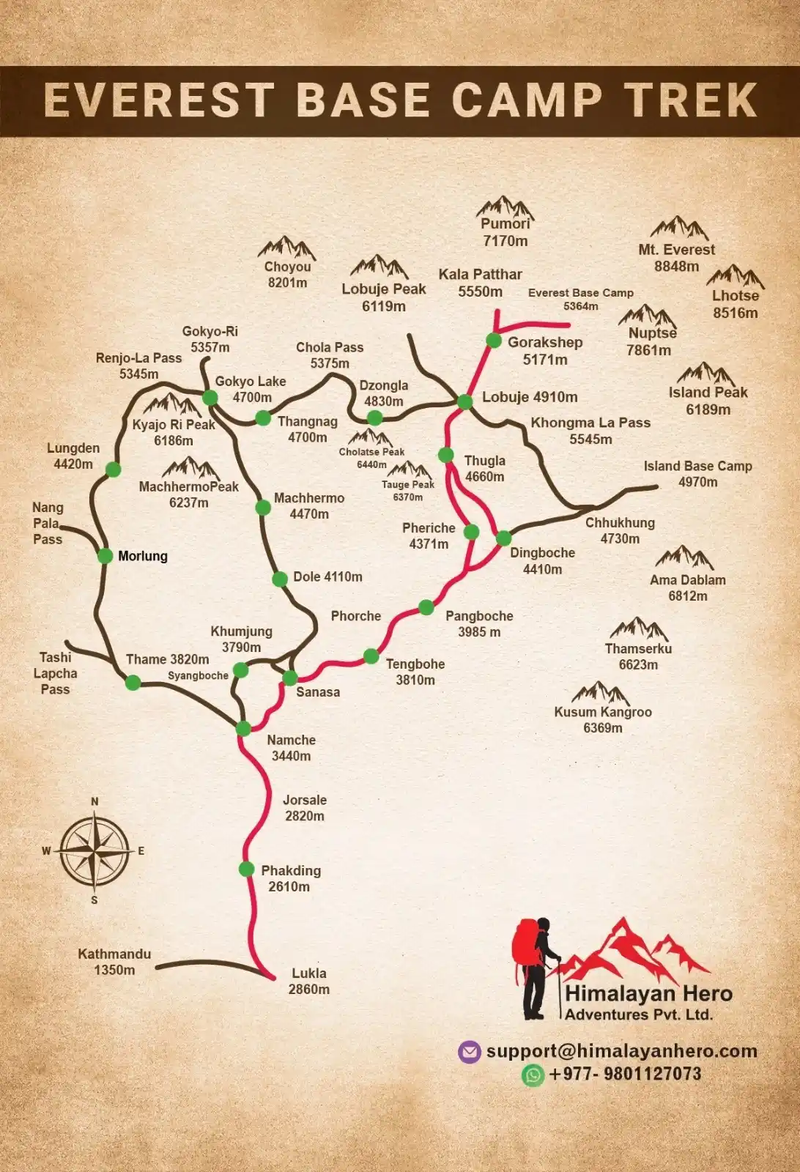
everest-base-camp-map


Most trekkers begin their journey with a flight from Kathmandu to Lukla before following the famous trekking trail through Namche Bazaar, Tengboche, Dingboche, and Gorak Shep to reach Everest Base Camp.

Everest Base Camp Trek Difficulty

The Everest Base Camp Trek difficulty is moderate to challenging, mainly because of the altitude and long days on the trail. You do not need technical climbing skills, but you need enough fitness to walk for several days across steep and uneven mountain paths. Most trekking days involve 5 to 8 hours of walking, with rocky trails, stone steps, suspension bridges, and regular uphill and downhill sections.

A reasonable level of fitness can be enough for the trek, even if you have never done a high-altitude trek before. The biggest challenge comes as you climb higher toward Everest Base Camp at 5,364 meters (17,598 feet). Lower oxygen levels can make normal walking feel much harder. Good training, a gradual ascent, and planned acclimatization days can help you handle the demands of the route.

What Makes the Everest Base Camp Trek Challenging?

Several parts of the trek can test your stamina, especially as you gain altitude. Knowing what to expect helps you prepare for the trail.

Daily trekking hours: Most days require 5 to 8 hours of walking. Some sections are gentle, while others include long climbs that require steady effort.

Trail terrain: The route follows rocky paths, stone staircases, suspension bridges, and uneven mountain trails. Steep climbs and descents can make your legs work harder.

Mountain weather: Weather can change quickly in the Everest region. You may experience sunshine, cold wind, rain, or snow during the trek. Temperatures also drop as you gain altitude, so proper layers matter.

High altitude: The trail climbs above 3,000 meters, where the air contains less available oxygen. Higher elevations can make walking and other physical activities feel much harder.

No technical climbing: The Everest Base Camp route does not require mountaineering experience or technical climbing equipment. You need hiking fitness, suitable gear, and enough time to acclimatize.

How Does High Altitude Affect Your Body?

Altitude becomes a bigger challenge as you climb above 3,000 meters. Atmospheric pressure decreases with elevation, so your body gets less oxygen with each breath. Your heart and lungs then work harder to supply oxygen to your muscles and organs.

That change can make simple activities feel surprisingly tiring. Walking uphill or carrying a daypack may feel easy in Kathmandu but become much harder above 4,000 meters.

Common effects of high altitude include:

  • Faster breathing
  • Increased heart rate
  • Shortness of breath during exercise
  • Fatigue
  • Lower energy levels
  • Difficulty sleeping

Your body gradually adapts to thinner air through acclimatization. This is why a well-planned Everest Base Camp Trek itinerary includes acclimatization days in places such as Namche Bazaar and Dingboche.

Every person responds to altitude differently. Being physically fit does not prevent altitude-related problems, so a steady pace and gradual ascent remain important.

What Are the Common Symptoms of Altitude Sickness?

Acute Mountain Sickness (AMS) is a common altitude-related problem that can affect trekkers after they reach higher elevations. It can develop above roughly 2,500 to 3,000 meters, particularly when someone gains altitude too quickly.

Mild AMS symptoms can include:

  • Headache
  • Tiredness
  • Loss of appetite
  • Nausea
  • Dizziness
  • Poor sleep
  • Mild shortness of breath

Rest and allowing more time to acclimatize may help mild symptoms improve. You should still tell your guide when symptoms appear.

More serious warning signs include:

  • Severe or worsening headache
  • Repeated vomiting
  • Trouble walking or keeping your balance
  • Confusion
  • Extreme weakness
  • Shortness of breath while resting
  • Chest tightness

If symptoms get worse, stop ascending and tell your guide immediately. Descending to a lower altitude is often the main treatment for serious altitude problems. Conditions such as High Altitude Pulmonary Edema (HAPE) and High Altitude Cerebral Edema (HACE) require urgent medical attention and immediate descent.

Your guide can monitor your condition throughout the trek and adjust the plan when your health requires it.

How Can You Reduce the Risk of Altitude Sickness?

You cannot completely eliminate the risk of altitude sickness, but sensible trekking habits can reduce the chances and help you handle the altitude better.

Allow time for acclimatization: Choose an itinerary with planned acclimatization days, particularly at Namche Bazaar and Dingboche. These breaks give your body more time to adjust.

Stay hydrated: Drink water regularly throughout the day. Dehydration can make altitude-related symptoms harder to manage.

Walk at a steady pace: Avoid rushing uphill. A slow, consistent pace helps you conserve energy as the air gets thinner.

Eat regular meals: Carbohydrate-rich foods can provide useful energy during long trekking days. Try to eat even when your appetite decreases at altitude.

Listen to your guide: Tell your guide about headaches, nausea, dizziness, or other unusual symptoms as soon as they appear. Early action can prevent a minor problem from becoming more serious.

Do not climb with worsening symptoms: If your condition gets worse, stop going higher and follow your guide's advice about descending.

With proper preparation and a gradual ascent, many trekkers complete the Everest Base Camp Trek successfully. Fitness helps, but pacing, acclimatization, hydration, and listening to your body matter just as much.


Everest Base Camp Trek Cost: What's the Real Price?

The cost of an Everest Base Camp trek can vary significantly depending on the operator and what's included in the package. While you may see tours advertised from $999, these prices often cover only the basic trek and exclude several essential services. Before booking, it's important to compare the full list of inclusions rather than focusing solely on the starting price.

Many budget packages charge extra for services that most trekkers will need, which can increase the overall cost by several hundred dollars.

Hidden Costs to Watch Out For

Some of the most common additional expenses include:

  • Trekking permits (around $50)
  • Hotel accommodation in Kathmandu ($60–$120, depending on the hotel)
  • Airport transfers (approximately $20)
  • Porter services (around $200)
  • Experienced guide upgrades (around $150)

In addition, some low-cost operators reduce expenses by using basic teahouses or hiring less experienced guides. While these options may lower the initial price, they can affect your overall trekking experience and comfort.

Our Transparent, All-Inclusive Pricing

We believe in clear and honest pricing, so you know exactly what you're paying for before you book. Our 2026 Everest Base Camp Trek packages include the essential services needed for a safe, comfortable, and enjoyable journey, helping you avoid unexpected costs along the way.

Here's our transparent, all-inclusive pricing for 2026:

Package Pricing

Group Size Price Per Person What You're Really Getting
Private (1 person) $1,449 One guide entirely focused on your pace and needs
2-3 people $1,449 Semi-private experience with flexibility
4-8 people $1,349 Small group energy, still personalized

Total realistic budget: $1,500-2,000 from your door to base camp and back, all-in. Anyone telling you it's possible for significantly less is either lying or cutting dangerous corners.

For a detailed breakdown including hidden costs most companies don't mention, check our complete cost guide for 2026.
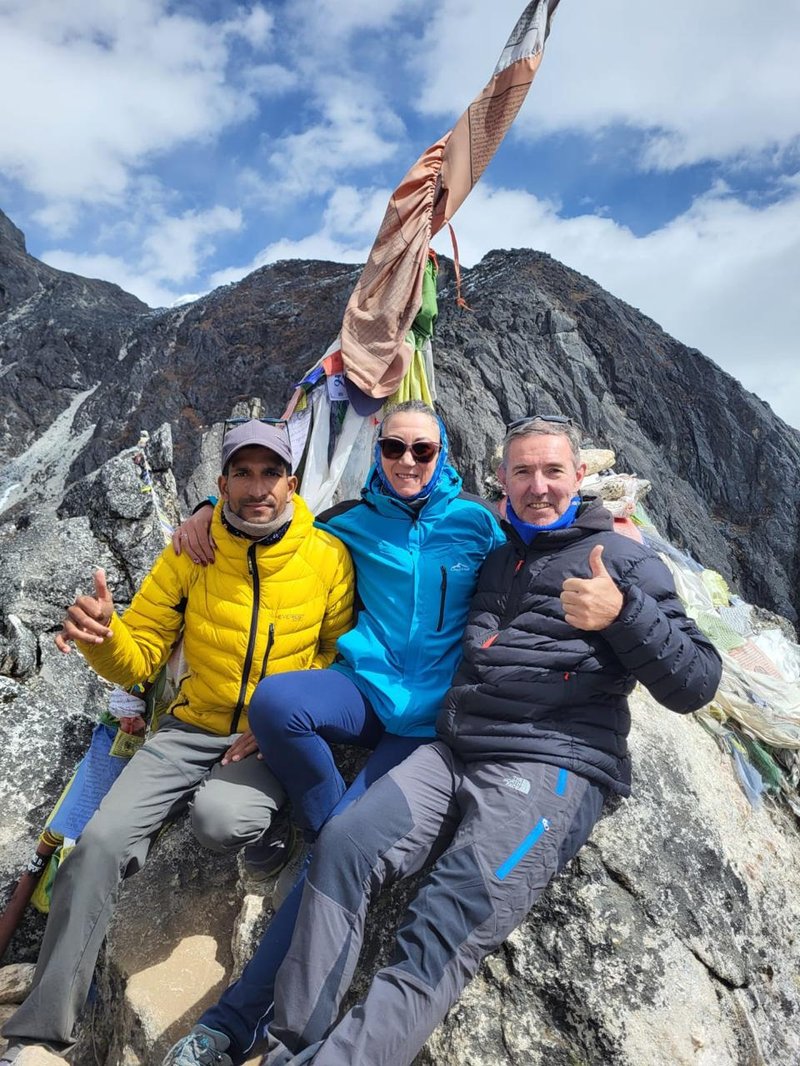

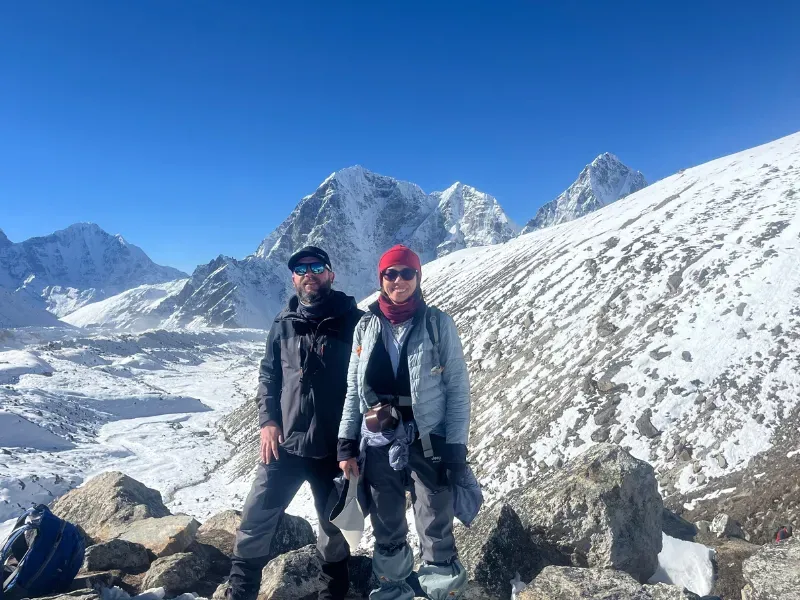
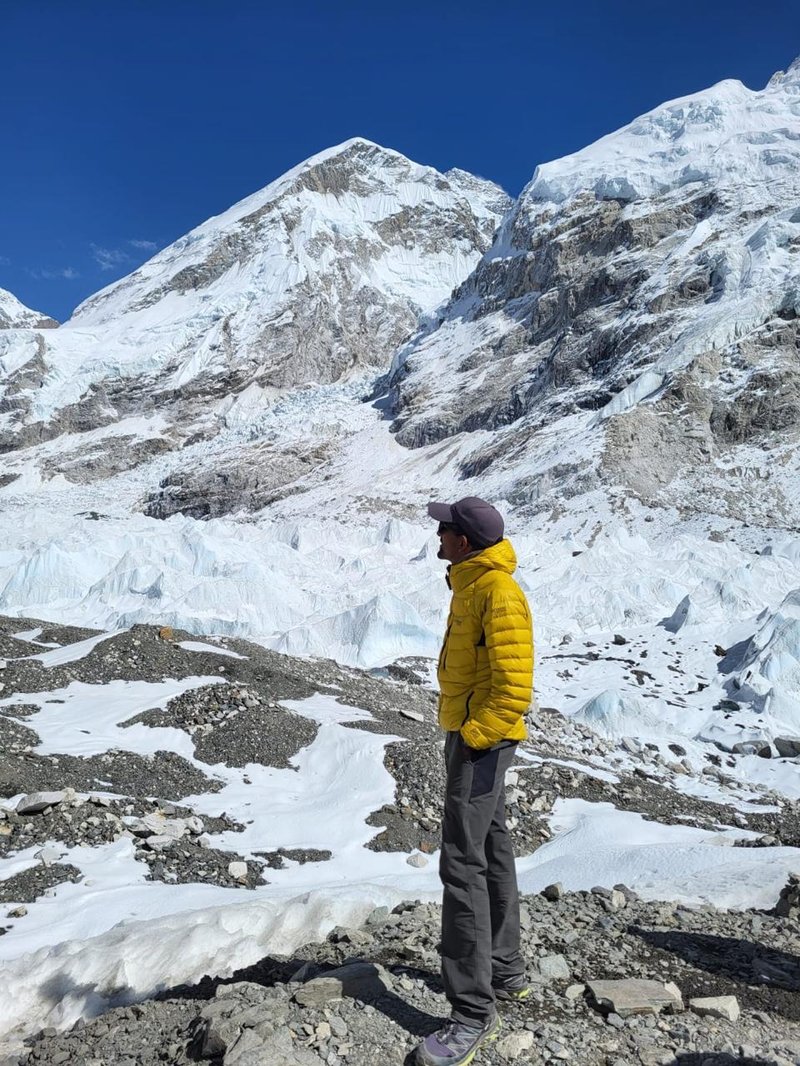
Trekkers posing with their mountain guide during Everest Base Camp trek in the Himalayas


Best Time to Do the Everest Base Camp Trek

Choosing the right season can make a huge difference to your Everest Base Camp experience. Weather, mountain visibility, trail conditions, and temperatures vary throughout the year, so planning your trek during the ideal trekking season gives you the best chance of enjoying clear views and comfortable hiking conditions.

In general, spring (March to May) and autumn (September to November) are considered the two best seasons for the Everest Base Camp Trek. These months offer stable weather, excellent mountain views, and favorable trekking conditions. The monsoon season (June to August) is generally not recommended due to heavy rainfall, slippery trails, frequent cloud cover, and limited mountain visibility.

Spring (March to May): Vibrant Landscapes and Everest Expeditions

Spring is one of the most popular times to trek to Everest Base Camp. Warmer daytime temperatures, blooming rhododendron forests, and the excitement of Everest climbing expeditions create a lively atmosphere throughout the region.

Highlights of spring:

  • Pleasant daytime temperatures, especially at lower elevations
  • Colorful rhododendron forests in full bloom
  • Opportunity to see Everest expedition teams preparing for summit attempts
  • Longer daylight hours for trekking
  • Active and vibrant atmosphere at Everest Base Camp

Things to consider:

  • Trails can be busier during peak weeks
  • Accommodation fills up more quickly
  • Prices may be slightly higher during the busiest period
  • Occasional afternoon showers or spring storms

For the most reliable weather, late March through mid-April and late April to early May are often considered excellent trekking windows.

Autumn (September to November): Clear Skies and Stable Weather

Autumn is widely regarded as the best overall season for the Everest Base Camp Trek. After the monsoon rains, the air is fresh, visibility is exceptional, and mountain panoramas are at their clearest.

Highlights of autumn:

  • Crystal-clear views of the Himalayas
  • Stable weather and low rainfall
  • Comfortable trekking temperatures
  • Excellent conditions for photography
  • Chance to experience Nepal's major festivals, including Dashain and Tihar

Things to consider:

  • Nights become much colder, especially in October and November
  • This is the busiest trekking season
  • Popular teahouses may fill up quickly
  • Trails can be slightly dustier after the monsoon

The period between early and late October is generally considered one of the most dependable times for clear skies and consistent weather.

Which Season Should You Choose?

Spring (March to May) and autumn (September to November) are the best seasons for this trek. Both give stable weather and clear views.

Autumn brings the sharpest mountain views and the Dashain and Tihar festivals, but trails are busy. Spring has rhododendron blooms and the sight of expedition tents at base camp, though afternoons can bring showers. Monsoon months bring heavy rain and cloud, so we do not recommend them.

See our month by month seasonal guide to pick your dates.

Season Weather Visibility Temperature Crowds Festivals Pros Cons
Spring (Mar–May) Mild and stable Excellent -10°C to 15°C High Mani Rimdu (late season in some years), Buddha Jayanti Blooming rhododendrons, clear views, ideal trekking conditions Busy trails and teahouses
Summer (Jun–Aug) Warm with monsoon rain Poor to Fair 5°C to 20°C Low Dumji Festival Quiet trails, lush green landscapes Rain, leeches, cloudy views, flight delays
Autumn (Sep–Nov) Dry and stable Excellent -10°C to 15°C High Dashain, Tihar, Mani Rimdu Crystal-clear mountain views, pleasant temperatures Peak trekking season with larger crowds
Winter (Dec–Feb) Cold and dry Good -20°C to 10°C Low Losar (some years) Peaceful trails, fewer trekkers, snowy scenery Freezing temperatures and possible snow closures

Accommodation on the Trek

Accommodation on the Everest Base Camp Trek is mainly in traditional teahouses, offering a comfortable place to rest after each day's hike. Facilities become more basic as you gain altitude, but they provide everything needed for a memorable mountain experience.

Facility What to Expect
Teahouses Family-run lodges available in every major village.
Rooms Twin-sharing rooms with single beds, pillows, and basic furnishings.
Bathrooms Shared toilets are common, with limited attached bathrooms at lower elevations.
Blankets Blankets are provided, but a warm sleeping bag is highly recommended.
Electricity Available in most villages, often powered by solar energy at higher altitudes.
Charging Available for an extra fee, especially above Namche Bazaar.
WiFi Available in many teahouses but can be slow and chargeable.
Food Freshly prepared meals with Nepali, Tibetan, and international options.

Food and Drinks

Teahouses along the trail serve nutritious meals to keep you energized throughout the trek. Menus are surprisingly varied, although choices become more limited at higher elevations.

Item What to Expect
Breakfast Porridge, eggs, toast, pancakes, muesli, tea, and coffee.
Lunch Dal Bhat, fried rice, noodles, pasta, momos, and soups.
Dinner Dal Bhat, curry, potatoes, pasta, pizza, noodles, and soups.
Water Bottled, boiled, or purified water is available throughout the trek.
Coffee Instant and brewed coffee are served in most teahouses.
Tea Black tea, milk tea, ginger tea, lemon tea, and herbal teas.
Vegetarian Options Widely available and recommended at higher altitudes.
Vegan Options Available in most teahouses with advance requests.

Everest Base Camp Trek Permits

For the standard Everest Base Camp Trek, trekkers generally need two main permits. If you start from Jiri or Salleri, an additional conservation-area permit may apply.

Permit Required For Cost Where to Get It
Sagarmatha National Park Entry Permit All trekkers entering Sagarmatha National Park Check current fee Kathmandu or Monjo checkpoint
Khumbu Pasang Lhamu Rural Municipality Permit Trekkers entering the Khumbu region Check current fee Lukla or local checkpoint
Gaurishankar Conservation Area Permit Trekkers starting through Jiri or Salleri Check current fee Kathmandu or Shivalaya
TIMS Card Standard Everest Base Camp route Not required Not applicable
Permit Required For Cost Where to Get It

Tip: Carry your original passport and enough Nepalese rupees for permit payments. Permit fees and requirements can change, so confirm the current rates before your trek.
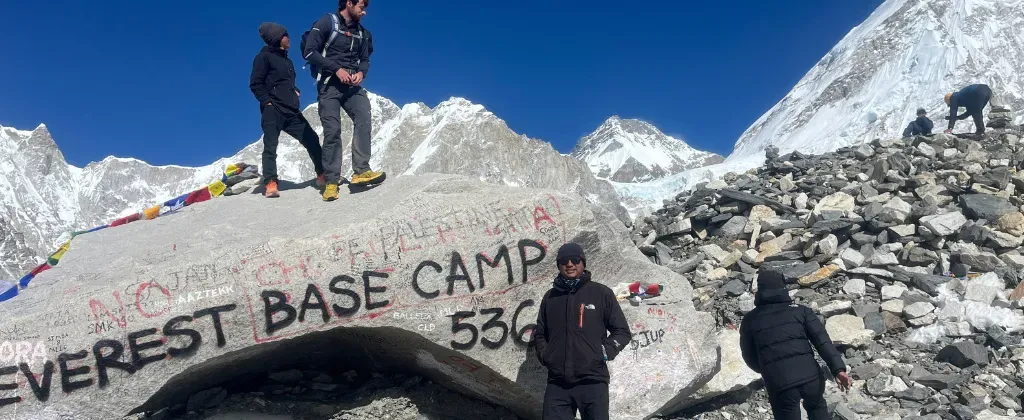
Happy trekkers celebrating at Everest Base Camp with mountain backdrop


Wildlife Along the Everest Base Camp Trek

The Everest region is home to some of the Himalayas' most fascinating wildlife. As you walk through Sagarmatha National Park, you'll pass alpine forests, glacial valleys, and rugged mountain landscapes that support a wide variety of plants a

Wildlife & Nature Description
Sagarmatha National Park A UNESCO World Heritage Site protecting Mount Everest, glaciers, forests, and unique Himalayan ecosystems.
Himalayan Tahr These agile mountain goats are frequently spotted grazing on steep cliffs along the trekking trail.
Musk Deer A shy Himalayan species that lives in the park's high-altitude forests.
Snow Leopard One of the rarest predators in the Himalayas, occasionally found in the park's remote alpine areas.
Danphe Nepal's colorful national bird, often seen in rhododendron and pine forests.
Yak An iconic part of the Khumbu region, carrying supplies between mountain villages.
Flora Rhododendrons, pine, juniper, birch, and alpine wildflowers add color to the trail, especially in spring.

Everest Base Camp Trek Fitness Requirements

You do not need to be an athlete to complete the Everest Base Camp Trek. Good endurance, proper training, and a steady pace matter more than physical strength.

Most days involve 5–8 hours of walking on uneven trails, with steep climbs and high-altitude sections. Good fitness can make these long days easier, but it cannot prevent altitude sickness.

How fit do you need to be?

You should be comfortable walking for several hours and handling uphill sections with a light daypack.

Your training can include:

  • Hiking and long-distance walking
  • Hill and stair climbing
  • Cycling or running
  • Squats and lunges
  • Hiking on consecutive days
  • Walking with a light backpack

Start training around 12 weeks before your trek. Increase your distance and uphill walking gradually, then reduce training before departure.

Why does mental preparation matter?

The trek can test your patience as much as your fitness. Walking slowly, taking regular breaks, and following your acclimatization plan can help you manage long days at high altitude.

Can older trekkers do the Everest Base Camp Trek?

Yes, many older trekkers can complete the trek with proper preparation and realistic expectations. Age alone does not determine your trekking ability.

If you are older or have a health condition, talk to your doctor before training. Our Everest Base Camp Trek Over 50 Guide also covers useful preparation tips for older trekkers.

Sherpa Culture in the Everest Region

The Khumbu region is the homeland of the Sherpa people, whose traditions and hospitality make the journey as memorable as the mountain scenery. Their Buddhist heritage is reflected throughout the trail.

Culture Description
History Sherpas have lived in the Everest region for generations and are world-renowned for their mountaineering expertise.
Religion Tibetan Buddhism shapes everyday life, with monasteries, stupas, and prayer flags found throughout the trail.
Monasteries Tengboche and Pangboche monasteries offer a glimpse into the region's spiritual traditions.
Festivals Events like Mani Rimdu and Losar showcase Sherpa culture through colorful ceremonies and dances.
Cuisine Traditional meals such as Dal Bhat, momos, thukpa, and Tibetan bread are served in local teahouses.
Language Sherpa, Nepali, and English are commonly spoken in trekking villages.
Etiquette Respect local customs by walking clockwise around stupas and asking permission before photographing people.

What to Pack for the Everest Base Camp Trek

The right gear can make your Everest Base Camp Trek much more comfortable. Mountain weather changes quickly, with warm afternoons, cold nights, wind, and snow at higher elevations. Keep your luggage light and focus on useful gear you will actually wear.

If you are planning your packing for Everest Base Camp, use a simple layering system. This helps you adjust your clothing as the temperature changes. Many trekking packages also provide items like a down jacket, sleeping bag, and duffel bag.

What clothes should you pack?

Layered clothing works best for the Everest Base Camp Trek. You can add or remove layers as the weather changes.

Pack these clothing essentials:

  • Moisture-wicking base layers
  • Fleece or warm mid-layers
  • Waterproof and windproof jacket
  • Waterproof trekking pants
  • Comfortable hiking pants
  • Warm hat and sun hat
  • Buff or neck gaiter
  • Lightweight and insulated gloves
  • Several pairs of wool or synthetic socks
  • Comfortable clothes for teahouse evenings

What footwear is best for Everest Base Camp?

Good hiking boots can make a big difference on long trekking days. Choose waterproof boots with good grip and ankle support.

Break in your boots before the trek to reduce the chance of blisters. You can also pack lightweight sandals or comfortable shoes for relaxing at teahouses.

What trekking gear do you need?

A few basic items can make your days on the trail easier and safer.

Consider packing:

  • Trekking poles
  • UV-protection sunglasses
  • Headlamp with spare batteries
  • 25–35 liter daypack
  • Reusable water bottles or hydration bladder
  • Water purification tablets or a filter
  • Power bank
  • Small waterproof bag for important items

What personal items should you bring?

Keep personal items simple so your luggage stays manageable. Some essentials are easy to forget, especially for first-time trekkers.

Bring:

  • SPF 50+ sunscreen
  • Lip balm with sun protection
  • Personal toiletries
  • Basic first-aid supplies
  • Prescription medicines
  • Passport and passport-size photos
  • Nepalese Rupees for personal expenses

What should you leave at home?

Overpacking can make long trekking days harder. You do not need to carry everything you might use at home.

Leave behind:

  • Heavy jeans
  • Large bottles of toiletries
  • Hair dryers and unnecessary electrical items
  • Excessive camera equipment
  • Multiple books
  • Other heavy items you rarely use

How much do you need to carry with a porter?

With porter support, you can keep your daypack small and comfortable. Carry only the items you need during the day's walk.

Your daypack can include:

  • Water
  • Snacks
  • Extra layer
  • Sunscreen
  • Camera or phone
  • Personal medicines
  • Important documents

Your porter carries the main duffel bag, so you can walk with less weight. This can feel especially helpful during the longer and higher sections of the trail.

Smart packing is about carrying the right things, not carrying more things. Choose lightweight gear, use layers, and prepare for changing mountain weather. A lighter pack can make each trekking day feel easier.

Photography Guide for the Everest Trek

The Everest trekking route offers endless opportunities to capture dramatic Himalayan landscapes, traditional villages, and unforgettable mountain sunrises

Photography Tips Description
Best Viewpoints Kala Patthar, Namche Bazaar, Tengboche, and Gorak Shep provide spectacular mountain panoramas.
Sunrise Kala Patthar is the best place to photograph the first light hitting Mount Everest.
Sunset Dingboche and Namche Bazaar offer beautiful golden-hour views of the surrounding peaks.
Drone Rules Flying a drone requires permission from Nepal's authorities and Sagarmatha National Park.
Camera Settings Use a low ISO, fast shutter speed, and spare batteries for the best results in cold conditions.

Internet, Electricity & Connectivity on the Everest Trek

Although you're trekking in a remote Himalayan region, basic connectivity is available in most villages. Services become more limited as you gain altitude.

Service Description
WiFi Most teahouses offer paid WiFi, though speeds vary with altitude and weather.
Charging Mobile phones and cameras can be charged in lodges for an additional fee.
eSIM Some international eSIM providers work in lower villages, but coverage is limited higher up.
Local SIM Nepal Telecom generally provides better coverage than Ncell in the Everest region.
Power Banks Carry a high-capacity power bank to keep your devices charged between villages.

Common Mistakes First-Time Trekkers Make

Many first-time trekkers underestimate the challenges of high-altitude trekking. Avoiding these common mistakes can make your Everest journey safer, more comfortable, and far more enjoyable.

Common Mistake Why It Matters
Overpacking Carrying unnecessary gear makes the trek more tiring. Pack only the essentials.
Walking Too Fast A slow, steady pace helps conserve energy and reduces the risk of altitude sickness.
Ignoring Hydration Drinking enough water is essential for acclimatization and overall health.
Poor Acclimatization Skipping rest days or ascending too quickly increases the risk of Acute Mountain Sickness (AMS).
Wrong Footwear Uncomfortable or unworn boots can cause blisters and make trekking difficult.
Skipping Travel Insurance Comprehensive insurance with high-altitude helicopter evacuation coverage is essential for emergencies.

Everest Base Camp vs Other Popular Treks

Not sure if the Everest Base Camp Trek is right for you? Compare it with Nepal's other popular trekking routes to find the adventure that best matches your experience, fitness level, and travel style.

Trek Duration Max Altitude Difficulty Best For
Everest Base Camp 12–14 Days 5,364 m Moderate to Challenging Iconic Everest experience
Annapurna Base Camp 7–12 Days 4,130 m Moderate Shorter Himalayan trek
Manaslu Circuit 14–18 Days 5,106 m Challenging Remote adventure
Langtang Valley 7–10 Days 4,984 m Moderate Culture and mountain scenery
Gokyo Lakes 12–15 Days 5,357 m Moderate to Challenging Lakes and quieter Everest views
Three Passes Trek 17–21 Days 5,545 m Very Challenging Experienced trekkers

Why Choose Himalayan Hero Adventures?

Choosing the right trekking company is just as important as choosing the right itinerary. At Himalayan Hero Adventures, we combine local expertise, safety, and personalized service to help you enjoy a memorable Everest experience.

  • Government Licensed: Fully registered and licensed trekking company in Nepal.
  • Local Everest Experts: Experienced team with extensive knowledge of the Everest region.
  • Professional Guides: Licensed, trained, and English-speaking trekking guides.
  • Small Group Sizes: Enjoy a more personal and flexible trekking experience.
  • Transparent Pricing: No hidden costs, with clear inclusions and exclusions.
  • 24/7 Emergency Support: Assistance is available throughout your trek.
  • Personalized Service: Private departures and customized itineraries to suit your needs.
  • Safety First: Well-planned acclimatization and a strong track record of successful treks.
  • Responsible Tourism: We support local communities and promote sustainable trekking practices.

Book Your Everest Base Camp Trek

Ready to take on the adventure of a lifetime? Join our Everest Base Camp Trek and experience breathtaking Himalayan landscapes, Sherpa culture, and the thrill of reaching the base of the world's highest mountain. Whether you're traveling solo, with friends, or as a private group, we'll help you plan a safe and unforgettable journey.

  • ✔ Fixed Departure Dates: Multiple departures available during spring and autumn.
  • ✔ Transparent Pricing: No hidden costs, with flexible options for different budgets.
  • ✔ Easy Inquiry Form: Submit your details, and our travel experts will respond with a personalized itinerary and quotation.
  • ✔ Private & Group Treks: Choose a scheduled group departure or customize your own adventure.
  • ✔ Local Expert Support: Get pre-trip guidance and assistance throughout your journey.

Submit an inquiry to check availability, receive the latest pricing, and start planning your Everest Base Camp Trek with our local experts.

Itinerary


Day 1 Arrival in Kathmandu (1,350m / 4,428ft)

📍 Distance: Approximately 6–10 km (Airport to Hotel)
🕒 Driving Time: 20–30 minutes (depending on traffic)
⛰️ Highest Altitude: 1,350 m (4,428 ft)
🛏️ Overnight Altitude: 1,350 m (4,428 ft)


Welcome to Nepal! Upon arrival at Tribhuvan International Airport in Kathmandu, a representative from Himalayan Hero will be waiting to greet you. After a warm welcome, you will be transferred to your hotel in Thamel by private vehicle. During the drive, you will pass through the busy streets of Kathmandu, where you can see local markets, temples, and everyday city life.

After checking in to your hotel, you have time to relax after your journey or explore the nearby area. Thamel is the main tourist district in Kathmandu and is known for its trekking gear shops, cafés, restaurants, and souvenir stores. It is a great place to experience the city's lively atmosphere before your trek begins.In the evening, meet your trekking guide for a pre-trip briefing. Your guide will explain the itinerary, review safety information, check your trekking equipment, and answer any questions you may have. This meeting helps ensure you are fully prepared for the adventure ahead.

Before the day ends, make sure you have your original passport, travel insurance details, and personal trekking gear ready. Get a good night's rest, as tomorrow begins with an early morning flight to Lukla, the gateway to the Everest region.

📋 Today's Journey

Route: Tribhuvan International Airport → Thamel Hotel

Lunch Stop: Not included. Many restaurants and cafés are available in Thamel.

Villages and Towns We Pass: Kathmandu City

Major Attractions: Thamel, local markets, traditional temples, Kathmandu city streets

Local Culture: Kathmandu is a cultural center where Hindu and Buddhist traditions have existed side by side for centuries. While exploring Thamel, you can see prayer flags, ancient temples, local shops and experience the warm hospitality of the Nepali people.

Trail/Road Condition: Paved city roads. Traffic can be busy during peak hours.

Weather and Travel Tips: Attend the pre-trip meeting to meet your guide and review the trekking plan. Bring your original passport, travel insurance documents, and a passport-sized photo if needed for permits. If you arrive early, you may visit nearby UNESCO World Heritage Sites such as Swayambhunath (Monkey Temple) or Boudhanath Stupa.

🍽️ Meals Included: Not Included

🛏️ Accommodation: 3-Star Hotel in Kathmandu

Day 2 Flight to Lukla & Trek to Phakding (2,840m / 9,317ft)

📍 Distance: Flight: 138 km (Kathmandu to Lukla) | Trek: 7.5 km
🕒 Walking/Driving Time: 30–35 minutes flight | 3–4 hours trek
⛰️ Highest Altitude: 2,860 m (9,383 ft) at Lukla
🛏️ Overnight Altitude: 2,610 m (8,563 ft) at Phakding


Your journey begins early in the morning with a scenic flight from Kathmandu to Lukla. The flight offers views of green hills, deep valleys, and snow-covered Himalayan peaks before landing at Tenzing-Hillary Airport, one of the world's most famous mountain airports.

After meeting your guide and porters, you start trekking through the village of Chaurikharka. The trail gradually descends through pine forests and follows the Dudh Koshi River. Colorful prayer flags, mani stones, and small Buddhist monuments appear along the route.

Cross several suspension bridges and pass the villages of Cheplung and Ghat and small farming settlements. Local Sherpa families run teahouses, lodges, and small shops. Yaks and mules carrying trekking supplies are common on the trail.The final section follows the river to Phakding, a peaceful village surrounded by forests and mountains. After checking into your teahouse, enjoy dinner and rest well before tomorrow's longer walk toward Namche Bazaar.

📋 Today's Journey

Route:
Kathmandu → Lukla → Chaurikharka → Cheplung → Ghat → Phakding

Lunch Stop: Ghat

Villages and Towns We Pass: Chaurikharka, Cheplung, Ghat

Major Attractions: Lukla Airport, Dudh Koshi River, suspension bridges, prayer wheels

Local Culture: Sherpa villages with traditional houses, Buddhist monuments, and local farming.

Trail/Road Condition: Well-marked stone paths with gentle descents and several suspension bridges.

Weather and Travel Tips: Morning flights are more reliable due to clear weather. Carry a light jacket and drink plenty of water during the trek.

🍽️ Meals Included: Breakfast, Lunch, Dinner

🛏️ Accommodation: Teahouse in Phakding

Day 3 Trek to Namche Bazaar (3,440m / 11,286ft)

📍 Distance: 10–11 km

🕒 Walking Time: 6–7 hours

⛰️ Highest Altitude: 3,440 m (11,286 ft)

🛏️ Overnight Altitude: 3,440 m (11,286 ft)

The morning begins with breakfast before following the Dudh Koshi River north. The trail crosses several suspension bridges and passes forests filled with pine and rhododendron trees. Small waterfalls and mountain streams flow beside the path.

You pass the villages of Benkar and Monjo before entering Sagarmatha National Park. At the park entrance, trekking permits are checked before continuing through peaceful forest trails toward Jorsalle.

After lunch, the trail follows the river before crossing the famous Hillary Suspension Bridge. From here, a long uphill climb leads through forest to Namche Bazaar. Along the way, weather permitting, you may catch your first distant view of Mount Everest.

Namche Bazaar is the largest Sherpa town in the Khumbu region. After arriving at your teahouse, spend the evening relaxing and preparing for tomorrow's acclimatization day.

📋 Today's Journey

Route: Phakding → Benkar → Monjo → Jorsalle → Hillary Bridge → Namche Bazaar

Lunch Stop: Monjo or Jorsalle

Villages and Towns We Pass: Benkar, Monjo, Jorsalle

Major Attractions: Sagarmatha National Park, Hillary Bridge, Dudh Koshi River, first Everest viewpoint

Local Culture: Sherpa communities with Buddhist traditions, teahouses, and mountain hospitality.

Trail/Road Condition: Stone steps, forest trails, suspension bridges, and a steep final climb.

Weather and Travel Tips: Walk slowly during the uphill section and drink enough water to help with acclimatization.

🍽️ Meals Included: Breakfast, Lunch, Dinner

🛏️ Accommodation: Teahouse in Namche Bazaar

Day 4 Climate Acclimation Day in Namche Bazaar

📍 Distance: 5–6 km (optional hike)

🕒 Walking Time: 3–4 hours

⛰️ Highest Altitude: 3,880 m (12,730 ft) at Everest View Hotel

🛏️ Overnight Altitude: 3,440 m (11,286 ft)

Today is an important acclimatization day. Instead of resting all day, you take a short hike to a higher altitude before returning to Namche Bazaar. This helps your body adjust to the thinner mountain air.

The trail climbs toward Syangboche and continues to the Everest View Hotel. Along the way, enjoy clear views of Mount Everest, Lhotse, Ama Dablam, Thamserku, and Kunde Ri. This is one of the best viewpoints in the Khumbu region.

After enjoying the mountain scenery, continue to Khumjung Village. The village is home to the historic Khumjung Monastery and a traditional Sherpa community. Stone houses, farmland, and grazing yaks create a peaceful mountain landscape.

Return to Namche Bazaar in the afternoon. Spend the rest of the day relaxing at your teahouse or exploring local cafés, bakeries, gear shops, and the small Sherpa museum.

📋 Today's Journey

Route:
Namche Bazaar → Syangboche → Everest View Hotel → Khumjung → Namche Bazaar

Lunch Stop: Namche Bazaar

Villages and Towns We Pass: Syangboche, Khumjung

Major Attractions: Everest View Hotel, Khumjung Monastery, panoramic Himalayan views

Local Culture: Traditional Sherpa villages, Buddhist monasteries, and mountain farming.

Trail/Road Condition: Wide mountain trails with gradual uphill and downhill sections.

Weather and Travel Tip: Walk slowly and avoid overexertion. Carry sunscreen because UV rays are strong at high altitude.

🍽️ Meals Included: Breakfast, Lunch, Dinner

🛏️ Accommodation: Teahouse in Namche Bazaar

Day 5 Trek to Tengboche (3,860m / 12,664ft)

📍 Distance: 9–10 km

🕒 Walking Time: 5–6 hours

⛰️ Highest Altitude: 3,867 m (12,687 ft)

🛏️ Overnight Altitude: 3,867 m (12,687 ft)

After breakfast, the trail leaves Namche Bazaar and follows a scenic path along the hillside. This section offers wide views of Everest, Lhotse, Ama Dablam, and Thamserku. The trail is mostly gentle before descending toward the river.

Descend to Phungi Thenga, where you cross the Dudh Koshi River and stop for lunch. The area is surrounded by forests filled with pine, fir, and rhododendron trees. During spring, colorful rhododendron flowers bloom along the trail.

After lunch, begin the steady uphill climb through forest toward Tengboche. Birds, mountain streams, and peaceful woodland make this one of the most enjoyable walking days on the trek.

Tengboche is famous for its monastery, the largest in the Everest region. After arriving at your teahouse, visit Tengboche Monastery if time allows. The monastery sits against a backdrop of Ama Dablam and other Himalayan peaks.

📋 Today's Journey

Route:
Namche Bazaar → Sanasa → Phungi Thenga → Tengboche

Lunch Stop: Phungi Thenga

Villages and Towns We Pass: Sanasa, Phungi Thenga

Major Attractions: Tengboche Monastery, Dudh Koshi River, Ama Dablam viewpoints

Local Culture: Sherpa Buddhist traditions centered around Tengboche Monastery.

Trail/Road Condition: Well-maintained trails with forest paths, stone steps, and a steady uphill climb.

Weather and Travel Tips: Weather can change quickly in the afternoon. Carry a warm layer and rain protection throughout the day.

🍽️ Meals Included: Breakfast, Lunch, Dinner

🛏️ Accommodation: Teahouse in Tengboch

Day 6 Trek to Dingboche (4,410m / 14,468ft)

📍 Distance: 10–11 km
🕒 Walking Time: 5–6 hours
⛰️ Highest Altitude: 4,410 m (14,469 ft)
🛏️ Overnight Altitude: 4,410 m (14,469 ft) at Dingboche


The day begins with breakfast in Tengboche before descending through a peaceful forest of rhododendron, pine, and fir trees. The trail crosses a suspension bridge over the Imja Khola before reaching the small village of Deboche. The walk is pleasant with mountain views appearing between the trees.

From Deboche, continue to Pangboche, one of the oldest Sherpa villages in the Khumbu region. Stone houses, prayer walls, and fields surrounded by mountain scenery give the village a traditional atmosphere. Ama Dablam rises prominently above the valley and remains visible for much of the day.

After lunch at Shomare, the trail gradually climbs through open alpine landscapes. Trees become fewer as the elevation increases, and the wide Imja Valley opens ahead. You may see yaks grazing on the hillsides and small streams flowing from nearby glaciers.

The final section leads to Dingboche, a village surrounded by stone walls built to protect crops from strong winds and grazing animals. After arriving at your teahouse, enjoy a warm meal and rest as you prepare for another acclimatization day at higher altitude.

📋 Today's Journey

Route:
Tengboche → Deboche → Pangboche → Shomare → Dingboche

Lunch Stop: Shomare

Villages and Towns We Pass: Deboche, Pangboche, Shomare

Major Attractions: Ama Dablam viewpoints, Imja Valley, Imja Khola, alpine landscapes

Local Culture: Traditional Sherpa villages, Buddhist prayer walls, farming, and yak herding.

Trail/Road Condition: Well-maintained mountain trails with gradual climbs and rocky sections.

Weather and Travel Tips: The air becomes cooler as you gain altitude. Walk at a steady pace and drink plenty of water throughout the day.

🍽️ Meals Included: Breakfast, Lunch, Dinner

🛏️ Accommodation: Teahouse in Dingboche

Day 7 Climate Acclimation Day in Dingboche

📍 Distance: 5–6 km (round trip hike)
🕒 Walking Time: 3–4 hours
⛰️ Highest Altitude: 5,081 m (16,670 ft) at Nagarjun Hill
🛏️ Overnight Altitude: 4,410 m (14,469 ft) at Dingboche

Today is set aside for acclimatization. After breakfast, take a gradual hike to Nagarjun Hill, following the important trekking rule of climbing higher during the day and returning to sleep at a lower altitude. This helps your body adjust to the thinner air before continuing toward Everest Base Camp.

The trail climbs over rocky slopes above Dingboche. As you gain elevation, the views become wider and more impressive. Peaks such as Makalu, Lhotse, Lobuche Peak, Baruntse, and Ama Dablam can be seen on clear days.

Spend some time at the viewpoint before slowly returning to Dingboche. The downhill walk is easier and offers another chance to enjoy the surrounding mountain scenery and the quiet alpine valley.

Back in Dingboche, the afternoon is free to relax at the teahouse, explore the village, or prepare your equipment for the higher elevations ahead. A good night's rest is important before tomorrow's trek to Lobuche.

📋 Today's Journey

Route:
Dingboche → Nagarjun Hill → Dingboche

Lunch Stop: Dingboche

Villages and Towns We Pass: Dingboche

Major Attractions: Nagarjun Hill, panoramic Himalayan viewpoints, alpine valley

Local Culture: Sherpa settlement with traditional farming and yak grazing.

Trail/Road Condition: Steep rocky trail with gradual ascent and descent.

Weather and Travel Tips:
Temperatures can change quickly. Wear warm clothing, use sunscreen, and continue drinking plenty of fluids.

🍽️ Meals Included: Breakfast, Lunch, Dinner

🛏️ Accommodation: Teahouse in Dingboche

Day 8 Trek to Lobuche (4,910m / 16,109ft)

📍 Distance: 8 km
🕒 Walking Time: 5–6 hours
⛰️ Highest Altitude: 4,940 m (16,207 ft)
🛏️ Overnight Altitude: 4,940 m (16,207 ft) at Lobuche


After breakfast, leave Dingboche and follow a gradual uphill trail through the wide Khumbu Valley. The route offers open views of surrounding mountains and passes alpine meadows where yaks often graze during the warmer months.

Reach Thukla, a small settlement where many trekkers stop for lunch before beginning the next climb. From here, a steep ascent leads to the Everest Memorial, also known as Chukpi Lhara. Stone memorials honor climbers and Sherpas who lost their lives while climbing Everest and other Himalayan peaks.

Beyond the memorial area, the trail becomes more gradual as it follows the edge of the Khumbu Glacier. The landscape changes into rocky terrain with fewer plants, creating a dramatic high-mountain environment.

Arrive in Lobuche during the afternoon and settle into your teahouse. The colder temperatures and higher altitude make it important to rest well before tomorrow's journey to Everest Base Camp.

📋 Today's Journey

Route:
Dingboche → Thukla → Everest Memorial → Lobuche

Lunch Stop: Thukla

Villages and Towns We Pass: Thukla

Major Attractions: Pheriche Valley, Chukpi Lhara Memorial, Khumbu Glacier, mountain panoramas

Local Culture: Sherpa culture and mountaineering history reflected in the Everest memorials.

Trail/Road Condition: Rocky mountain trail with a steep climb after Thukla and gradual glacier-side paths.

Weather and Travel Tips:The weather is colder and windier at this altitude. Walk slowly and watch for signs of altitude sickness.

🍽️ Meals Included: Breakfast, Lunch, Dinner

🛏️ Accommodation: Teahouse in Lobuche

Day 9 Trek to Everest Base Camp (5,364m / 17,598ft) & Return to Gorak Shep

📍 Distance: 15 km (round trip)
🕒 Walking Time: 7–8 hours
⛰️ Highest Altitude: 5,364 m (17,598 ft) at Everest Base Camp
🛏️ Overnight Altitude: 5,164 m (16,942 ft) at Gorak Shep


Start the day early with breakfast before following the rocky trail toward Gorak Shep. The route runs beside the Khumbu Glacier, passing glacial streams, rocky ridges, and scattered boulders shaped by years of ice movement. The mountain scenery becomes more dramatic with every step.

After reaching Gorak Shep, enjoy lunch and leave your larger bags at the teahouse. Continue the trek toward Everest Base Camp across rocky glacial terrain. The trail requires careful footing as it follows the edge of the Khumbu Glacier.

Arrive at Everest Base Camp, the starting point for climbers attempting Mount Everest during the spring climbing season. Colorful expedition tents may be visible if you visit during the climbing months. The nearby Khumbu Icefall and Changri Shar Glacier create one of the most famous landscapes in the Himalayas.

After spending time at Base Camp, retrace your steps to Gorak Shep. Check into your teahouse, enjoy a warm dinner, and prepare for an early morning hike to Kala Patthar the following day.

📋 Today's Journey

Route:
Lobuche → Gorak Shep → Everest Base Camp → Gorak Shep

Lunch Stop: Gorak Shep

Villages and Towns We Pass: Gorak Shep

Major Attractions: Everest Base Camp, Khumbu Glacier, Khumbu Icefall, Changri Shar Glacier

Local Culture: Meet trekkers, climbers, and Sherpa expedition teams during the climbing season.

Trail/Road Condition: Rocky glacier trails with uneven surfaces and sections requiring careful footing.

Weather and Travel Tips: Start early and carry warm clothing, gloves, sunglasses, and enough drinking water. Afternoon weather can change quickly at this altitude.

🍽️ Meals Included: Breakfast, Lunch, Dinner

🛏️ Accommodation: Teahouse in Gorak Shep

Day 10 Hike to Kala Patthar (5,545m) & Descend to Pheriche

📍 Distance: 13–14 km
🕒 Walking Time: 7–8 hours
⛰️ Highest Altitude: 5,545 m (18,192 ft) at Kala Patthar
🛏️ Overnight Altitude: 4,240 m (13,911 ft) at Pheriche


The day starts before sunrise with a steep climb to Kala Patthar, the highest point of the trek. The early morning hike is challenging, but reaching the viewpoint rewards you with one of the best panoramic views of Mount Everest, Nuptse, Lhotse, Pumori, and the surrounding Himalayan peaks. As the sun rises, the mountains glow with golden light.

After spending time at the viewpoint, descend carefully to Gorak Shep for breakfast. Once refreshed, begin the return journey by following the trail back toward Lobuche. The route passes alongside the Khumbu Glacier before descending through rocky terrain.

Stop for lunch at Lobuche and continue downhill to Thukla. The trail becomes easier as you lose elevation and re-enter the broad Pheriche Valley. Along the way, enjoy views of Cholatse, Taboche, and the surrounding alpine landscape.

Arrive in Pheriche in the afternoon and check into your teahouse. The lower altitude often makes breathing more comfortable after several days at high elevation. Spend the evening resting and preparing for tomorrow's trek back to Namche Bazaar.

📋 Today's Journey

Route:
Gorak Shep → Kala Patthar → Gorak Shep → Lobuche → Thukla → Pheriche

Lunch Stop:
Lobuche

Villages and Towns We Pass:
Lobuche, Thukla

Major Attractions:
Kala Patthar, Khumbu Glacier, sunrise over Everest, Pheriche Valley

Local Culture:
Sherpa teahouses and seasonal mountain settlements along the trekking route.

Trail/Road Condition:
Steep rocky climb to Kala Patthar followed by gradual downhill trails and glacier paths.

Weather and Travel Tips:
Temperatures are very cold before sunrise. Wear warm layers, gloves, and a hat, and walk carefully on rocky sections.

🍽️ Meals Included: Breakfast, Lunch, Dinner

🛏️ Accommodation: Teahouse in Pheriche

Day 11 Trek to Namche Bazaar (3,440m / 11,286ft)

📍 Distance: 19–20 km
🕒 Walking Time: 7–8 hours
⛰️ Highest Altitude: 4,240 m (13,911 ft) at Pheriche
🛏️ Overnight Altitude: 3,440 m (11,286 ft) at Namche Bazaar


After breakfast, leave Pheriche and follow the trail through alpine meadows toward Pangboche. As you descend, the landscape gradually changes from open mountain terrain to forests of pine and rhododendron. The warmer air makes the walk more comfortable than previous days.

Continue through Pangboche and Deboche before reaching Tengboche for lunch. If time allows, you may visit Tengboche Monastery once more before continuing the trek. The surrounding mountain views remain impressive throughout the journey.

After lunch, descend to Phungi Thenga and cross the Dudh Koshi River. The final climb of the day leads back to Namche Bazaar through a forested trail. Colorful prayer flags and suspension bridges mark the route.

Arrive in Namche Bazaar during the afternoon and settle into your teahouse. Enjoy a hot meal, visit a local café, or simply relax after another rewarding day on the trail.

📋 Today's Journey

Route:
Pheriche → Pangboche → Deboche → Tengboche → Phungi Thenga → Namche Bazaar

Lunch Stop: Tengboche

Villages and Towns We Pass: Pangboche, Deboche, Tengboche, Phungi Thenga

Major Attractions: Tengboche Monastery, Dudh Koshi River, rhododendron forests, mountain viewpoints

Local Culture: Sherpa villages, Buddhist monasteries, and traditional mountain lifestyle.

Trail/Road Condition: Well-maintained trails with downhill sections, forest paths, and one final uphill climb.

Weather and Travel Tips: Descending reduces the risk of altitude sickness, but continue drinking enough water and watch your footing on steep sections.

🍽️ Meals Included: Breakfast, Lunch, Dinner

🛏️ Accommodation: Teahouse in Namche Bazaar

Day 12 Trek to Lukla (2,840m / 9,317ft)

📍 Distance: 18–19 km
🕒 Walking Time: 6–7 hours
⛰️ Highest Altitude: 3,440 m (11,286 ft) at Namche Bazaar
🛏️ Overnight Altitude: 2,860 m (9,383 ft) at Lukla


After breakfast, begin the final trekking day by descending from Namche Bazaar toward the Dudh Koshi River. Cross the famous Hillary Suspension Bridge before following the trail through forests and riverside paths.

Continue through Jorsalle and Monjo before leaving Sagarmatha National Park. The route then passes Benkar, Phakding, and Ghat, where many trekkers stop for a short break or lunch.

The final section follows the river before climbing gradually through Chaurikharka to Lukla. Although the uphill walk is steady, reaching Lukla marks the successful completion of your Everest Base Camp trekking adventure.

After arriving, check into your teahouse and spend the evening celebrating with your guide and trekking team. Prepare your luggage for tomorrow's morning flight back to Kathmandu.

📋 Today's Journey

Route: Namche Bazaar → Hillary Bridge → Monjo → Phakding → Ghat → Chaurikharka → Lukla

Lunch Stop: Phakding

Villages and Towns We Pass: Monjo, Benkar, Phakding, Ghat, Chaurikharka

Major Attractions: Hillary Bridge, Dudh Koshi River, Sagarmatha National Park

Local Culture: Sherpa villages, traditional lodges, and mountain communities.

Trail/Road Condition: Stone paths, suspension bridges, riverside trails, and a gradual uphill climb near Lukla.

Weather and Travel Tips: Pack your bags in the evening and confirm your flight schedule, as mountain weather can affect flight times.

🍽️ Meals Included: Breakfast, Lunch, Dinner

🛏️ Accommodation: Teahouse in Lukla

Day 13 Flight to Kathmandu & Farewell Dinner

📍 Distance: Flight: 138 km
🕒 Flight Time: 30–35 minutes
⛰️ Highest Altitude: 2,860 m (9,383 ft) at Lukla
🛏️ Overnight Altitude: 1,400 m (4,593 ft) at Kathmandu


After an early breakfast, walk to Tenzing-Hillary Airport for your scheduled flight to Kathmandu. Morning departures are preferred because weather conditions are usually more stable. Before boarding, enjoy one last look at the surrounding Himalayan peaks.

The short flight offers spectacular aerial views of the mountains, deep valleys, rivers, and hillside villages. As the aircraft descends toward Kathmandu, the landscape changes from rugged alpine terrain to green hills and the busy Kathmandu Valley

.

Upon arrival at Tribhuvan International Airport's domestic terminal, meet your representative and transfer to your hotel. The rest of the day is free to relax after your trek or explore nearby markets, cafés, and cultural sites if time allows.

In the evening, you may enjoy a farewell dinner with your guide or simply rest at your hotel. This is a good opportunity to reflect on your Everest Base Camp experience and prepare for your departure from Nepal.

📋 Today's Journey

Route:
Lukla → Kathmandu

Lunch Stop: Not included (available in Kathmandu)

Villages and Towns We Pass: Scenic mountain flight over the Khumbu region

Major Attractions: Tenzing-Hillary Airport, Himalayan mountain views, Kathmandu Valley

Local Culture: Return to the vibrant atmosphere of Kathmandu with its markets, temples, and everyday city life.

Trail/Road Condition: Short airport transfer on paved city roads after arrival in Kathmandu.

Weather and Travel Tips: Flights may be delayed due to mountain weather. Keep important travel documents and valuables in your hand luggage.

🍽️ Meals Included: Breakfast

🛏️ Accommodation: Hotel in Kathmandu

Day 14 Final Departure

📍 Distance: Approximately 6–10 km (depending on hotel location)
🕒 Walking/Driving Time: 20–45 minutes by private vehicle
⛰️ Highest Altitude: 1,400 m (4,593 ft)
🛏️ Overnight Altitude: Not applicable (Tour Ends)
🚐 Transportation: Private airport transfer

After breakfast at your hotel, enjoy some free time depending on your international flight schedule. Make sure your luggage is packed and that your passport, flight ticket, and other travel documents are ready before leaving the hotel.

At the scheduled time, a representative will meet you at your hotel and transfer you to Tribhuvan International Airport. During the drive, you will pass through the busy streets of Kathmandu, where local markets, temples, and everyday city life provide a final glimpse of Nepal.

Upon arrival at the airport, complete the check-in, immigration, and security procedures for your international flight. During peak travel seasons, arriving at least three hours before departure is recommended to allow enough time for airport formalities.

Your Everest Base Camp Trek comes to an end today. You leave Nepal with lasting memories of the Khumbu region, Sherpa villages, Himalayan landscapes, and your journey to Everest Base Camp. We wish you a safe journey home and hope to welcome you back to Nepal in the future.

📋 Today's Journey

Route: Hotel in Kathmandu → Tribhuvan International Airport

Lunch Stop: Not included. Available at the airport depending on your flight schedule.

Villages and Towns We Pass: Kathmandu City

Major Attractions: Kathmandu streets, local markets, Tribhuvan International Airport

Local Culture: Enjoy a final glimpse of Kathmandu's busy streets and traditional neighborhoods before departing Nepal.

Trail/Road Condition: Paved city roads. Traffic may be heavy during busy hours.

Weather and Travel Tips: Confirm your international flight time, arrive at the airport at least three hours before departure, and keep your passport and important documents in your hand luggage.

🍽️ Meals Included: Breakfast

🛏️ Accommodation: Not Included (End of Trip)

Fixed Departures

Inclusion

  • Pick up and drop off Airport Hotel-Airport in Kathmandu by private vehicle.
  • All hotel accommodations with BB Plan in Kathmandu.
  • Flight ticket from Kathmandu-Lukla- Kathmandu.
  • 3 meals a day (Breakfasts, Lunch, and Dinners with tea or coffee) during the trek.
  • Accommodation of Lodges and guesthouses during the trek
  • Trekking Permit (National Park entry fee).
  • TIMS card (Trekker's Information Management System).
  • Experience Certified Guide
  • Porter to Carry Your Bag ( 2: 1 )
  • Facility of Food, accommodation, salary, insurance, and equipment for all trekking staff.
  • Nepal Government Taxes
  • Service Charge


Extra Supplement

  • Group medical supplies (First Aid kit).
  • Sleeping Bag
  • Himalayan Hero Cap
  • Duffle Bag for Porter
  • Farewell Dinner before departure.
  • Trek Achievement Certificate.

Exclusion

  • Lunch and dinner in Kathmandu.
  • Alcoholic beverages, personal nature expenses, Mineral water, laundry, phone calls, internets.
  • Emergency rescue evacuation if required such as personal accident insurance or Helicopter rescue.
  • International flight tickets, date change or re-issue If required.
  • Nepal visa fee, Visa issuance is easy upon arrival.
  • Tips, gifts, souvenirs.

FAQs about travel in himalayanhero.com

How difficult is the Everest Base Camp Trek?

The Everest Base Camp Trek is considered moderately challenging. It does not require technical climbing skills, but you should be prepared for 5–8 hours of hiking each day, steep trails, and high altitude. Proper acclimatization and a good fitness level make the trek achievable for most healthy people.

Can a beginner do the Everest Base Camp Trek?

Yes. Beginners can complete the Everest Base Camp Trek if they are physically fit and follow a well-planned itinerary with enough acclimatization days. Training before the trek and hiking with an experienced guide can improve your chances of a safe and successful journey.

Can the average person hike to Everest Base Camp?

Yes. Most healthy adults with moderate fitness can hike to Everest Base Camp. You don't need mountaineering experience, but you should prepare with regular walking, hiking, or cardio training before your trip

Who can do the Everest Base Camp Trek?

Anyone in good health with a reasonable level of fitness can do the Everest Base Camp Trek. The trek is suitable for solo travelers, couples, families with older children, and active seniors who can comfortably hike for several hours each day.

Can I do the Everest Base Camp Trek alone?

Yes, but regulations for independent trekking may change. Many trekkers choose a licensed guide because they provide local expertise, improve safety, help with permits, and assist in case of altitude sickness or emergencies.

How long does the Everest Base Camp Trek take?

A standard Everest Base Camp Trek takes 12–14 days, including acclimatization days. Some itineraries are shorter, while extended trips include destinations such as Kala Patthar or Gokyo Lakes.

How many days are needed for the Everest Base Camp Trek?

Most trekkers need 12 to 14 days to complete the Everest Base Camp Trek safely. This schedule allows enough time for gradual altitude gain and proper acclimatization, reducing the risk of altitude sickness.

How hard is the Everest Base Camp Trek?

The trek is physically demanding but achievable. The biggest challenge is the high altitude rather than the hiking distance. Walking at a steady pace, staying hydrated, and taking acclimatization days greatly improve your chances of reaching base camp.

How much does the Everest Base Camp Trek cost?

The total cost of an Everest Base Camp Trek usually ranges from US$1,200 to US$2,500 for guided packages, depending on the itinerary, accommodation, services, and season. Independent trekkers may spend less, while luxury treks cost more.

How do I plan an Everest Base Camp Trek?

Start by choosing the best trekking season, selecting a reliable trekking company or guide, booking flights to Lukla, arranging permits, training for the trek, and purchasing travel insurance that covers high-altitude trekking and emergency evacuation.

What is the best time of year for the Everest Base Camp Trek?

The best time to do the Everest Base Camp Trek is during spring (March to May) and autumn (September to November). These seasons offer stable weather, clear mountain views, and comfortable trekking conditions.

What temperatures can I expect on the Everest Base Camp Trek?

Temperatures vary by season and altitude. During spring and autumn, daytime temperatures generally range from 41°F to 59°F (5°C to 15°C) at lower elevations, while nighttime temperatures near Everest Base Camp can fall below 14°F (-10°C).

What should I pack for the Everest Base Camp Trek?

Pack waterproof hiking boots, layered clothing, a down jacket, rain gear, gloves, a warm hat, sleeping bag, trekking poles, sunglasses, sunscreen, reusable water bottles, and a basic first-aid kit. Packing light but warm is essential.

What should I wear for the Everest Base Camp Trek?

Wear moisture-wicking base layers, insulating mid-layers, and a waterproof outer shell. Comfortable trekking pants, warm socks, gloves, and a quality down jacket will help you stay comfortable as temperatures change throughout the trek.

Where does the Everest Base Camp Trek start?

Most Everest Base Camp Treks begin with a flight from Kathmandu to Lukla. From Lukla, trekkers follow the classic trail through Phakding, Namche Bazaar, Tengboche, Dingboche, Lobuche, and Gorak Shep before reaching Everest Base Camp.

Where is the Everest Base Camp Trek?

The Everest Base Camp Trek is located in the Khumbu region of northeastern Nepal within Sagarmatha National Park. It leads to the southern base camp of Mount Everest, the world's highest mountain.

What are the tea houses like on the Everest Base Camp Trek?

Tea houses provide simple yet comfortable accommodation with twin rooms, home-cooked meals, and shared dining areas. Facilities become more basic at higher elevations, but they offer a warm and welcoming experience throughout the trek.

Which is harder: Kilimanjaro or the Everest Base Camp Trek?

Both are challenging, but in different ways. Kilimanjaro involves a faster ascent to a higher altitude, while the Everest Base Camp Trek includes longer hiking days over nearly two weeks with gradual acclimatization. Your fitness, experience, and altitude tolerance will influence which feels more difficult.

Is the Everest Base Camp Trek worth it?

Yes. The Everest Base Camp Trek is considered one of the world's greatest trekking adventures. You'll experience breathtaking Himalayan scenery, Sherpa culture, ancient monasteries, and the unforgettable achievement of reaching Everest Base Camp.

Customer Reviews


J

Justine - UK

"I booked with Himalayan Hero Adventures when I was in Kathmandu, and as a solo traveller, Medan made me feel super comfortable about the group I would be joining. I had the best time. We had Bijay as our guide, and I couldn’t recommend him enough, he was incredible. I strongly believe we wouldn’t have made it without him. He kept us entertained and gave us the best advice to deal with the difficult conditions. Medan and Bijay took care of all the arrangements both on the trek and before and after, so we didn’t have to worry about a thing except enjoying ourselves. It was my birthday the day after we arrived back in Kathmandu, and Bijay and Medan hosted a birthday dal bhat and surprise cake, which made my day so special. Medan and his team looked after us all the way through to dropping us off at the airport for our flight out of Kathmandu. All of these little touches made my time in Nepal super special, and I would definitely recommend Himalayan Hero Adventures to everyone. My mum also booked the Everest flight with Himalayan Hero Adventures and loved it!"

April 5, 2026

A

Anokh UK

"I went on the Everest Base Camp Trek in a small group of friends. Madan had provided plenty of information beforehand, including a useful equipment check list. Bijay was our guide and took care of all the admin for us including tea house bookings and baggage transportation with the porters. The Himalayan Heros team was very helpful and professional which was very good after the long trekking days."

March 28, 2026

H

Henry - UK

"I did the Everest Base Camp tour with 4 friends. Madan organised everything and was super helpful and really responsive to questions before the tour. We had Bijay as our guide. He was amazing along with his team. Super knowledgeable of the valley, and really good at keeping everyone motivated on the trek. Both Bijay and Madan were really proactive at managing difficult situations, e.g. if weather was bad. Overall I think the trip was great value for money and I would recommend Himalayan Hero Adventures to everyone! Thank you, Madan and Bijay."

March 27, 2026

USD 1499.00 per person

Secure Your Booking with Just 10% Down!