Written by Himalayan Hero Adventures trekking team | Licensed guides with 20+ years in the Annapurna region | Last updated: May 2026
Also known as the Mardi Himal and ABC Trek — the most complete Himalayan adventure in the Annapurna region. There is something deeply humbling about walking through the Himalayas. It is not just the scale of the peaks — it is the way the air changes as you climb, moving from the humid, bird-filled forests of the lowlands to the silent, ice-cracked sanctuaries of high altitude.
If you want to truly experience the Annapurna region — not just glimpse it but live within it for two weeks — combining the Mardi Himal Trek with the Annapurna Base Camp Trek is the most complete way to do it.
One ridgeline. One sanctuary. Two base camps. One journey that most trekkers have never considered — and never forget.
Quick Facts: Mardi Himal and Annapurna Base Camp Trek at a Glance
| Detail |
Information |
| Duration |
14 Days (Kathmandu to Kathmandu) |
| Maximum Altitude |
4,500m (Mardi Himal Base Camp) |
| ABC Altitude |
4,130m (Annapurna Base Camp) |
| Difficulty |
Moderate to Challenging |
| Trek Style |
Fully Guided Teahouse Trek |
| Best Season |
Spring (March–May) and Autumn (September–November) |
| Starting Point |
Pokhara |
| Total Package Price |
$999 USD per person (all-inclusive) |
| Group Size |
Maximum 12 trekkers per guide |
| Permits Required |
ACAP permit + TIMS card (included) |
What Makes This Trek Different?
Most trekkers choose either Annapurna Base Camp or Mardi Himal. This Mardi Himal and ABC trek does both — and the order matters.
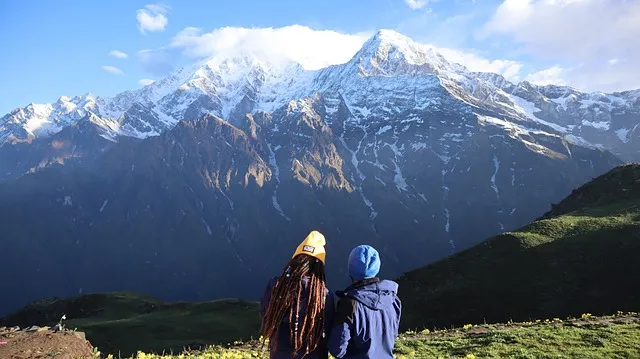
The Mardi Himal ridge comes first. It is quieter, steeper, and more intimate — a narrow ridgeline staircase that leads you face-to-face with Machhapuchhre (Fishtail) from the front. Then you descend, recover at Jhinu Danda hot springs, and enter the Annapurna Sanctuary — the iconic 360-degree mountain amphitheatre that has defined Himalayan trekking for generations.
Starting with Mardi first is a deliberate guide decision, not just a scheduling choice.
- The gradual ridge ascent provides superior acclimatisation before the higher sanctuary
- You see Machhapuchhre from two completely different angles — front ridgeline then side profile inside the Sanctuary
- The physical and emotional arc of the trek builds correctly — quiet discovery first, iconic climax second
- Jhinu Danda hot springs at the midpoint provides natural recovery before the ABC push
"We always recommend Mardi first. Trekkers who start with ABC miss the best acclimatisation window, and they often struggle more at 4,130m. The ridge builds you up perfectly." — Himalayan Hero senior guide, 12 years on the Annapurna routes.
Trek Highlights
- Two Base Camps: Reach Mardi Himal Base Camp (4,500m) and Annapurna Base Camp (4,130m) in a single 14-day journey
- Dual Perspectives of Machhapuchhre: View the iconic Fishtail peak from its rugged front ridgeline and from inside the Sanctuary
- Sunrise from High Camp: First light hitting the Annapurna Massif from 3,600m — one of the finest morning moments in the Annapurna region
- Jhinu Danda Hot Springs: Natural geothermal pools at the midpoint — the best natural recovery stop in the Himalayas
- Gurung Culture: Traditional villages, authentic mountain hospitality, and centuries-old Buddhist and Hindu cultural traditions
- Cloud Forest: Dense, moss-covered rhododendron forest on the Mardi ridge that feels genuinely remote and rarely visited
- Rich Biodiversity: Five distinct climate zones from subtropical valley floor to high alpine moraine
The Mardi Himal and ABC trek itinerary below is structured to prioritise acclimatisation — Mardi ridge first, Annapurna Sanctuary second, with Jhinu Danda hot springs as the natural midpoint recovery.
Mardi Himal and ABC Trek Itinerary: Daily Elevation and Walking Hours
| Day |
Route |
Altitude |
Walking Hours |
| Day 1 |
Kathmandu to Pokhara (Drive) |
820m |
7–8 hrs drive |
| Day 2 |
Phedi to Deurali |
2,100m |
4–5 hrs |
| Day 3 |
Deurali to Forest Camp |
2,550m |
4–5 hrs |
| Day 4 |
Forest Camp to High Camp |
3,600m |
5–6 hrs |
| Day 5 |
High Camp to Mardi Base Camp, descend to Low Camp |
4,500m → 2,990m |
7–8 hrs |
| Day 6 |
Low Camp to Jhinu Danda |
1,780m |
4–5 hrs |
| Day 7 |
Jhinu Danda to Bamboo |
2,310m |
5–6 hrs |
| Day 8 |
Bamboo to Deurali |
3,200m |
5–6 hrs |
| Day 9 |
Deurali to Annapurna Base Camp |
4,130m |
4–5 hrs |
| Day 10 |
ABC to Bamboo (descent) |
2,310m |
6–7 hrs |
| Day 11 |
Bamboo to Jhinu Danda |
1,780m |
5–6 hrs |
| Day 12 |
Jhinu Danda to Nayapul, drive to Pokhara |
820m |
3–4 hrs walk + drive |
| Day 13 |
Pokhara to Kathmandu (Drive) |
1,400m |
7–8 hrs drive |
| Day 14 |
Final Departure |
— |
— |
Total trekking days: 10 active days on trail Total estimated walking hours: approximately 55–65 hours Maximum single day: Day 5 (Mardi summit and descent) — 7–8 hours, most physically demanding day
Mardi Himal vs Annapurna Base Camp: Key Differences
Understanding what makes each half of this trek unique helps you appreciate the contrast that makes the combined route so rewarding.
Mardi Himal vs Annapurna Base Camp
| Factor |
Mardi Himal Trek |
Annapurna Base Camp Trek |
| Trail Type |
Narrow ridgeline |
Valley corridor |
| Crowd Level |
Very low |
Moderate to high |
| Scenery |
Intimate, rugged, close-up peaks |
Open, 360-degree amphitheatre |
| Difficulty |
Steeper terrain, narrow paths |
Long sustained stone stairs |
| Atmosphere |
Wilderness solitude |
Social, international trekker community |
| Machhapuchhre view |
Direct front face |
Side profile from inside sanctuary |
| Teahouse Quality |
Basic, rustic |
More developed, wider menus |
| Best for |
Photography, solitude seekers |
First-time sanctuary experience |
| Maximum altitude |
4,500m |
4,130m |
Bottom line: Mardi Himal tests you in terrain and solitude. ABC rewards you in scale and spectacle. This itinerary gives you both — in the right order.
Package Price: $999 USD Per Person (All-Inclusive)
| Included |
Details |
| Transport |
Tourist bus Kathmandu–Pokhara, private vehicle to/from trailheads |
| Permits |
ACAP permit + TIMS card — arranged and paid by us |
| Guide |
Government-licensed, English-speaking, certified in wilderness first aid |
| Porter |
Available as optional add-on ($180–$220 for 14 days) |
| Accommodation |
11 nights teahouse (twin-sharing) + 2 nights hotel in Pokhara |
| Meals |
Breakfast, lunch, and dinner daily throughout the trek |
| Safety |
Comprehensive first aid kit, pulse oximeter, emergency coordination |
| Taxes |
All government taxes and agency fees |
What Is Not Included
- International flights to and from Nepal
- Nepal entry visa ($30–$50 on arrival)
- Personal travel insurance — mandatory, must cover helicopter evacuation to 5,000m
- Hot showers on trail ($2–3), device charging ($2–3), WiFi access
- Personal trekking gear (sleeping bag, boots, clothing)
- Bottled water, alcoholic beverages, snacks
- Tips for guide and porter ($15–$20 per day per guide recommended)
Optional Add-Ons
- Porter service: $180–$220 for 14 days — carry only a 6–8kg daypack
- Flight upgrade: Replace 8-hour Kathmandu–Pokhara drive with 25-minute domestic flight ($80–$100 each way)
- Kathmandu sightseeing day: UNESCO Heritage site visits arranged pre or post trek
- Itinerary extension: Add Annapurna Circuit connection or Gosaikunda Lakes (additional cost)
Group Discounts
- Groups of 4–6: $80 off per person
- Groups of 7+: $120 off per person
- Private trek (any group size, custom dates): Contact us for pricing
Why Book With Himalayan Hero Adventures?
- 20+ years operating in the Annapurna region — we know every teahouse, every weather pattern, every trail variation
- 100% licensed guides — all guides hold Nepal Tourism Board certification and wilderness first aid qualification
- Zero fatalities in 20 years of operation — our safety record is our most important credential
- Maximum 12 trekkers per guide — small groups, better attention, safer altitude management
- Pre-booked teahouses in peak season — you will not arrive at Mardi High Camp in October to find it full
- 24/7 emergency support — satellite communication on every departure, helicopter evacuation coordination
- Transparent pricing — $999 means $999. No hidden charges added after booking
- Sustainable tourism — fair wages for guides and porters above Nepal's minimum rate, eco-conscious operating practices
Permits and Entry Requirements
Securing the correct permits is non-negotiable. Both documents are verified at multiple checkpoints along the route.
- Annapurna Conservation Area Project (ACAP) permit: $30 USD — supports environmental conservation in the Annapurna region. Checked at entry and multiple trail points.
- TIMS card (Trekkers' Information Management System): $20 USD — safety tracking document enabling search and rescue coordination if needed.
- Mandatory guide requirement (2023 regulation): All trekkers in Nepal's protected areas must be accompanied by a government-licensed guide. This is actively enforced at checkpoints on both the Mardi and ABC routes.
- Travel insurance: Must explicitly cover high-altitude trekking to at least 5,000m and include emergency helicopter evacuation. We verify this before your departure from Kathmandu.
All permits are arranged by our team. Provide a passport copy and four passport photos on arrival in Kathmandu. You do not need to visit any permit offices independently.
For full details on the permit application process, see our guide to ACAP and TIMS permits for Nepal trekking.
Difficulty and Fitness Requirements
How Difficult Is the Mardi Himal and ABC Trek?
This combined trek is rated moderate to challenging. Neither half requires technical climbing skills or mountaineering experience. The difficulty comes from three specific factors:
- Volume: 10 active trekking days averaging 5–7 hours of walking daily
- Terrain variety: Steep Mardi ridgeline with narrow paths, then sustained stone stair climbs on the ABC approach
- Altitude: Reaching 4,500m on Day 5 and 4,130m on Day 9 — both require proper altitude management
The 14-day schedule is designed with gradual altitude gain to give your body the best possible acclimatisation window. Our guides follow the "climb high, sleep low" principle and carry pulse oximeters to monitor blood oxygen levels daily above 3,000m.
"A fit beginner who has prepared consistently for 8–12 weeks will complete this trek. The most common mistake is underestimating the volume — this is 10 days of walking, not 10 days of occasional hiking." — Himalayan Hero senior guide.
Who Can Do This Trek?
- First-time trekkers with 8–12 weeks of dedicated preparation
- Trekkers who have completed shorter routes (Poon Hill, Mardi Himal alone)
- Active adults aged 18–65 with good cardiovascular fitness
- Solo trekkers — the group dynamic on this route is excellent
- Trekkers with cardiovascular conditions — consult your doctor before booking
- Children under 14 on the high-altitude days (Mardi Base Camp and ABC)
Training Recommendations (Start 8–12 Weeks Before Departure)
Cardiovascular training (most important):
- Run, cycle, swim, or use a stair machine 3–4 times per week for 45–60 minutes
- Build toward sustained effort, not speed
Hiking-specific preparation:
- Weekend hikes on hilly terrain with a 6–8kg pack
- At least one 5–6 hour hike before departure to simulate a typical trek day
Strength training:
- Squats, lunges, and step-ups 2–3 times per week
- Core stability exercises for back support under a pack
Boot break-in (non-negotiable): Walk a minimum of 50km in your trekking boots before departure. Blisters at altitude are avoidable and genuinely painful — do not skip this.
Mental preparation: The Himalayas demand patience more than fitness. Walk "Bistari, Bistari" (slowly, slowly) as locals say. Your guide sets the pace. Trust it.
Best Time to Trek Mardi Himal and Annapurna Base Camp
Spring (March–May) — Colour and Warmth
Spring is one of the two recommended windows for this combined trek. Rhododendron forests on the Mardi ridge and the lower ABC approach bloom in vivid red, pink, and white from mid-March through April. Temperatures are moderate (10°C–20°C daytime), mornings are clear, and the mountain views are excellent.
- March: Building season — fewer crowds, some residual cold above 3,500m
- April: Peak spring — rhododendron bloom at its finest, optimal conditions
- May: Pre-monsoon heat builds in lower sections but upper altitudes remain good
Autumn (September–November) — The Gold Standard
Autumn is the best overall season for this combined route. Post-monsoon air clarity delivers the sharpest mountain views of the year. The Mardi ridge in October — with deep blue skies and crystalline visibility of Machhapuchhre — is one of the finest photographic environments in the Annapurna region.
- September: Conditions improving rapidly from mid-month — underrated and less crowded
- October: Best single month — crystal-clear skies, optimal temperatures, vibrant trail atmosphere
- November: Excellent visibility, colder nights, fewer trekkers than October
Winter (December–February) — For Experienced Trekkers
Cold, dry, and very quiet. Daytime skies are often flawlessly clear but temperatures at Mardi High Camp and ABC drop below -10°C at night. Some higher sections of the Mardi ridge can be icy. Viable for experienced, well-equipped trekkers. Not recommended for first-timers.
Monsoon (June–August) — Generally Not Recommended
Heavy daily rainfall, slippery trails, leeches in forest sections, and consistently poor mountain visibility make monsoon season the most challenging period. For trekkers specifically seeking solitude and lush green landscapes and who are comfortable with wet conditions, it is possible — but not our recommendation for this route.
For a detailed month-by-month breakdown specific to the ridge, read our guide on the best time to trek Mardi Himal.
Altitude Sickness: Risks and Prevention
The Mardi Himal and ABC combined route reaches 4,500m on Day 5 — the highest point of the trek and the day with the greatest altitude risk. Understanding AMS before you arrive is essential.
Recognise the symptoms:
- Mild: Persistent headache, mild nausea, fatigue, poor sleep, reduced appetite
- Moderate: Severe headache, vomiting, increasing weakness, loss of coordination
- Severe (HACE/HAPE): Confusion, breathlessness at rest — requires immediate descent and evacuation
How we manage altitude on this route:
- Our itinerary follows gradual altitude gain — no day increases sleeping altitude by more than 900m
- Guides carry pulse oximeters — blood oxygen readings are taken every morning above 3,000m
- Day 5 (Mardi summit) follows the "climb high, sleep low" principle — you reach 4,500m then descend to 2,990m to sleep
- Guides are certified in altitude sickness recognition and carry supplemental oxygen on every departure
Your responsibilities:
- Drink 3–4 litres of water daily above 2,500m
- Never take sleeping pills at altitude — they suppress breathing
- Never push through worsening symptoms — tell your guide immediately
- Carry Diamox if prescribed by your doctor before departure
Accommodation and Food
| Elevation |
Teahouse Standard |
Facilities |
| Pokhara (hotel) |
3-star |
Private bathroom, hot water, WiFi |
| Lower trail (Phedi–Chhomrong) |
Good |
Twin rooms, shared bathroom, hot shower |
| Mid trail (Bamboo–Deurali) |
Standard |
Twin rooms, shared bathroom, basic |
| High camp sections (3,500m+) |
Basic |
Twin rooms, shared facilities, very cold nights |
Rooms are simple across the route — twin beds, blankets provided. Bring your own sleeping bag rated to -10°C for nights above 3,000m. The communal dining room with its wood-burning stove is the social heart of every teahouse — warm, communal, and genuinely memorable.
What You Will Eat
Breakfast: Porridge, scrambled eggs, toast, Tibetan bread, pancakes, tsampa porridge, tea or coffee Lunch: Dal bhat (always the best value — endlessly refillable), noodle soup, momos, pasta, sandwiches Dinner: Dal bhat, Sherpa stew, garlic soup (recommended at altitude), pasta, rice dishes, local vegetables
Dal bhat is the unofficial anthem of the Himalayas — nutritious, filling, and always available. Our guides eat it twice a day for good reason.
Drinks: Butter tea, milk tea, lemon honey ginger tea, hot chocolate, instant coffee. Avoid alcohol above 3,000m — it accelerates dehydration and impairs altitude adaptation.
Packing List
Clothing Essentials
- Moisture-wicking thermal base layers (top and bottom)
- Fleece mid-layer or light down jacket
- Waterproof, windproof hard shell jacket and trousers
- Trekking trousers (2 pairs — convertible zip-off ideal)
- Warm wool hat, buff/neck gaiter
- Liner gloves and insulated outer gloves
- UV-protection sunglasses (essential above 3,000m)
- Sun hat for lower valley sections
Trekking Gear
- Waterproof trekking boots — broken in for 50km minimum before departure
- Trekking poles — strongly recommended for both ridge descent and ABC stone stairs
- Sleeping bag rated to -10°C
- 25–30 litre daypack
- Headlamp with spare batteries
- Trekking socks (3–4 pairs, wool or synthetic)
Health and Safety Items
- Basic first aid kit: blister plasters, ibuprofen, antiseptic wipes, rehydration salts
- Pulse oximeter — for personal altitude monitoring above 3,500m
- Water purification tablets or Steripen
- Altitude medication (Diamox) if prescribed — consult doctor before departure
- Personal prescriptions with extra supply
What to Leave Behind
- Heavy casual clothing — pack light
- Cotton anything — retains moisture, provides no insulation
- Multiple pairs of jeans or heavy trousers
- Valuables that are irreplaceable
Book Your Mardi Himal and Annapurna Base Camp Trek
$999 USD per person — fully inclusive of all essentials
Our 14-day combined Mardi Himal and Annapurna Base Camp trek runs on fixed departure dates from March through November, with private departures available year-round for individuals, couples, and groups.
How to Book:
- Fill out the inquiry form on our website or contact us directly
- Our team confirms availability and answers your specific questions
- Pay a 25% deposit to secure your spot
- Receive your full pre-departure briefing, packing list, and itinerary
- Pay the remaining balance 30 days before departure
Departure Months: March, April, May (spring) | September, October, November (autumn) Group size: Maximum 12 trekkers per licensed guide Private treks: Available on flexible dates — contact us for customisation
- 📧 Email: [email protected]
- 📱 WhatsApp/Call: +977-9801127073
- 🏢 Office: Thamel, Kathmandu, Nepal