Everest View Trek
Trip Duration
8 Days
Location
Everest Nepal
Grading
Moderate
Best Season
Mar-Apr-May-Oct-Nov-Dec
Max Altitude
3700m
Starts from
Kathmandu
Ends at
Kathmandu

Everest View Trek: Your Gateway to the World's Highest Mountain

The Everest View Trek stands as one of the most rewarding short treks in the Himalayan region, offering breathtaking panoramas of Mount Everest without the extended commitment of a full base camp expedition. This remarkable journey takes you through the heart of Sherpa country, where ancient Buddhist traditions blend seamlessly with dramatic mountain landscapes.

For trekkers seeking an authentic Himalayan experience within a limited timeframe, this route delivers everything the Everest region is famous for. You walk the same legendary trails as mountaineering pioneers, cross suspension bridges over roaring rivers, and witness the world's highest peak from one of its most spectacular viewpoints.

What makes this trek special:

  • Clear views of Mount Everest, Lhotse, Nuptse, and Ama Dablam
  • Immersive Sherpa cultural experiences in traditional villages
  • Maximum altitude of 3,880m—significantly lower than Everest Base Camp
  • Suitable for trekkers without prior high-altitude experience
  • Complete journey in just 7 days from arrival to departure

The Khumbu region has captivated adventurers for decades, and this condensed itinerary captures its essence beautifully. Whether you're a first-time trekker or a seasoned hiker with limited vacation time, the Everest View Trek provides an unforgettable introduction to the world's most famous mountain range.

What Is the Everest View Trek and Why It's Popular

The Everest View Trek, also known as the Everest Panorama Trek, is a carefully designed route through Nepal's Sagarmatha National Park. The journey begins with a scenic flight to Lukla and follows the classic Everest trail to Namche Bazaar, the legendary gateway to the high Himalayas.

Unlike the demanding two-week Everest Base Camp expedition, this short Everest trek reaches its highlight at the Hotel Everest View in Syangboche. At 3,880 meters, this viewpoint offers unobstructed panoramas that many consider the finest accessible Everest views in Nepal.

Why trekkers choose this route:

  • Experience the Everest region in approximately one week
  • Minimal altitude sickness risk compared to higher treks
  • Same stunning scenery as longer expeditions
  • Ideal introduction to Himalayan trekking
  • Perfect for travelers with limited time

The trek's popularity has grown significantly among travelers who want meaningful mountain experiences without committing to extended expeditions. Families, working professionals, and older adventurers particularly appreciate that this route delivers genuine Himalayan magic within a manageable timeframe.

Why Choose Everest view trek?

Trek Specification Details
Total Duration 7 days (including arrival/departure)
Trekking Days 4 days of active walking
Maximum Altitude 3,880m (Hotel Everest View)
Difficulty Rating Easy to Moderate
Best Suited For Beginners to experienced trekkers

Why This Is the Best Short Trek to See Everest

Among Nepal's many trekking options, the Everest View Trek has earned recognition as the best short trek to see Everest for several compelling reasons. The route maximizes mountain exposure while minimizing time and physical demands.

The Hotel Everest View at Syangboche offers arguably the finest accessible Everest viewpoint in Nepal. Unlike viewpoints on longer treks that require reaching 5,000+ meters, this location delivers comparable panoramas at a comfortable 3,880 meters.

Why this route outperforms alternatives:

  • Direct sightlines to Everest unobstructed by intervening ridges
  • Lower altitude reduces acclimatization time needed
  • Same trail and villages as Everest Base Camp route
  • Complete Sherpa cultural immersion included
  • No technical skills or extreme fitness required

Many travelers initially consider helicopter tours for quick Everest views. However, those airborne experiences last mere minutes and lack the cultural depth that makes Himalayan journeys meaningful. The Everest View Trek provides days of immersion rather than fleeting glimpses.

For those comparing short Everest trek options, this itinerary strikes the optimal balance. Shorter routes miss Namche Bazaar entirely, while longer variations add days without significantly improving views. The 7-day format captures the region's essence efficiently.

Comparision with EBC trek and Helicopter tour

Comparison Factor Everest View Trek Helicopter Tour EBC Trek
Duration 7 days 4-5 hours 12-14 days
Max Altitude 3,880m Variable 5,364m
Everest Views Excellent Brief Good
Cultural Experience Deep None Deep
Fitness Required Moderate None High
AMS Risk Low None Moderate-High

Best Time for the Everest View Trek: Seasonal Analysis

Choosing the best time for the Everest View Trek significantly impacts your experience. Nepal's distinct seasons each offer different conditions, and understanding these helps you plan appropriately.

Autumn Season (September to November)

Autumn represents the premier trekking season throughout Nepal, and the Everest region particularly shines during these months. Post-monsoon skies deliver exceptional clarity, with October and November offering the year's best mountain visibility.

Temperatures remain comfortable during autumn days, ranging from 10-15 degrees Celsius at Namche Bazaar. Nights grow progressively colder as the season advances, but nothing that proper layering cannot address.

Autumn advantages:

  • Clearest mountain views of the year
  • Stable weather patterns with minimal precipitation
  • Comfortable daytime temperatures
  • Major festival season (Dashain, Tihar)
  • Peak season with lively trail atmosphere

Spring Season (March to May)

Spring offers the second prime trekking window, with warming temperatures and stunning rhododendron blooms throughout lower elevations. March can still hold winter chill, while May grows warmer with occasional afternoon clouds.

Visibility generally remains excellent through April, though pre-monsoon buildup may bring afternoon clouds by late May. The compensating attraction is dramatic rhododendron forests painting hillsides in vibrant reds and pinks.

Spring advantages:

  • Warming temperatures and longer days
  • Spectacular rhododendron blooms (March-April)
  • Fewer trekkers than autumn season
  • Wildlife more active after winter
  • Good visibility through mid-May

Winter Season (December to February)

Winter trekking is possible but presents challenges. Days are shorter, nights extremely cold, and some higher teahouses may close. However, winter offers solitude and often crystal-clear skies between occasional snowfalls.

The Everest View Trek's moderate altitude makes it more feasible for winter than higher routes. Namche Bazaar remains operational year-round, and the Hotel Everest View hike remains achievable in good weather.

Monsoon Season (June to August)

Monsoon trekking is generally not recommended. Heavy rainfall, cloud cover obscuring views, and trail conditions make this season unsuitable for most trekkers. Leeches also become problematic on lower sections.

Everest View Trek: Seasonal Analysis

Season Visibility Crowds Temperature
Autumn (Sep-Nov) Excellent High Moderate
Spring (Mar-May) Good-Excellent moderate warm
Winter (Dec-Feb) Variable very low cold
Monsoon (Jun-Aug) Poor very low warm

Everest View Trek Permits and Entry Requirements

Securing proper Everest View Trek permits before entering Sagarmatha National Park is mandatory. Nepal's permit system protects the fragile mountain environment while supporting local communities and conservation efforts.

Required Permits

Sagarmatha National Park Entry Permit

This permit grants access to Nepal's first national park, a UNESCO World Heritage Site protecting the Everest region's unique ecosystems. The permit is checked at the Monjo entrance gate on Day 3 of the trek.

Khumbu Pasang Lhamu Rural Municipality Permit

Introduced to support local communities, this additional permit funds infrastructure and conservation projects throughout the Khumbu region. It's typically processed alongside the national park permit.

TIMS Card (Trekkers' Information Management System)

While requirements have evolved recently, TIMS registration may still be required depending on your trekking arrangement. Your agency typically handles this alongside other permits.

Permit processing essentials:

  • Two passport-sized photographs required
  • Valid passport with minimum 6 months validity
  • Permits typically processed in Kathmandu before departure
  • Processing takes 1-2 business days
  • All permits included in organized trek packages

Permit Regulations and Conservation

The permit system serves crucial conservation purposes. Sagarmatha National Park protects endangered species including snow leopards, red pandas, and Himalayan tahr. Permit fees fund ranger patrols, trail maintenance, and waste management initiatives.

Trekkers must carry permits throughout the journey, as checkpoints verify compliance at multiple locations. Attempting the trek without proper permits results in fines and potential trek termination.

Role of an Everest View Trek Guide: Why It Matters

Hiring an experienced Everest View Trek guide transforms your journey from simple walking into meaningful exploration. While the trail to Namche Bazaar is well-marked, a knowledgeable guide adds dimensions impossible to achieve independently.

Local Knowledge and Cultural Insight

Guides from the Khumbu region possess intimate knowledge of Sherpa culture, Buddhist traditions, and mountain lore that no guidebook captures. They explain the significance of mani walls, translate conversations with villagers, and share stories that bring the landscape alive.

The Sherpa people have lived in this region for centuries, developing unique adaptations to high-altitude life. Your guide bridges the gap between visitor and community, facilitating interactions that solo trekkers rarely experience.

What experienced guides provide:

  • Deep knowledge of Sherpa customs and traditions
  • Trail navigation and safety management
  • Altitude sickness monitoring and response
  • Teahouse recommendations and arrangements
  • Translation and cultural interpretation
  • Emergency response capabilities

Safety and Logistics Management

Even on shorter treks, guides provide essential safety oversight. They monitor trekkers for altitude sickness symptoms, adjust pacing appropriately, and know evacuation procedures if emergencies arise.

Logistically, guides handle teahouse bookings, meal arrangements, and the countless small decisions that otherwise consume trekker attention. This allows you to focus entirely on the experience rather than planning each step.

Supporting Local Communities

Hiring local guides directly supports Khumbu communities. Tourism provides primary income for many Sherpa families, and choosing locally-based guides ensures your contribution reaches those who need it most.

The guiding profession represents respected work in Sherpa society, with many guides coming from multi-generational mountaineering families. Their expertise reflects lifetimes of mountain experience passed down through family traditions.

Everest View Trekking Experience and Scenic Highlights

The Everest view trekking experience delivers far more than mountain panoramas. Each day reveals new dimensions of Himalayan beauty, from roaring rivers to ancient monasteries, from dense forests to high-altitude villages.

The Lukla Flight Experience

Your adventure begins with one of aviation's most memorable flights. The 25-minute journey from Kathmandu weaves between towering peaks, offering aerial perspectives that set the tone for coming days.

Landing at Tenzing-Hillary Airport (2,840m) provides an immediate adrenaline rush. The short runway ends at a mountain wall, requiring precise pilot skill that passengers observe with amazement.

Flight experience features:

  • Window seats offer premium mountain views
  • Clear mornings provide best visibility
  • Airport named for Everest's first summiteers
  • Immediate transition from flight to trekking

The Trail to Namche Bazaar

The path from Lukla follows the Dudh Koshi ("Milk River"), named for its glacial white waters. You cross numerous suspension bridges, each offering unique perspectives on the canyon below.

Villages along the route showcase traditional Sherpa architecture—stone buildings with carved wooden window frames, prayer wheels spinning at every entrance, and colorful prayer flags stretching between buildings.

Namche Bazaar: Heart of Sherpa Country

Arriving in Namche Bazaar feels like discovering a hidden mountain civilization. The town occupies a natural amphitheater, its buildings rising in terraces up the mountainside.

Saturday brings the famous Namche market, where traders from Tibet and lower villages gather to exchange goods. Even on other days, the town buzzes with trekkers, guides, and locals creating a uniquely vibrant atmosphere.

Namche Bazaar experiences:

  • Weekly Saturday market with Tibetan traders
  • Sherpa museums documenting mountaineering history
  • Numerous cafes and bakeries with mountain views
  • Buddhist monastery with panoramic outlooks
  • Fascinating blend of traditional and trekking cultures

The Hotel Everest View Panorama

The trek's culminating viewpoint delivers everything promised and more. From 3,880 meters, you witness a mountain panorama that includes the world's highest peaks in a single sweeping view.

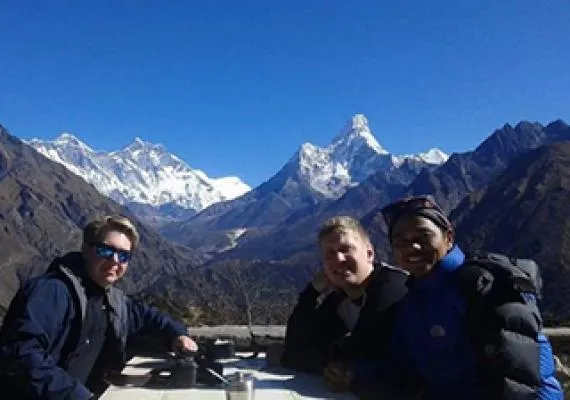
Mount Everest dominates the horizon, its distinctive pyramid instantly recognizable. Lhotse and Nuptse flank the world's highest mountain, while Ama Dablam's dramatic spire rises to the east. On clear days, the view extends to Cho Oyu and beyond.

Who Is This Short Everest Trek Ideal For?

The Everest View Trek welcomes a remarkably diverse range of trekkers. Its moderate altitude and manageable duration make it accessible to many who couldn't consider longer Himalayan expeditions.

First-Time Trekkers

If you've never trekked in the Himalayas, this route provides an ideal introduction. The trails are well-maintained, teahouses comfortable, and altitude manageable for most healthy individuals.

The experience builds confidence for future adventures. Many trekkers return to Nepal for longer expeditions after discovering their capabilities on this route.

Families with Children

Children as young as 8-10 have successfully completed this trek with proper preparation. The shorter duration and lower altitude reduce risks that make longer treks unsuitable for younger adventurers.

Families appreciate that children experience genuine Himalayan adventure rather than watered-down alternatives. The memories created last lifetimes.

Ideal candidate profiles:

  • First-time Himalayan trekkers seeking authentic experience
  • Families with children aged 10 and above
  • Travelers with limited vacation time
  • Older adventurers seeking accessible mountain experiences
  • Photographers prioritizing mountain panoramas
  • Trekkers recovering from previous altitude issues

Time-Limited Travelers

Working professionals often cannot spare two weeks for Everest Base Camp. This 7-day itinerary fits within standard vacation windows while delivering meaningful Himalayan experience.

The efficiency doesn't sacrifice quality. You walk the same legendary trails, stay in the same villages, and witness the same peaks as longer expeditions—simply without extending to base camp itself.

Senior Adventurers

Trekkers in their 60s, 70s, and even 80s have completed this route successfully. The moderate altitude and reasonable daily distances accommodate slower pacing without compromising the experience.

Many seniors find this trek more enjoyable than they anticipated. The key lies in honest fitness assessment and willingness to proceed at comfortable paces.

Time-Limited Travelers

Trekker Profile Suitability Key Considerations
First-timers Excellent Perfect introduction to Himalayan trekking
Families Very Good Children 10+ with proper preparation
Limited Time Excellent Maximum experience in 7 days
Seniors (60+) Good Steady pacing, good health required
Photographers Excellent Outstanding viewpoint access
Fitness Beginners Good Moderate fitness required, training helps

Preparation Tips and Trek Difficulty Overview

Understanding the Difficulty Level

The Everest View Trek rates as easy to moderate on Nepal's trekking difficulty scale. This assessment reflects several factors: maximum altitude, daily walking distances, trail conditions, and technical requirements.

Most healthy individuals with reasonable fitness complete this trek comfortably. The challenge lies primarily in altitude adjustment rather than extreme physical demands.

Difficulty factors explained:

  • Maximum altitude: 3,880m (moderate, well below danger zones)
  • Daily walking: 3-7 hours depending on day
  • Trail conditions: Well-maintained, clearly marked
  • Technical skills: None required
  • Elevation gain: Gradual with acclimatization built in

Physical Preparation

While no extreme fitness is required, preparation improves your experience significantly. Cardiovascular conditioning helps most, as walking at altitude demands more from your respiratory system.

Begin training 4-6 weeks before departure. Focus on activities that elevate heart rate sustainably—hiking, running, cycling, or stair climbing all work effectively.

Recommended preparation activities:

  • Regular cardio exercise (30-45 minutes, 4-5 times weekly)
  • Hill walking or stair climbing for leg strength
  • Day hikes with a loaded daypack
  • Flexibility exercises for steep trail sections
  • Practice walking for multiple consecutive days

Gear and Packing Essentials

Proper gear makes the difference between comfort and struggle. Kathmandu offers extensive rental options, but bringing critical items from home ensures proper fit and familiarity.

Essential gear categories:

  • Layered clothing system (base, mid, outer layers)
  • Waterproof jacket and pants
  • Broken-in trekking boots
  • Warm sleeping bag liner (teahouses provide blankets)
  • Daypack for daily essentials
  • Headlamp with spare batteries
  • Sun protection (hat, sunglasses, sunscreen)
  • Personal medications and first aid basics

Altitude Considerations

At 3,880 meters maximum, this trek presents lower altitude sickness risk than higher routes. However, respecting altitude remains important for safe, enjoyable trekking.

The itinerary builds in acclimatization through the rest day in Namche Bazaar. The "climb high, sleep low" hike to Hotel Everest View helps your body adjust before sleeping at lower elevation.

Altitude sickness prevention:

  • Ascend gradually (the itinerary manages this)
  • Stay well hydrated throughout
  • Avoid alcohol, especially during first days at altitude
  • Listen to your body and report symptoms to your guide
  • Descend if symptoms worsen despite rest


Final Thoughts and Trek Recommendation

The Everest View Trek represents Himalayan adventure distilled to its essence. In just seven days, you experience the legendary Khumbu region—its trails, villages, culture, and incomparable mountain scenery—without the extended commitment that longer expeditions demand.

This journey suits remarkable diversity. First-time trekkers discover their Himalayan capabilities. Time-pressed professionals capture authentic mountain experiences within vacation constraints. Families create shared memories in one of Earth's most dramatic landscapes. Older adventurers prove that age needn't limit mountain dreams.

Key takeaways from this guide:

  • The Everest View Trek delivers a genuine Himalayan experience in 7 days
  • The Maximum altitude of 3,880m minimizes altitude sickness risk
  • Autumn and spring offer optimal trekking conditions
  • Experienced guides transform logistics into meaningful cultural immersion
  • Proper permits protect the environment and support local communities
  • Moderate fitness and a positive attitude are the primary requirements

The Hotel Everest View panorama stays with you long after returning home. Standing at 3,880 meters, watching the morning sun illuminate the world's highest peaks, you understand why this region has captivated adventurers for generations.

For those weighing options, consider this: The Everest View Trek captures perhaps 80% of the Everest region's magic in half the time of longer routes. The mathematics favor this journey for anyone balancing adventure aspirations with real-world constraints.

Whether this becomes your introduction to Himalayan trekking or one adventure among many, the Khumbu region welcomes you. The Sherpa people's hospitality, the trail's timeless beauty, and those incomparable mountain views await.

Your Everest story begins with a single step. Make it count.

Itinerary


Day 1 Arrival in Kathmandu.

Your Himalayan adventure begins upon landing at Tribhuvan International Airport. After clearing customs, our team transfers you to your hotel in the Thamel district, Kathmandu's vibrant tourist hub.

The remainder of the day is yours to explore or rest after your international journey. An evening briefing covers trek logistics, introduces your guide, and addresses any questions about the coming days.

Day 1 essentials:

  • Airport pickup and hotel transfer included
  • Trek briefing and equipment check
  • Time to explore Kathmandu if energy permits
  • Early dinner recommended for morning flight preparation

Day 2 Fly to Lukla and Trek to Phakding (2,610m)

Flight time: 25-30 minutes | Trek time: 3-4 hours | Distance: 8km

The morning begins with one of aviation's most thrilling experiences—the flight to Lukla. Your twin-propeller aircraft weaves between mountain peaks before landing at Tenzing-Hillary Airport, famously considered one of the world's most challenging runways.

After landing, you begin trekking immediately. The trail descends gently through pine forests and Sherpa villages, crossing your first suspension bridges over the Dudh Koshi River. Phakding, your overnight stop, sits in a peaceful valley where the sound of rushing water accompanies your evening meal.

Day 2 highlights:

  • Spectacular mountain flight with Himalayan views
  • First steps on the legendary Everest trail
  • Multiple suspension bridge crossings
  • Introduction to teahouse accommodation
  • Altitude: Starting at 2,840m (Lukla), ending at 2,610m (Phakding)

Day 3 Phakding to Namche Bazaar (3,440m)

Trek time: 5-6 hours | Distance: 11km | Elevation gain: 830m

This day features the trek's most significant climb, ascending through Sagarmatha National Park to reach Namche Bazaar. The trail follows the Dudh Koshi valley, crossing the famous Hillary Suspension Bridge—one of the longest in the Khumbu region.

After entering the national park at Monjo, the path steepens dramatically for the final push to Namche. The effort rewards you with arrival in the Sherpa capital, a remarkable town built into a horseshoe-shaped mountainside with stunning views in every direction.

Day 3 milestones:

  • Entry into Sagarmatha National Park at Monjo
  • Hillary Suspension Bridge crossing
  • First potential Everest sighting on clear days
  • Arrival at legendary Namche Bazaar
  • Altitude gain requires steady pacing

Day 4 Acclimatization Day with Everest View Hotel Hike

Hike time: 3-4 hours | Altitude reached: 3,880m | Overnight: Namche Bazaar

The fourth day represents the trek's crown jewel. After breakfast, you ascend to the Hotel Everest View at Syangboche, where the Himalayan panorama unfolds in magnificent detail. Mount Everest, Lhotse, Nuptse, Ama Dablam, and Thamserku create a skyline found nowhere else on Earth.

This acclimatization day follows the mountaineering principle of "climb high, sleep low." By hiking to 3,880 meters and returning to sleep at 3,440 meters in Namche, your body adjusts more effectively to the altitude.

Day 4 experiences:

  • Sunrise views over Kongde Ri and Thamserku
  • Hike to Hotel Everest View (3,880m)
  • Unobstructed panoramas of Everest and surrounding giants
  • Visit to Syangboche Airport (world's highest)
  • Optional exploration of Khumjung village and monastery
  • Return to Namche for comfortable overnight

Day 5 Namche Bazaar to Lukla (2,840m)

Trek time: 6-7 hours | Distance: 19km | Elevation loss: 600m

The return journey combines two upward days into one longer descent. The trail feels different heading downward—you notice details missed during the ascent and appreciate the scenery from new angles.

Walking is generally easier on the descent, though the distance requires steady pacing. You arrive in Lukla with time to explore this fascinating mountain town and enjoy a celebration dinner with your trekking crew.

Day 5 considerations:

  • Longer walking day (combine Day 2 & 3 routes)
  • Descent is easier but requires knee care
  • Final views of Khumbu valley peaks
  • Celebration dinner in Lukla
  • Early rest for morning flight

Day 6 Fly to Kathmandu

Flight time: 25-30 minutes

The morning flight returns you to Kathmandu, where the contrast between mountain serenity and city energy becomes immediately apparent. After landing, transfer to your hotel with the remainder of the day free.

Many trekkers use this day for souvenir shopping, temple visits, or simply processing their mountain experience. Kathmandu's Thamel district offers excellent options for last-minute gifts and memorable meals.

Day 6 activities:

  • Early morning flight (weather dependent)
  • Transfer to Kathmandu hotel
  • Free time for exploration or rest
  • Optional: Kathmandu sightseeing (Boudhanath, Pashupatinath)
  • Farewell dinner opportunity

Day 7 Final Departure

Your Everest View Trek concludes with an airport transfer for your onward journey. Depending on your flight schedule, the morning hours may allow for final exploration of Kathmandu or souvenir shopping.

Inclusion

  • Pick up and drop off Airport Hotel-Airport in Kathmandu by private vehicle.
  • All hotel accommodations with BB Plan in Kathmandu.
  • Flight ticket from Kathmandu-Lukla- Kathmandu.
  • 3 meals a day (Breakfasts, Lunch, and Dinners with tea or coffee) during the trek.
  • Accommodation of Lodges and guesthouses during the trek
  • Trekking Permit (National Park entry fee).
  • TIMS card (Trekker's Information Management System).
  • Experience Certified Guide
  • Porter to Carry Your Bag ( 2: 1 )
  • Facility of Food, accommodation, salary, insurance, and equipment for all trekking staff.
  • Nepal Government Taxes
  • Service Charge


Extra Supplement

  • Group medical supplies (First Aid kit).
  • Sleeping Bag
  • Himalayan Hero Cap
  • Duffle Bag for Porter
  • Farewell Dinner before departure.
  • Trek Achievement Certificate.

Exclusion

  • Lunch and dinner in Kathmandu.
  • Alcoholic beverages, personal nature expenses, Mineral water, laundry, phone calls, internets.
  • Emergency rescue evacuation if required such as personal accident insurance or Helicopter rescue.
  • International flight tickets, date change or re-issue If required.
  • Nepal visa fee, Visa issuance is easy upon arrival.
  • Tips, gifts, souvenirs.

FAQs about travel in himalayanhero.com

What is the cost of Everest View Trek 2025?

The Everest View Trek cost for 2025 ranges from $900-$1,600 per person for a standard package including flights, permits, guide, porter, accommodation, and meals. Budget travelers might manage with $700-$800 by arranging components independently, while luxury packages with upgraded accommodations can reach $2,000-$2,500.

Is Everest View Trek suitable for beginners?

Yes! The Everest View Trek is perfectly suitable for beginners with basic fitness. Unlike more challenging routes, this trek maintains moderate altitudes (maximum 3,880m) and follows well-established trails. No technical climbing experience is required—just the ability to walk 5-6 hours daily with a light pack.

How difficult is the Everest View Trek compared to Everest Base Camp?

The Everest View Trek is significantly easier than the Everest Base Camp trek. It's shorter (8 days vs 12-14 days), reaches lower maximum altitude (3,880m vs 5,364m), and covers less distance. This makes it ideal for those with time constraints or altitude concerns while still offering spectacular mountain views.

What permits do I need for Everest View Trek?

You need two permits: the Sagarmatha National Park permit Everest View (NPR 3,000/$30) and a TIMS card (NPR 1,000/$10). These can be arranged through your trekking agency or obtained independently in Kathmandu. Bring passport photos and copies for the application process.

Can I do Everest View Trek without a guide?

While possible to trek independently, hiring a guide enhances safety and cultural experience. Since 2023, solo trekking regulations have become stricter, and many areas require guides. A guide helps with navigation, accommodation bookings, altitude monitoring, and provides invaluable local knowledge about Sherpa culture and mountains.

What happens if flights to Lukla are cancelled?

Flight Kathmandu Lukla Everest View Trek cancellations due to weather are common. Build a buffer day into your itinerary. During peak season, flights may operate from Ramechhap (4-5 hours from Kathmandu) with better reliability. Helicopter services offer expensive alternatives ($500-$600 per person) when available.

How cold does it get on Everest View Trek?

Temperatures vary by season and altitude. In peak seasons (spring/autumn), expect daytime temperatures of 10-15°C at lower elevations and 5-10°C around Namche. Nighttime temperatures can drop to -5°C to -10°C. Winter treks experience much colder conditions, with nighttime temperatures potentially reaching -15°C.

What kind of food is available on the trek?

Teahouse accommodation Everest View Trek includes varied menu options. Dal Bhat (rice, lentils, vegetables) provides the best value and energy. Western dishes like pasta, pizza, pancakes, and omelets are widely available. Meat becomes less reliable at higher altitudes, so many trekkers stick to vegetarian options for safety.

Do I need travel insurance for Everest View Trek?

Yes, comprehensive travel insurance is mandatory. Your policy must cover trekking up to 4,000 meters altitude and include emergency helicopter evacuation. Standard travel insurance often excludes high-altitude trekking, so verify coverage details. Costs range from $100-$200 for adequate coverage.

When is the best time to see rhododendrons on Everest View Trek?

The best season Everest View Trek for rhododendron blooms is March through early May. The forests between Namche and Tengboche explode with red, pink, and white flowers during this period. Peak blooming typically occurs in April, creating stunning contrasts against snow-capped peaks.

USD 999.00 per person

Secure Your Booking with Just 10% Down!