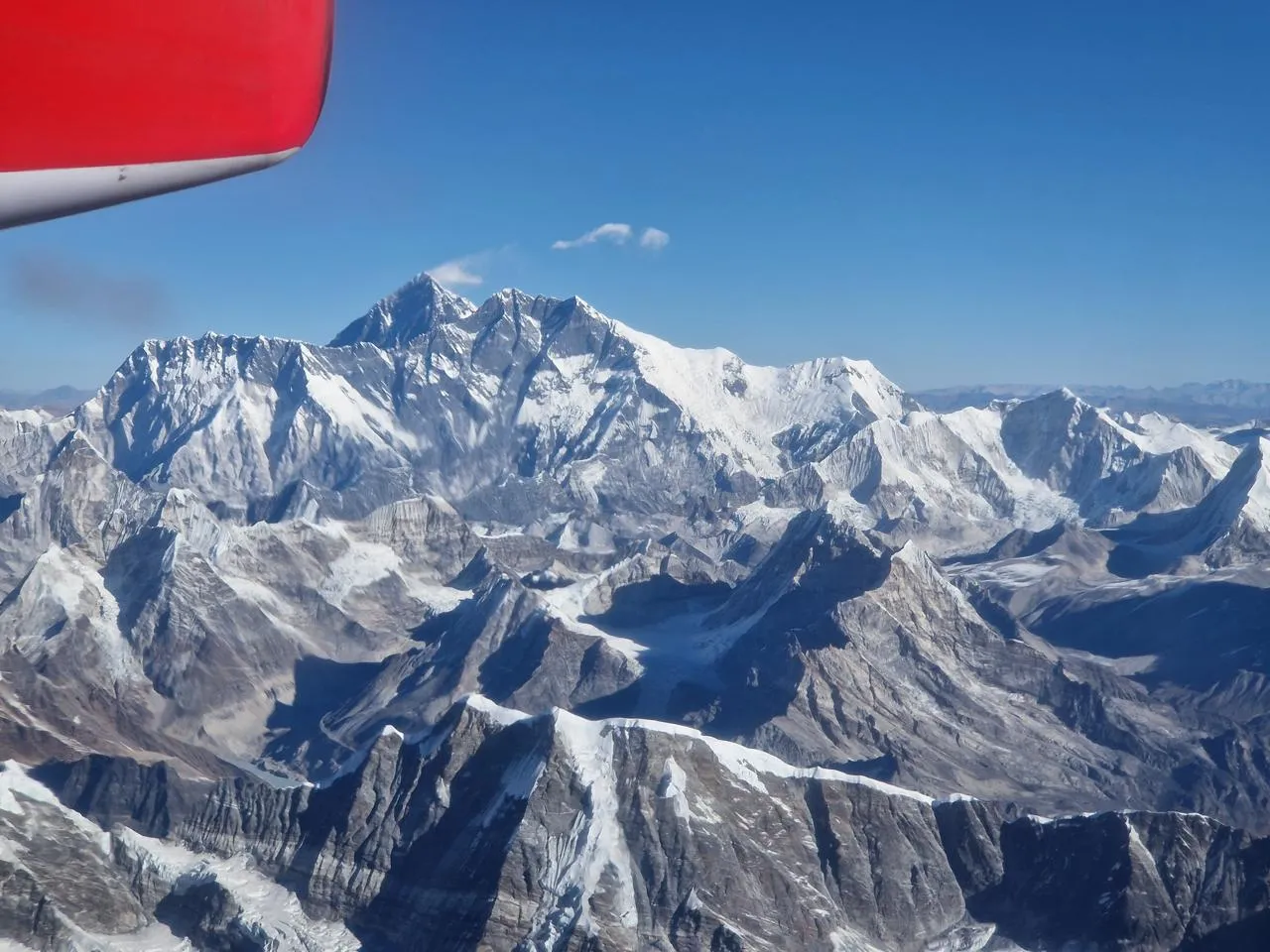
Some journeys permanently change the way you see the world. Sitting beside a wide aircraft window as the Himalayan horizon unfolds — peak after snowcapped peak rising from the clouds — and then watching Mount Everest fill the glass in front of you is one of those moments.
The Everest Mountain Flight from Kathmandu is Nepal's most iconic aerial experience. In just one hour, it delivers what trekkers spend weeks reaching — an unobstructed, face-to-face view of Everest and the surrounding 8,000-metre giants. Every passenger gets a guaranteed window seat. The pilot invites you to the cockpit. A peak identification map is handed to you before takeoff.
For travelers short on time, for families, for photographers chasing that perfect Himalayan light, and for anyone who has dreamed of looking Everest directly in the eye — this Everest flight from Kathmandu is the single most efficient way to make that happen.
Everest Mountain Flight at a Glance
| Detail |
Info |
| Duration |
Approx. 1 hour |
| Departure |
Tribhuvan International Airport, Kathmandu |
| Flight Times |
6:30 AM – 8:00 AM (early morning only) |
| Price – Foreign Nationals |
USD 279 per person |
| Price – Indian & Nepali Nationals |
NPR 18,600 per person |
| Window Seat |
Guaranteed — every passenger |
| Hotel Pickup |
Included from central Kathmandu |
| Best Season |
October–May |
| Airlines |
Buddha Air, Yeti Airlines, Shree Airlines |
| Cockpit Visit |
Yes, weather & safety permitting |
| Mountain Map |
Provided in-flight |
| Airport Tax |
Not included — approx. USD 20–25 extra |
Everest Mountain Flight Price 2026
The Everest Mountain Flight price is one of the most-searched questions from travelers planning Nepal trips. Here is the complete, transparent breakdown.
Price by Nationality
| Traveler Category |
Price |
| Foreign Nationals |
USD 279 per person |
| Indian & Nepali Nationals |
NPR 18,600 per person |
What the Price Includes
- Round-trip scenic flight from Kathmandu
- Guaranteed individual window seat
- In-flight peak identification map and crew commentary
- Cockpit visit opportunity
- Hotel pickup and drop-off (select central Kathmandu hotels)
- Flight completion certificate
What Is Not Included
- Airport tax — approximately USD 20–25 for foreign nationals, payable at the airport on the day
- Travel insurance (strongly recommended for all Nepal travel)
- Guide and crew tips
- Professional in-flight video recording (offered by some airlines as an optional extra)
Why Does the Mountain Flight Price in Nepal Stay Consistent Across Airlines?
Nepal's Civil Aviation Authority (CAAN) sets regulated pricing guidelines for mountain scenic flights — which is why the Everest Mountain Flight cost stays close across Buddha Air, Yeti Airlines, and Shree Airlines. The meaningful variables are what each operator bundles: specifically whether airport tax and hotel pickup are included in the quoted price. Always confirm this when comparing mount Everest flight tour prices between providers.
Budget Reality Check: The true all-in cost for most foreign nationals — base price, airport tax, hotel transfer, and a fair crew tip — typically lands between USD 305–325. Factor this into your Nepal travel budget rather than relying on the headline price alone.
Everest Mountain Flight vs Helicopter Tour: Which Should You Choose?
This comparison ranks among the most frequent pre-booking searches and deserves a direct, honest answer.
| Factor |
Mountain Flight |
Helicopter Tour |
| Price |
USD 279/person |
USD 1,200–1,500/person |
| Duration |
~1 hour |
~4 hours |
| Altitude |
Eye-level with peaks (7,000–8,000 m) |
Lands at Kalapathar (5,545 m) |
| Passengers |
18–40 per flight |
4–5 per flight |
| Experience |
Panoramic aerial flight |
Immersive landing experience |
| Best For |
Budget-conscious, families, short visits |
Those wanting ground-level EBC access |
If budget and accessibility are the priority, the Everest Mountain Flight wins decisively — it costs approximately 80% less than a helicopter tour while delivering comparable aerial views of Everest, Lhotse, Makalu, and Cho Oyu at window level. If you want to physically land near Base Camp, experience the Khumbu glacier atmosphere, and have breakfast at the Everest View Hotel, the Everest Base Camp Helicopter Tour is a different experience at a different price. Both are worth doing if your budget allows.
What Will You See on the Everest Scenic Flight?
The flight over Mount Everest covers one of the most dramatic aerial panoramas on Earth. Here is what appears on a clear morning, peak by peak.
The Peaks You Will Identify
Mount Everest (8,849 m) — The undisputed centrepiece. On a clear morning you can trace the summit pyramid, the South Col, and the iconic snow plume blown off the apex by high-altitude jet-stream winds. The moment it fills your window is unlike anything accessible from the ground.
Lhotse (8,516 m) — The world's fourth-highest mountain, sharing Everest's upper slopes. Its sheer south face — one of the most technically demanding walls in Himalayan climbing — dominates the view to Everest's immediate right.
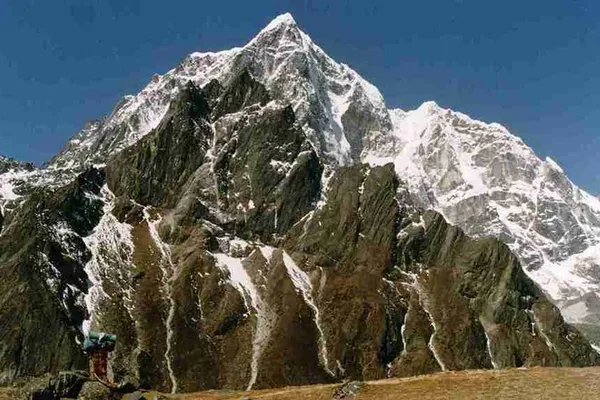
Makalu (8,485 m) — A near-perfect pyramid of dark rock and ice. Many mountaineers consider it the most aesthetically striking of the 8,000-metre peaks when viewed from the air, and the Everest scenic flight confirms why.
Cho Oyu (8,188 m) — The world's sixth-highest mountain, prominent in the western section of the Everest zone. A vast, glaciated dome that looks almost approachable from the air until you grasp its true scale.
Ama Dablam (6,812 m) — Widely called the most beautiful mountain in the Khumbu. Its distinctive twin-spired ridge is instantly recognisable and consistently the favourite subject for photographers on the mountain flight in Nepal.
Gauri Shankar (7,134 m) — A sacred twin-peaked mountain visible early in the eastward leg of the flight, with deep significance in both Hindu and Buddhist traditions across the region.
Langtang Range — Provides stunning nearer-horizon depth before the higher peaks take over. Glaciers, snowfields, and ridge lines appear at close range as the aircraft climbs and tracks east.
The In-Flight Experience
Beyond the peaks themselves, the experience is carefully structured so every passenger gets full value.
- A peak identification chart is distributed before departure — essential for first-time Himalayan viewers who want to name what they are seeing
- The crew provides live commentary identifying each mountain, its elevation, and key facts throughout the flight
- All passengers rotate to the cockpit for a direct forward view of the Himalayan wall — consistently rated the single most memorable moment of the entire Everest flight experience
- The aircraft flies at mountain level, with the peaks alongside you at eye level — not far below as on commercial airliners — which creates a genuinely different sense of scale and proximity
- Photography is actively encouraged; the guaranteed window seat ensures every traveller has a clean, unobstructed shot throughout
The Everest Mountain Flight Route
Understanding the Everest Mountain Flight route from Kathmandu helps you plan photography positioning and set accurate expectations for each stage of the flight.
Kathmandu Takeoff — The aircraft departs Tribhuvan International Airport's domestic terminal and climbs above the Kathmandu Valley. Snow-capped peaks are already visible to the north on clear mornings before the valley rim is even cleared.
Approaching the Himalayan Wall — Tracking east, the Langtang range gives way to the Rolwaling massif and then Gauri Shankar. The aircraft stays at mountain-face altitude throughout — not above, not far below, but directly alongside.
The Everest Zone — The heart of the Everest aerial tour. The turnaround point falls in the Solu-Khumbu region, where Everest, Lhotse, Makalu, Cho Oyu, and Ama Dablam appear in the same panorama simultaneously. This is what the entire flight is designed around.
Return to Kathmandu — The aircraft turns and follows the same Himalayan corridor westward, giving passengers on the opposite side of the cabin their own full-view return leg. Total flight time: approximately 60 minutes.
Best Time for the Everest Mountain Flight in Nepal
Timing is the single most consequential variable for the mountain flight in Nepal. Himalayan visibility shifts dramatically by season and by hour.
Season-by-Season Breakdown
Autumn — October & November (Best Overall) Post-monsoon skies are Nepal's clearest. The atmosphere is washed clean by the summer rains, producing sharp, high-contrast Himalayan views. This is the undisputed peak season for the Everest Mountain Flight and the period when seats fill earliest. Book at least 2–3 weeks ahead.
Spring — March to May (Excellent) Warm, stable pre-monsoon air delivers excellent morning visibility. Rhododendron forests glow red and pink in the lower valleys, adding colour and depth to the approach. Spring is the fastest-growing season for the Everest flight from Kathmandu as autumn demand intensifies on Nepal's broader trekking network.
Winter — December to February (Good with Caveats) Crisp cold air produces sharp, photogenic conditions on many mornings. Ground fog over Kathmandu can delay early departures, and peak-season crowds are absent — but schedule flexibility is essential. Worth considering if you value quieter travel and can absorb a potential rebooking day.
Monsoon — June to September (Not Recommended) Persistent cloud cover obscures the peaks on most days. Flights cancel frequently. Unless your Kathmandu dates are completely fixed, the monsoon season is not the right window for the Everest scenic flight.
The Morning Rule: All Everest Mountain Flights depart between 6:30–8:00 AM, regardless of season. Mountain weather is cleanest in the first hours after sunrise. Afternoon cloud build-up occurs even on peak-season days. The early departure is a feature, not an inconvenience — the flight is complete before 9:30 AM, leaving the rest of the day entirely free.
Everest Flight Schedule, Timing & What to Expect
| Stage |
Approximate Timing |
| Hotel Pickup |
5:30 – 6:30 AM |
| Airport Check-in |
6:00 – 7:00 AM |
| Departure |
6:30 – 8:00 AM |
| Return Landing |
7:30 – 9:00 AM |
| Hotel Drop-off |
8:00 – 9:30 AM |
Your operator confirms the exact pickup time the evening before, based on the following morning's weather forecast. Be ready at the stated time — the schedule cannot accommodate late passengers.
Weather Cancellation Policy
When the airline cancels due to poor visibility or unsafe conditions:
- Full refund if you cannot rebook within your remaining Kathmandu schedule
- Free rebooking to the next available date at no additional charge
- No financial penalty for airline-initiated cancellations
Which Airline Is Best for the Everest Mountain Flight?
Three CAAN-licensed operators run the Everest Mountain Flight from Kathmandu with strong safety records. Here is a direct comparison.
Buddha Air — Recommended for First-Timers
Nepal's most established private airline and the most consistently recommended operator for the mountain flight Nepal experience.
- Modern Beechcraft 1900D and ATR-42 fleet, purpose-configured with oversized windows for mountain viewing
- Guaranteed individual window seats — no mid-flight rotation
- Most experienced mountain commentary crew with detailed peak-by-peak narration
- Highest passenger volume and longest continuous operating record on this route
Yeti Airlines — Strong Alternative
Strong safety record and consistent positive reviews from repeat Nepal visitors.
- ATR-42 and Beechcraft 1900D configurations
- Guaranteed window seats
- Good crew commentary; slightly more personal cabin experience
- Reliable availability when Buddha Air fills during peak season
Shree Airlines — Budget-Conscious Option
Growing operator with competitive pricing and solid CAAN-certified operational standards. Less international brand recognition, but a legitimate choice if the other two are unavailable on your specific date.
Buddha Air vs Yeti Airlines: Direct Comparison
| Feature |
Buddha Air |
Yeti Airlines |
| Aircraft Type |
Beechcraft 1900D / ATR-42 |
ATR-42 / Beechcraft 1900D |
| Window Guarantee |
Yes |
Yes |
| Cockpit Visit |
Yes |
Yes |
| Commentary Quality |
Most detailed |
Good |
| Peak Season Availability |
Books fastest |
Good availability |
| Price |
USD 279 |
USD 279 |
Both airlines charge identical CAAN-regulated prices. The practical difference is commentary depth and peak-season seat availability. Book Buddha Air first; switch to Yeti if unavailable.
Is the Everest Mountain Flight Worth It?
The honest answer, based on consistent passenger feedback across thousands of completed flights: yes, clearly.
It Achieves in One Hour What Trekking Takes Two Weeks to Reach
A comparable Everest panorama by trekking requires 12–14 days minimum, solid fitness, acclimatisation time, and a budget of USD 1,200–1,800 or more. The Everest Mountain Flight delivers aerial views of the same peaks — Everest, Lhotse, Makalu, Cho Oyu — in 60 minutes from a climate-controlled cabin at a fraction of the cost.
It Opens the Himalayas to Everyone
Elderly travelers, families with young children, business visitors with a single Kathmandu morning, travelers with physical limitations that prevent high-altitude trekking — the mount Everest sightseeing flight makes the Himalayan experience genuinely accessible to people the trekking industry simply cannot serve.
Unmatched Photography Conditions
Early morning light on 8,000-metre snowfields, guaranteed window seats, eye-level mountain altitude, and cockpit access combine to create photographic conditions unavailable from any ground viewpoint in Nepal. This is why so many professional travel photographers specifically schedule a mountain flight Kathmandu stop into their Nepal assignments.
The One Honest Caveat
Weather is the only variable outside your control. The flight is transcendent on a clear autumn morning and can disappoint on an overcast winter day. The mitigation is simple: fly in October–November or March–May, take the earliest available departure, and leave one schedule buffer day for a potential weather rebooking.
How to Book Your Everest Mountain Flight
Honestly, this is the part most travelers overthink. The booking process is straightforward — but how you book matters more than most people realise, and it's worth taking two minutes to understand why.
Skip the Airline Websites. Book Through a Local Expert Instead.
You can technically book directly through Buddha Air or Yeti Airlines. But here's what that process looks like in practice: you fill out a form, wait for confirmation, coordinate your own airport transfer, figure out check-in logistics on your own, and handle any weather rebooking yourself — often while you're mid-trip and juggling other plans.
When you book through Himalayan Hero Adventures, none of that lands on your plate.
Himalayan Hero is a Kathmandu-based registered trekking and tour operator with over a decade of experience handling exactly this kind of logistics for international travellers. Their team knows which airline has availability on your specific date, which aircraft configuration gives you the best window experience, and what the weather window looks like for your travel period. That's not something a self-service airline booking page can offer you.
What Booking Through Himalayan Hero Actually Looks Like
You reach out — by email, WhatsApp, or through their website — and tell them your travel dates and group size. That's genuinely all they need to get started.
From there, they handle the airline confirmation, lock in your guaranteed window seats, arrange hotel pickup from your Kathmandu accommodation, and send you a clear confirmation with everything you need for the day of the flight. If weather causes a cancellation — which does happen, particularly in winter — their team proactively manages the rebooking for you rather than leaving you to chase the airline independently.
For solo travellers, the peace of mind is worth it on its own. For families or groups, it's simply the smarter way to organise a morning that you genuinely don't want to leave to chance.
What You'll Need to Provide
- Your full name as it appears on your passport
- Your nationality (this determines your pricing tier)
- Your Kathmandu hotel name and address for pickup coordination
- Your preferred travel date — and ideally one backup date if your schedule allows flexibility
Payment and Confirmation
Himalayan Hero accepts international credit and debit cards, bank transfers, and in some cases cash payment at their Kathmandu office. Confirmation is typically issued within 24 hours of booking, and your flight voucher is sent by email in advance of your departure morning.
Cancellation and Rebooking
If the airline cancels due to poor visibility or unsafe weather conditions, Himalayan Hero handles the rebooking directly with the airline on your behalf. You will be notified the evening before if conditions look doubtful, giving you time to adjust your broader day plans. No financial penalty applies for weather-initiated cancellations.
Ready to lock in your seat? Reach out to the Himalayan Hero team at himalayanhero.com or via WhatsApp at +977 980 112 7073. During October–November and March–May, seats fill fast — earlier is always better.
Travel Tips for the Everest Mountain Flight
Arrive at Pickup Time — Hotel collections begin around 5:30 AM. The schedule cannot accommodate late passengers.
Sit on the Right Side (Outbound) — On the eastward leg, the right (starboard) side of the aircraft provides the primary continuous Himalayan wall views. Ask check-in staff for starboard window seat confirmation.
Camera Preparation — Mirrorless or DSLR camera with a 50–200 mm zoom delivers the best results. For smartphones, clean the lens thoroughly and disable HDR — the peaks in direct morning light need no artificial processing. Carry a soft cloth for window condensation.
Dress in Layers — The cabin is climate-controlled, but pre-dawn Kathmandu is cold from November to February. A light insulating jacket for the drive to the airport is practical.
Motion Sickness — The flight is generally smooth, but turboprop aircraft over mountain terrain can produce brief turbulence. If you are prone to motion sickness, take medication at least 60 minutes before your pickup time.
Eat Light Before the Flight — A light snack before departure is fine. Save the full breakfast for after landing — the flight is complete before 9:30 AM, leaving the rest of the morning free.
Reserve Your Everest Mountain Flight Before Seats Close
The Everest Mountain Flight is Nepal's most accessible Himalayan experience — and one of the most genuinely moving things a traveler can do in a single morning. In one hour, from a guaranteed window seat, you will watch the world's greatest mountain range appear at eye level in golden morning light. No other Nepal experience delivers that at USD 279.
Book your Everest Mountain Flight today. Our team handles airline confirmation, hotel pickup coordination, and complete weather rebooking support if conditions require it. Whether you have three days or three weeks in Nepal, this is the one morning worth protecting.
Ready to go further? Explore our Everest Base Camp Helicopter Tour for a landing experience at 5,545 m, or start planning the full journey with our Everest Base Camp Trek by Road guide.