Timing is everything on the Annapurna Circuit. Trek in the wrong season and you face washed-out trails, closed passes, and zero visibility at the viewpoints you travelled halfway around the world to see. Trek in the right season and the Himalayas deliver exactly what you came for.
The Annapurna Circuit is a 160–230 km loop through one of the most diverse trekking landscapes on Earth — subtropical forest, river gorges, high-altitude desert, and the 5,416m Thorong La Pass. Each of those environments responds differently to the weather. Understanding the seasons is not optional preparation — it is the foundation of a successful trek.
- Best overall seasons: Spring (March–May) and Autumn (September–November)
- Best single month: October — stable weather, crystal visibility, ideal temperatures
- Months to avoid: June, July, August — full monsoon, landslide risk, trail closures
- Winter (December–February): Possible but challenging — Thorong La may close with snow
This guide breaks down every season, every key month, and the exact weather conditions you can expect at each stage of the Annapurna Circuit — so you can plan your trek with complete confidence.
Best Time to Trek Annapurna Circuit: Quick Answer
The best time to hike the Annapurna Circuit is October and November in autumn, and March and April in spring.
Both windows offer stable weather, clear mountain views, and safe Thorong La Pass conditions. Autumn is slightly preferred by experienced trekkers for its post-monsoon clarity. Spring is preferred by those who want warmer temperatures and rhododendron colour in the lower sections.
- October: Single best month — clear skies, optimal temperature range, firm trails
- November: Quieter than October, colder nights, still excellent conditions
- April: Best spring month — warming temperatures, rhododendrons in bloom
- March: Good conditions developing — slightly colder, fewer crowds than April
If you have one chance to trek the Annapurna Circuit and flexibility in your dates, book October or April. Both will give you the experience that the route is capable of delivering at its best.
Annapurna Circuit Weather Overview
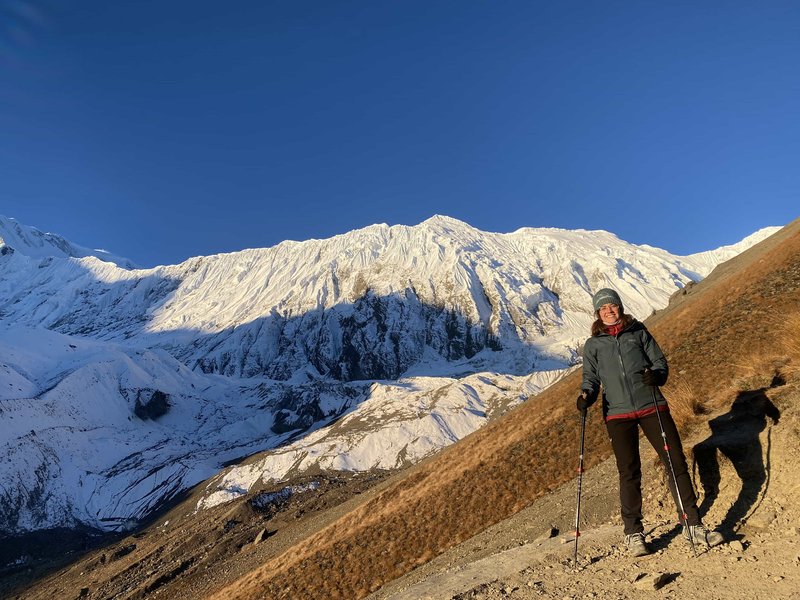
The Annapurna Circuit covers an extraordinary altitude range — from around 800m at Besisahar to 5,416m at Thorong La. This means the weather is not uniform across the trek. What you experience in the subtropical lower valleys is completely different from conditions above 4,000m.
At lower altitudes (800m–2,000m), the climate is warm and humid in summer, pleasant in spring and autumn, and cool in winter. Above 3,000m — particularly around Manang (3,519m) and above — temperatures drop sharply, weather windows narrow, and the impact of the high-altitude jet stream becomes a real factor.
- Lower circuit (below 2,000m): Subtropical — warm, lush, significantly affected by monsoon
- Mid circuit (2,000m–4,000m): Alpine — pleasant in spring/autumn, cold in winter, wet in monsoon
- High circuit (above 4,000m): High altitude — cold year-round, snow possible any month, wind is significant
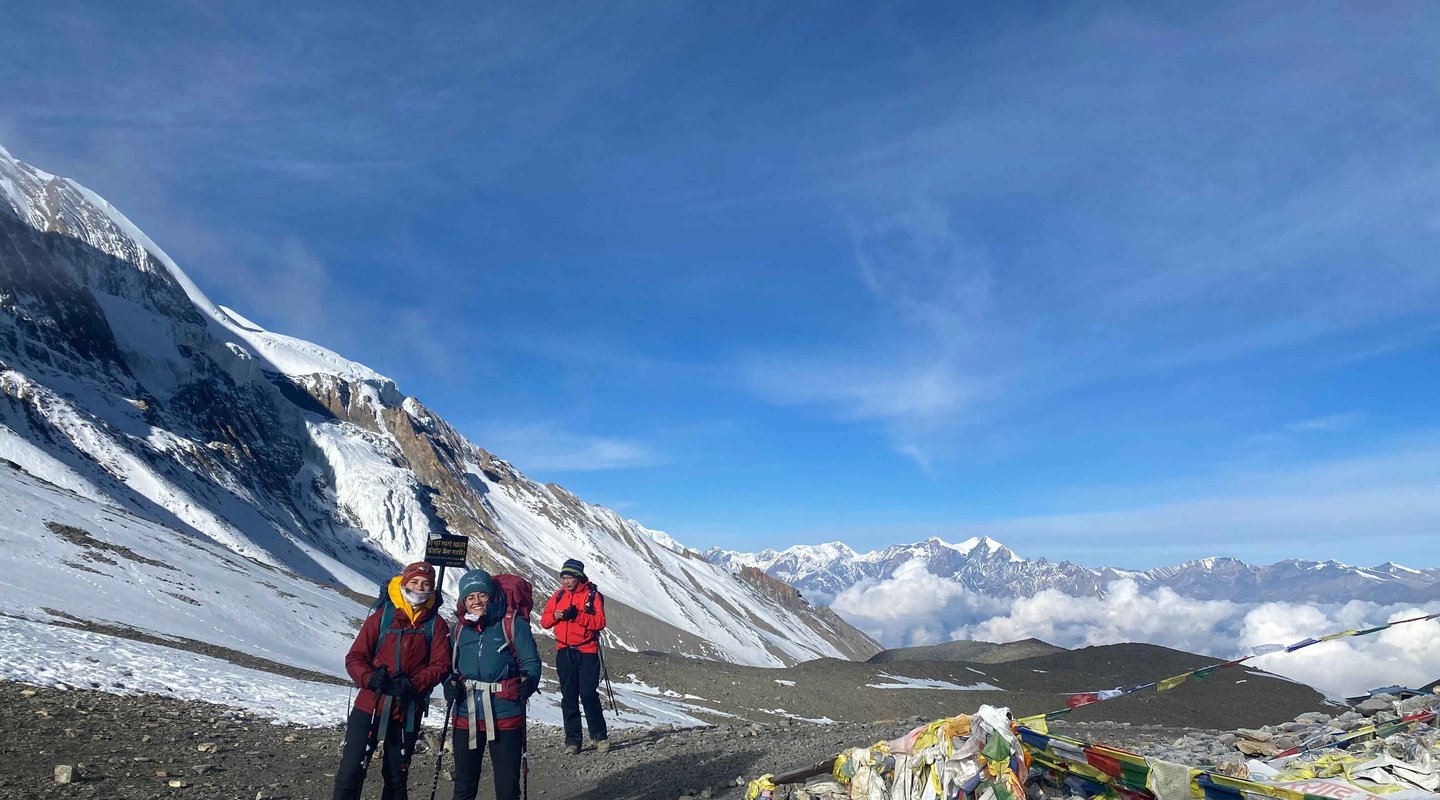
- Thorong La Pass (5,416m): Weather-dependent — can close without warning in winter or unseasonal snowfall
The Annapurna Circuit temperature varies enormously by altitude and season. In Manang in October, expect daytime temperatures of 8°C–14°C and nights of -5°C to -10°C. The same location in January sees daytime temperatures of 0°C–5°C and nights well below -15°C.
Seasonal Breakdown: When to Hike the Annapurna Circuit
🌸 Spring (March–May) — Warmth, Colour, and Clear Passes
Spring is the first peak season for Annapurna Circuit trekking. As temperatures rise from February lows, the trail comes alive — rhododendron forests below Manang bloom in vivid red and pink from March into April, and the mountains emerge from winter with sharp, photogenic clarity.
March is the start of the spring window. Conditions are good but not yet optimal — the higher sections can still see overnight snow, and mornings at Thorong La are cold. Trekkers who want spring conditions with fewer crowds often choose March for exactly this reason.
- Annapurna Circuit temperature in March: 5°C–15°C at mid-altitude (Manang range), -5°C to 5°C at night
- Thorong La Pass in March: Open but cold — early morning crossing recommended
- Rhododendrons: Beginning to bloom from lower sections upward through March
- Crowd levels: Low to moderate — noticeably quieter than April
April is the sweet spot of spring. Temperatures are warmer, the rhododendron bloom is at its peak in the mid-altitude sections, and the weather pattern is at its most stable before the pre-monsoon heat builds in May. This is one of the two best months of the year for the full Annapurna Circuit experience.
- April temperature at Manang: 10°C–18°C daytime, -3°C to 5°C at night
- Visibility: Excellent — morning views of Annapurna II, III, and Gangapurna are outstanding
- Trail conditions: Firm and well-maintained throughout
- Crowd levels: High — book teahouses in advance, especially around Thorong La
May marks the tail end of spring. The lower sections become warmer, and the pre-monsoon haze starts to build in the afternoons. The higher sections are still excellent. May is a good option for trekkers who want spring conditions with slightly reduced crowds and warmer overnight temperatures.
- May lower circuit temperatures: 18°C–25°C — warm but manageable
- High pass conditions: Still good, but afternoon weather can build quickly
- Monsoon arrival: Usually hits Nepal in early to mid-June — May departure gives a comfortable buffer
🍂 Autumn (September–November) — The Gold Standard Season
Autumn is the best overall season for Annapurna Circuit trekking — and October is widely considered the single best month of the year for any major Nepal trek.
The monsoon exits Nepal in mid to late September, leaving behind an atmosphere that has been washed completely clean. The result is visibility that trekkers describe as extraordinary — mountains that appear closer and sharper than at any other time of year, skies of a deep, clear blue that photographers travel specifically to capture.
- September: Transition month — conditions improving rapidly from mid-September
- Early September: Some residual monsoon moisture, trails drying out, crowds minimal
- Late September: Conditions excellent — a genuinely underrated trekking window
October is the benchmark month. Stable high-pressure weather dominates, Thorong La is reliably open, and temperatures across the circuit are close to ideal — warm enough for comfort during the day, cold enough to feel the high-altitude environment at night.
- Annapurna Circuit temperature in October: 10°C–20°C at mid-altitude, -5°C to 0°C at night above 4,000m
- Manang temperature in October: 8°C–14°C daytime, -8°C to -5°C at night
- Thorong La conditions: Stable and well-travelled — crossing is reliable in the early morning window
- Crowd levels: Peak season — teahouses fill fast, especially around Thorong La and Manang
November brings the post-October quiet. Temperatures drop progressively, particularly at altitude, but the weather remains stable and the mountain visibility is still excellent. The lower sections are noticeably cooler and the high passes see the first seasonal snow accumulation toward late November.
- November temperature at Manang: 2°C–10°C daytime, -12°C to -8°C at night
- Thorong La in November: Open through most of the month — close monitoring needed in late November
- Crowds: Significantly fewer than October — a strong choice for experienced trekkers
❄️ Winter (December–February) — For the Experienced and Well-Equipped
Winter trekking on the Annapurna Circuit is not recommended for first-timers. Thorong La Pass reaches 5,416m, and in heavy snowfall conditions, it becomes impassable without mountaineering equipment. Several teahouses above Manang close entirely for the season.
That said, winter has a dedicated following among experienced trekkers who want solitude and clear skies. The lower sections of the circuit — below 3,000m — can be very pleasant in December and January, with cool, dry air and almost no other trekkers.
- December temperatures at Manang: 0°C–5°C daytime, -15°C to -20°C at night
- January–February: Coldest months — severe cold above 4,000m, potential for frostbite without proper gear
- Thorong La: Risk of full closure — always check current conditions before attempting
- Teahouse availability: Limited above Manang — confirm bookings before departure
Winter is a viable option for the lower circuit sections only — Besisahar to Manang and below. Attempting the full circuit, including Thorong La in January or February, requires experienced winter mountaineering judgment and should not be undertaken lightly.
🌧️ Monsoon (June–August) — The Season to Avoid
The Annapurna Circuit in the monsoon season is a fundamentally different experience — and not in a good way for most trekkers. The Annapurna region receives heavy monsoon rainfall from June through August, and the consequences for trail conditions are significant.
The Annapurna Circuit in June sees daily rainfall, particularly in the afternoon. Landslides are common on the lower sections. Leeches appear below 2,000m. Visibility at key viewpoints is frequently obscured by cloud for days at a time. Thorong La can be crossable in early morning windows, but the risk profile is higher than any other season.
- Annapurna Circuit in June: Heavy rainfall below 3,000m, mist and cloud at higher altitudes
- Landslide risk: Elevated on lower sections — trail closures possible without warning
- Leeches: Common below 2,000m — an unavoidable part of the lower trail experience in the monsoon
- Visibility at viewpoints: Frequently poor — Thorong La views often obscured
- Crowds: Minimal — teahouses are quiet and some may close
The upper sections above 3,000m — particularly the Manang Valley and high-altitude zones — sit in a partial rain shadow during monsoon and can be surprisingly dry. Experienced trekkers who want an off-season experience with maximum solitude sometimes trek the upper circuit in July or August specifically for this reason.
For most trekkers, however, the monsoon is the season to reschedule rather than endure.
Weather by Region: Key Altitude Points on the Circuit
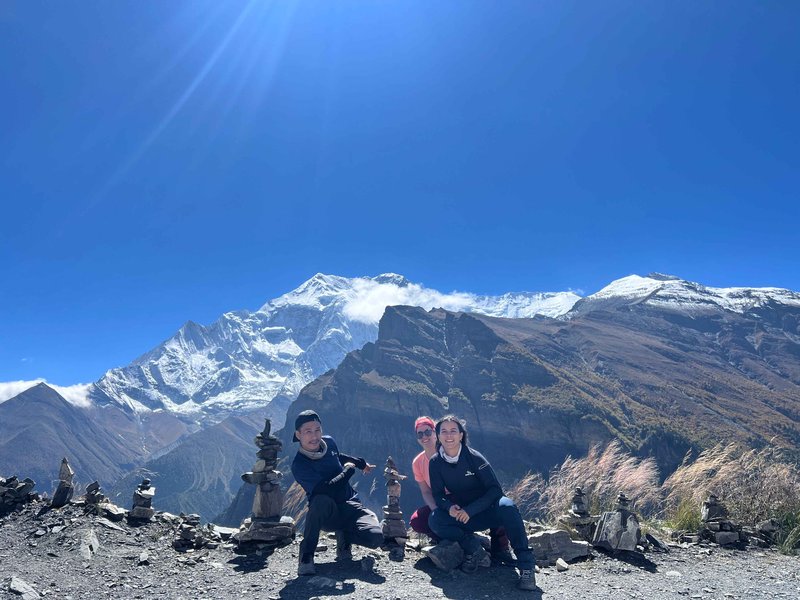
Understanding how weather varies between key stopping points helps you pack correctly and set realistic daily expectations.
Manang (3,519m) — Acclimatisation Hub Manang sits in the upper Marsyangdi Valley in the rain shadow of the Annapurna massif. In October, daytime temperatures reach 8°C–14°C with nights dropping to -8°C. In March, expect 4°C–10°C daytime. Manang is noticeably drier than the lower circuit throughout the year — even during monsoon, it receives less rainfall than Besisahar.
Thorong La Pass (5,416m) — The High Crossing The pass is best crossed in early morning — before 10 AM in every season — when wind is lighter and visibility is highest. In October the crossing is reliably clear. In winter the pass can receive snowfall that makes the approach trail dangerous without crampons.
Deurali and Supa Deurali (4,400m–4,850m) — The Final Approach Deurali is the last significant stop before Thorong La. Temperatures here in October drop to -10°C to -15°C overnight. Supa Deurali, where some trekkers stay for a very early pass start, is higher and colder. Wind exposure increases significantly at this elevation and proper layering is essential regardless of the season.
- Deurali temperature in October: -10°C to -15°C at night, 0°C–5°C daytime
- Supa Deurali temperature: 3°C–5°C colder than Deurali at equivalent time of day
- Wind: The single most underestimated weather factor on the approach to Thorong La
When Should You Trek? A Decision Guide
Beginners and first-time high-altitude trekkers: Choose October or April. Both offer the most stable conditions, the best teahouse availability, and the most reliable Thorong La crossing windows. The predictable weather reduces the number of variables you are managing on your first serious high-altitude experience.
Budget-conscious trekkers: March and November offer near-peak conditions at lower crowd levels — which means slightly better teahouse negotiating room and a less congested experience at viewpoints. The cost difference between peak and shoulder season on the Annapurna Circuit is modest but real.
Adventure and solitude seekers: Late September is one of the best-kept secrets on the circuit. The trail is drying from the monsoon, the crowds have not yet arrived, and the post-rain clarity on the mountains can be extraordinary. Requires flexibility — conditions can vary significantly week to week in September.
Experienced winter trekkers: February is the most viable winter month — temperatures are beginning to recover, and the pass is typically accessible with proper gear. Full winter trekking above 4,000m requires cold-weather experience, the right equipment, and a confirmed guide.
Is March a Good Time to Trek the Annapurna Circuit?
Yes — March is a good time to hike the Annapurna Circuit, and it is specifically a strong choice for trekkers who want spring conditions without the April crowd levels.
Thorong La is reliably open in March, though morning temperatures at the pass can be -15°C or colder. The rhododendron forests between Besisahar and Chame begin blooming from mid-March upward. Visibility in March is generally excellent — the air has not yet developed the pre-monsoon haze that appears in May.
- March Annapurna Circuit temperature at Manang: 4°C–10°C daytime, -10°C to -5°C at night
- Thorong La in March: Open — cross before 10 AM, carry appropriate cold-weather layers
- Is March a good time to visit Nepal for Annapurna? Yes, particularly for trekkers seeking quiet trails
- Crowds: Noticeably lower than April — most teahouses have availability without booking
- Trail conditions: Some ice possible on the high sections in early March — microspikes useful
If your only available window is March, take it. It is a genuine trekking season — not a compromise.
Tips for Choosing the Right Season
The most common mistake trekkers make is choosing a season based on weather alone. The right season is the intersection of weather, crowd tolerance, budget, experience level, and personal goals.
If you want the best mountain views with maximum comfort, choose October. If you want solitude and are willing to accept colder nights, choose November or March. If budget is the primary driver, late September and early November offer shoulder-season value with near-peak conditions.
- Weather vs crowds: October gives the best weather but the most trekkers — a trade-off worth considering
- Cost vs experience: Shoulder months (March, November) offer similar quality at lower pressure
- First-time trekkers: Prioritise weather predictability over crowd avoidance — October or April
- Photography focus: October morning light on the Annapurna massif is world-class
Pack for the season you are entering, not the season you left behind. Even in April, nights above 4,000m require a -10°C sleeping bag and a proper layering system. Even in October, the Thorong La crossing at 5:00 AM requires windproof outer layers and warm gloves.
Conclusion: Plan Your Annapurna Circuit Around Your Goals
The best time for the Annapurna Circuit trek is not a single date on a calendar — it is the intersection of your schedule, your experience level, and what you want the trek to feel like.
October delivers the full Annapurna Circuit experience as close to perfect as weather allows. April delivers the same experience with colour, warmth, and a slightly different energy. March and November are strong alternatives for those who value quiet trails. Monsoon is for the very experienced and very flexible.
Whatever season you choose — go prepared, go with a licensed guide, and give the route the time it deserves. The Annapurna Circuit is one of the great long-distance treks on Earth. The right season is what lets it show you why.
👉 Ready to plan your trek? Read our complete Annapurna Circuit Trek guide for the full route, itinerary, and everything you need to book your 2026 departure.