What is the cheapest trek in Nepal? If you're a budget traveler, backpacker, or student dreaming of Himalayan adventure without draining your savings, the answer might surprise you.
The Poon Hill Trek consistently ranks as Nepal's most affordable trekking experience, with total costs as low as $200–350 for a complete 4–5 day adventure. That's roughly $40–70 per day including permits, accommodation, meals, and transport.
But Poon Hill isn't your only option. Nepal offers dozens of budget-friendly treks where you can experience world-class mountain scenery for less than you'd spend on a weekend city break back home.
This guide breaks down the most affordable trekking routes in Nepal, comparing costs, difficulty levels, and value for money. Whether you're a first-time trekker or an experienced hiker watching your wallet, you'll find the perfect budget adventure here.
Nepal remains one of the world's cheapest destinations for high-altitude trekking. The combination of affordable teahouse accommodation, inexpensive local food, and accessible trails makes Himalayan adventure surprisingly attainable.
Let's explore your options.
What Makes a Trek Cheap in Nepal?
Before diving into specific routes, understanding what drives trekking costs helps you make smarter budget decisions.
Permit Costs Vary Dramatically
Nepal's permit system creates significant cost differences between regions.
Budget-friendly permits:
- TIMS Card: $20 (required for most treks)
- Annapurna Conservation Area Permit (ACAP): $30
- Langtang National Park Permit: $30
Expensive restricted area permits:
- Manaslu: $100+ per week
- Upper Mustang: $50 per day
- Dolpo: $500 for 10 days
Sticking to non-restricted areas immediately slashes your budget.
Teahouse Trekking Keeps Costs Low
Nepal's teahouse system is a budget traveler's dream. These family-run lodges along trekking routes offer:
- Basic rooms: $3–8 per night
- Meals: $4–8 each
- Hot showers: $2–4
- Charging facilities: $1–3
You don't need camping gear, cooking equipment, or expensive guided expeditions. The infrastructure exists to trek independently and affordably.
Transportation Accessibility Matters
Treks starting closer to Kathmandu or Pokhara cost less to reach.
Budget transport examples:
- Kathmandu to Syabrubesi (Langtang): $15–20 by local bus
- Pokhara to Nayapul (Poon Hill/ABC): $5–10 by local bus
- Kathmandu to Salleri (Pikey Peak): $20–25 by local bus
Expensive transport:
- Lukla flights (EBC): $350–450 return
- Chartered jeeps to remote trailheads: $150–300
Avoiding flights dramatically reduces your total budget.
Guide Requirements Impact Cost
Since April 2023, Nepal requires licensed guides for foreign trekkers. However, enforcement varies by region, and guide costs differ significantly.
Budget guide options:
- Group treks sharing guide costs: $15–25/day per person
- Basic licensed guide only: $25–35/day
- Joining agency group departures: Often includes guide in package
Solo independent trekking is technically prohibited, but many budget travelers join informal groups to share guide expenses.
Top Cheapest Treks in Nepal
Poon Hill Trek: Nepal's Most Affordable Classic
The Poon Hill Trek delivers iconic Himalayan sunrise views at the lowest possible cost. This is the cheapest trek in Nepal for beginners who want a genuine mountain experience.
Quick Facts:
- Duration: 4–5 days
- Difficulty: Easy to moderate
- Highest point: 3,210m (Poon Hill viewpoint)
- Daily cost: $25–40
Why It's Affordable:
Poon Hill benefits from excellent infrastructure and easy access. The trail starts just two hours from Pokhara by local bus. Well-established teahouses compete for business, keeping prices reasonable.
Permits cost only $50 total (TIMS + ACAP). No expensive flights required. The short duration means fewer days of expenses.
Cost Breakdown (5 days):
- Permits: $50
- Transport (Pokhara–Nayapul return): $15
- Accommodation: $25–40 (5 nights)
- Food: $60–80
- Guide (shared): $50–75
- Total: $200–260
Who It's Best For:
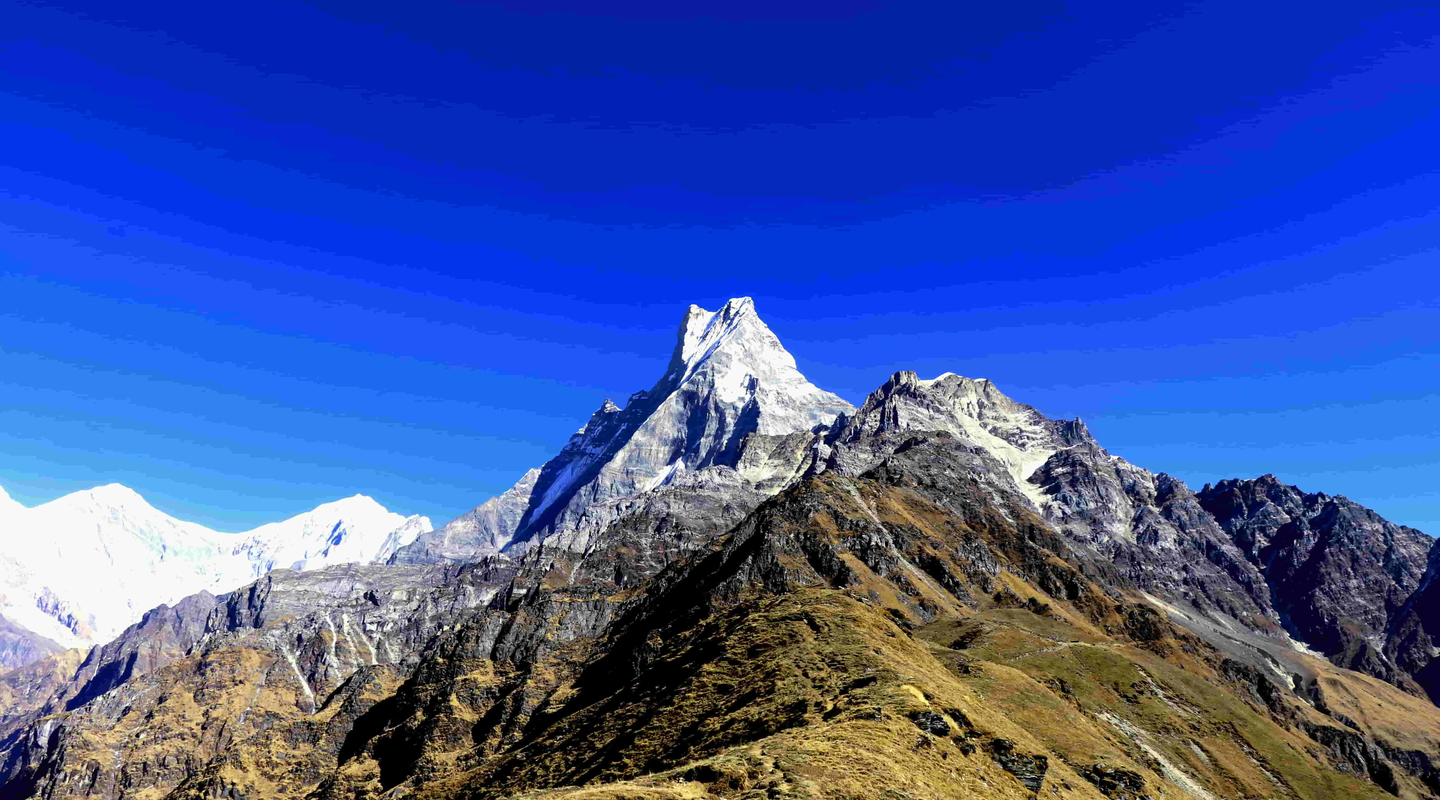
First-time trekkers, families with older children, travelers with limited time, and anyone wanting maximum mountain views with minimum investment. The sunrise panorama from Poon Hill includes Dhaulagiri, Annapurna South, and Machhapuchhre—worth every rupee.
Mardi Himal Trek: Best Value Hidden Gem
The Mardi Himal Trek has exploded in popularity for good reason. It offers Annapurna views rivaling expensive routes at a fraction of the cost.
Quick Facts:
- Duration: 5–7 days
- Difficulty: Moderate
- Highest point: 4,500m (Mardi Himal Base Camp)
- Daily cost: $30–45
Why It's Affordable:
Mardi Himal uses the same permit system as Poon Hill ($50 total) but delivers higher altitude adventure. The trailhead at Kande is just 45 minutes from Pokhara.
Teahouses are simpler than on mainstream routes, but this keeps prices lower. Fewer trekkers mean less commercialisation and more authentic pricing.
Cost Breakdown (6 days):
- Permits: $50
- Transport: $15
- Accommodation: $30–50
- Food: $75–100
- Guide (shared): $60–90
- Total: $230–305
Who It's Best For:
Budget travelers wanting more challenge than Poon Hill without the crowds of Annapurna Base Camp. The ridge walk to High Camp offers some of Nepal's most dramatic scenery. Social media has discovered Mardi Himal, but it remains significantly cheaper than mainstream alternatives.
Pikey Peak Trek: Everest Views Without Everest Prices
ThePikey Peak Trek delivers the Everest experience at a fraction of EBC's cost. Sir Edmund Hillary called this his favourite view of Everest.
Quick Facts:
- Duration: 6–8 days
- Difficulty: Moderate
- Highest point: 4,065m (Pikey Peak)
- Daily cost: $30–40
Why It's Affordable:
No Lukla flights. That single factor saves $350–450 compared to traditional Everest region treks. The trek starts from Salleri, reachable by $20 local bus from Kathmandu.
Permit costs remain low (TIMS + local fees around $45). Teahouse infrastructure exists but isn't overdeveloped, keeping prices honest.
Cost Breakdown (7 days):
- Permits: $45
- Transport: $40 return
- Accommodation: $35–55
- Food: $85–110
- Guide (shared): $70–100
- Total: $275–350
Who It's Best For:
Trekkers who want Everest region authenticity without Everest region prices. Pikey Peak suits those who value uncrowded trails and genuine village experiences over famous base camp selfies. The sunrise view of Everest, Lhotse, and Makalu is genuinely world-class.
Langtang Valley Trek: Best Budget Multi-Day Adventure
Among all Himalayan routes, the Langtang Valley Trek stands out as one of the most affordable multi-day treks near Kathmandu. Located inside Langtang National Park, this trek offers mountain scenery, cultural villages, and alpine landscapes without expensive domestic flights.
Unlike Everest Base Camp or Annapurna Circuit, Langtang is accessible by road, making it a top choice for budget travelers.
Langtang Valley Trek Cost Breakdown (Independent Trekker)
If you are planning independently, here is an estimated cost range:
- Park Permit: $30–40
- Transportation (Kathmandu–Syabrubesi): $15–25
- Accommodation: $10–15 per night
- Food: $15–25 per day
- Guide (mandatory for foreigners): $25–35 per day
👉 Estimated Total Cost: $400–700
Langtang Valley Trek Cost for Nepali Trekkers
For Nepali citizens:
- Lower national park entry fee
- No TIMS requirement
- Cheaper transport options
👉 Estimated Cost: NPR 15,000–30,000 depending on comfort level.
Want a Complete Itinerary?
If you prefer a fully organized trip with guide, permits, and accommodation arranged, explore our detailed Langtang Valley Trek 8 Days package here.
Annapurna Base Camp Trek: Budget Perspective
The classic Annapurna Base Camp Trek can be done affordably with smart planning, though it's not the absolute cheapest option.
Quick Facts:
- Duration: 10–14 days
- Difficulty: Moderate to challenging
- Highest point: 4,130m (Annapurna Base Camp)
- Daily cost: $35–50
Why It's Relatively Affordable:
Same low permit costs as Poon Hill ($50). Excellent teahouse infrastructure keeps competition healthy. No flights required—bus from Pokhara to the trailhead costs under $10.
The longer duration increases total cost, but the daily rate remains budget-friendly compared to Everest region alternatives.
Cost Breakdown (12 days):
- Permits: $50
- Transport: $20
- Accommodation: $50–80
- Food: $150–200
- Guide (shared): $120–180
- Total: $390–530
Who It's Best For:
Budget trekkers are willing to invest more time for a bucket-list destination. ABC delivers the iconic Himalayan amphitheatre experience at roughly one-third the cost of Everest Base Camp.
Cheapest Trek in Nepal for Beginners
First-time trekkers need routes balancing affordability with safety and achievable challenge. Here's how the budget options compare for beginners.
Best Beginner Choice: Poon Hill Trek
Poon Hill wins for absolute beginners. Low altitude (max 3,210m) virtually eliminates altitude sickness risk. Well-marked trails and abundant teahouses mean you're never far from help.
The 4–5 day duration lets you test your trekking legs without major commitment. If you love it, you can extend to Ghorepani-Tadapani or plan a longer trek next time.
Step-Up Option: Mardi Himal Trek
For beginners with reasonable fitness who want more challenge, Mardi Himal delivers altitude experience (4,500m) on a budget. The shorter duration compared to ABC reduces risk while building confidence.
Mardi requires more fitness than Poon Hill but doesn't demand prior trekking experience.
Consider Your Priorities
Choose Poon Hill if:
- You've never trekked before
- You're nervous about altitude
- You have limited time (4–5 days)
- Budget is your primary concern
Choose Mardi Himal if:
- You're fit but new to trekking
- You want higher altitude experience
- You prefer fewer crowds
- You have 5–7 days available
Choose Langtang if:
- You want longer adventure (7–10 days)
- You value cultural immersion
- You don't mind moderate difficulty
- You want the cheapest multi-day option
Underrated Treks in Nepal That Are Surprisingly Cheap
Beyond the popular routes, several lesser-known treks offer exceptional value.
Helambu Trek
Just north of Kathmandu, Helambu offers Sherpa culture and mountain views without the crowds. Total costs can stay under $250 for 5–6 days.
The trail starts from Sundarijal, reachable by local bus from Kathmandu ($3). Permits cost only $30. Simple teahouses keep accommodation affordable.
Khopra Ridge Trek
This Annapurna region alternative visits the sacred Khayer Lake and offers views of 23 Himalayan peaks. Same low permits as Poon Hill, but dramatically fewer trekkers.
Community-owned lodges keep profits local and prices fair. Budget $35–45 per day for a genuine hidden gem experience.
Mohare Danda Trek
Nepal's first official "eco-trek" combines sustainability with affordability. The community-run lodges charge standardised rates, eliminating price gouging.
The trail connects to Poon Hill but sees a fraction of the traffic. Perfect for budget trekkers who value responsible tourism.
Tamang Heritage Trail
ThisLangtang region alternative focuses on the Tamang culture through traditional villages. Homestay accommodation keeps costs exceptionally low—often $15–25 per day, including meals.
The 5–7 day trek combines cultural immersion with mountain scenery at prices that feel almost too good.
Langtang Trek Cost Breakdown
Since Langtang represents the best value multi-day budget trek, here's a detailed Langtang trek cost analysis.
Permits: $50 Total
- Langtang National Park Entry: $30
- TIMS Card: $20
These are the only mandatory permits. No restricted area fees or conservation levies.
Transport: $30–50 Return
- Kathmandu to Syabrubesi by local bus: $15–20 (7–8 hours)
- Return journey same cost
- Private jeep option: $150–200 (for groups)
Local buses depart early morning from Machhapokhari, Kathmandu. Book through your hotel or show up at 6 AM.
Accommodation: $35–60 for 8 Nights
Teahouse rooms in Langtang range from:
- Basic twin room: $3–5 per night
- Better room with attached bathroom: $8–12
- Peak season premium: 20–30% increase
Many teahouses offer free rooms if you eat meals there. Always negotiate.
Food: $100–140 for 8 Days
Expect to pay:
- Breakfast: $4–6 (porridge, eggs, toast, tea)
- Lunch: $5–8 (dal bhat, noodles, fried rice)
- Dinner: $6–10 (dal bhat, momos, pasta)
- Snacks and drinks: $3–5 daily
Prices increase with altitude. Kyanjin Gompa costs more than Lama Hotel.
Guide Cost: $80–120 Shared
A licensed guide for 8 days costs approximately $25–35 per day. Split between 2–4 trekkers, your share becomes $80–120.
Some budget travelers find guides in Thamel willing to negotiate lower rates for basic services.
Porter (Optional): $60–90
If you prefer not to carry your own pack:
- Porter rate: $20–25 per day
- Tip: $10–15 total
- Your share (if splitting): $60–90
Most budget trekkers carry their own packs to save money.
Total Langtang Trek Cost
Budget option (8 days): $300–400 Comfortable budget (8 days): $400–500
This makes Langtang one of the most affordable week-plus adventures in the Himalayas.
How Much Does Hiking in Nepal Cost?
This question appears constantly in travel forums. Here's the honest answer.
Daily Trekking Costs
Ultra-budget: $25–35/day
- Cheapest teahouses
- Basic dal bhat meals
- Shared guide
- No porter
Comfortable budget: $40–55/day
- Mid-range teahouses
- Varied menu choices
- Professional guide
- Optional porter for difficult sections
Mid-range: $60–100/day
- Best available accommodation
- Full meal variety
- Private guide
- Porter included
Luxury: $150–300+/day
- Premium lodges (Yeti Mountain Home, etc.)
- Western-style meals
- Private guide and porter
- Helicopter options
Which Trek Is Best for Beginners in Nepal?
For absolute beginners, Poon Hill offers the gentlest introduction. Low altitude, short duration, and excellent infrastructure create a forgiving environment for first-timers.
For fit beginners seeking more adventure, Mardi Himal or Langtang Valley provide higher altitude experience while remaining achievable without prior trekking background.
Avoid Everest Base Camp or Annapurna Circuit for your first trek—not because they're impossible, but because cheaper, shorter treks let you test your abilities before committing to longer expeditions.
Is Trekking in Nepal Expensive Compared to Other Countries?
Absolutely not. Nepal offers some of the world's cheapest high-altitude trekking.
Comparison:
- Nepal: $30–50/day (budget)
- Peru (Inca Trail): $80–150/day
- Patagonia: $100–200/day
- Alps: $150–300/day
- Kilimanjaro: $200–400/day
Nepal's teahouse system eliminates expensive camping logistics. Local prices for food and accommodation remain genuinely affordable. The infrastructure supporting independent travel keeps costs low.
Budget-Saving Tips for Trekking in Nepal
Choose Shoulder Season
Peak seasons (October–November, March–April) bring perfect weather but higher prices. Consider:
December–February: Cold but clear. Prices drop 20–30%. Fewer crowds. Lower altitude treks remain comfortable.
May–June: Pre-monsoon warmth. Some afternoon clouds but generally good trekking. Off-peak pricing.
September: Late monsoon. Increasingly clear days. Prices haven't peaked yet.
DIY vs Agency Trekking
Agency packages include: Permits, guide, transport coordination, emergency backup.
DIY approach: Arrange permits yourself ($50–100 savings), find guides locally, book local transport.
For budget travelers, arranging your own logistics in Thamel or Pokhara typically saves 30–40% compared to online agency bookings.
Local Transport Tips
Always use local buses over tourist coaches. The difference:
- Tourist bus Kathmandu–Pokhara: $15–25
- Local bus same route: $8–12
Shared jeeps from main roads to trailheads cost less than private vehicles. Ask guesthouse owners about departure times.
Pack Smart to Reduce Costs
Rent instead of buy: Thamel offers sleeping bags ($1–2/day), down jackets ($2–3/day), and trekking poles ($1/day). For one trek, rental beats purchase.
Bring from home: Quality base layers and hiking boots. These items have poor rental options locally.
Eat like locals: Dal bhat (lentils, rice, vegetables) is always the best value meal—unlimited refills included at most teahouses. Western food costs 50–100% more.
Carry snacks: Buy chocolate, nuts, and energy bars in Kathmandu. Teahouse snack prices increase dramatically with altitude.
Negotiate Respectfully
Teahouse accommodation is often negotiable, especially:
- During the low season
- When staying multiple nights
- When committing to all meals at the lodge
A polite "Is there a better price for the room?" often yields 10–20% discounts.
Frequently Asked Questions
What is the cheapest trek in Nepal?
The Poon Hill Trek is Nepal's cheapest classic trek, costing $200–350 total for 4–5 days. Daily costs average $40–70 including permits, accommodation, food, and transport. The trek requires no flights, uses low-cost permits, and benefits from competitive teahouse pricing near Pokhara.
Which is the cheapest trek for beginners?
Poon Hill is both the cheapest and most beginner-friendly trek. The maximum altitude of 3,210m poses minimal altitude sickness risk. Well-maintained trails, abundant teahouses, and easy access from Pokhara make it ideal for first-timers on a budget.
Can you trek in Nepal without a guide?
Since April 2023, Nepal has required foreign trekkers to use licensed guides. However, enforcement varies. Budget travelers often join informal groups to share guide costs, reducing per-person expenses to $15–25 per day. Truly independent trekking is officially prohibited.
Is Annapurna Base Camp a budget trek?
ABC is relatively budget-friendly, costing $390–530 for 10–14 days ($35–50/day). It's not the cheapest option due to longer duration, but it offers excellent value compared to Everest region treks. The same low permits as Poon Hill and no flight requirements keep costs reasonable.
How much does the Langtang trek cost?
The Langtang Valley Trek costs approximately $300–500 for 7–10 days. Permits total $50, transport costs $30–50 return, and daily expenses average $30–45. It represents the best value for multi-day budget trekking, combining affordability with genuine high-altitude adventure.
What's the cheapest way to see Everest?
The Pikey Peak Trek offers Everest views for $275–350 total—roughly one-quarter the cost of Everest Base Camp. No expensive Lukla flights required. Sir Edmund Hillary called Pikey Peak his favourite Everest viewpoint.
When is the cheapest time to trek in Nepal?
December through February offers the lowest prices (20–30% below peak season). The weather is cold but clear at lower altitudes. Teahouses discount rooms to attract off-season business. May–June also offers reasonable prices before the monsoon fully arrives.
Is it cheaper to book treks in Nepal or online?
Booking locally in Kathmandu or Pokhara typically saves 30–40% compared to international online agencies. You can negotiate directly with guides, compare multiple operators, and avoid overseas middleman fees. The trade-off is less pre-trip certainty.
Conclusion
Finding the cheapest trek in Nepal doesn't mean compromising on experience. The Himalayan nation offers world-class adventure at prices that shame expensive alternatives elsewhere.
For absolute budget priority, the Poon Hill Trek delivers iconic sunrise views over Annapurna and Dhaulagiri for as little as $200–350 total. It's the perfect first trek and the most affordable introduction to Himalayan adventure.
For slightly more investment, the Mardi Himal Trek provides higher altitude experience with fewer crowds at $230–305. The Pikey Peak Trek brings Everest views without Everest prices at $275–350.
For the best value multi-day adventure, the Langtang Valley Trek offers 7–10 days of genuine high-altitude trekking for $300–500—making it possibly the best deal in Himalayan tourism.
Budget trekking in Nepal isn't about cutting corners. It's about smart choices: non-restricted areas, local transport, teahouse accommodation, and shared guide costs. The mountains don't care how much you paid to see them.
Start with Poon Hill. Fall in love with the Himalayas. Come back for more.