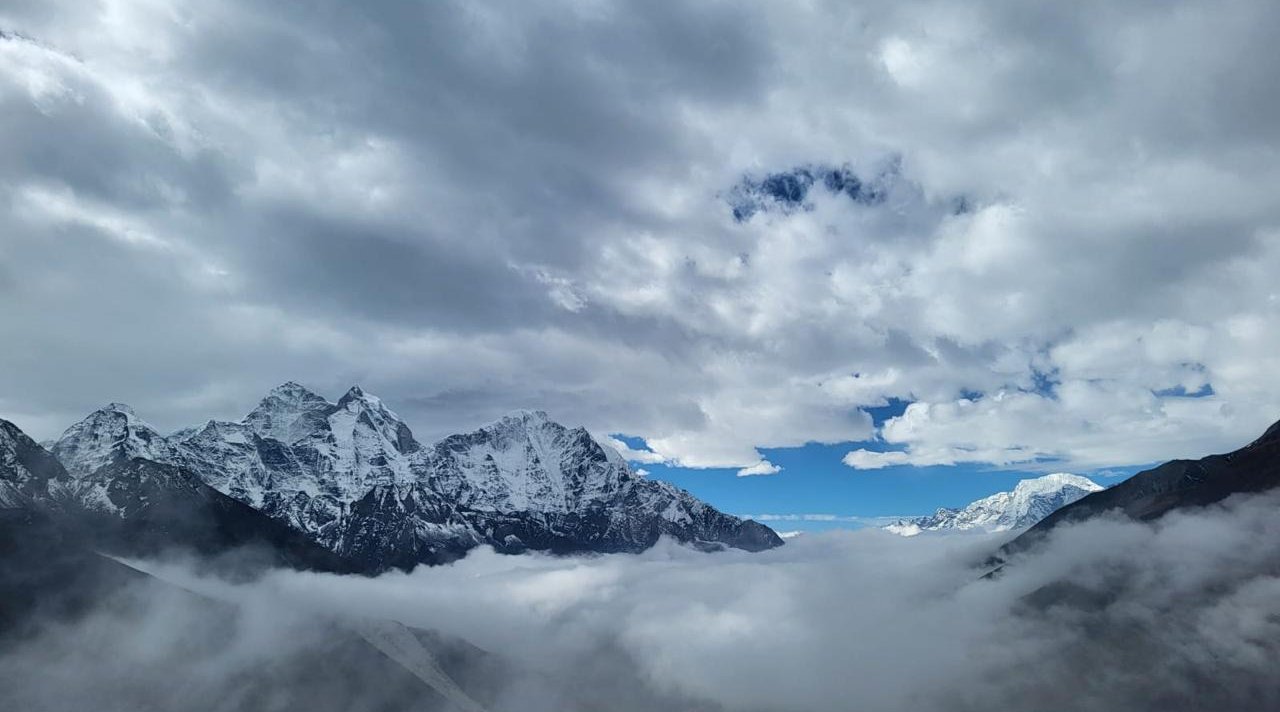
Everest Base Camp (South) in Nepal sits at exactly 5,364 meters (17,598 feet) above sea level. The Everest North Base Camp in Tibet reaches approximately 5,150 meters (16,900 feet). The Nepal side base camp represents the standard trekking destination and serves as the staging area for most Everest summit attempts.
The altitude of Everest Base Camp places it higher than the summits of most mountain ranges worldwide, including the Alps, Rockies, and Andes' lower peaks. Understanding this EBC altitude helps trekkers prepare properly for the significant physiological challenges of reaching one of Earth's highest accessible destinations.
Exact Height of Everest Base Camp (Nepal Side)
The height of Everest Base Camp on the Nepal (South) side measures precisely 5,364 meters or 17,598 feet above sea level. This elevation makes it approximately 61% of Mount Everest's total height and higher than Europe's tallest peak, Mont Blanc (4,808m).
The Everest Base Camp elevation varies slightly year to year as the Khumbu Glacier moves and shifts. However, the established measurement of 5,364 meters remains the standard reference point used by trekking agencies, mountaineers, and navigation systems.
Key Elevation Facts:
- Official height: 5,364 meters / 17,598 feet
- Location: Khumbu Glacier, Solukhumbu District, Nepal
- Coordinates: 28.0026°N, 86.8528°E
- Terrain type: Glacial moraine and rocky ground
- Percentage of Everest height: 60.6% of summit elevation
The mount everest base camp height sits in the "extreme altitude" category (above 5,500m is considered extreme, though EBC just misses this classification at 5,364m). At this elevation, atmospheric pressure drops to approximately 50% of sea level, significantly impacting oxygen availability.
Altitude Classification:
- Sea level to 2,500m: Low altitude
- 2,500m to 3,500m: Moderate altitude
- 3,500m to 5,500m: High altitude ← EBC falls here
- Above 5,500m: Extreme altitude
- Above 8,000m: Death zone
The everest base camp above sea level measurement of 5,364 meters means trekkers experience roughly half the oxygen concentration available at sea level. This dramatic reduction creates the primary challenge — shortness of breath, reduced energy, potential altitude sickness, and the need for gradual acclimatization.
Everest North Base Camp Elevation (Tibet Side)
The Everest North Base Camp elevation in Tibet reaches approximately 5,150 meters (16,900 feet) above sea level. This makes it 214 meters lower than the Nepal side base camp, though still representing an extreme high-altitude environment.
The everest base camp tibet altitude differs from the Nepal side in several significant ways. North Base Camp sits on relatively stable ground rather than a moving glacier, experiences slightly different weather patterns, and offers road access making it more easily accessible by vehicle.
North vs South Comparison:
- North (Tibet): 5,150m / 16,900 feet
- South (Nepal): 5,364m / 17,598 feet
- Difference: 214 meters / 698 feet
- Access: North = Road accessible, South = Trek only
- Location: North = Rongbuk Valley, South = Khumbu Glacier
The everest north base camp exact elevation of 5,150 meters makes it more accessible for quick visits but potentially more dangerous for altitude sickness due to rapid ascent by vehicle from lower elevations. The Nepal side's multi-day trek approach provides natural acclimatization.
Which Base Camp Is Higher?
The everest base camp south nepal elevation at 5,364 meters is definitively higher than Tibet's north camp. However, both qualify as extreme high-altitude locations requiring proper preparation, acclimatization, and respect for physiological limitations.
Everest Base Camp Height in Feet & Meters (Complete Conversion)
Understanding everest base camp height in feet alongside metric measurements helps international trekkers relate to familiar elevation references.
Primary Conversions:
- 5,364 meters = 17,598 feet (South Base Camp)
- 5,150 meters = 16,900 feet (North Base Camp)
The 5364 meters to feet conversion equals exactly 17,598 feet — significantly higher than any peak in the contiguous United States (Mount Whitney tops at 14,505 feet). This comparison helps American trekkers understand the extreme altitude they'll experience.
Comparative Heights:
- Everest Base Camp (5,364m / 17,598 ft): Your trekking destination
- Denali/Mount McKinley (6,190m / 20,310 ft): North America's highest
- Mont Blanc (4,808m / 15,777 ft): Alps highest, 556m lower than EBC
- Mount Whitney (4,421m / 14,505 ft): Lower 48 highest, 943m lower than EBC
- Kilimanjaro (5,895m / 19,341 ft): Africa's highest, 531m higher than EBC
The ebc altitude in feet of 17,598 places it above the cruising altitude of many small aircraft and well into the zone where supplemental oxygen becomes necessary for prolonged stays. Commercial aircraft cabins maintain pressure equivalent to 6,000-8,000 feet — less than half EBC's actual altitude.
How Many Feet Is Everest Base Camp?
17,598 feet — more than 3.3 miles vertically above sea level. This measurement helps visualize the extreme elevation through a familiar unit for those using imperial measurements.
How Much Elevation Gain to Reach Everest Base Camp?
The everest base camp elevation gain depends entirely on your starting point. Most trekkers begin from Lukla Airport (2,860m), creating a total elevation gain of 2,504 meters (8,216 feet) to reach base camp.
However, the everest base camp trek total elevation gain exceeds simple subtraction. The trail includes numerous descents into valleys followed by re-ascents, creating cumulative elevation gain significantly higher than the net gain.
Starting Point Altitude Breakdown:
- Lukla Airport: 2,860m (9,383 feet) — standard starting point
- Net gain to EBC: 2,504m (8,216 feet)
- Cumulative gain: ~3,500-4,000m (11,500-13,100 feet) with all ups/downs
- Trek duration: 7-9 days ascent, allowing acclimatization
Elevation Progression (Standard Route):
- Day 1: Lukla (2,860m) → Phakding (2,610m) — 250m descent
- Day 2: Phakding (2,610m) → Namche Bazaar (3,440m) — +830m gain
- Day 3: Rest day Namche (acclimatization hike to 3,880m)
- Day 4: Namche (3,440m) → Tengboche (3,860m) — +420m gain
- Day 5: Tengboche (3,860m) → Dingboche (4,410m) — +550m gain
- Day 6: Rest day Dingboche (acclimatization)
- Day 7: Dingboche (4,410m) → Lobuche (4,940m) — +530m gain
- Day 8: Lobuche (4,940m) → Gorak Shep (5,164m) — +224m gain
- Day 9: Gorak Shep → Everest Base Camp (5,364m) — +200m gain
The gradual elevation gain to everest base camp over 8-9 days represents best practice for high-altitude acclimatization. This pacing allows your body to adapt progressively, significantly reducing altitude sickness risk.
Daily Gain Guidelines:
- Safe acclimatization: 300-500m gain per day above 3,000m
- Rest days essential every 1,000m gain
- "Climb high, sleep low" principle maximizes adaptation
- EBC trek follows these guidelines closely
Oxygen Level at Everest Base Camp
The oxygen level at everest base camp drops to approximately 50% of sea level concentration. This dramatic reduction creates the primary physiological challenge trekkers face.
At 5,364 meters altitude, atmospheric pressure falls to about 540 millibars compared to 1,013 millibars at sea level. This reduced pressure means each breath delivers significantly less oxygen to your lungs and bloodstream.
Oxygen Availability by Altitude:
- Sea level (0m): 100% oxygen availability
- Namche Bazaar (3,440m): ~68% oxygen availability
- Dingboche (4,410m): ~58% oxygen availability
- Everest Base Camp (5,364m): ~50% oxygen availability
- Everest Summit (8,849m): ~33% oxygen availability
The 50% oxygen reduction at EBC altitude forces your body to work significantly harder for every activity. Simple tasks like climbing stairs or carrying a daypack become noticeably more difficult. Your breathing rate increases, heart rate elevates, and sleep quality often decreases.
Physiological Adaptations at EBC:
- Increased breathing rate (hyperventilation)
- Elevated resting heart rate
- Reduced sleep quality initially
- Decreased appetite
- Increased urination (altitude diuresis)
- Red blood cell production increases over days/weeks
Most trekkers do not require supplemental oxygen at base camp altitude. Your body naturally compensates through the adaptations listed above if given proper acclimatization time. However, individuals with pre-existing respiratory or cardiac conditions should consult physicians before attempting this altitude.
Everest Base Camp vs Mount Everest Summit Height
Understanding everest base camp vs summit height provides perspective on mountaineers' achievement reaching the top of the world.
Mount Everest Summit: 8,848.86 meters (29,031.7 feet) — official 2020 Nepal-China joint measurement
Everest Base Camp: 5,364 meters (17,598 feet)
Vertical Difference: 3,484.86 meters (11,433 feet)
The everest base camp to summit elevation gain of 3,485 meters represents more vertical distance than most mountains' total height. This massive additional elevation gain requires mountaineers to establish multiple high-altitude camps, use supplemental oxygen, and spend weeks acclimatizing.
Camp System Above Base Camp:
- Base Camp: 5,364m — trekker destination
- Camp I: 6,065m (+701m) — above Khumbu Icefall
- Camp II: 6,400m (+335m) — Western Cwm
- Camp III: 7,200m (+800m) — Lhotse Face
- Camp IV: 7,920m (+720m) — South Col, "Death Zone" begins
- Summit: 8,849m (+929m) — final push
How High Is Everest Base Camp Compared to Summit?
Base camp represents 60.6% of Everest's total height. While trekkers achieve a remarkable altitude reaching EBC, climbers must tackle an additional 39.4% vertical distance — the most technically difficult and dangerous section.
The height of everest base camp at 5,364 meters already exceeds the altitude where most humans can survive indefinitely. Above 8,000 meters (the "death zone" beginning at Camp IV), human bodies deteriorate rather than acclimatize, making summit attempts a race against physiological decline.
Why Elevation Matters for Trekkers
Understanding what altitude is everest base camp goes beyond trivia — it directly impacts trek preparation, safety, and success probability.
The everest base camp altitude of 5,364 meters creates specific physiological challenges requiring respect and preparation. Altitude sickness (Acute Mountain Sickness) can affect anyone regardless of fitness level, age, or previous experience at lower elevations.
Critical Altitude Considerations:
- Above 2,500m: Altitude effects become noticeable
- Above 3,500m: Altitude sickness risk increases significantly
- Above 5,000m: Extreme altitude requires careful monitoring
- 5,364m (EBC): Approximately 50% sea-level oxygen
Proper acclimatization through gradual ascent remains the single most important factor for reaching base camp successfully. The standard 12-14 day trek itinerary provides this gradual adaptation, with rest days strategically placed at Namche Bazaar (3,440m) and Dingboche (4,410m).
Altitude Sickness Warning Signs:
- Headache (most common symptom)
- Nausea and loss of appetite
- Dizziness and fatigue
- Difficulty sleeping
- Shortness of breath at rest
The EBC height makes these symptoms common even with proper acclimatization. Mild symptoms are normal and expected. However, severe symptoms require immediate descent to lower altitude — the only reliable cure for serious altitude sickness.
Pre-Trek Preparation:
- Cardiovascular fitness training (3-4 months minimum)
- Multi-day hiking practice with loaded pack
- Altitude exposure if accessible (train above 2,000m if possible)
- Medical consultation for anyone with heart/lung conditions
- Comprehensive travel insurance covering helicopter evacuation
Trek Distance and Duration Context
While everest base camp height meters creates the primary challenge, understanding the complete trek context helps preparation.
Standard Trek Statistics:
- Duration: 12-14 days round trip from Kathmandu
- Trekking days: 8-9 days ascent, 3-4 days descent
- Total distance: ~130km round trip (trek portion only)
- Daily walking: 4-7 hours average
- Highest sleeping altitude: Gorak Shep (5,164m)
The everest base camp elevation in meters of 5,364 represents just one data point. Success requires sustained multi-day effort at progressively higher altitudes, making overall fitness as important as altitude tolerance.
Many trekkers also climb Kala Patthar (5,545m) — a viewpoint 181 meters higher than base camp offering superior Everest views. This optional ascent adds another altitude challenge but rewards with arguably the trek's best photography opportunity.
Frequently Asked Questions About Everest Base Camp Altitude
What is the height of Everest Base Camp in meters?
Everest Base Camp (South/Nepal side) sits at exactly 5,364 meters above sea level. The North Base Camp in Tibet reaches approximately 5,150 meters. The 5,364-meter elevation places South Base Camp at roughly 60% of Mount Everest's summit height and higher than most mountain peaks worldwide.
How high is Everest Base Camp in feet?
Everest Base Camp elevation converts to 17,598 feet above sea level. This measurement exceeds the height of any peak in the contiguous United States (Mount Whitney: 14,505 feet) and approaches the altitude of Africa's Kilimanjaro (19,341 feet). At 17,598 feet, atmospheric pressure drops to approximately 50% of sea level.
How much elevation gain is there on the EBC trek?
From Lukla Airport (2,860m), trekkers gain 2,504 meters net elevation to reach base camp at 5,364m. However, cumulative elevation gain including all descents and re-ascents totals approximately 3,500-4,000 meters over 8-9 ascending days. This gradual gain over multiple days allows proper acclimatization.
What is the oxygen level at Everest Base Camp?
At 5,364 meters altitude, oxygen availability drops to approximately 50% of sea level concentration. Atmospheric pressure falls to about 540 millibars versus 1,013 at sea level. This reduced oxygen forces increased breathing rate, elevated heart rate, and requires days of acclimatization for safe adaptation.
Which Everest Base Camp is higher — Nepal or Tibet?
The Nepal (South) Base Camp at 5,364 meters is 214 meters higher than Tibet's North Base Camp at 5,150 meters. The Nepal side sits on the moving Khumbu Glacier and requires a multi-day trek to reach, while the Tibet side offers road access but less natural acclimatization opportunity.
How high is Everest Base Camp compared to the summit?
Everest Base Camp at 5,364m represents 60.6% of the summit's height (8,849m). The remaining vertical distance of 3,485 meters to the summit requires technical mountaineering, supplemental oxygen, multiple high-altitude camps, and weeks of additional acclimatization. Base camp marks where trekking ends and mountaineering begins.
Is 5,364 meters considered extreme altitude?
Technically, 5,364m falls into the "high altitude" category (3,500-5,500m). "Extreme altitude" begins above 5,500m. However, 5,364m sits at the upper edge of high altitude where approximately 50% oxygen remains available and altitude sickness can affect anyone regardless of fitness or experience.
Do I need oxygen at Everest Base Camp?
No, most trekkers do not require supplemental oxygen at base camp altitude. Your body naturally adapts if given proper acclimatization time through gradual ascent over 8-9 days. However, individuals with respiratory or cardiac conditions should consult physicians and may benefit from supplemental oxygen as a precaution.
Planning Your Trek to 5,364 Meters
Understanding the everest base camp height represents just the first step in planning your Himalayan adventure. The 5,364-meter altitude demands respect, preparation, and realistic expectations about the physical and mental challenges ahead.
Success at this extreme elevation requires:
Physical Preparation:
- 3-4 months cardiovascular training
- Multi-day hiking with weighted pack practice
- Leg strengthening for sustained uphill and downhill walking
- Mental preparation for basic lodging and simple food
Proper Acclimatization:
- Minimum 12-day itinerary from Kathmandu
- Rest days at Namche Bazaar and Dingboche
- "Climb high, sleep low" acclimatization hikes
- Slow, steady pacing especially above 4,000m
Essential Gear:
- Four-season sleeping bag (-15°C minimum rating)
- Quality trekking boots (broken in before departure)
- Layering system for extreme temperature variation
- Comprehensive first aid and altitude sickness medication
The altitude of everest base camp makes this one of Earth's highest trekkable destinations accessible without technical climbing skills. While challenging, proper preparation and gradual ascent allow most reasonably fit individuals to stand at 5,364 meters beneath the world's highest peak.
Ready to trek to 5,364 meters? Our comprehensive Everest Base Camp trek package includes experienced guides, optimal acclimatization scheduling, and professional logistics handling for safe high-altitude trekking. Learn more about our detailed EBC itinerary designed specifically for successful acclimatization to this extreme elevation.