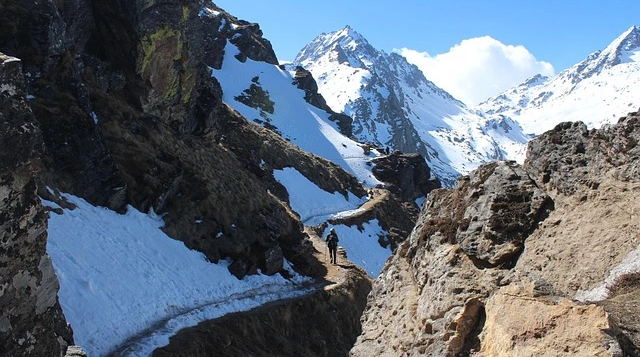
The Langtang Helambu trek itinerary presented here combines three distinct Himalayan experiences into one remarkable 15-day journey. This comprehensive route takes you through the glacier-carved Langtang Valley, past the sacred waters of Gosaikunda Lake, and into the culturally rich Helambu region, all without requiring domestic flights or technical climbing skills.
Whether you're researching the classic Langtang Gosaikunda Helambu trek itinerary or exploring the shorter Helambu trek itinerary options, this complete day-by-day guide covers every village, pass, and overnight stop along the combined circuit. Understanding the daily schedule helps you prepare physically and mentally for what lies ahead.
What this itinerary guide covers:
- Complete 15-day Langtang Helambu trek itinerary with elevations
- Daily walking hours and route descriptions
- Key acclimatization strategies at critical altitude points
- Village descriptions and overnight locations
- Helambu trek itinerary section highlights (Days 11-14)
Trek Overview: Route Snapshot
The Langtang Gosaikunda Helambu trek follows a clockwise circuit starting from Syabrubesi (1,462m) and ending at Melamchi Pul Bazaar (846m). This Langtang Helambu trek itinerary reaches its maximum altitude at Gosaikunda Pass (4,610m), also known as Laurebina La, making proper acclimatization essential.
The route naturally divides into three sections: the Langtang Valley exploration (Days 2-6), the Gosaikunda pilgrimage route (Days 7-10), and the Helambu cultural circuit (Days 11-14). Each section offers distinctly different landscapes and experiences.
Quick reference details:
- Total duration: 15 days (13 trekking days + 2 driving days)
- Maximum altitude: 4,610m (Gosaikunda Pass/Laurebina La)
- Starting point: Syabrubesi, Rasuwa District
- Ending point: Melamchi Pul Bazaar, Sindhupalchok District
- Total trekking distance: Approximately 145 km
- Difficulty level: Moderate to strenuous
Complete 15-Day Langtang Helambu Trek Itinerary
Day 01: Kathmandu to Syabrubesi (1,462m)
Your Langtang Helambu trek itinerary begins with a scenic 7-8 hour drive from Kathmandu to Syabrubesi, the traditional gateway to Langtang National Park. The road follows the Trishuli River valley, passing terraced hillsides and small Nepali towns before climbing into the mountains.
Syabrubesi sits at the confluence of the Langtang Khola and Bhote Koshi rivers. This small settlement marks the last significant town before entering the national park, offering basic supplies and comfortable teahouse accommodation.
Day 1 highlights:
- Scenic drive along Trishuli River valley
- Views of terraced farmland and rural Nepal
- Arrival at Langtang National Park gateway
- Final supply stop before entering wilderness
Day 02: Trek to Lama Hotel (2,500m)
The first trekking day of your Langtang Gosaikunda Helambu trek itinerary covers approximately 5-6 hours through dense forest along the Langtang Khola. The trail initially descends to cross the river before beginning a gradual ascent through bamboo groves and rhododendron forests.
You'll cross several suspension bridges and pass through small settlements including Bamboo (1,960m) before reaching Lama Hotel. Despite its name, Lama Hotel is actually a cluster of teahouses in a forest clearing, not a single establishment.
Trail features today:
- Multiple suspension bridge crossings
- Dense bamboo and rhododendron forest
- Langtang Khola river valley views
- Possible wildlife sightings (langur monkeys, birds)
Day 03: Trek to Mundu (3,543m) via Langtang Village (3,307m)
Today's 5-6 hour trek brings significant elevation gain as the valley opens dramatically. The trail passes through Ghoda Tabela, a former Nepali Army checkpoint, where the landscape transitions from dense forest to alpine meadows dotted with yak pastures.
Langtang Village (3,307m) was tragically buried in the 2015 earthquake but has been rebuilt higher on the slope. The community has erected a memorial to those lost. Continuing past the village, you reach Mundu, offering excellent views of Langtang Lirung (7,234m) and surrounding peaks.
Key landmarks today:
- Ghoda Tabela checkpoint area
- Langtang Village earthquake memorial
- First clear views of Langtang Lirung (7,234m)
- Transition from forest to alpine meadow
- Mundu village with mountain panorama
Day 04: Trek to Kyanjin Gompa (3,798m)
A shorter 2-3 hour trek allows your body to adjust to increasing altitude. The trail follows the valley floor through wide yak pastures, passing mani walls and prayer flags before reaching Kyanjin Gompa, the valley's largest settlement.
Kyanjin Gompa centers around an ancient Buddhist monastery estimated to be 280-600 years old. The village also hosts the famous yak cheese factory, established with Swiss assistance in the 1950s. Surrounding peaks create an amphitheater of ice and rock.
Kyanjin Gompa features:
- Ancient Buddhist monastery (gompa)
- Historic yak cheese factory
- Surrounding glacial moraines
- Base for acclimatization hikes
- Spectacular mountain amphitheater views
Day 05: Kyanjin Gompa Exploration and Rest Day
This crucial acclimatization day prevents altitude sickness before crossing Gosaikunda Pass. Rather than resting in bed, the "climb high, sleep low" principle means hiking to higher elevations during daylight hours.
Two excellent options await. Kyanjin Ri (4,773m) offers a 2-3 hour round trip with 360-degree panoramic views. The more ambitious Tserko Ri (5,033m) requires 5-6 hours but rewards trekkers with arguably the best viewpoint in the entire Langtang region, including views of Langtang Lirung, Dorje Lakpa, and even Shishapangma in Tibet.
Acclimatization day options:
- Kyanjin Ri (4,773m): 2-3 hours round trip, moderate
- Tserko Ri (5,033m): 5-6 hours round trip, challenging
- Langtang Glacier viewpoint: 2 hours round trip
- Village exploration and monastery visit
Day 06: Trek Back to Lama Hotel (2,500m)
The 6-7 hour descent retraces your ascent through the Langtang Valley. Walking familiar terrain in reverse reveals perspectives you missed while climbing. The significant altitude loss from 3,798m to 2,500m provides welcome relief to lungs and legs.
Descending through Langtang Village and Ghoda Tabela, the forest gradually thickens around you. By late afternoon, you're back among the rhododendrons and bamboo groves surrounding Lama Hotel.
Descent day considerations:
- Protect knees on steep sections
- Different viewpoints walking in reverse
- Return through Langtang Village memorial
- Thicker air improves sleep quality
- Preparation for route divergence tomorrow
Day 07: Trek to Thulo Syabru (2,250m)
Today marks the transition from Langtang Valley to the Gosaikunda pilgrimage route. Rather than returning to Syabrubesi, the trail branches west, climbing through forest before descending to Thulo Syabru, a traditional Tamang village.
The 5-6 hour trek through mixed forests eventually opens to reveal Thulo Syabru perched on a hillside with commanding valley views. This authentic settlement sees fewer trekkers than the main Langtang route, offering a more intimate cultural experience.
Route transition highlights:
- Branch from main Langtang trail
- Mixed rhododendron and oak forest
- Traditional Tamang village architecture
- Views of Ganesh Himal range
- Cultural immersion opportunity
Day 08: Trek to Sing Gompa (3,250m)
A steady 4-5 hour climb through some of Nepal's finest rhododendron forest brings you to Sing Gompa (also called Chandanbari). During spring months (March-May), this section explodes with red, pink, and white blossoms creating a spectacular natural display.
Sing Gompa is a small monastery settlement with basic but welcoming teahouses. The gompa itself houses Buddhist artifacts, and a small cheese factory operates nearby. Mountain views begin opening as you gain altitude above the treeline.
Forest and monastery section:
- Dense rhododendron forest (spectacular in spring)
- Sing Gompa Buddhist monastery
- Small-scale cheese production
- Views opening toward Gosaikunda
- Final forest zone before alpine terrain
Day 09: Trek to Gosaikunda (4,300m)
Today's 5-6 hour trek climbs above treeline into stark alpine terrain, reaching the sacred Gosaikunda Lake at 4,300m. The trail passes through Cholangpati viewpoint and Laurebinayak before revealing the turquoise waters of the holy lake.
Gosaikunda holds profound religious significance for Hindu and Buddhist pilgrims. According to legend, Lord Shiva created the lake by striking the mountain with his trident. Thousands of pilgrims visit during Janai Purnima festival each August. The lake is part of a larger basin containing 108 sacred lakes.
Sacred lake experience:
- Trek above treeline into alpine zone
- Cholangpati and Laurebinayak viewpoints
- Sacred Gosaikunda Lake (4,300m)
- Part of 108 holy lakes complex
- Hindu and Buddhist pilgrimage site
- Basic teahouse accommodation at lakeside
Day 10: Cross Gosaikunda Pass (4,610m) and Trek to Ghopte (3,430m)
The trek's most challenging day involves crossing Gosaikunda Pass (Laurebina La) at 4,610m, the route's highest point. The 7-8 hour day requires an early start to reach the pass during stable morning weather.
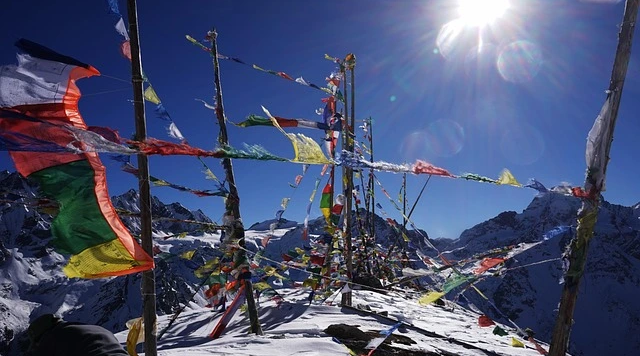
From Gosaikunda, the trail climbs past Surya Kunda and other sacred lakes before reaching the prayer flag-draped pass. Views from Laurebina La extend to Langtang Lirung, Ganesh Himal, Manaslu, and on clear days, the Annapurna range. The descent to Ghopte marks your entry into the Helambu region, beginning the cultural immersion portion of this Langtang Helambu trek itinerary.
Pass crossing details:
- Early morning start recommended (5-6 AM)
- Maximum altitude: 4,610m at Laurebina La
- Panoramic mountain views from pass
- Descent into Helambu region begins
- Cultural transition: Tamang to Hyolmo
- Ghopte: first Helambu overnight stop
Helambu Trek Itinerary Section (Days 11-14)
The final section of this combined route follows the classic Helambu trek itinerary through the homeland of the Hyolmo (Yolmo) people. This culturally rich region offers a gentler pace with ancient monasteries, traditional villages, and warm hospitality.
Day 11: Trek to Melamchi Gaon (3,490m)
A 5-6 hour trek descends through changing landscapes as you enter the heart of Helambu. The trail traverses ridgelines with expansive views before dropping into the forested slopes above Melamchi Gaon.
Melamchi Gaon is a traditional Hyolmo (Yolmo) village where Tibetan Buddhist culture blends with local traditions. Stone houses with carved wooden windows line narrow pathways. The pace of life here feels removed from the more tourist-frequented trails.
Helambu region introduction:
- Ridge walking with mountain views
- Transition through multiple vegetation zones
- Hyolmo cultural immersion begins
- Traditional stone village architecture
- Buddhist monasteries and prayer wheels
- Quieter trails than Langtang section
Day 12: Trek to Tarkeghyang (2,743m)
Today's 5-6 hour trek continues through Helambu's cultural heartland, descending to Tarkeghyang, home to one of the region's oldest and most significant monasteries. This portion of the Helambu trek itinerary showcases the region's spiritual heritage.
Tarkeghyang (sometimes written Tarke Ghyang) showcases Hyolmo heritage at its finest. The monastery here dates back centuries and remains an active center of Buddhist practice. Village elders maintain traditional weaving and other crafts, offering glimpses into pre-modern Himalayan life.
Cultural highlights:
- Ancient Tarkeghyang monastery
- Active Buddhist religious practice
- Traditional Hyolmo village life
- Handicraft traditions preserved
- Panoramic mountain backdrop
Day 13: Trek to Shermathang (2,621m)
A gentler 4-5 hour day connects Tarkeghyang to Shermathang through rolling hills and cultivated terraces. The landscape softens as you descend, with forests giving way to agricultural land.
Shermathang offers another window into Hyolmo culture, with its own monastery and traditional village structure. As the final high village on this Helambu trek itinerary, it provides one last night in the cultural highlands before descending to lower elevations.
Final highland section:
- Rolling terrain through cultivated areas
- Agricultural landscapes and terraces
- Shermathang monastery and village
- Last night above 2,000m elevation
- Preparation for final descent
Day 14: Trek to Melamchi Pul Bazaar (846m)
The longest descent day drops dramatically from 2,621m to 846m over 6-7 hours of walking. The trail winds through progressively warmer zones, passing through several villages before reaching the roadhead at Melamchi Pul Bazaar.
Melamchi Pul Bazaar marks the official end of trekking on this Langtang Gosaikunda Helambu trek itinerary. This bustling market town sits along the Melamchi River, serving as the commercial hub for surrounding villages. Basic hotels and restaurants cater to trekkers completing the circuit.
Descent day features:
- Significant elevation loss (nearly 1,800m)
- Transition through multiple climate zones
- Return to sub-tropical vegetation
- Multiple village encounters
- Arrival at Melamchi Pul Bazaar roadhead
Day 15: Drive Back to Kathmandu
A 3-4 hour drive returns you to Kathmandu via the winding road through Sindhupalchok District. The journey offers final views of the Himalayan foothills before descending into the Kathmandu Valley.
Return journey:
- Morning departure from Melamchi Pul Bazaar
- Scenic drive through foothill villages
- Arrival in Kathmandu by early afternoon
- Trek completion and time for rest
Best Time for This Langtang Helambu Trek Itinerary
The Langtang Gosaikunda Helambu trek works best during Nepal's two primary trekking seasons when weather conditions favor safe pass crossings and clear mountain views.
Autumn Season (September-November)
October and November offer the clearest skies, driest trails, and best mountain visibility. Post-monsoon conditions mean stable weather patterns ideal for crossing Laurebina La. Daytime temperatures range from 10-20°C at lower elevations, dropping below freezing at Gosaikunda.
Spring Season (March-May)
Spring brings rhododendron blooms that transform the forests between Thulo Syabru and Sing Gompa into spectacular displays of color. Views are generally good, though slightly hazier than autumn. Temperatures warm progressively through May.
Seasonal considerations:
- Autumn: Best visibility, stable weather, peak season
- Spring: Rhododendron blooms, warming temperatures
- Winter: Cold but possible, snow above 3,000m
- Monsoon: Not recommended (rain, leeches, landslide risk)
Difficulty and Physical Requirements
This Langtang Helambu trek itinerary rates as moderate to strenuous, primarily due to the Laurebina La pass crossing and cumulative days of walking. The altitude profile requires proper acclimatization, making the rest day at Kyanjin Gompa essential.
Physical demands:
- 5-7 hours walking most days
- Significant elevation gains and losses
- Maximum altitude 4,610m requires acclimatization
- 13 consecutive trekking days
- Variable terrain from forest to alpine
Preparation through cardio training, stair climbing, and practice hikes with weighted packs significantly improves the experience.
Frequently Asked Questions
How many days does the Langtang Helambu trek itinerary require?
The complete Langtang Gosaikunda Helambu circuit requires 15 days: 13 trekking days plus 2 driving days for transportation between Kathmandu and the trailheads.
What is the highest point on this Langtang Helambu trek itinerary?
Gosaikunda Pass (Laurebina La) at 4,610m is the maximum altitude on the main route. Optional acclimatization hikes from Kyanjin Gompa can reach Tserko Ri at 5,033m.
Can I do just the Helambu trek itinerary separately?
Yes, the Helambu section can be done as a standalone 5-7 day trek, typically starting from Sundarijal near Kathmandu and ending at Melamchi Pul Bazaar, or vice versa.
Is this Langtang Helambu trek itinerary suitable for beginners?
With proper fitness preparation and acclimatization, motivated beginners can complete this route. The moderate-to-strenuous rating reflects length and altitude rather than technical difficulty.
Where does the Langtang Gosaikunda Helambu trek start and end?
The trek starts at Syabrubesi (1,462m) reached by road from Kathmandu, and ends at Melamchi Pul Bazaar (846m) with road connection back to Kathmandu.
What is the best month for this trek?
October offers optimal conditions with clear skies, dry trails, and stable weather. March-April provides good trekking with bonus rhododendron blooms along the Gosaikunda approach.
Conclusion
The Langtang Helambu trek itinerary presented here delivers remarkable diversity across 15 days of Himalayan exploration. From the glacier-carved Langtang Valley to the sacred waters of Gosaikunda and the cultural richness of the Helambu trek itinerary section, this circuit offers experiences that reward every step.
Proper preparation and respect for altitude make this Langtang Gosaikunda Helambu trek itinerary achievable for committed trekkers seeking authentic Nepal adventure beyond the most crowded routes. The day-by-day structure outlined above provides realistic expectations for planning your own circuit through this remarkable landscape.
For complete trek arrangements including permits, guides, and logistics, see the full Langtang Helambu Trek package details.