Introduction: The Risk You Don’t See in the Himalayas
When people imagine danger in Nepal, they think of avalanches, icy ridgelines, and dramatic Himalayan storms.
But the most common serious threat on high-altitude treks isn’t visible.
It’s oxygen.
Every trekking season, helicopter rescues take place across the Everest, Annapurna, Langtang, and Manaslu regions because someone’s body cannot adapt quickly enough to reduced oxygen levels.
Some are rescued in time.
Some are not.
According to reports from theNepal Tourism Board, 21 trekkers died from altitude sickness in the Annapurna region during fiscal year 2023–2024. .
These were not climbers attempting 8,000-meter summits.
They were trekkers.
The Himalayan Rescue Association (HRA), Nepal’s leading high-altitude medical organization, has historically estimated altitude-related mortality at approximately 1 death per 30,000 trekkers.
A medical review published through JAMA Network documented dozens of altitude-related evacuations and fatalities across trekking seasons in past decades.
These numbers are not here to create fear.
They exist for one reason:
Altitude sickness is real.
And it is largely preventable.
If you’re planning an adventure like the Everest Base Camp trek itinerary, understanding proper acclimatization is essential for safety and success.
Why Acclimatization Is the Foundation of Every Safe Himalayan Trek
Acclimatization is not a “rest day.”
It is a biological adaptation process.
When you ascend, atmospheric pressure decreases. Oxygen molecules are spaced farther apart. Each breath delivers less usable oxygen into your bloodstream.
Your body responds by:
- Increasing breathing rate
- Raising heart rate
- Producing more red blood cells
- Adjusting blood chemistry
- Shifting fluid balance
But these adaptations take time.
If ascent outpaces adaptation, symptoms develop.
If ascent continues despite symptoms, complications follow.
The mountain is not punishing you.
Your physiology is simply overwhelmed.
This principle applies whether you’re trekking the Annapurna Circuit acclimatization tips or climbing moderate trails like the Mardi Himal trek altitude guide.
What Altitude Actually Does to the Human Body
At sea level, oxygen saturation averages 98–100%.
At 3,000 meters, it may drop to 90–93%.
At 5,000 meters, it can fall to 75–85%.
That drop affects:
- Brain oxygenation
- Muscle efficiency
- Sleep quality
- Appetite
- Hydration regulation
- Decision-making ability
Many trekkers first notice it at night.
Sleep becomes fragmented.
Dreams become vivid.
Rest feels incomplete.
This is a normal adaptation—until symptoms intensify.
The Three Forms of Altitude Illness
Understanding these stages can save your life.
Acute Mountain Sickness (AMS)
This is the early stage.
Symptoms include:
- Headache (most common sign)
- Nausea
- Fatigue
- Dizziness
- Loss of appetite
- Poor sleep
The common mistake?
Trekkers assume a headache is only dehydration.
But an altitude headache combined with nausea or fatigue is a warning sign.
If you ascend further with worsening symptoms, risk escalates.
High Altitude Pulmonary Edema (HAPE)
This is fluid leakage into the lungs.
Mechanism:
Low oxygen causes uneven lung blood vessel constriction.
Pressure builds.
Fluid leaks into air spaces.
Symptoms include:
- Shortness of breath at rest
- Wet cough
- Chest tightness
- Reduced exercise tolerance
- Crackling lung sounds
HAPE can progress rapidly.
Descent is treatment.
Oxygen helps.
Delay can be fatal.
High Altitude Cerebral Edema (HACE)
This is brain swelling caused by severe hypoxia.
Symptoms include:
- Confusion
- Loss of coordination
- Slurred speech
- Hallucinations
- Altered consciousness
HACE is life-threatening.
Immediate descent is mandatory.
Why Fit People Still Get Sick
Altitude sickness does not correlate strongly with:
- Age
- Gender
- Muscle strength
- Cardiovascular fitness
It correlates with:
- Rate of ascent
- Sleeping elevation gain
- Previous AMS history
Even marathon runners develop AMS if they ascend too quickly.
Fitness helps you walk.
It does not change oxygen physics.
The Golden Rules of Acclimatization (Field Proven)
Above 3,000 meters:
- Do not increase sleeping altitude more than 300–500 meters per day.
- For every 1,000 meters gained, include one acclimatization day.
- Practice “climb high, sleep low.”
- Drink 3–4 liters of water daily.
- Avoid alcohol and smoking.
- Eat high-carbohydrate meals.
- Never ascend with worsening symptoms.
These rules are repeated across global high-altitude medical research because they work.
Helicopter Rescue Reality in Nepal
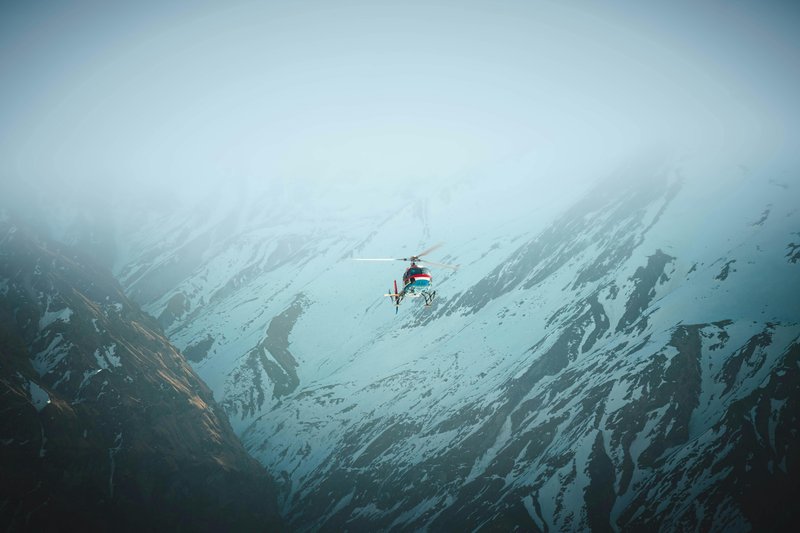
Nepal has one of the most active high-altitude helicopter rescue networks globally.
But evacuation depends on:
Storms ground flights.
Cloud cover delays evacuation.
Wind prevents a safe landing.
Rescue is reactive.
Acclimatization is preventative.
The safest trekkers never require a helicopter rescue.
Why Most Altitude Emergencies Happen
From years of observing trekking patterns, most altitude incidents involve
- Compressed itineraries
- Ego-driven pace
- Group pressure
- Lack of buffer days
- Ignoring mild symptoms
- Budget operators removing acclimatization days
Many emergencies begin with one sentence:
“I feel okay. Let’s continue.”
Altitude punishes denial.
Humility is protection.
Psychological Traps at High Altitude
The mountain exposes personality patterns:
The competitor who doesn’t want to slow down.
The planner who cannot afford delays.
The social trekker who fears disappointing the group.
The optimist who minimizes symptoms.
Acclimatization requires discipline.
And honesty with yourself.
Designing a Safe Nepal Trekking Itinerary
A professionally structured high-altitude itinerary includes:
- Gradual elevation gain
- Acclimatization days every 800–1,000 meters.
- Shorter trekking hours at higher elevations
- Clear emergency descent routes
- Weather buffer days
- Licensed, experienced guides
The cheapest itinerary is rarely the safest.
Premium planning prioritizes physiology over speed.
Medication & Prevention Strategy
Diamox (Acetazolamide)
- Stimulates breathing
- Speeds acclimatization
- Reduces AMS severity
But it does not replace gradual ascent.
Always consult a physician before use.
Dexamethasone
Emergency medication for HACE.
Not for routine prevention.
Portable Oxygen
Helpful for stabilization.
But descent remains the definitive treatment.
There is no substitute for going lower.
Advanced Strategy for Treks Above 4,500m
For higher-altitude treks:
- Build extra buffer days
- Monitor oxygen saturation
- Avoid aggressive summit pushes
- Maintain consistent calorie intake
- Track symptoms daily
- Communicate openly with your guide
Awareness dramatically improves safety outcomes.
FAQ
What is the safest way to prevent altitude sickness in Nepal?
Gradual ascent (300–500 m sleeping gain per day above 3,000 m), rest days every 1,000 m, proper hydration, avoiding alcohol, and never ascending with worsening symptoms.
At what altitude does altitude sickness begin?
Most cases begin above 2,500–3,000 meters. Severe complications are more common above 4,000 meters.
How many trekkers die from altitude sickness in Nepal?
Recent reports documented 21 altitude-related deaths in the Annapurna region during fiscal year 2023–2024. Overall mortality is low compared to total trekkers, and most cases are preventable with proper acclimatization.
Can I take Diamox instead of acclimatizing?
No. Diamox supports adaptation but does not replace gradual ascent.
Is a helicopter rescue common in Nepal treks?
Helicopter rescues occur every trekking season due to altitude illness and other emergencies. However, weather conditions can delay evacuation.
How quickly can altitude sickness become dangerous?
Mild AMS can worsen within 24 hours if ascent continues. HAPE and HACE can become life-threatening without immediate descent.
Final Thoughts: Walk Slowly, Return Safely
The Himalayas are powerful but predictable.
They reward patience.
They punish the ego.
The safest trekkers are not the strongest.
They are the most disciplined.
Walk slower than you think you need to.
Drink more water than you think you should.
Take the extra rest day.
The mountain will still be there tomorrow.
Your health must be, too.