Travel insurance for trekking in Nepal is not optional. It is the single most important logistical decision you will make before setting foot on the trail — and the one most trekkers underestimate until something goes wrong.
Nepal's trekking routes pass through some of the highest and most remote terrain on Earth. When altitude sickness strikes above 4,000m, or an injury occurs on a trail days from the nearest road, a helicopter evacuation is often the only safe option. Without proper coverage, the rescue costs between $3,000 and $10,000 — paid entirely out of pocket.
- Helicopter evacuation in Nepal: $3,000–$10,000+ per rescue
- Most standard travel insurance policies exclude altitude above 4,000m
- Everest Base Camp sits at 5,364m — well above most standard policy limits
- Without correct coverage, you are fully financially responsible for your own rescue
This guide covers everything you need to know about Nepal trekking travel insurance — altitude requirements, helicopter rescue coverage, costs, and the key mistakes trekkers make when buying a policy.
Is Travel Insurance Mandatory for Trekking in Nepal?
Nepal does not have a blanket national law requiring all trekkers to hold travel insurance. However, the practical reality makes it effectively mandatory for any serious high-altitude trek.
Many trekking agencies — including reputable Nepal-based operators — require proof of adequate insurance coverage before confirming a booking. Restricted trekking areas such as Upper Mustang, Dolpo, Nar Phu, and Tsum Valley require special permits, and responsible agencies operating in these zones will not accept clients without verified helicopter evacuation cover.
- Legally mandatory: No blanket national requirement
- Practically mandatory: Most reputable agencies require proof of coverage
- Restricted areas: Agencies require evacuation insurance before confirming permits
- Everest Base Camp: No legal requirement — but no responsible operator proceeds without it
- Strong recommendation from Nepal Tourism Board for all trekkers above 3,500m
The short version: you are not legally required to have insurance to enter Nepal. But any reputable trekking company — and any trekker who understands the risks — will treat it as non-negotiable.
Why Standard Travel Insurance Is Not Enough for Nepal Trekking
This is the most important point in this guide. The majority of standard travel insurance policies — including many mainstream providers — contain altitude exclusions that make them effectively useless above 4,000m.
A policy that covers "adventure sports" or "hiking" in standard terms typically covers activities up to 2,000m or 3,000m. Everest Base Camp is at 5,364m. Annapurna Base Camp is at 4,130m. Island Peak, a popular trekking peak near EBC, reaches 6,189m. Standard coverage does not reach any of these destinations.
- Most standard policies: cover hiking up to 2,000m–3,000m only
- Adventure sports policies: often extend to 4,000m — still not enough for EBC
- Altitude exclusion fine print: frequently buried in policy terms — always check
- Medical evacuation caps: many budget policies cap rescue at $50,000–$100,000 — potentially insufficient for complex high-altitude rescues
- Pre-existing conditions: most policies exclude altitude sickness if pre-existing heart or lung conditions are present
Before purchasing any policy, you must read the altitude exclusion clause and the medical evacuation limit. These two factors determine whether your policy is actually useful on a Nepal high-altitude trek.
What Altitude Coverage Do You Need for Nepal Trekking?
Your required altitude coverage depends entirely on where you are trekking. Here is the minimum coverage altitude for each major Nepal trekking destination.
For Annapurna Base Camp (4,130m), you need a policy that covers high-altitude trekking to at least 5,000m to give yourself a comfortable margin. For Everest Base Camp (5,364m), your policy must explicitly cover altitude up to at least 6,000m. For trekking peaks such as Island Peak (6,189m) or Mera Peak (6,476m), you need coverage to 7,000m minimum.
- Annapurna Base Camp (4,130m): minimum policy altitude 5,000m
- Everest Base Camp (5,364m): minimum policy altitude 6,000m
- Island Peak (6,189m): minimum policy altitude 7,000m
- Mera Peak (6,476m): minimum policy altitude 7,000m
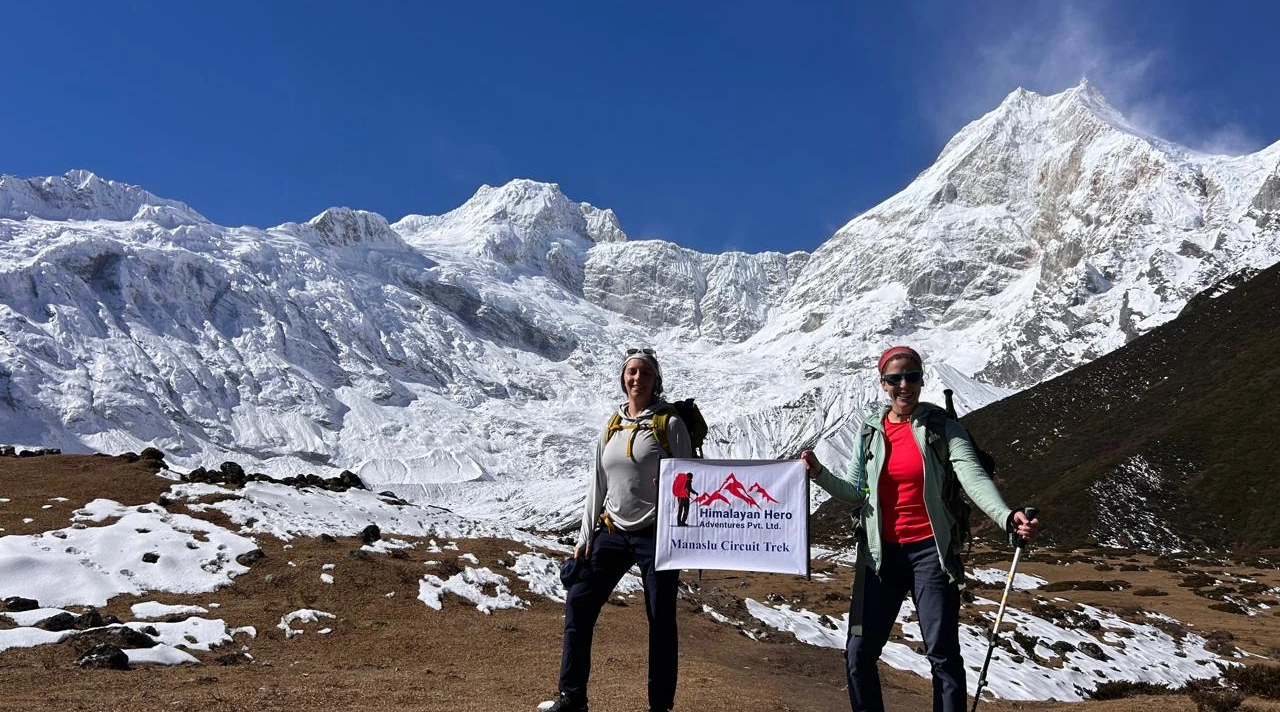
- Manaslu Circuit (5,160m): minimum policy altitude 6,000m
Always buy coverage to at least 1,000m above your planned maximum altitude. Weather, route variations, and side trips can take you higher than planned. The cost difference between a 5,000m and 6,000m policy is minimal — the protection difference is significant.
Helicopter Rescue Insurance in Nepal: What You Must Know
Helicopter evacuation is more common on Nepal's trekking routes than most first-time visitors expect. The Khumbu region alone sees hundreds of helicopter rescues every trekking season — for altitude sickness, injury, sudden illness, and weather-related emergencies.
The cost of a rescue varies based on altitude, distance, and the type of aircraft required. A standard evacuation from Namche Bazaar to Kathmandu runs approximately $3,000–$5,000. A rescue from above 5,000m — Lobuche, Gorakshep, or Base Camp — can cost $6,000–$10,000 or more. Without insurance, this bill is yours immediately.
- Rescue from Namche Bazaar to Kathmandu: approximately $3,000–$5,000
- Rescue from above 5,000m: approximately $6,000–$10,000+
- Rescue from above 6,000m (trekking peaks): $10,000–$15,000+
- Payment is typically required before the helicopter departs in some cases
- Insurance providers must be contactable 24/7 — confirm this before purchasing
Your policy must include a dedicated helicopter rescue and emergency evacuation clause — not just general medical coverage. Confirm the evacuation coverage limit is a minimum of $100,000 USD, and ideally $200,000–$500,000 for high-altitude expeditions.
Travel Insurance for Everest Base Camp Trek
Everest Base Camp sits at 5,364m — above the altitude exclusion limit of most standard policies. Any policy you purchase for an EBC trek must explicitly state coverage for high-altitude trekking up to at least 6,000m and must include helicopter evacuation coverage.
The most common medical emergencies on the EBC route are altitude sickness (AMS), High Altitude Cerebral Oedema (HACE), and High Altitude Pulmonary Oedema (HAPE). All three can become life-threatening within hours and require immediate helicopter evacuation to lower altitude.
- EBC altitude: 5,364m — confirm your policy explicitly covers this
- Kala Patthar (optional summit viewpoint): 5,545m — must also be covered
- Most common medical reason for EBC evacuation: AMS, HACE, HAPE
- Average EBC evacuation cost: $5,000–$8,000
- Your policy must cover: altitude to 6,000m minimum + helicopter evacuation + emergency medical treatment
Best Travel Insurance Providers for Nepal Trekking
Several providers offer policies specifically designed for high-altitude trekking. Below is a neutral overview of the most commonly used options among Nepal trekkers. Always verify current policy terms directly with the provider — terms and altitude limits change regularly.
World Nomads One of the most widely used providers among adventure trekkers. Standard Explorer plan typically covers trekking to 6,000m and includes emergency evacuation. Covers most nationalities and allows purchase after departure. Check the current altitude limit in your specific plan — it has varied between plan tiers.
IMG Global (Patriot and iTravelInsured) Popular among long-term travellers and expeditioners. Offers high evacuation limits and flexibility on altitude coverage. Review the adventure sports rider carefully — it is required for high-altitude cover.
Allianz Travel Insurance Well-known global provider. Standard plans typically cover more limited altitudes — check the adventure sports add-on for Nepal-level coverage. Strong medical network and 24/7 emergency line.
SafetyWing Budget-friendly subscription-based model. Covers emergency medical and evacuation but check the altitude cap carefully — standard plans may not reach EBC altitude without an upgrade.
True Traveller (UK-based) Highly regarded among Nepal trekkers from the UK and Europe. Explicit high-altitude coverage options up to 6,000m available. Good reputation for fast evacuation claims processing.
- Always purchase before departure from Nepal when possible
- Verify altitude limits in writing — not just on marketing materials
- Confirm the 24/7 emergency assistance number works internationally
- Read the adventure sports clause — standard plans often require an add-on
- Check whether pre-existing medical conditions affect altitude coverage
How Much Does Trekking Insurance for Nepal Cost?
Nepal trekking insurance is significantly more affordable than most trekkers expect — especially relative to the costs it covers.
For a 14-day standard EBC or ABC trek, a quality policy with 6,000m altitude coverage and full helicopter evacuation typically costs between $80 and $150 USD. Factors that affect price include your age, the coverage altitude, the evacuation limit, trip cancellation cover, and whether you add gear or flight delay protection.
- 14-day high-altitude trek policy (to 6,000m): $80–$150 USD
- 21-day expedition policy: $120–$200 USD
- Age 50+: premiums typically 30–50% higher than under-35 rates
- Adding trip cancellation cover: adds $30–$60 to most policies
- Full gear replacement coverage: adds $20–$50 depending on declared value
The single most important factor is the helicopter evacuation limit — not the headline premium. A $60 policy with a $50,000 evacuation cap is substantially less useful than a $120 policy with a $250,000 cap. Prioritise the coverage ceiling over the premium cost.
What Your Nepal Trekking Insurance Policy Must Cover
Use this checklist before purchasing any policy for a Nepal high-altitude trek. If a policy cannot confirm all of these points, it is not adequate for EBC, ABC, or any route above 4,000m.
- High-altitude trekking coverage: explicitly stated to at least 6,000m
- Emergency helicopter evacuation: minimum $100,000 — ideally $200,000+
- Emergency medical treatment: minimum $100,000
- Medical repatriation to home country: included
- 24/7 emergency assistance line: confirmed operational internationally
- Search and rescue: included (separate from helicopter evacuation in some policies)
- Trip cancellation and curtailment: recommended for flight and Lukla delay scenarios
- Accidental death and disability: included
- Gear and equipment: optional but recommended for expensive trekking equipment
- Pre-existing conditions: reviewed and either covered or explicitly excluded
Common Mistakes Trekkers Make When Buying Nepal Insurance
These are the errors that result in trekkers being uninsured at the worst possible moment.
Assuming standard travel insurance covers EBC The most common mistake. A standard "worldwide" travel policy purchased through a bank or airline almost never covers altitude above 3,000m. Always check the altitude clause specifically.
Not checking the helicopter evacuation cap A policy might technically cover helicopter rescue but cap the payout at $20,000–$30,000 — well below the actual cost of a complex high-altitude rescue. Always verify the specific evacuation limit.
Buying after something goes wrong Some trekkers attempt to purchase or upgrade insurance after symptoms of altitude sickness appear. This is not possible — policies cannot be backdated, and any condition that existed before purchase is excluded.
- Mistake 1: Buying a standard travel policy without checking the altitude exclusion
- Mistake 2: Assuming "adventure sports" cover automatically includes 5,000m+ altitude
- Mistake 3: Choosing the cheapest policy without checking evacuation limits
- Mistake 4: Not saving the emergency assistance number in your phone before the trek
- Mistake 5: Forgetting to declare pre-existing medical conditions — voids the policy entirely
Frequently Asked Questions: Nepal Trekking Insurance
Do I need travel insurance for Everest Base Camp?
Yes — without question. Everest Base Camp sits at 5,364m, well above the exclusion limit of most standard policies. You need a policy that explicitly covers high-altitude trekking to at least 6,000m and includes helicopter evacuation coverage. Most reputable EBC trekking agencies require proof of adequate insurance before confirming your booking.
What travel insurance covers trekking over 5,000m?
Policies from World Nomads (Explorer plan), IMG Global, True Traveller, and Allianz with adventure riders typically offer 5,000m–6,000m+ coverage. Always verify the current altitude limit directly with the provider — policy terms change, and marketing materials do not always reflect the fine print.
Does travel insurance cover a helicopter rescue in Nepal?
Yes — if you purchase a policy that specifically includes helicopter evacuation. This is not standard in most base policies and must be either included or added as a rider. Confirm the evacuation limit is at least $100,000 and that the provider has a 24/7 emergency line.
How much coverage do I need for a Nepal trek?
For a standard EBC or ABC trek: at minimum $100,000 medical evacuation cover, $100,000 emergency medical treatment, and altitude coverage to 6,000m. For trekking peaks above 6,000m, increase evacuation cover to $200,000–$500,000.
How much does trekking insurance for Nepal cost?
A quality 14-day high-altitude trekking policy with full helicopter evacuation cover typically costs $80–$150 USD. Age, altitude limit, evacuation cap, and trip cancellation add-ons all affect the final price. This cost is marginal compared to the $3,000–$10,000+ evacuation costs it covers.
Is travel insurance mandatory in Nepal?
There is no national law requiring all visitors to hold travel insurance. However, reputable trekking agencies operating in restricted areas and high-altitude zones require proof of adequate coverage. The Nepal Tourism Board strongly recommends insurance for all trekkers above 3,500m.
What happens if I do not have insurance and need a rescue?
Without insurance, you are personally responsible for the full cost of your rescue — typically $3,000–$10,000 for a helicopter evacuation, plus all medical treatment costs. In some cases, the helicopter crew may require payment confirmation before departure. Embassies can sometimes assist with communication but cannot pay for rescues.
The Bottom Line on Nepal Trekking Insurance
Travel insurance for trekking in Nepal is not bureaucratic paperwork — it is what stands between a manageable emergency and a financial catastrophe. The Himalayas are extraordinary, but they are also remote, high, and unforgiving when things go wrong.
Buy the right policy before you fly. Confirm the altitude limit, verify the evacuation cap, save the emergency number in your phone, and carry a printed copy of your policy reference on the trail. These are small steps that carry enormous consequences.
If you are trekking Everest Base Camp or Annapurna Base Camp with us, our team can advise on policy requirements specific to your route and departure date before you book.
Explore our 14-Day Everest Base Camp Trek and 12-Day Annapurna Base Camp Trek — and get in touch with our team for pre-trek insurance guidance.