The Langtang Valley Trek itinerary typically spans 8 days including drive days from Kathmandu, with 6 days of actual trekking through the stunning Langtang Valley. This carefully designed schedule balances efficient progress with proper acclimatization, ascending from Syabrubesi (1,550m) to Kyanjin Gompa (3,870m) and optional Tserko Ri summit (4,984m) before descending back to the valley floor.
Understanding the complete Langtang trek itinerary 8 days breakdown helps you prepare physically and mentally for each stage of this remarkable Himalayan adventure. The route progresses gradually through ecological zones—from subtropical forests to alpine meadows—allowing your body to adjust naturally to increasing elevation while experiencing authentic Tamang Buddhist culture and spectacular mountain scenery beneath Langtang Lirung's towering 7,227-meter summit.
This comprehensive itinerary guide covers the standard 8-day route with detailed daily breakdowns, alternative duration options (5-7 days for time-limited trekkers, 10 days for extra acclimatization), complete route overview, and practical planning advice to help you choose the Langtang itinerary that best suits your fitness level, available time, and trekking goals.
Why 8 Days Is the Standard Langtang Valley Trek Itinerary
The 8 days Langtang Valley trek duration represents the optimal balance between efficient time management and safe high-altitude acclimatization. Unlike shorter 5-6 day options that rush altitude gain, or extended 10-12 day itineraries that may exceed available vacation time, the 8-day schedule provides sufficient acclimatization rest while fitting within standard two-week holiday windows.
The itinerary structure allows critical rest at Namche-equivalent elevations, includes a dedicated exploration day at Kyanjin Gompa for acclimatization hikes, and follows the mountaineering principle of "climb high, sleep low" on summit day. This pacing significantly reduces altitude sickness risk compared to condensed schedules while maintaining daily walking distances of 4-6 hours that suit moderately fit trekkers.
Why 8 Days Works Best:
- Gradual altitude gain: Never exceeds 960m in a single day
- Built-in acclimatization: Day 5 includes high-altitude exposure with return to lower sleeping elevation
- Proper rest days: Shorter walking on Day 4 allows altitude adjustment
- Fits standard vacations: Total 8 days from Kathmandu return
- No flight complications: Road access eliminates weather delay buffers
- Physical recovery: Descent days allow muscle and joint recuperation
The Langtang trek route distance of approximately 35-40 kilometers one-way (70-80km round trip) becomes manageable when spread across 6 trekking days rather than compressed into 4-5 days. Daily walking averages 5-6 hours, allowing morning departures around 7-8 AM and afternoon arrivals by 2-3 PM with ample rest time.
Complete Langtang Valley Trek Itinerary 8 Days – Detailed Breakdown
Day 1: Kathmandu to Syabrubesi (1,550m) – Journey to Trailhead
Your Langtang Valley Trek itinerary begins with an early morning departure from Kathmandu, typically around 7:00 AM to maximize daylight travel hours. The 117-kilometer journey to Syabrubesi takes 7-8 hours along the increasingly improved Pasang Lhamu Highway, winding through terraced hillsides and riverside roads that showcase rural Nepali life.
The scenic drive passes through Trishuli Bazaar, follows the Bhote Koshi River toward the Tibetan border, and provides your first glimpses of the mountains you'll soon trek beneath. Road conditions have dramatically improved since earthquake reconstruction, with the route now fully paved though still featuring winding mountain sections that demand careful driving.
Day 1 Overview:
- Transport: Private vehicle or tourist bus from Kathmandu
- Duration: 7-8 hours drive (117km)
- Starting altitude: Kathmandu 1,300m
- Ending altitude: Syabrubesi 1,550m
- Accommodation: Basic lodge in Syabrubesi
- Activities: Drive, final gear check, early rest
Syabrubesi sits in a river valley where the Bhote Koshi and Langtang Khola converge, serving as the official gateway to Langtang National Park. This small settlement offers last-minute gear supplies, basic lodges with dining halls, and permit checking stations. Evening hours allow final equipment organization and early sleep before tomorrow's trekking begins.
Day 2: Syabrubesi to Lama Hotel (2,470m) – Enter the National Park
The first trekking day introduces you to Langtang's lush forest landscapes and begins the gradual altitude gain that characterizes this journey. After breakfast and national park permit verification at the checkpoint, the trail immediately crosses a suspension bridge over the rushing Bhote Koshi River before beginning steady uphill through subtropical forest.
The path alternates between riverside sections and forest switchbacks, gaining 920 meters over 5-6 hours of walking. Dense bamboo groves, rhododendron forests, and oak trees create a mystical atmosphere, especially when morning mist clings to the canopy. This elevation zone represents prime red panda habitat—rare sightings possible at dawn or dusk.
Day 2 Trek Details:
- Walking time: 5-6 hours
- Distance: Approximately 11km
- Elevation gain: +920m (1,550m to 2,470m)
- Trail type: Forest paths, suspension bridges, stone steps
- Villages passed: Bamboo, Rimche
- Accommodation: Lama Hotel lodge cluster
Lama Hotel consists of several lodges nestled in thick rhododendron forest at 2,470 meters. Despite its singular name, multiple teahouses provide comfortable accommodation with dining rooms featuring wood stoves that create warm social atmospheres. First-day altitude effects remain minimal at this moderate elevation, though you may notice slightly heavier breathing during steep uphill sections.
Day 3: Lama Hotel to Langtang Village (3,430m) – Mountain Views Emerge
Day three brings significant altitude gain as the Langtang trek itinerary climbs 960 meters to Langtang Village, the trek's first major settlement and cultural hub. Morning departure around 7:00-8:00 AM allows steady progress before afternoon temperatures peak and potential clouds obscure mountain panoramas.
Forest character changes dramatically with elevation—rhododendron and oak give way to increasingly sparse vegetation as the valley widens. Your first clear views of Langtang Lirung's massive south face dominate the northern horizon. Stone walls, prayer wheels, and Buddhist chortens begin appearing, marking entrance into traditionally Buddhist Tamang territory.
Day 3 Highlights:
- Walking time: 5-6 hours
- Distance: Approximately 12km
- Elevation gain: +960m (2,470m to 3,430m)
- Key landmarks: Ghoda Tabela (3,000m), valley opening
- Cultural markers: Mani walls, prayer flags, Buddhist monuments
- Mountain views: First clear Langtang Lirung panoramas
Langtang Village holds profound significance as the settlement completely destroyed by the 2015 earthquake avalanche that killed over 300 people. The community has since rebuilt slightly relocated with earthquake-resistant construction, creating a living memorial to resilience. Your overnight stay directly supports this remarkable recovery, making the trek meaningful beyond personal achievement.
Evening exploration reveals Buddhist stupas, colorful prayer flag streams, and traditional stone architecture adapted with modern safety features. Altitude effects become more noticeable here—slight headaches, reduced appetite, and increased breathing during exertion are normal. Hydration (3-4 liters daily) and slow, deliberate movement become increasingly important as elevation rises.
Day 4: Langtang Village to Kyanjin Gompa (3,870m) – Valley Sanctuary
This shorter trekking day allows critical acclimatization time while reaching Kyanjin Gompa, the Langtang Valley trek itinerary's spiritual and physical destination. The relatively easy 3-4 hour walk gains just 440 meters, providing your body crucial adjustment time at high altitude before tomorrow's optional summit attempt.
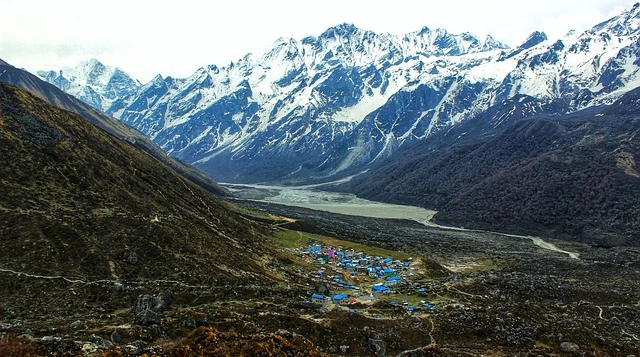
The trail follows the broad valley floor through alpine meadows dotted with grazing yak herds and bordered by towering 6,000-7,000 meter peaks. Multiple glacial streams crisscross the landscape, fed by the Langtang and Lirung glaciers hanging from surrounding mountains. The terrain opens into a spectacular amphitheater with peaks surrounding you on three sides.
Day 4 Experience:
- Walking time: 3-4 hours
- Distance: Approximately 7km
- Elevation gain: +440m (3,430m to 3,870m)
- Villages: Mundu (3,540m with cheese factory)
- Landscape: Alpine meadows, glacial streams, mountain amphitheater
- Afternoon options: Rest, monastery visit, cheese factory tour, acclimatization hike
Kyanjin Gompa centers around an ancient Buddhist monastery that gives the settlement its name. The gompa welcomes visitors during non-prayer times, offering insights into Tibetan Buddhist practices with stunning interior murals. Adjacent to the monastery, the government yak cheese factory produces traditional cheese using centuries-old methods—samples available for purchase and highly recommended tasting.
Day 5: Tserko Ri Summit Day (4,984m) & Exploration – Trek's Highest Point
Summit day represents the Langtang Valley trek itinerary elevation peak and physical crescendo. Pre-dawn departure between 4:30-5:30 AM allows summit arrival for spectacular sunrise when clear skies and optimal lighting conditions create unforgettable photography opportunities and unobstructed Himalayan panoramas.
The ascent to Tserko Ri gains 1,114 meters from Kyanjin Gompa over approximately 2.5-3 hours of continuous uphill hiking. The trail follows steep but non-technical paths through increasingly alpine terrain, eventually reaching rocky slopes requiring careful footing but no climbing skills. Altitude effects intensify significantly above 4,500 meters—shortness of breath, reduced pace, and physical fatigue challenge even fit trekkers.
Tserko Ri Summit Details:
- Pre-dawn start: 4:30-5:30 AM (headlamps required)
- Ascent time: 2.5-3 hours continuous uphill
- Summit altitude: 4,984m (16,355 feet)
- Descent time: 1.5-2 hours return to Kyanjin Gompa
- Total duration: 5-6 hours round trip
- Views: 360-degree panorama including Langtang Lirung, Shishapangma (Tibet), Yala Peak, Gangchenpo
The summit panorama justifies every challenging step. Langtang Lirung's massive 7,227-meter face dominates immediately north, while Shishapangma (8,027m, Earth's 14th highest peak) appears across the Tibetan border on clear days. Dozens of 6,000-7,000 meter peaks create a complete mountain amphitheater that few locations worldwide can match.
Day 6: Kyanjin Gompa to Lama Hotel (2,470m) – Begin Descent
The descent retraces your ascent route, covering in one day what required two days climbing. The 5-6 hour trek loses 1,400 meters elevation, returning to significantly oxygen-rich air that your lungs immediately appreciate. However, extended downhill stresses knee joints and leg muscles—trekking poles become extremely valuable equipment for reducing impact.
Morning departure around 7-8 AM allows steady pacing without rushing. The familiar trail through Langtang Village (lunch stop typical), Ghoda Tabela clearing, and back into thick rhododendron forests provides different perspectives on landscapes climbed days earlier. The air grows noticeably warmer and thicker as elevation decreases, making breathing progressively easier.
Day 6 Descent Considerations:
- Walking time: 5-6 hours
- Distance: Approximately 19km
- Elevation loss: -1,400m (3,870m to 2,470m)
- Lunch stop: Typically Langtang Village
- Trail type: Same route in reverse, downhill focus
- Physical impact: Knee and quad stress from sustained descent
Afternoon arrival at Lama Hotel provides comfortable overnight accommodation in familiar surroundings. Evening reflection on accomplishments—standing at nearly 5,000 meters beneath some of Earth's highest peaks—creates satisfaction that makes the physical demands worthwhile. Final evening in the mountains allows preparation for tomorrow's exit from the national park.
Day 7: Lama Hotel to Syabrubesi (1,550m) – Trek Completion
The final trekking day descends through dense forest back to Syabrubesi, completing the mountain loop. The 4-5 hour walk loses 920 meters elevation, returning to the valley floor where your adventure began six days earlier. The trail's familiarity allows reflective walking and photographic opportunities missed during the focused upward climb.
The path retraces your Day 2 route through Bamboo and Rimche villages, crossing suspension bridges over the Langtang Khola, and eventually emerging from forest into the more open valley approaching Syabrubesi. The descent feels relatively easy compared to previous days, though sustained downhill still demands attention to footing on stone steps.
Day 7 Final Trek:
- Walking time: 4-5 hours
- Distance: Approximately 11km
- Elevation loss: -920m (2,470m to 1,550m)
- Trail: Forest descent, suspension bridges, riverside paths
- Arrival: Syabrubesi by early afternoon
- Evening: Farewell dinner with guide and porter team
Evening arrival in Syabrubesi traditionally includes a celebration dinner acknowledging trek completion and the team that made your journey successful. Tipping typically occurs this evening based on service quality—your guide provides recommendations following local customs and standards. Final night at lower elevation brings warmer temperatures and easier breathing after days at altitude.
Day 8: Syabrubesi to Kathmandu – Return Journey
The final day mirrors Day 1 in reverse, driving 7-8 hours back to Kathmandu along the Pasang Lhamu Highway. Morning departure around 7:00 AM allows afternoon arrival in the capital, providing time for hotel check-in, hot showers (greatly appreciated after basic mountain lodges), and celebration dinners in Thamel's restaurants.
The drive provides transition time from mountain simplicity back to city complexity. Most trekkers experience mixed emotions—relief at completion, satisfaction at achievement reaching nearly 5,000 meters, and nostalgia for the mountain simplicity and profound quiet found at Kyanjin Gompa beneath Langtang Lirung's towering presence.
Alternative Langtang Valley Trek Itinerary Durations
While 8 days represents the standard and recommended Langtang itinerary, alternative durations suit specific needs, fitness levels, and time constraints.
Langtang Valley Trek 5 Days (Ultra-Condensed)
The 5 days Langtang Valley trek option exists for extremely time-limited trekkers but significantly increases altitude sickness risk and physical demands. This compressed schedule eliminates acclimatization margins and requires exceptional fitness.
5-Day Structure:
- Day 1: Drive to Syabrubesi, trek to Lama Hotel (combined)
- Day 2: Lama Hotel to Kyanjin Gompa (skipping Langtang Village stop)
- Day 3: Tserko Ri summit, return to Lama Hotel (extremely long day)
- Day 4: Lama Hotel to Syabrubesi
- Day 5: Drive to Kathmandu
This condensed Langtang Valley trek 5-day option saves 3 days but eliminates critical acclimatization time. Only experienced high-altitude trekkers with proven altitude tolerance should consider this schedule. The rapid ascent to 3,870m sleeping altitude within 24 hours significantly increases altitude sickness probability.
Langtang Valley Trek 6 Days (Condensed)
The Langtang Valley Trek 6 days provides slight improvement over the 5-day rush while still fitting within one week including travel days.
6-Day Structure:
- Day 1: Kathmandu to Syabrubesi
- Day 2: Syabrubesi to Langtang Village (combining Day 2-3, very long)
- Day 3: Langtang Village to Kyanjin Gompa
- Day 4: Tserko Ri summit, descend to Lama Hotel
- Day 5: Lama Hotel to Syabrubesi
- Day 6: Syabrubesi to Kathmandu
This Langtang Valley trek 6 day schedule reduces one trekking day from the standard itinerary, requiring a very long Day 2 covering 20+ kilometers and 1,880 meters elevation gain. Suitable only for very fit trekkers comfortable with 7-8 hour walking days.
Langtang Valley Trek 7 Days (Short Option)
The Langtang Valley trek 7-day represents a reasonable compromise between time efficiency and proper acclimatization for experienced trekkers.
7-Day Structure:
- Day 1: Kathmandu to Syabrubesi
- Day 2: Syabrubesi to Lama Hotel
- Day 3: Lama Hotel to Langtang Village
- Day 4: Langtang Village to Kyanjin Gompa
- Day 5: Tserko Ri summit, return to Langtang Village (skip second Lama Hotel night)
- Day 6: Langtang Village to Syabrubesi (long descent)
- Day 7: Syabrubesi to Kathmandu
This saves one day by eliminating the second night at Lama Hotel on descent, instead staying at Langtang Village. Suitable for moderately fit trekkers with some previous high-altitude experience.
10-Day Extended Langtang Valley Trek Itinerary (Recommended for Beginners)
The 10-day extension adds valuable acclimatization time and exploration opportunities, particularly beneficial for first-time Himalayan trekkers or those wanting less rushed experiences.
10-Day Enhanced Structure:
- Day 1: Kathmandu to Syabrubesi
- Day 2: Syabrubesi to Lama Hotel
- Day 3: Lama Hotel to Langtang Village
- Day 4: Acclimatization day in Langtang Village (hike to viewpoints)
- Day 5: Langtang Village to Kyanjin Gompa
- Day 6: Acclimatization/exploration day Kyanjin Gompa (Kyanjin Ri)
- Day 7: Tserko Ri summit day, return to Kyanjin Gompa
- Day 8: Kyanjin Gompa to Lama Hotel
- Day 9: Lama Hotel to Syabrubesi
- Day 10: Syabrubesi to Kathmandu
The extra acclimatization days significantly reduce altitude sickness risk while allowing side explorations: Langshisa Kharka glacier viewpoint, longer monastery visits, or simply enjoying the mountain environment without constant movement pressure.
Understanding the Langtang Trek Route Geography
The Langtang trek route follows a relatively straightforward "out-and-back" pattern rather than a circuit, ascending the Langtang Valley along the Langtang Khola river and returning via the same path with slight variations possible on descent.
The route begins at Syabrubesi (1,550m) in the valley floor where rivers converge, immediately entering Langtang National Park through dense subtropical forest. The trail climbs steadily through ecological zones—subtropical giving way to temperate rhododendron forests around 2,500m, transitioning to alpine scrub and meadows above 3,500m, and finally reaching the high alpine zone at Kyanjin Gompa (3,870m).
Route Characteristics:
- Total one-way distance: 35-40 kilometers (70-80km round trip)
- Elevation gain: 2,320m net (Syabrubesi to Kyanjin Gompa)
- Elevation range: 1,550m to 4,984m (Tserko Ri summit)
- Trail type: Well-maintained paths, stone steps, suspension bridges
- Navigation: Clear signage, impossible to get lost on main route
- Direction: Northeast from Syabrubesi, following Langtang Khola upstream
The valley orientation provides spectacular mountain views throughout, with Langtang Lirung (7,227m) dominating the northern horizon as you ascend. Side valleys branch off the main route, offering optional explorations to Langshisa Kharka, glaciers, and viewpoints that extend the trekking experience for those with extra time.
Descent follows the identical route with minor variations possible around Lama Hotel area. Some trekkers take slightly different paths between Syabrubesi and Lama Hotel on return, though these variations add negligible distance or interest compared to the ascent route.
How Long Is the Langtang Trek? Duration Factors
The question "how long is the Langtang trek" depends on multiple factors beyond simple distance calculations—your fitness level, acclimatization needs, weather conditions, and trekking style all influence total duration.
Factors Affecting Trek Duration:
- Fitness level: Fit trekkers complete days faster; beginners need more time
- Acclimatization: First-time high-altitude trekkers benefit from slower ascent
- Weather: Rain or snow can slow progress significantly
- Group size: Larger groups move slower, require more breaks
- Photography focus: Photographers need extra time for lighting, compositions
- Cultural interest: Village exploration and monastery visits extend days
The standard 8-day itinerary assumes moderate fitness with 5-6 hours daily walking capacity, normal weather conditions, and balanced interest in covering ground versus detailed exploration. Ultra-fit trail runners could theoretically complete the route in 4-5 days, while leisurely trekkers preferring 3-4 hour walking days might extend to 10-12 days.
Physical Distance vs. Time:
- Trail distance: 70-80km total doesn't sound extreme
- Elevation gain: 4,500-5,000m cumulative gain is the real challenge
- Altitude effects: Reduced oxygen slows pace dramatically above 3,500m
- Terrain: Stone steps, suspension bridges, uneven paths demand careful footing
Most trekkers find the 8-day schedule provides perfect balance—challenging enough to feel accomplished, comfortable enough to enjoy rather than endure, and short enough to fit within realistic vacation timeframes without requiring extended leave from work or family commitments.
Choosing Your Ideal Langtang Valley Trek Itinerary
Selecting the right Langtang trek itinerary 8 days variation (or alternative duration) requires honest self-assessment of fitness, experience, time availability, and priorities.
Choose 8-Day Standard Itinerary If:
- You have 8-10 days total available from Kathmandu
- Moderate fitness with ability to walk 5-6 hours daily
- First-time Himalayan trekker wanting proper acclimatization
- Balance of challenge and comfort appeals
- No extreme time pressure forcing compression
Choose 10-Day Extended If:
- First-time high-altitude trekking (never above 3,000m before)
- Prefer leisurely pace with ample rest
- Want extra time for photography, cultural exploration
- Age 55+ or traveling with varied fitness levels
- Prioritize safety margins over time efficiency
Choose 6-7 Day Condensed If:
- Experienced high-altitude trekker (proven 4,000m+ tolerance)
- Excellent cardiovascular fitness
- Strict time limitations (one week maximum)
- Comfortable with 7-8 hour walking days
- Accept higher altitude sickness risk
Avoid 5-Day Ultra-Condensed Unless:
- You have extensive Himalayan experience
- Previously trekked above 4,500m without issues
- Elite fitness level
- Fully understand and accept significant altitude risks
- Have flexible plans allowing abort if symptoms develop
The Langtang Valley trek itinerary you choose should match not just your available days but your honest assessment of fitness, previous altitude experience, and personal trekking style. Rushing altitude gain to save 1-2 days dramatically increases altitude sickness risk and reduces enjoyment—the mountains will still be there next year if you need to cut a trek short due to time constraints.
Frequently Asked Questions About Langtang Valley Trek Itinerary
What is the best Langtang Valley trek itinerary?
The 8-day itinerary provides optimal balance for most trekkers, including proper acclimatization, comfortable daily distances (5-6 hours), and fitting within standard vacation windows. It includes drive days from Kathmandu, 6 trekking days, gradual altitude gain to Kyanjin Gompa (3,870m), and optional Tserko Ri summit (4,984m). First-timers or those over 55 should consider the 10-day extended version with extra acclimatization days.
How many days does the Langtang trek take?
The standard Langtang trek takes 8 days from Kathmandu including drive days (6 actual trekking days). Alternative durations include 5-7 days for condensed schedules (experienced trekkers only) or 10 days for extended acclimatization. The trek covers approximately 70-80km round trip with 2,320m elevation gain from Syabrubesi (1,550m) to Kyanjin Gompa (3,870m).
Can I do Langtang Valley trek in 6 days?
Yes, but not recommended for most trekkers. The 6-day itinerary requires very long trekking days (7-8 hours), rapid altitude gain, and significantly increases altitude sickness risk. Day 2 would combine the standard Day 2-3, gaining 1,880m in one day—far exceeding safe acclimatization guidelines. Only very fit trekkers with previous high-altitude experience should attempt this compressed schedule.
What is the Langtang trek route?
The Langtang trek follows an out-and-back route ascending the Langtang Valley. Starting from Syabrubesi (1,550m), the trail goes through Lama Hotel (2,470m), Langtang Village (3,430m), to Kyanjin Gompa (3,870m), with optional Tserko Ri summit (4,984m). The route returns via the same path. Total distance covers approximately 35-40km one-way (70-80km round trip) through Langtang National Park.
Is 5 days enough for Langtang Valley trek?
No, 5 days is insufficient for safe trekking for most people. This ultra-compressed schedule eliminates critical acclimatization time, requires extremely long walking days, and significantly increases altitude sickness risk. Only elite fitness trekkers with proven altitude tolerance above 4,500m should consider 5-day options. The standard 8-day itinerary exists specifically to provide safe acclimatization pacing.
What is included in a typical Langtang trek itinerary?
A standard 8-day Langtang itinerary includes: Day 1 (Kathmandu to Syabrubesi drive), Days 2-4 (ascent to Kyanjin Gompa through Lama Hotel and Langtang Village), Day 5 (Tserko Ri summit or exploration), Days 6-7 (descent to Syabrubesi), Day 8 (return drive to Kathmandu). Each day includes 4-6 hours trekking, teahouse accommodation, and gradual altitude gain for acclimatization.
Can beginners follow the 8-day Langtang itinerary?
Yes, the 8-day itinerary suits prepared beginners with reasonable fitness. The gradual acclimatization schedule, moderate daily distances, and lower maximum sleeping altitude (3,870m vs. 5,164m on Everest treks) make it accessible to first-time Himalayan trekkers. Beginners should train 6-8 weeks pre-trek with cardio exercise and practice hikes, and consider extending to 10 days for extra safety margins.
Ready to experience the Langtang Valley with a perfectly paced itinerary? Our comprehensive Langtang Valley Trek package provides the complete 8-day route with experienced guides, optimal acclimatization scheduling, and professional logistics handling for a safe, enjoyable Himalayan adventure at just $599 per person.