Nepal trekking routes offer some of the world's most spectacular mountain experiences, combining towering Himalayan peaks with authentic cultural encounters in traditional Buddhist and Hindu villages. From the legendary Everest Base Camp trail to remote circuits around Manaslu and Annapurna, Nepal's diverse trekking landscape welcomes everyone from first-time hikers to experienced mountaineers seeking serious high-altitude challenges.
The best trekking routes in Nepal traverse through eight of Earth's fourteen highest peaks, Buddhist monasteries perched on mountainsides, sacred Hindu pilgrimage temples, and communities where ancient traditions continue unchanged for centuries. This extraordinary concentration of natural beauty and living culture within a compact geographical area makes Nepal the ultimate trekking destination for adventure travelers worldwide.
This comprehensive guide covers everything you need to know about Nepal hiking routes: detailed breakdowns of major trekking circuits with altitude profiles and difficulty ratings, beginner-friendly options, challenging remote trails, seasonal timing recommendations, permit requirements, and practical advice for choosing the perfect trek matching your fitness level, available time, and adventure goals.
Why Nepal Offers the World's Best Trekking Routes
Nepal's reputation as the premier trekking destination stems from its unique combination of geographical features, cultural diversity, and established mountain infrastructure. The country sits along the world's highest mountain range, with elevations ranging from 60 meters in the southern plains to 8,849 meters at Mount Everest's summit—creating extraordinary vertical diversity within a small area that allows trekkers to experience multiple climate zones in a single journey.
The Himalayas dominate Nepal's northern border, creating an 800-kilometer mountain wall that includes eight peaks above 8,000 meters: Everest, Kanchenjunga, Lhotse, Makalu, Cho Oyu, Dhaulagiri, Manaslu, and Annapurna. This concentration of giant mountains provides trekkers with access to close-up views unavailable anywhere else on Earth.
What Makes Nepal Trekking Exceptional:
- Tea house system: Network of mountain lodges eliminates heavy camping equipment requirements
- Cultural diversity: Buddhist, Hindu, and animist traditions create rich encounters beyond scenery
- Vertical ecosystems: Trek from subtropical forests to alpine tundra in days, not weeks
- Established trails: Decades of tourism created reliable paths and support infrastructure
- Year-round options: Different routes peak in different seasons, allowing continuous trekking
- Himalayan accessibility: Well-maintained trails reach high altitudes without technical climbing
The tea house trekking system, unique to Nepal, allows comfortable mountain travel with just a daypack, making multi-week Himalayan adventures accessible to average hikers rather than only expedition-level mountaineers. Combined with legendary Sherpa, Tamang, and Gurung hospitality, this infrastructure creates experiences blending serious adventure with cultural immersion and comfort.
Everest Base Camp Trek – Nepal's Most Iconic Route
The Everest Base Camp trek represents Nepal's most famous route, bringing trekkers to the base of the world's highest mountain at 5,364 meters. This challenging 12-14-day journey through the Khumbu region combines spectacular mountain scenery with authentic Sherpa Buddhist culture in villages that have supported Everest expeditions since the 1950s.
The trail climbs from Lukla (2,860m) through rhododendron forests to Namche Bazaar (3,440m), continues to the monastery village Tengboche (3,860m), passes through high-altitude settlements at Dingboche and Lobuche, and reaches Gorak Shep (5,164m) before the final approach to Base Camp. Most trekkers also climb Kala Patthar (5,545m) for superior Everest summit views.
Everest Base Camp Trek Details:
- Duration: 12-14 days round trip from Kathmandu, including flights
- Maximum altitude: 5,545 meters at Kala Patthar viewpoint
- Difficulty: Challenging due to sustained high altitude and daily duration
- Best season: March-May (spring), September-November (autumn)
- Highlights: Close-up Everest views, Sherpa culture, Tengboche monastery, Kala Patthar sunrise
- Ideal for: Fit trekkers with previous multi-day hiking experience and good altitude tolerance
The route requires strong cardiovascular fitness and altitude acclimatization but no technical climbing skills. Tea house accommodation provides shelter and meals throughout, though facilities become increasingly basic above 4,500 meters, where extreme altitude affects both trekkers and lodge operations.
Annapurna Base Camp Trek – Mountain Amphitheater Experience
The Annapurna Base Camp trek delivers trekkers into a spectacular mountain amphitheater surrounded by towering Annapurna peaks and the sacred Machhapuchhre (Fishtail Mountain). This 10-12 day trek climbs the Modi Khola gorge to reach base camp at 4,130 meters, offering intimate proximity to 7,000-8,000 meter giants that dominate the skyline.
The route ascends through terraced farmlands and Gurung villages like Ghandruk and Chhomrong before entering the narrowing Modi Khola valley. Dense rhododendron forests give way to bamboo groves and eventually alpine meadows as the trail climbs to Machhapuchhre Base Camp (3,700m) before the final sanctuary approach.
Annapurna Base Camp Specifications:
- Duration: 10-12 days from Pokhara (7-8 days trekking only)
- Maximum altitude: 4,130 meters at Annapurna Base Camp
- Difficulty: Moderate with some steep climbing sections
- Best season: March-May (rhododendron blooms), September-November (clear skies)
- Highlights: Mountain amphitheater, rhododendron forests, Gurung culture, sunrise panoramas
- Ideal for: Moderately fit trekkers, families with teenagers, budget-conscious adventurers
The trek's lower maximum altitude compared to Everest Base Camp makes it more accessible while still delivering stunning high-mountain scenery. The natural hot springs at Jhinu Danda provide a perfect relaxation opportunity before returning to Pokhara's lakeside restaurants and hotels.
Manaslu Circuit Trek – Remote Himalayan Adventure
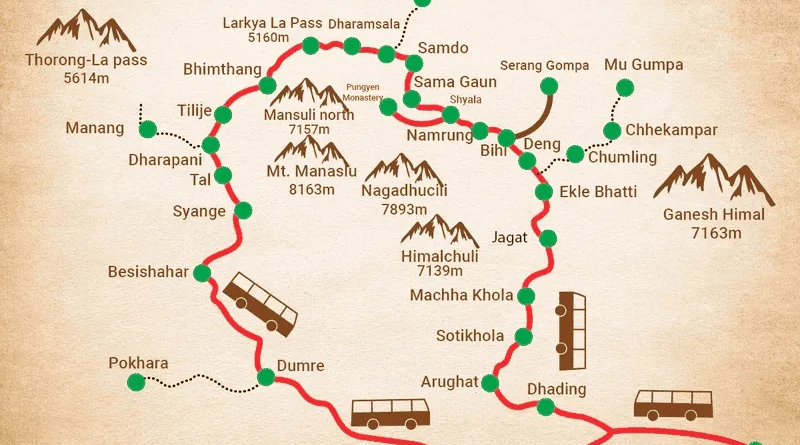
The Manaslu Circuit trek circles the world's eighth-highest mountain (8,163m) through a restricted area, seeing far fewer trekkers than the Everest or Annapurna routes. This 14-18 day journey crosses the Larkya La Pass at 5,106 meters, traversing culturally Tibetan villages where Buddhist traditions remain authentic and undiluted by mass tourism.
The circuit follows the Budhi Gandaki river valley through terraced fields and traditional stone villages before climbing to high-altitude settlements like Samagaon and Samdo. The challenging pass crossing leads into the upper Marsyangdi valley, eventually connecting with the Annapurna Circuit trails near Dharapani.
Manaslu Circuit Characteristics:
- Duration: 14-18 days, including drive days from Kathmandu
- Maximum altitude: 5,106 meters at Larkya La Pass
- Difficulty: Challenging due to the remote nature, high pass, and sustained altitude
- Best season: March-May, September-November (winter too cold, monsoon too wet)
- Highlights: Cultural authenticity, Larkya La views, Tibetan Buddhist villages, solitude
- Ideal for: Experienced trekkers seeking authentic experiences away from crowds
The trek requires special restricted area permits, mandatory licensed guide services, and minimum two-trekker groups—regulations ensuring lower visitor numbers that preserve the route's traditional character and prevent the over-commercialization affecting more popular trails.
Langtang Valley Trek – Accessible Himalayan Classic
The Langtang Valley trek offers spectacular mountain scenery just north of Kathmandu without requiring expensive domestic flights or weeks of vacation time. This 7-10 day journey through Langtang National Park reaches Kyanjin Gompa at 3,870 meters with optional climbs to Tserko Ri (4,984m) or Kyanjin Ri (4,773m) providing panoramic Himalayan views.
The route follows the Langtang Khola river through forests and villages rebuilt after the devastating 2015 earthquake, ascending past traditional Tamang settlements to the high valley beneath Langtang Lirung (7,227m). The government cheese factory at Kyanjin Gompa produces traditional yak cheese, and the Buddhist monastery serves as the spiritual center for valley communities.
Langtang Valley Trek Profile:
- Duration: 7-10 days from Kathmandu (road access, no flights)
- Maximum altitude: 4,984 meters at Tserko Ri optional viewpoint
- Difficulty: Moderate with a proper acclimatization day at Kyanjin Gompa
- Best season: March-May (rhododendrons), September-November (clarity)
- Highlights: Langtang Lirung views, Tamang culture, yak cheese factory, red panda habitat
- Ideal for: Time-limited trekkers, budget travelers, first-time Himalayan hikers
The trek's accessibility from Kathmandu via 7-8 hour drive and lack of flight requirements make it particularly cost-effective while still delivering mountain scenery comparable to more famous routes. Supporting earthquake-recovered communities adds meaningful purpose beyond personal adventure.
Easy Nepal Trekking Routes for Beginners
Easy treks in Nepal provide genuine Himalayan experiences without extreme altitude, technical difficulty, or extended duration, making them perfect for first-time trekkers, families with children, or travelers seeking moderate challenges with spectacular rewards.
The Ghorepani Poon Hill trek leads beginner options, offering panoramic Annapurna and Dhaulagiri range views in just 4-5 days. The route climbs from Nayapul through beautiful rhododendron forests to Ghorepani village (2,860m) before the pre-dawn climb to Poon Hill (3,210m) for sunrise over twenty peaks, including several above 7,000 meters.
Beginner-Friendly Himalayan Routes:
- Ghorepani Poon Hill (4-5 days): Classic short trek with spectacular Annapurna panoramas
- Mardi Himal (5-7 days): Lower Annapurna region reaching 4,500m with excellent views
- Pikey Peak (5-6 days): Solo Khumbu trek offering Everest views without extreme altitude
- Khopra Ridge (6-7 days): Alternative Annapurna route with community lodges
- Mohare Danda (4-5 days): Eco-friendly community trek near Poon Hill
These routes share characteristics making them beginner-appropriate: maximum altitudes under 4,500 meters, reducing altitude sickness risks, shorter durations fitting standard vacation windows, well-established tea house systems providing comfortable shelter, and moderate daily walking times (4-6 hours), manageable for average fitness levels.
Beginner Route Selection Criteria:
- Maximum altitude under 4,000 meters (reduced altitude concerns)
- Daily walking times 4-6 hours (not exhausting for average fitness)
- Good trail conditions (clear paths, manageable gradients)
- Established tea house accommodation (comfortable facilities, warm meals)
- Shorter total duration (5-8 days maximum, including travel)
- Accessible trailheads (no complex logistics or remote access)
Challenging Nepal Trekking Routes for Experienced Hikers
Difficult treks in Nepal challenge experienced mountaineers with extreme altitudes, technical passes, extended remote durations, and demanding physical requirements beyond average trekking capabilities.
The Annapurna Circuit remains a classic, challenging route despite road construction shortening some sections. This 15-21 day circumnavigation of the Annapurna massif crosses Thorong La Pass at 5,416 meters, showcasing extraordinary landscape diversity from subtropical rice paddies to high-altitude desert terrain resembling Tibetan plateaus.
Advanced Trekking Routes:
- Annapurna Circuit (15-21 days): Classic mountain circuit crossing 5,416m Thorong La Pass
- Three Passes Trek (18-21 days): Everest region circuit crossing three 5,300m+ passes
- Upper Mustang (12-14 days): Restricted Tibetan cultural region with desert landscapes
- Kanchenjunga Base Camp (20-24 days): Remote far-eastern Nepal to the world's third-highest peak
- Dolpo Circuit (21-28 days): Extremely remote western Nepal crossing multiple high passes
These routes demand serious preparation, including high-altitude training, extended time availability (3-4 weeks minimum), substantial budgets for permits and logistics, experience with previous Himalayan treks, and mental preparation for basic facilities or camping requirements in remote sections.
How to Choose Your Perfect Nepal Trekking Route
Selecting the right Nepal trekking route requires an honest assessment of your fitness level, available vacation time, budget constraints, seasonal timing, and personal interests in balancing pure mountain scenery versus cultural experiences.
Critical Selection Factors:
- Available time: Match trek duration to vacation days plus 2-3 buffer days for weather
- Fitness level: Be honest about cardiovascular conditioning and multi-day hiking experience
- Budget range: Factor permits, guide/porter costs, flights, meals, and contingency funds
- Travel season: Choose routes peaking during your available dates
- Altitude experience: Previous high-altitude success indicates suitability for 5,000m+ routes
- Priority balance: Some routes emphasize culture, others pure mountain vistas
First-time Himalayan trekkers should choose routes with maximum altitudes under 4,500 meters, durations under 12 days, and good tea house infrastructure. The Ghorepani Poon Hill, Annapurna Base Camp, and Langtang Valley treks perfectly suit these criteria while delivering authentic mountain experiences.
Experienced trekkers with proven 4,000m+ altitude tolerance can tackle Everest Base Camp, Annapurna Circuit, or Manaslu Circuit routes. Those seeking ultimate challenges should consider the Three Passes Trek, Kanchenjunga, or Dolpo circuits requiring 3-4 weeks and serious high-altitude capabilities.
Budget significantly impacts route choice. Everest region treks require expensive Lukla flights ($350-400 round trip), while Annapurna and Langtang use ground transportation, saving $300+ per person. Restricted areas like Manaslu and Upper Mustang charge premium permit fees ($200-500) compared to open trekking areas ($30-50).
Best Time for Nepal Trekking Routes
Nepal trekking routes experience distinct seasonal patterns that dramatically affect trail conditions, mountain visibility, and overall experience quality. Choosing optimal timing significantly enhances success probability and enjoyment.
Autumn (September-November) – Peak Trekking Season:
Autumn represents Nepal's most popular trekking window with crystal-clear post-monsoon visibility, stable weather patterns, and comfortable temperatures. October sees maximum trekker numbers, creating crowded trails on popular routes but ensuring all tea houses operate fully staffed with fresh supplies.
Spring (March-May) – Rhododendron Season:
Spring offers excellent trekking conditions with warming temperatures, blooming rhododendrons painting forests brilliant reds and pinks, and generally good visibility though slightly hazier than autumn. Late May approaches monsoon with increasing afternoon clouds potentially obscuring mountain views.
Winter (December-February) – Cold but Clear:
Winter brings extreme cold at high altitudes—Everest Base Camp nights reach -20°C—but often spectacular clarity rivaling autumn's famous views. Lower-altitude routes like Ghorepani Poon Hill remain pleasant, while 5,000m+ routes become very challenging, requiring serious cold-weather gear.
Monsoon (June-August) – Limited Options:
Monsoon brings heavy rainfall to most regions, creating muddy trails, obscured mountain views, and serious leech problems below 3,000 meters. However, Mustang and Dolpo regions lie in rain shadows, receiving minimal precipitation, making them ideal monsoon destinations when other areas become unpleasant.
Seasonal Route Recommendations:
Best for Autumn: All routes are optimal—Everest Base Camp, Annapurna Circuit, Annapurna Base Camp, Manaslu Circuit, Langtang Valley deliver peak experiences.
Best for Spring: Everest region, Annapurna routes, Langtang, Manaslu, all excellent with rhododendron blooms adding color to forest sections.
Best for Winter: Ghorepani Poon Hill, Mardi Himal, lower-altitude routes avoiding extreme high-altitude cold.
Best for Monsoon: Upper Mustang, Dolpo exclusively—rain shadow protection makes these periods ideal for these specific regions.
Read our full guide about Best time to trek in nepal month by month guide.
Permits Required for Nepal Trekking Routes
Different trekking routes in Nepal require varying permits based on whether they pass through national parks, conservation areas, or government-restricted zones. Understanding permit requirements prevents complications during trek preparation and ensures legal compliance.
Common Permit Types:
- TIMS Card: Required for most open trekking areas, costs NPR 2,000 (approximately $20)
- National Park Permits: Sagarmatha for Everest ($30), Langtang ($30), required for respective regions
- Conservation Area Permits: Annapurna ACAP ($30), Manaslu MCAP ($30) fund conservation projects
- Restricted Area Permits: Manaslu RAP ($75-100 per week), Upper Mustang ($500 for 10 days), Dolpo ($500)
Open trekking areas like Annapurna and Langtang allow independent hiking with simple permits obtained directly from Nepal Tourism Board offices in Kathmandu or Pokhara. Restricted areas require registered guide services, minimum two-trekker groups, and agency-processed permits that individuals cannot obtain independently.
Permit Processing:
Open area permits can be obtained same-day at tourism board offices with a passport, photos, and itinerary details. Restricted area permits must be processed through licensed trekking agencies requiring 1-2 business days, and cannot be obtained by individual trekkers under any circumstances.
The Everest region requires Sagarmatha National Park permits and TIMS cards totaling approximately $50 per person. Annapurna routes need ACAP and TIMS at a similar total cost. Restricted areas add substantial fees—Manaslu costs $150-300 in permits alone, depending on season and trek duration.
Frequently Asked Questions About Nepal Trekking Routes
What is the best trekking route in Nepal?
The "best" Nepal trekking route depends on your specific priorities and capabilities. For iconic mountain views and serious challenge, Everest Base Camp leads. For landscape diversity and classic circuit experience, Annapurna Circuit excels. For accessibility and excellent value, Annapurna Base Camp or Langtang Valley deliver spectacular experiences in moderate timeframes. First-time trekkers often find Ghorepani Poon Hill perfect for manageable difficulty with breathtaking Annapurna panoramas.
Which trek is easiest in Nepal for beginners?
The Ghorepani Poon Hill trek ranks as Nepal's easiest classic route, requiring just 4-5 days with a maximum altitude of 3,210 meters and daily walking times of 4-6 hours. Other beginner-appropriate options include Mardi Himal (5-7 days), Pikey Peak (5-6 days), and Mohare Danda (4-5 days). These routes suit first-time trekkers, families, and older adventurers with moderate fitness, offering genuine Himalayan experiences without extreme challenges or altitude risks.
Do I need a guide for trekking in Nepal?
Guides are not legally required for the most popular Nepal hiking routes, including Everest Base Camp, Annapurna Base Camp, Annapurna Circuit, and Langtang Valley, allowing independent trekking with proper permits. However, restricted areas, including Manaslu Circuit, Upper Mustang, Dolpo, and Kanchenjunga, mandate licensed guides and a minimum two-trekker groups by law. Even in open areas, guides provide valuable benefits: navigation, altitude monitoring, cultural interpretation, emergency support, and tea house coordination.
How much does trekking in Nepal cost?
Costs vary dramatically by route, style, and services chosen. Budget-independent trekking costs $25-35 per day for food and accommodation, plus permit fees ($30-50 for open areas). Guided tea house treks range $800-1,500 for 10-14 day packages including guides, permits, meals, and accommodation. Restricted-area treks cost $1,200- $ 2,500 due to premium permits and mandatory guide services. Add international flights, Kathmandu hotels, gear, comprehensive insurance, and contingency funds.
When is the best season for Nepal trekking routes?
Autumn (September-November) offers peak conditions with clear skies, stable weather, and comfortable temperatures, though October trails get crowded. Spring (March-May) provides excellent alternative timing with warming weather and spectacular rhododendron blooms. Winter suits lower-altitude routes but brings extreme cold to high passes above 5,000 meters. Monsoon (June-August) works exclusively for rain-shadow regions like Upper Mustang but creates difficult conditions elsewhere with heavy rain and leeches.
Start Your Nepal Trekking Adventure
Nepal trekking routes offer unmatched diversity, accommodating every fitness level, time availability, and adventure preference. From beginner-friendly Poon Hill to challenging Everest Base Camp, from culturally rich Manaslu Circuit to spectacular Annapurna Base Camp, Nepal's trails deliver lifetime memories combining natural beauty with authentic cultural encounters.