The Everest Base Camp vs Manaslu Circuit trek comparison represents one of Nepal's most compelling trekking decisions—choosing between the world-famous Everest route through Sherpa villages or the remote Manaslu circuit around the world's eighth-highest mountain. Both the EBC vs Manaslu trek adventures deliver spectacular Himalayan scenery, challenging high-altitude passes, and profound cultural immersion, yet they differ fundamentally in crowd levels, permit requirements, cultural experiences, and the nature of the trekking challenge itself.
Understanding Manaslu vs Everest differences helps trekkers choose between the iconic Everest Base Camp trail with established infrastructure and daily views of Earth's highest peak, or the wild Manaslu Circuit offering pristine solitude, Tibetan Buddhist culture, and the dramatic Larkya La Pass crossing at 5,160 meters. While Everest Base Camp allows independent trekking on well-developed trails, Manaslu requires mandatory guides and minimum group sizes, creating distinctly different adventure experiences.
Key Comparison Factors:
- Crowd levels: EBC crowded vs Manaslu remote and quiet
- Permit regulations: EBC solo-friendly vs Manaslu restricted area
- Cultural immersion: Sherpa Buddhism vs Tibetan Buddhist traditions
- Maximum altitude: Kala Patthar 5,545m vs Larkya La 5,160m
- Trek distance and duration differences
- Difficulty and technical challenge variations
- Cost and logistics comparison
This comprehensive guide breaks down the which trek is harder Everest or Manaslu question through detailed comparison across difficulty, permits, cultural richness, scenery, costs, and suitability for different trekker profiles, helping you make an informed decision based on your experience level, preferences, and adventure goals.
| Feature |
Everest Base Camp Trek |
Manaslu Circuit Trek |
| Total Distance |
~130 km round trip |
~177 km circuit |
| Duration |
12-16 days |
13-16 days |
| Maximum Altitude |
5,545m (Kala Patthar) |
5,160m (Larkya La Pass) |
| Difficulty |
Moderate (non-technical) |
Strenuous (technical sections) |
| Permits Cost |
$50 total (Sagarmatha + Khumbu) |
$160-260 (RAP + MCAP + ACAP) |
| Solo Trekking |
Allowed (guide optional) |
Forbidden (guide + 2 trekkers minimum) |
| Crowd Levels |
High (popular route) |
Low (remote, restricted) |
| Best Season |
Mar-May, Sep-Dec |
Mar-May, Sep-Nov |
| Access |
Lukla flight or road |
Road to Soti Khola |
| Average Cost |
$1,200-2,000 guided |
$1,500-2,200 guided |
| Cultural Focus |
Sherpa Buddhist villages |
Tibetan Buddhist culture |
| Tea House Quality |
Excellent throughout |
Basic at higher elevations |
Overview of Everest Base Camp Trek
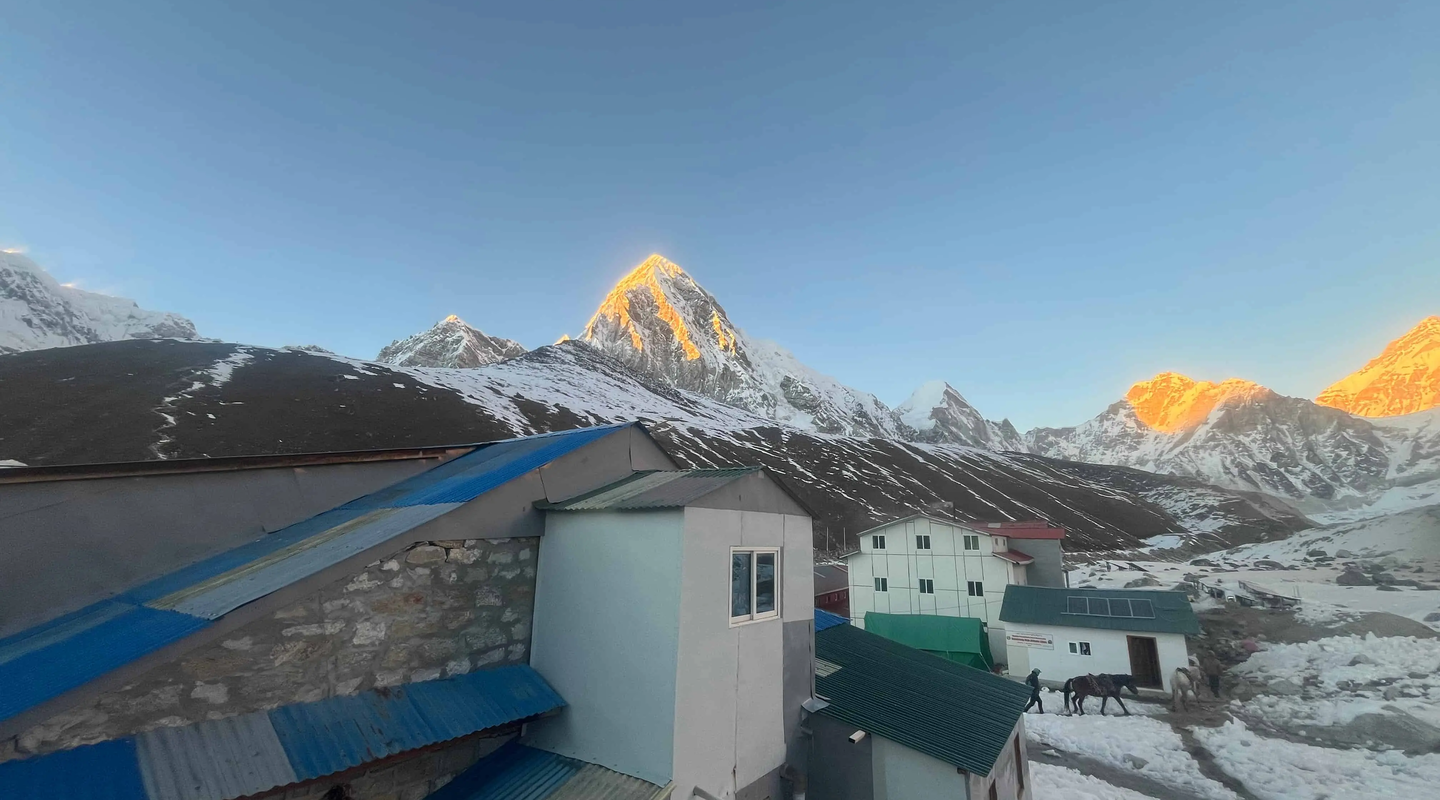
Everest Base Camp sits at 5,364 meters on the Khumbu Glacier beneath Mount Everest's south face, representing the staging area for climbing expeditions to the world's highest summit at 8,849 meters. The Everest Base Camp trek follows the classic route through traditional Sherpa villages in the Khumbu region, ascending from Lukla (2,860m) through Namche Bazaar (3,440m), Tengboche (3,860m), Dingboche (4,410m), and Lobuche (4,940m) before reaching base camp.
The trek covers approximately 130 kilometers round trip over 12-16 days, with most trekkers also climbing Kala Patthar viewpoint at 5,545 meters for unobstructed Everest summit views. The route passes through Sagarmatha National Park, a UNESCO World Heritage Site protecting unique Himalayan ecosystems and Buddhist cultural heritage.
Everest Base Camp Trek Highlights:
- Standing beneath the world's highest mountain at 8,849m
- Close-up views of Everest, Lhotse, Nuptse, Ama Dablam, Thamserku
- Kala Patthar sunrise panorama over Everest summit
- Sherpa Buddhist culture with monastery visits (Tengboche, Pangboche)
- Well-established tea house system with comfortable facilities
- Namche Bazaar's vibrant Saturday market and Sherpa museums
- Independent trekking allowed with optional guide services
- Established medical facilities and rescue infrastructure
The Everest trek emphasizes cultural immersion through Sherpa villages combined with spectacular mountain scenery. Trekkers stay in family-run tea houses, visit ancient monasteries, and experience living Buddhist traditions while walking beneath four 8,000-meter peaks. The route's popularity ensures excellent infrastructure but also brings significant crowds during peak seasons (October-November, March-April).
Overview of Manaslu Circuit Trek
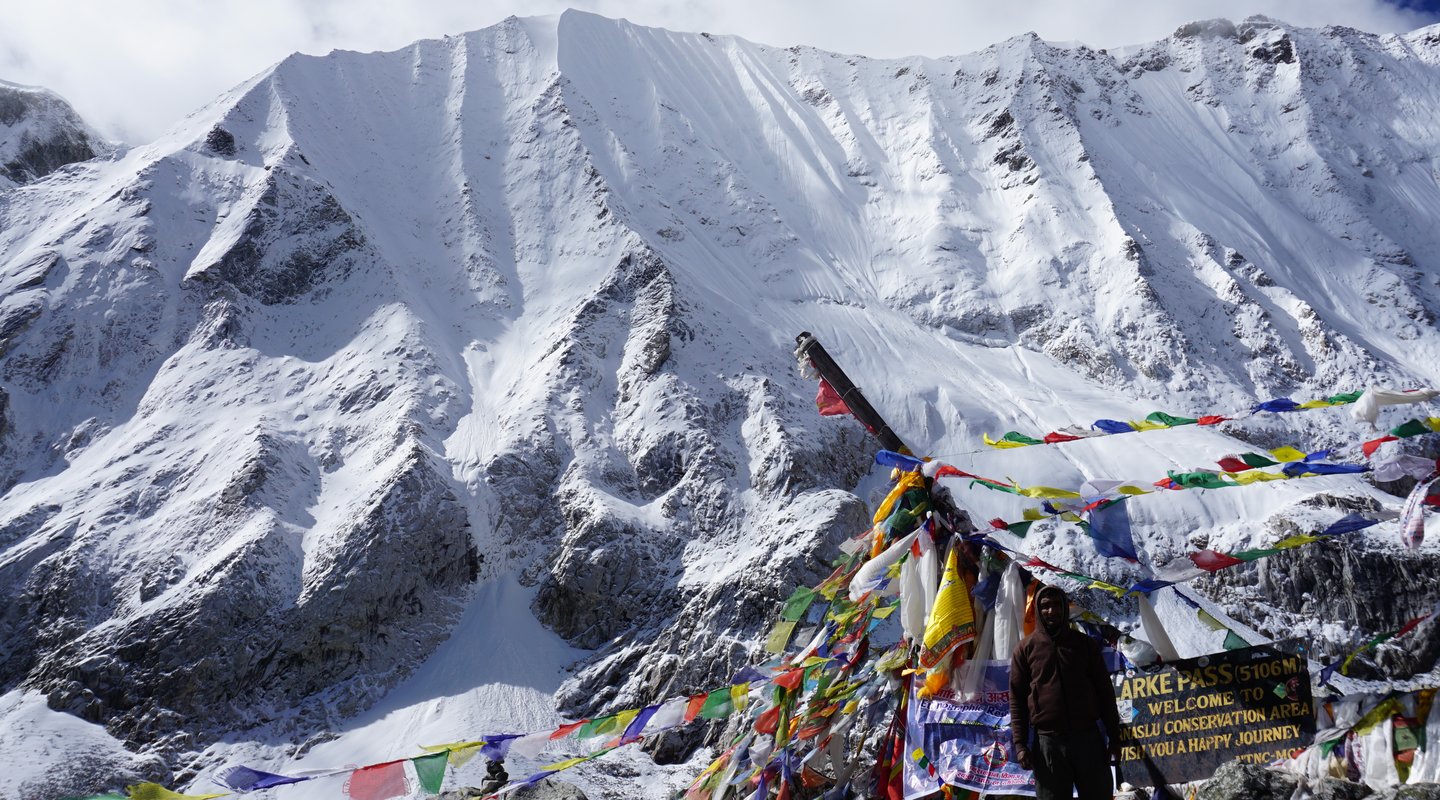
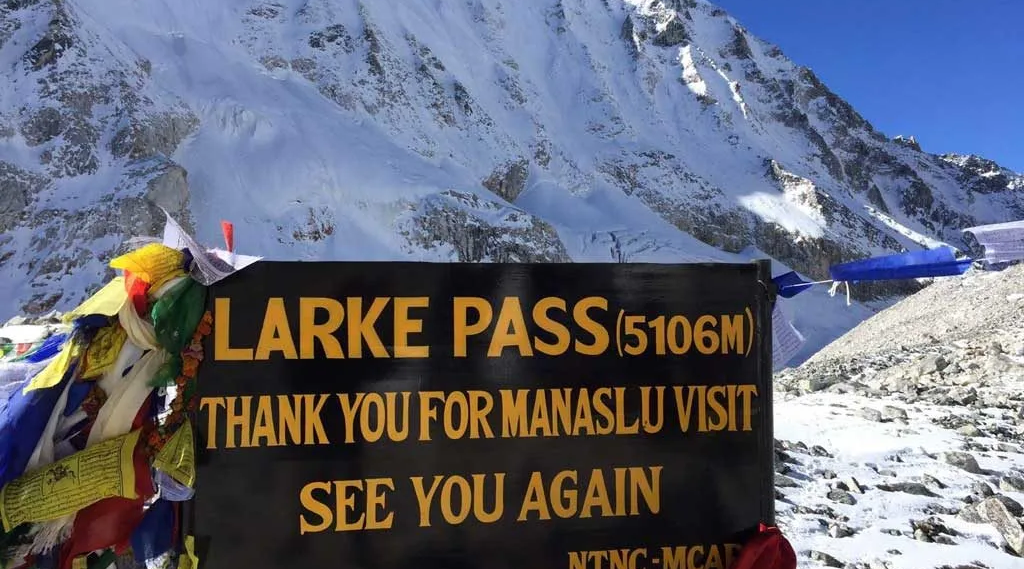
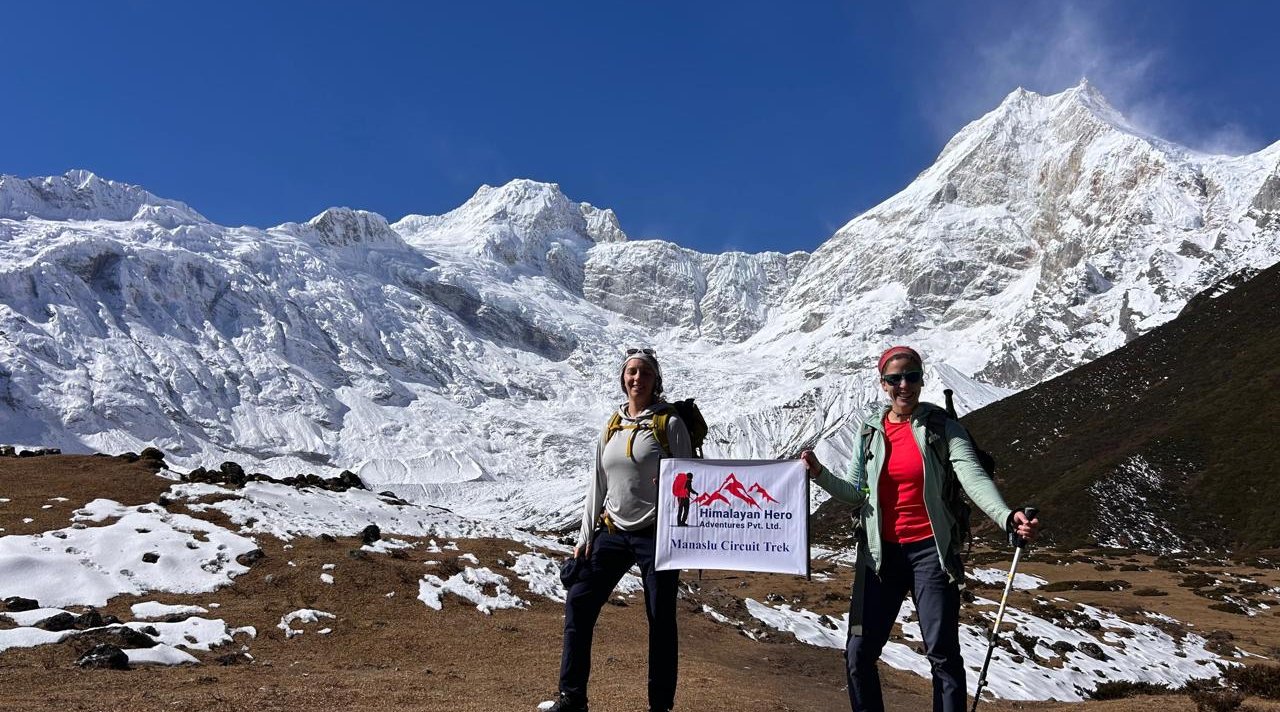
Manaslu Circuit circumnavigates Manaslu (8,163m), the world's eighth-highest mountain, through a restricted area along the Nepal-Tibet border. The Manaslu trek covers approximately 177 kilometers over 13-16 days, starting from Soti Khola (700m) and climbing through subtropical forests, terraced farmlands, and Tibetan Buddhist villages before crossing the dramatic Larkya La Pass at 5,160 meters.
The circuit enters restricted territory requiring special permits, mandatory licensed guides, and minimum two-trekker groups—regulations preserving the route's pristine character and authentic cultural experiences. The trek passes through the Manaslu Conservation Area, protecting biodiversity from tropical to alpine zones while supporting traditional Tibetan Buddhist communities.
Manaslu Circuit Trek Highlights:
- Circumnavigating the world's eighth-highest mountain (8,163m)
- Crossing spectacular Larkya La Pass at 5,160m with panoramic mountain views
- Authentic Tibetan Buddhist culture in remote villages (Samagaon, Samdo)
- Pristine wilderness with minimal trekker traffic
- Ancient monasteries and Buddhist traditions (Pungyen, Rachen gompa)
- Five climate zones from subtropical to alpine
- Traditional Tibetan architecture and prayer flag-draped valleys
- Wildlife diversity including Himalayan tahr, snow leopard habitat
The Manaslu vs Everest trek experience differs fundamentally in remoteness—Manaslu offers solitude and pristine mountain environments where you might trek hours without seeing other groups, while Everest's popularity creates busy trails with continuous trekker traffic. Manaslu's restricted status preserves authentic village culture less impacted by mass tourism.
Difficulty and Fitness Requirements Comparison
| Difficulty Factor |
Everest Base Camp |
Manaslu Circuit |
| Technical Difficulty |
Non-technical |
Technical sections (pass crossing) |
| Daily Walking |
5-7 hours |
6-9 hours |
| Longest Day |
7-8 hours |
10-12 hours (pass day) |
| Terrain Type |
Established trails |
Remote, less maintained |
| Fitness Level Needed |
Moderate-High |
High-Very High |
| Previous Experience |
Multi-day hiking helpful |
High-altitude experience recommended |
| Overall Rating |
Moderate |
Strenuous |
Which trek is harder, Everest or Manaslu has a clear answer—Manaslu Circuit presents significantly greater difficulty through longer daily stages, technical pass crossing, more remote conditions, and sustained endurance demands. The Manaslu vs Everest difficulty comparison shows Manaslu as strenuous versus Everest's moderate rating, requiring higher fitness levels and preferably previous high-altitude trekking experience.
Everest Base Camp Difficulty:
The EBC trek challenges trekkers through sustained altitude exposure (8-9 days above 3,500m) and cumulative fatigue over 12-14 days, but follows well-maintained trails with consistent gradients and no technical sections. Daily walking averages 5-7 hours with the longest day (Lobuche to Gorak Shep to EBC to Gorak Shep) requiring 7-8 hours. The route's popularity ensures clear trail markings, frequent tea houses, and established rescue infrastructure.
Manaslu Circuit Difficulty:
The Manaslu Circuit trek difficulty proves significantly higher through longer daily stages (6-9 hours typical), the demanding Larkya La Pass crossing (10-12 hours), less maintained trails at higher elevations, and limited facility options forcing longer distances between stops. The pass crossing day presents technical challenges including potential snow/ice navigation, extreme altitude effects at 5,160m, and steep descents requiring trekking poles and good balance.
EBC vs Manaslu Difficulty Factors:
- Trail maintenance: EBC excellent, Manaslu basic at high elevations
- Daily distances: EBC 10-15km, Manaslu 12-20km average
- Elevation gain: EBC gradual ascent, Manaslu significant daily gains/losses
- Technical skills: EBC none needed, Manaslu basic mountaineering helpful
- Emergency access: EBC helicopter rescue readily available, Manaslu limited access
- Weather exposure: Both challenging, Manaslu pass more extreme
Fitness Required Everest vs Manaslu:
EBC suits moderately fit trekkers with 8-12 weeks training including multi-day hiking. Manaslu demands high fitness requiring 12-16 weeks preparation including back-to-back long days, significant elevation gain training, and ideally previous altitude exposure above 4,000m. The Manaslu trek fitness requirements exceed Everest's due to longer distances, technical pass crossing, and more demanding daily stages. For more information check out our guide on how to train for EBC trek.
Distance, Duration, and Altitude Comparison
| Factor |
Everest Base Camp |
Manaslu Circuit |
| Total Distance |
~130 km round trip |
~177 km circuit |
| Trek Duration |
10-14 days trekking |
11-14 days trekking |
| With Travel Days |
12-16 days total |
13-16 days total |
| Maximum Altitude |
5,545m (Kala Patthar) |
5,160m (Larkya La) |
| Starting Elevation |
2,860m (Lukla) |
700m (Soti Khola) |
| Total Ascent |
~2,700m elevation gain |
~4,500m elevation gain |
| Acclimatization Days |
2-3 recommended |
2-3 mandatory |
Everest vs Manaslu trek distance and days reveals Manaslu as the longer route (177km vs 130km) covering greater total elevation gain (4,500m vs 2,700m) despite similar overall duration. The how many days Manaslu trek vs Everest question shows comparable timeframes (13-16 days both) but Manaslu packs more daily distance into similar duration, creating more demanding daily stages.
Distance Breakdown:
Everest Base Camp: The 130-kilometer round trip breaks into approximately 65km from Lukla to Base Camp and return. Daily distances average 10-15 kilometers with shorter stages at higher elevations allowing altitude adaptation. The highest daily elevation gain rarely exceeds 600-700 meters, supporting safe acclimatization.
Manaslu Circuit: The 177-kilometer circuit includes 100+ kilometers from Soti Khola to Larkya La Pass, then 70+ kilometers descending to Dharapani. Daily distances average 12-20 kilometers with some stages exceeding 20km on descent days. Several days involve 800-1,000+ meter elevation gains, particularly approaching the pass.
Altitude Comparison:
The Manaslu vs Everest altitude and passes difference shows Kala Patthar reaching 5,545m versus Larkya La at 5,160m—385 meters higher on Everest. However, Manaslu's starting elevation at just 700m versus Lukla's 2,860m means greater total ascent (4,500m vs 2,700m), creating more cumulative altitude challenge despite lower maximum elevation.
Highest Point Differences:
- Kala Patthar (EBC): 5,545m, reached after days at 5,000m+ elevation
- Larkya La Pass (Manaslu): 5,160m, crossed in single demanding day
- Acclimatization profile: Both require 2-3 rest days for safe adaptation
- Altitude sickness risk: Similar levels despite elevation difference
Scenery and Cultural Experience Comparison
| Scenery Factor |
Everest Base Camp |
Manaslu Circuit |
| Mountain Views |
Everest, Lhotse, Nuptse, Ama Dablam |
Manaslu, Himalchuli, Ganesh Himal |
| 8,000m Peaks |
4 visible (Everest, Lhotse, Makalu, Cho Oyu) |
1 visible (Manaslu 8,163m) |
| Cultural Focus |
Sherpa Buddhist villages |
Tibetan Buddhist villages |
| Monasteries |
Tengboche, Pangboche, Thame |
Pungyen, Rachen, Mu gompa |
| Landscape Variety |
High-altitude Himalayan |
5 climate zones (subtropical to alpine) |
| Photography |
Iconic Everest views |
Remote pristine landscapes |
| Crowds |
High season very crowded |
Quiet throughout year |
Everest vs Manaslu scenic views offers different appeals—Everest provides iconic views of the world's highest peaks including four 8,000-meter giants, while Manaslu showcases pristine wilderness with greater landscape diversity from subtropical forests to arctic pass conditions.
Everest Base Camp Scenery:
The EBC trek delivers the planet's most famous mountain views—Everest's pyramid summit, Lhotse's massive south face, Nuptse's complex ridges, and Ama Dablam's perfect symmetry create overwhelming visual drama. From Kala Patthar's summit, the Everest massif dominates the horizon with Pumori, Changtse, and dozens of 6,000-7,000m peaks completing the amphitheater. The Khumbu region's high-altitude landscape features glacial valleys, hanging icefalls, and alpine terrain.
Manaslu Circuit Scenery:
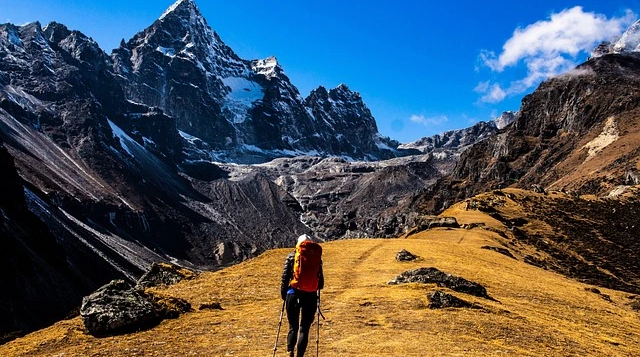
The Manaslu trek showcases extraordinary ecological diversity—subtropical forests with rhododendron blooms give way to terraced farmlands, then alpine meadows, and finally arctic desert approaching Larkya La Pass. The pass crossing reveals spectacular 360-degree panoramas including Manaslu's north face, Himalchuli, Cheo Himal, and Annapurna II. The route's remoteness creates pristine landscapes unmarred by development.
Cultural Differences:
Sherpa Culture (EBC): Sherpa Buddhist communities have adapted to trekking tourism while maintaining cultural traditions. Tengboche monastery offers daily ceremonies, Namche Bazaar features Sherpa museums and trading culture, and villages retain traditional architecture despite tourist infrastructure. The culture remains authentic but shows tourism influence.
Tibetan Culture (Manaslu): The Manaslu vs Everest culture difference proves dramatic—Manaslu villages preserve authentic Tibetan Buddhist traditions with minimal tourism impact. Samagaon and Samdo villages practice traditional agriculture, maintain ancient monasteries, and speak Tibetan dialects. Prayer wheels, chortens, and mani walls dominate landscapes, while villagers dress in traditional Tibetan clothing and practice polyandry marriage customs.
Permits and Regulations Comparison
| Permit Factor |
Everest Base Camp |
Manaslu Circuit |
| Sagarmatha NP |
$30 (required) |
Not needed |
| Khumbu Entry |
$20 (required) |
Not needed |
| Restricted Area Permit |
Not needed |
$100 (7 days Sep-Nov), $75 other months |
| Conservation Permit |
Included in NP |
MCAP $30 required |
| Annapurna CAP |
Not needed |
$30 if exiting via Dharapani |
| Total Permit Cost |
$50 |
$160-260 depending on season/route |
| Solo Trekking |
Allowed |
Forbidden by law |
| Guide Requirement |
Optional |
Mandatory with licensed guide |
| Minimum Group |
Solo okay |
2 trekkers minimum |
Permits for Manaslu and Everest trekking differ fundamentally in cost, requirements, and regulations. The Manaslu vs Everest permits cost comparison shows Manaslu as significantly more expensive ($160-260 vs $50 total) while imposing mandatory guide requirements and group minimums that Everest doesn't require.
Everest Base Camp Permits 2026:
- Sagarmatha National Park Permit: NPR 3,000 (~$30 USD)
- Khumbu Pasang Lhamu Entry Permit: NPR 2,000 (~$20 USD)
- Total cost: Approximately $50 per person
- Solo trekking: Completely legal and common
- Guide requirement: Optional; many trek independently
- TIMS card: No longer required for Everest region
- Processing: Can obtain in Kathmandu or at Monjo entry checkpoint
Manaslu Circuit Permits 2026:
Manaslu Restricted Area Permit (RAP):
- September-November: $100 per person for first 7 days, $15 per additional day
- December-August: $75 per person for first 7 days, $10 per additional day
- Issued by: Nepal Immigration Department
- Processing: Must be obtained through registered trekking agency
Manaslu Conservation Area Permit (MCAP):
- Cost: NPR 3,000 (~$30 USD)
- Issued by: Nepal Tourism Board
- Purpose: Conservation area entrance fee
Annapurna Conservation Area Permit (ACAP):
- Cost: NPR 3,000 (~$30 USD) if exiting via Dharapani
- Optional: Only needed if continuing to Annapurna Circuit
- Most trekkers exit via Dharapani: Usually required
Total Manaslu Permit Costs:
- Peak season (Sep-Nov): $100 (RAP) + $30 (MCAP) + $30 (ACAP) = $160 minimum
- Off-season (Dec-Aug): $75 (RAP) + $30 (MCAP) + $30 (ACAP) = $135 minimum
- Extended treks: Additional $10-15 per day beyond 7 days
Manaslu Guide Requirement:
The Manaslu trek guide requirement mandates all trekkers hire licensed guides through registered agencies. Solo trekking remains illegal—minimum two trekkers must trek together with guide. This regulation preserves the restricted area's character while supporting local guide employment and ensuring trekker safety in remote regions.
To know more in detail, check out our guide on how to get permits for nepal trekking.
Do I need a guide for Manaslu trek?
Yes, by law. Can I trek Everest Base Camp solo? Yes, completely legal and common.
Cost and Logistics Comparison
| Cost Factor |
Everest Base Camp |
Manaslu Circuit |
| Permits |
$50 |
$160-260 |
| Lukla Flights |
$350-450 round trip |
Not needed |
| Guide (mandatory) |
Optional ($25-35 per day) |
Mandatory ($25-35 per day) |
| Accommodation |
$5-12 per night |
$5-10 per night |
| Meals |
$20-35 daily |
$18-30 daily |
| Total Budget Package |
$950 |
$1449 |
| Access |
Fly to Lukla |
Drive to Soti Khola |
Manaslu vs Everest trek cost 2026 reveals similar total expenses despite different cost structures. The Manaslu trek cost vs EBC cost comparison shows Manaslu's higher permits ($160+ vs $50) and mandatory guide fees offset by avoided Lukla flights ($350-450), creating comparable overall budgets of $1,200-2,200 depending on service level.
Everest Base Camp Cost Breakdown:
- Permits: $50 total (Sagarmatha + Khumbu)
- Lukla flights: $350-450 round trip (major expense)
- Guide (optional): $25-30 daily × 12-14 days = $300-420
- Porter (optional): $18-22 daily × 12-14 days = $216-308
- Accommodation: $5-12 per night × 11-13 nights = $55-156
- Meals: $20-35 daily × 12-14 days = $240-490
- Total independent: $695-1,120 (without guide/porter)
- Total guided package: $1,200-2,000 (includes all services)
Manaslu Circuit Cost Breakdown:
- Permits: $160-260 (RAP + MCAP + ACAP combined)
- Transportation: Ground transport Kathmandu-Soti Khola $30-50
- Guide (mandatory): $25-30 daily × 13-15 days = $325-450
- Porter (optional): $18-22 daily × 13-15 days = $234-330
- Accommodation: $5-10 per night × 12-14 nights = $60-140
- Meals: $18-30 daily × 13-15 days = $234-450
- Total guided package: $1,500-2,200 (guide mandatory, all costs)
Cost Comparison Summary:
While individual cost components differ significantly (permits, flights vs road access), the total Manaslu vs Everest cost ends up comparable. EBC saves on permits ($110-210 less) but requires expensive Lukla flights. Manaslu avoids flights but charges premium restricted area permits and mandatory guide fees. Budget $1,500-2,000 for either trek with standard services.
Crowds and Solitude Comparison
EBC crowd vs Manaslu solitude represents one of the most significant experiential differences. The crowds Everest Base Camp vs Manaslu Circuit contrast shows Everest suffering from mass tourism (thousands of trekkers during peak months) while Manaslu maintains quiet trails with minimal trekker encounters.
Everest Base Camp Crowds:
Peak season (October-November, March-April) brings overwhelming crowds—hundreds of trekkers daily on popular sections, fully booked tea houses requiring advance reservations, congested trails creating bottlenecks on steep sections, and diminished wilderness experience. Namche Bazaar, Tengboche, and Gorak Shep become particularly crowded with limited accommodation forcing early check-ins or sleeping in dining rooms.
Manaslu Circuit Solitude:
The Manaslu Circuit preserves pristine quiet throughout the year thanks to restricted area status limiting permits. Even during peak season, you might encounter 5-15 groups total on the entire circuit versus Everest's hundreds daily. Many days pass without seeing other trekkers, creating genuine wilderness experience with pristine trails, available accommodation, and undisturbed village culture.
Which trek has more crowds, Everest or Manaslu?
Everest experiences 100-200x higher trekker numbers. Choose Manaslu if solitude and pristine wilderness matter more than iconic Everest views.
Best Season and Weather Comparison
| Season Factor |
Everest Base Camp |
Manaslu Circuit |
| Best Months |
Mar-May, Sep-Dec |
Mar-May, Sep-Nov |
| Avoid |
Jun-Aug (monsoon) |
Dec-Feb (heavy snow), Jun-Aug |
| Spring Weather |
Warmer, some haze |
Warmer, rhododendrons |
| Autumn Weather |
Crystal clear, cold |
Clear, very cold at pass |
| Winter Possibility |
Challenging but possible |
Not recommended (pass closed) |
| Monsoon Impact |
Moderate rain/clouds |
Heavy rain, leeches |
Best season for Manaslu or EBC trek aligns closely—both excel during spring (March-May) and autumn (September-November) with stable weather, clear visibility, and moderate temperatures. The Manaslu vs Everest trekking seasons differ slightly in winter feasibility—EBC remains possible with proper gear while Manaslu's Larkya La Pass often closes due to deep snow.
Autumn Season (September-November):
Both treks provide excellent conditions with crystal-clear post-monsoon visibility, stable weather, and comfortable daytime temperatures. October represents peak season with maximum crowds on Everest but still quiet on Manaslu. Night temperatures drop to -15°C to -20°C at highest points on both routes.
Spring Season (March-May):
Spring offers warming temperatures, blooming rhododendrons in lower forests, and generally good visibility though slightly hazier than autumn. Late May approaches monsoon with increasing afternoon clouds. Spring crowds prove lighter than autumn on both routes.
Winter and Monsoon:
Winter (December-February) becomes extremely cold at altitude with potential pass closures on Manaslu. EBC remains accessible with serious cold-weather gear. Monsoon (June-August) brings heavy rain, leeches, obscured views, and dangerous trail conditions on both routes—not recommended.
For more information, check out our blog on the best time to trek in Nepal.
Which Trek Should You Choose?
Choose Everest Base Camp If:
- You want to stand beneath the world's highest mountain
- Iconic Everest views and mountaineering heritage inspire you
- You prefer independent trekking without mandatory guides
- Solo trekking appeals (perfectly legal on EBC)
- You want well-established infrastructure and comfort
- Daily tea house options and reliable facilities matter
- You're comfortable with crowds during peak season
- Previous high-altitude experience limited
- First major Himalayan trek
- Moderate fitness with 8-12 weeks training
Choose Manaslu Circuit If:
- Solitude and pristine wilderness are priorities
- You want authentic Tibetan Buddhist culture less impacted by tourism
- You prefer quiet trails without crowds
- Remote adventure appeals more than famous destinations
- You have high fitness and previous trekking experience
- Dramatic pass crossing excites you
- You're willing to hire mandatory guide and group
- You want greater ecological diversity (five climate zones)
- Budget allows $160-260 permits plus mandatory guide
- You have 12-16 weeks for serious physical preparation
The Honest Assessment:
Everest Base Camp offers the classic Nepal trekking experience—iconic mountain views, cultural immersion, and proven infrastructure allowing independent travel. Perfect for first-time Himalayan trekkers wanting moderate challenge with Everest prestige.
Manaslu Circuit provides wilderness adventure—pristine solitude, authentic culture, and serious high-altitude challenge. Ideal for experienced trekkers seeking remote routes away from mass tourism, willing to accept mandatory guide requirements for genuine wilderness experience.
Can You Do Both?
Many trekkers complete both over separate trips—often EBC first (moderate difficulty, infrastructure) before graduating to Manaslu (strenuous challenge, remote conditions). This progression builds high-altitude experience and endurance systematically.
Ready to choose your Himalayan adventure?
Explore our comprehensive Everest Base Camp Trek package for detailed itineraries and expert guidance, or check our Manaslu Circuit Trek package for remote wilderness trekking with experienced guides ensuring safe, memorable journeys through Nepal's spectacular mountains.
Frequently Asked Questions
Which trek is harder: Everest Base Camp or Manaslu Circuit?
Manaslu Circuit is significantly harder than Everest Base Camp. Manaslu rates as strenuous with longer daily stages (6-9 hours vs 5-7 hours), greater total distance (177km vs 130km), demanding Larkya La Pass crossing (10-12 hours), and more remote conditions with less infrastructure. EBC rates as moderate with established trails, shorter days, and better facilities.
How many days are needed for Everest vs Manaslu trek?
Both treks require similar duration—Everest Base Camp needs 12-16 days total (10-14 trekking days) while Manaslu Circuit needs 13-16 days total (11-14 trekking days). Manaslu packs more distance into comparable timeframe, creating more demanding daily stages despite similar overall duration.
What are the altitude differences between EBC and Manaslu treks?
Everest Base Camp reaches higher maximum altitude—Kala Patthar at 5,545m versus Larkya La Pass at 5,160m (385m difference). However, Manaslu starts much lower (700m vs 2,860m), creating greater total elevation gain (4,500m vs 2,700m). Altitude sickness risk similar on both despite elevation difference.
What permits are required for Manaslu and Everest treks, and how much do they cost in 2026?
Everest requires Sagarmatha National Park permit ($30) and Khumbu entry permit ($20) totaling $50. Manaslu requires Restricted Area Permit ($100 peak season, $75 off-season), Manaslu Conservation Area permit ($30), and usually Annapurna Conservation Area permit ($30 if exiting via Dharapani), totaling $160-260 depending on season.
Do I need a guide for the Manaslu trek?
Yes, guides are mandatory by law for Manaslu Circuit. All trekkers must hire licensed guides through registered agencies. Solo trekking is forbidden—minimum two trekkers must trek together with guide. This regulation preserves the restricted area while ensuring safety.
Can I trek Everest Base Camp solo?
Yes, solo trekking is completely legal and common on Everest Base Camp. Guides are optional—many trekkers complete EBC independently using tea houses, trail signs, and maps. However, guides provide valuable navigation, altitude monitoring, cultural interpretation, and emergency support.
Which trek has more crowds, Everest or Manaslu?
Everest Base Camp experiences dramatically higher crowds—hundreds of trekkers daily during peak season (October-November, March-April) creating congested trails and fully booked tea houses. Manaslu maintains quiet trails year-round with perhaps 5-15 groups total on entire circuit, even during peak season, thanks to restricted area status limiting permits.
What is the best season for each trek?
Both treks excel during spring (March-May) and autumn (September-November) with stable weather, clear visibility, and moderate temperatures. Avoid monsoon (June-August) on both. Winter possible on EBC with serious gear but Manaslu's Larkya La Pass often closes due to heavy snow December-February.
How do the costs of Everest and Manaslu treks compare?
Total costs are comparable ($1,500-2,200 guided packages) despite different structures. EBC saves on permits ($50 vs $160-260) but requires expensive Lukla flights ($350-450). Manaslu avoids flights but charges premium permits and mandatory guide fees. Budget $1,500-2,000 for either trek with standard services.
Which trek is more scenic or culturally rich?
Everest offers iconic views of four 8,000m peaks (Everest, Lhotse, Makalu, Cho Oyu) and Sherpa Buddhist culture adapted to tourism. Manaslu showcases pristine wilderness, greater landscape diversity (five climate zones), and authentic Tibetan Buddhist culture less impacted by tourism. Both culturally rich but different characters—Sherpa vs Tibetan traditions.