Ever wondered why that $4,000 Everest Base Camp trek feels so expensive? Here's the truth: a Nepali operator is actually delivering it for around half that price, while the international brand you booked with pockets the difference.
In this blog about trekking companies in Nepal, we'll pull back the curtain on how the industry really works. International companies handle the marketing and sales part, sure, but then they subcontract everything (the actual trek, your guide, teahouse bookings, permits, emergency support) to local Nepali operators. The same team you could've booked directly with. We'll break down the subcontracting model, show you exactly what markup your paying, help you spot legitimate local operators, and explain why cutting out the middleman might be the smartest move you make.
How International Trekking Companies Actually Operate in Nepal
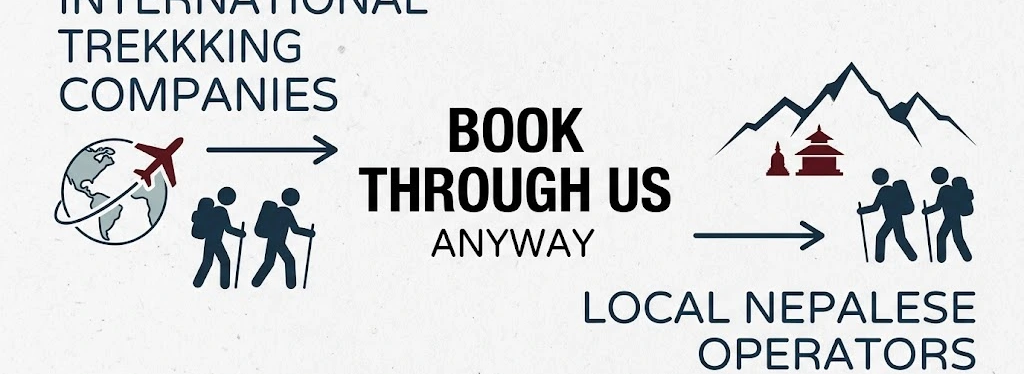
International trekking companies based in the US, UK, Australia, or Europe do not maintain their own guides, porters, or logistics teams in Nepal. They partner with local Nepali operators who handle everything on the ground. The guide walking beside you on the trail works for a Nepali company, not the international brand you booked with. This arrangement is called the "ground operator" or "inbound partner" model, where the international company sells the trip and collects your payment while the local Nepali company delivers the actual trek.
The work divides clearly: international companies handle marketing and sales in their home countries, while local Nepali operators process permits and paperwork, employ guides and porters, arrange accommodation and meals in teahouses, and coordinate emergency support with helicopter services and hospitals. If the local team does all the work, why pay a middleman? That is exactly what the rest of this article explains.
Why International Brands Quietly Subcontract to Local Nepali Operators
Foreign companies cannot legally employ Nepali trekking guides without establishing a local entity in Nepal, which is expensive and complicated for a seasonal business. Peak trekking season runs roughly March through May and September through November, meaning year-round staff would sit idle most of the year. Setting up offices, hiring full-time guides, and managing logistics in a foreign country simply does not make financial sense for international brands.
Local operators bring something international brands cannot replicate: relationships built over years with teahouse owners, permit offices, domestic airlines, and helicopter evacuation services. When flights get delayed or weather forces route changes, those connections keep your trek running smoothly. The subcontracting arrangement eliminates operational complexity for international companies. They focus on marketing to Western audiences while Nepali partners deliver the experience on the ground.
What Markup You Pay When You Book Through an International Company
When you book through an international trekking company, you pay their margin on top of what they pay the local operator. A portion of your payment never reaches Nepal at all. International companies carry overhead costs that local operators do not have: office rent in London or Denver, full-time customer service staff, digital marketing campaigns, and trade show appearances. Those costs get passed to you through higher package prices, sometimes with currency conversion fees embedded without disclosure.
The markup varies by company, but travelers commonly report paying $1,000 to $3,000 more for the same trek when booking through an international company versus a verified local operator. This extra cost covers international company margins, marketing overhead, administrative costs for booking platforms and customer service centers abroad. Not better guides, upgraded teahouses, or enhanced safety equipment on your actual trek.
Where Your Extra Money Actually Goes
The additional amount you pay an international company does not improve your on-ground experience. It funds their operations, not better guides, upgraded lodges, or enhanced safety equipment. Your guide remains the same licensed Nepali professional, your teahouse remains the same building on the same trail, and your permits come from the same government offices. The international markup pays for their office space, marketing campaigns, and customer service teams in Western countries.
When you book directly with a local operator, more of your money stays in Nepal, which translates to better wages for guides and porters, investment in safety equipment, and support for the communities along trekking routes. This direct booking model ensures your spending benefits the people who actually make your trek possible: the guides who lead you safely through high-altitude passes and the teahouse owners who provide warm meals and shelter along the trail.
What Is the Cost Difference Between International and Local Trekking Companies in Nepal?
The cost difference between international and local trekking companies in Nepal ranges from $1,000 to $3,500 depending on the route, with international operators charging nearly double what local companies charge for identical itineraries. International companies add marketing overhead, office expenses, and profit margins on top of what they pay Nepali ground operators, while local companies price treks based on actual operational costs, including guides, permits, accommodation, and meals.
This pricing gap exists across all major trekking routes in Nepal, from the Everest Base Camp Trek to restricted-area treks like Upper Mustang. The table below shows typical pricing for popular treks, comparing what international companies charge versus what verified local operators charge for the same route, same teahouses, same guide qualifications, and same permit coverage.
Everest Base Camp Trek Pricing
A standard 14-day EBC package from an international company typically runs $3,500–$5,500, while the same itinerary from a verified local operator costs $1,400–$2,200. Both packages include the same route to Everest Base Camp at 5,364m, the same teahouse accommodation along the trail, identical TIMS and Sagarmatha National Park permits, and licensed guides with high-altitude training.
The $2,000–$3,000 price difference does not buy you better guides, upgraded lodges, or enhanced safety equipment. It covers the international company's marketing costs, office overhead in Western countries, and profit margins. Your guide remains the same Nepali professional, your teahouse remains the same building on the same trail, and your permits come from the same government offices regardless of which company you book through.
Annapurna Circuit Trek Pricing
International operators charge $2,800–$4,500 for the Annapurna Circuit, while local operators deliver the same 14–18 day trek for $1,200–$1,800, including licensed guides, porters, teahouse accommodation, ACAP and TIMS permits, and most meals. The circuit crosses Thorong La Pass at 5,416m and requires proper acclimatization regardless of which company you book with.
Both pricing tiers use the same trail infrastructure, the same teahouse network, and guides with equivalent NMA licensing and altitude safety training. The markup you pay international companies funds their operations abroad, not improvements to your actual trekking experience in the Annapurna region.
Manaslu Circuit Trek Pricing
Manaslu requires booking through a registered Nepali agency by law because the restricted-area permit cannot be obtained otherwise, yet international companies still add their margin, charging $3,200–$5,000 for what local operators provide at $1,400–$2,000. This 14–16 day Manaslu Circuit trek circles Mount Manaslu (8,163 m) and crosses Larkya La Pass at 5,160 m, requiring special permits that only Nepali agencies can process.
Since you must book through a Nepali operator regardless, paying an international middleman adds no value to permit processing, guide qualifications, or trail logistics. The same restricted-area permit, the same teahouse accommodation, and the same licensed guide team deliver your trek whether you book direct or through an international brand.
Upper Mustang and Nar Phu Valley Pricing
Restricted-area permits for Upper Mustang and Nar Phu Valley require coordination through a registered Nepali agency regardless of how you book, yet international pricing runs $4,000–$6,500 while local operators charge $1,800–$2,800 for equivalent itineraries. Upper Mustang requires a $500 permit for 10 days, while Nar Phu Valley requires a special RAP permit that only Nepali agencies can obtain.
The international markup does not expedite permit processing, upgrade accommodation in remote villages, or provide better-trained guides. It simply adds overhead costs to the same service a local operator delivers. Your trek follows the same restricted trails, stays in the same limited teahouse options, and requires the same permits whether you pay $2,000 or $6,000.
What Do Local Operators Actually Earn From Each International Booking?
Local operators receive only 30–45% of what travelers pay international companies, meaning on a $4,000 international booking, the Nepali ground operator might receive just $1,200–$1,800 while the remainder stays with the international brand. This payment structure means the team actually guiding you, arranging your permits, booking your teahouses, and coordinating emergency support receives less than half of what you paid for the trek.
This margin compression affects the local operator's ability to pay guides fairly, invest in quality safety equipment, and provide proper insurance for porters. When budgets are squeezed by international middlemen taking large cuts, corners sometimes get cut in ways that affect your experience or safety: lower guide wages, heavier porter loads, or reduced emergency preparedness on remote trails.
How Does Booking Through International Companies Hurt Nepal's Local Economy and Guide Wages?
The subcontracting model reduces the money reaching Nepali communities, which means lower wages for porters and guides, reduced investment in trail infrastructure, and fewer resources for teahouse improvements along trekking routes. When international companies take 50–70% of your payment before it reaches Nepal, the economic benefit to local communities shrinks significantly compared to direct bookings with local operators.
Porters on budget-squeezed trips sometimes carry heavier loads or work without proper insurance because the local operator received a compressed margin from the international company. Guides may be paid rates that do not reflect their training, expertise, and the risks they manage at high altitude. Travelers who want their spending to benefit Nepal directly can make a meaningful difference by booking with local operators: same trek, same experience, but more of your money reaches the people who make it possible.
What Are Common Trekking Scams to Watch For in Nepal?
Common trekking scams in Nepal include unlicensed street touts offering suspiciously cheap treks, guides encouraging unnecessary helicopter evacuations for kickbacks, operators switching itineraries after payment, fabricated online reviews, and unlicensed guides lacking proper safety training. While most local operators are legitimate and TAAN-registered, understanding these scam patterns helps you avoid the small percentage of operators who cut corners or engage in fraudulent practices.
These scams typically target budget-conscious travelers in Kathmandu's Thamel district or those booking last-minute without proper verification. Legitimate operators provide transparent pricing, government registration numbers, licensed guides with NMA certification for high-altitude routes, and detailed written itineraries before accepting payment. Spending a few minutes verifying credentials protects your entire trek investment and ensures your safety on remote mountain trails.
The Thamel Walk In Trap
Unlicensed street touts in Kathmandu's Thamel district offer suspiciously cheap treks, sometimes 30–50% below market rates, by cutting corners on guide qualifications, porter welfare, or emergency preparedness. These operators often lack TAAN registration, proper insurance coverage, or relationships with teahouse owners, and some add hidden fees once you are on the trail where you have limited options to negotiate.
Legitimate local operators maintain offices, provide written contracts, and offer transparent pricing that reflects actual costs for licensed guides, proper permits, and adequate safety equipment. If a trek price seems too good to be true compared to verified operators, it usually means corners are being cut somewhere that affects your safety or experience.
The Helicopter Rescue Kickback
The "heli-evac scam" involves guides encouraging unnecessary helicopter evacuations to collect commissions from evacuation companies, sometimes $500–$1,000 per rescue. Recent investigations have uncovered cases where guides exaggerated altitude sickness symptoms, tampered with food to induce illness, or pressured mildly unwell trekkers into expensive evacuations that were not medically necessary. Understanding your travel insurance for Nepal trekking coverage before you hit the trail helps you recognize when evacuation recommendations are legitimate versus financially motivated.
Booking with reputable operators who pay guides fair wages reduces this risk, as guides earning proper salaries have less incentive to pursue evacuation kickbacks. Always get a second opinion on medical decisions at high altitude, understand your insurance coverage before trekking, and choose operators with transparent emergency protocols that prioritize your health over financial incentives.
The Bait and Switch Itinerary
Some operators sell one itinerary and deliver another, substituting lower-quality lodges, reducing trek duration by a day or two, or changing routes without explanation or refund. This scam works because once you are on the trail, you have limited ability to dispute changes or demand the original itinerary you paid for in Kathmandu.
Getting your complete itinerary in writing before payment protects against this, including specific teahouse names, daily routes, altitude gains, and included meals. Legitimate operators provide detailed day-by-day breakdowns and honor what they promise, while scam operators keep itineraries vague to maintain flexibility for substitutions that save them money.
The Fake Review Factory
Fabricated TripAdvisor or Google reviews are common, with some operators paying for positive reviews or posting fake testimonials using stock photos and generic praise. Look for detailed reviews mentioning specific guide names, exact trek dates, particular trail conditions, and realistic challenges rather than generic statements like "amazing experience" or "best company ever."
Patterns of identical language across multiple reviews, reviews posted in clusters on the same dates, or accounts with only one review suggest manipulation. Cross-reference reviews across multiple platforms, check for responses from the company that address specific details, and prioritize reviews from verified trekkers with established review histories.
The Unlicensed Guide Risk
Guides in Nepal are required to hold government licenses, including NMA (Nepal Mountaineering Association) certification for high-altitude routes above 4,000m, yet some budget operators use unlicensed guides who lack training in altitude sickness recognition and emergency response protocols. Unlicensed guides may have trail knowledge but miss critical symptoms of HACE or HAPE that require immediate descent or evacuation.
Requesting guide license numbers before booking is reasonable and standard practice with legitimate operators. Licensed guides have completed formal training in first aid, altitude physiology, rescue procedures, and environmental conservation, which directly affects your safety on remote trails where medical help is hours or days away.
How Do You Verify a Legitimate Local Trekking Company in Nepal?
You verify a legitimate local trekking company in Nepal by checking their TAAN (Trekking Agencies' Association of Nepal) registration, confirming their guides hold NMA licenses for high-altitude routes, reading independent TripAdvisor reviews with specific details, and requesting detailed written itineraries before payment. This verification process takes 15 to 20 minutes and protects your entire trek investment by ensuring you work with a licensed operator who maintains proper insurance, employs trained guides, and follows government regulations.
Legitimate operators provide transparent information willingly, including registration numbers, guide credentials, and itemized pricing breakdowns. Operators who hesitate to provide verification details, offer vague itineraries, or pressure you to pay deposits without written contracts raise red flags that suggest unlicensed operations or potential scams.
Check TAAN and Government Registration
TAAN (Trekking Agencies' Association of Nepal) maintains a registry of licensed operators that you can verify online through their official website or by requesting a company's registration number directly and confirming it with TAAN offices in Kathmandu. Registered companies have met government requirements for insurance, guide employment, and operational standards that protect trekkers.
Government registration also means the company can legally process trekking permits, employ Nepali guides under proper contracts, and maintain the insurance coverage required for commercial trekking operations. Unregistered operators cannot obtain permits for restricted areas like Manaslu or Upper Mustang, which immediately limits their legitimacy for certain treks.
Confirm NMA Licensed Guides and Porters
For treks above 4,000m, guides with NMA (Nepal Mountaineering Association) licensing have completed formal altitude safety training, first aid certification, and emergency response protocols specific to high-altitude environments. Requesting license numbers before booking is reasonable and standard practice. Legitimate operators provide this information immediately, often including guide profiles with photos and experience details.
NMA certification ensures your guide can recognize early symptoms of altitude sickness, knows proper acclimatization schedules, and understands when descent or evacuation becomes necessary. This training directly affects your safety on routes like Everest Base Camp, Annapurna Circuit, or Manaslu Circuit where altitude-related emergencies are the primary risk factor.
Read Independent TripAdvisor Reviews
Third-party review platforms like TripAdvisor are more reliable than testimonials on a company's own website because they include negative reviews, verified booking badges, and review histories that reveal patterns over time. Look for reviews with specific details about guide names, exact routes taken, particular challenges encountered, and how the company handled problems rather than generic praise.
Reviews mentioning specific dates, teahouse names, weather conditions, and guide performance provide more credibility than vague statements. Cross-reference reviews across Google, TripAdvisor, and trekking forums to identify consistent patterns in service quality, communication, and how operators handle unexpected situations on the trail.
Request a Detailed Itinerary and Inclusions List
Legitimate companies provide transparent breakdowns of what is and is not included before payment, specifying daily routes, altitude gains, teahouse names, meal coverage, permit types, guide-to-trekker ratios, and emergency protocols. Vague descriptions like "full board" or "all permits included" without itemization are warning signs that suggest the operator may substitute cheaper options or add hidden fees later.
A detailed itinerary should list each day's starting point, ending point, walking hours, altitude gain, accommodation name, and included meals. This specificity protects you from bait-and-switch tactics and ensures you understand exactly what you are paying for before transferring any deposit.
How Do You Book Direct With a Local Operator in Nepal?
You book direct with a local operator in Nepal by shortlisting two or three TAAN-registered companies, requesting itemized quotes that specify permits and inclusions, confirming guide licenses and payment security, and signing a written contract before paying a 20 to 30% deposit. This process typically takes 3 to 7 days of email communication and ensures you work with a verified operator who provides transparent pricing, licensed guides, and proper insurance coverage.
Direct booking eliminates international middlemen, reduces costs by $1,000 to $3,000 depending on the trek, and establishes direct communication with the team who will actually guide you on the trail. The steps below walk you through the verification and booking process to ensure you choose a legitimate local operator.
Step 1. Shortlist Two or Three Verified Local Companies
Compare multiple operators using TAAN registration verification, independent TripAdvisor reviews with specific details, transparent pricing on their websites, and responsiveness to initial email inquiries. Look for companies with established track records in your specific trek region: Everest specialists for EBC, Annapurna experts for the Circuit, or operators experienced in restricted areas for Manaslu or Upper Mustang.
Shortlisting multiple companies allows you to compare quotes, ask detailed questions about itineraries and safety protocols, and assess communication quality before committing. Operators who respond quickly with detailed answers and provide verification information without hesitation demonstrate professionalism that usually carries through to the actual trek.
Step 2. Request Custom Quotes and Compare Inclusions
Ask for itemized quotes specifying which permits are included (TIMS, ACAP, RAP, or restricted-area permits), meal coverage (breakfast only, half board, or full board), accommodation tier (basic teahouse, standard, or premium), guide-to-trekker ratio, porter availability, and emergency protocols including evacuation procedures. Comparing apples to apples requires understanding exactly what each quote includes and excludes.
Some operators quote lower prices but exclude permits, Kathmandu accommodation, or airport transfers that other operators include, making direct price comparison misleading. Request breakdowns that show the cost of guides, permits, accommodation, meals, and transportation separately so you can identify where price differences actually come from.
Step 3. Confirm Permits, Insurance, and Payment Terms
Clarify which permits the operator handles directly (TIMS, ACAP, RAP, or restricted-area permits) and confirm that payment methods are secure, preferably through bank transfer, PayPal, or established booking platforms rather than cash-only arrangements. Verify that the operator maintains proper insurance for guides and porters, and understand the cancellation policy including refund terms for weather delays or personal emergencies. Understanding Nepal Trekking Permit Rules 2026 helps you verify that your operator is processing the correct permits for your specific route.
Legitimate operators explain permit requirements clearly, provide permit copies before or during the trek, and use secure payment methods that create transaction records. Operators who insist on cash-only payments, provide vague permit information, or lack clear cancellation policies raise red flags about their legitimacy and professionalism.
Step 4. Sign the Booking Contract and Pay a Secure Deposit
Get a written agreement specifying the complete itinerary, cancellation terms, refund policy, included services, excluded costs, emergency procedures, and payment schedule before transferring any funds. A 20 to 30% deposit is standard for securing your booking, with the balance typically due upon arrival in Kathmandu or before the trek begins.
The contract protects both parties by documenting exactly what was agreed upon, preventing disputes about itinerary changes, additional costs, or service quality. Keep copies of all payment receipts, email confirmations, and the signed contract accessible during your trek in case any issues arise that require reference to the original agreement.
What Do You Gain by Booking Directly With a Nepal-Based Trekking Company?
You gain better pricing without international middleman markup, direct communication with the team who will actually guide you, easier customization of itineraries and dates, more of your payment staying in Nepal to support local communities, and faster response times due to local time zones and on-ground presence. Direct booking typically saves $1,000 to $3,000 compared to international companies while delivering the same guides, teahouses, permits, and trail experience.
The benefits extend beyond cost savings to include practical advantages like real-time communication with your guide before the trek, flexibility to adjust itineraries based on your fitness level or interests, and the satisfaction of knowing your spending directly supports Nepali guides, porters, and teahouse owners. The experience is the same, or better, because you are working directly with the people who know the trails, the teahouses, and the conditions.
- Better pricing: No international middleman markup, saving $1,000 to $3,000 on popular treks
- Direct communication: Speak with the actual guide team, ask specific questions, and get real-time updates
- Custom itineraries: Easier to adjust trek duration, rest days, side trips, and group size
- Local economic support: More of your payment stays in Nepal, supporting fair guide wages and community development
- Faster response: Local time zone alignment and on-ground presence mean quicker answers to questions
Book Smarter and Trek Better in Nepal With a Trusted Local Team
The truth is simple: the guides, the trails, the teahouses, and the mountains remain the same whether you book through an international brand or directly with a local operator. What changes is how much you pay and where your money goes. Booking directly with a verified Nepali company means better value, clearer communication, and the satisfaction of knowing your spending supports the people who make these treks possible: the guides who lead you safely through high passes, the porters who carry your gear, and the teahouse families who welcome you at the end of each day. If you're ready to experience Nepal's trails without the middleman markup, explore our fully inclusive trekking packages and start planning your journey with a team that knows these mountains by heart.
Frequently Asked Questions About Booking Trekking Companies in Nepal
What are the best trekking companies in Nepal?
The best companies are TAAN-registered, have verifiable TripAdvisor reviews, and provide transparent itineraries with licensed guides. Look for operators with a track record in the specific region you plan to trek, especially if you are a solo female traveler.
How much does a trekking guide cost in Nepal?
Guide costs vary by trek difficulty and duration, but booking directly with a local operator typically includes guide fees in the package price. Requesting an itemized quote shows exactly what portion covers guiding, usually $25 to $35 per day.
Is it safe for Americans and Europeans to trek in Nepal?
Nepal is a well-established trekking destination with strong safety infrastructure when travelers book with a reputable, licensed operator. Verifying company credentials and ensuring proper acclimatization protocols are the key factors.
Can I trust online reviews of Nepal trekking companies?
Independent platforms like TripAdvisor are more reliable than testimonials on a company's own website. Look for detailed reviews mentioning specific guides, routes, and dates rather than generic praise.
How far in advance should I book a trek directly with a local company?
Booking a few months ahead secures availability during peak seasons (spring and autumn), though local operators can often accommodate shorter notice, even for budget-friendly treks. Direct communication makes last-minute adjustments easier than booking through international middlemen.
What happens if I already booked through an international company?
Your trek will still be operated by a local Nepali team, and the on-the-ground experience is often identical. For future trips, booking direct gets you the same service at a better price.