So, is the Manaslu Circuit Trek difficult for seniors? It can be, especially around the higher sections and while crossing Larkya La. But altitude is only one part of the challenge. Long walking days, steep climbs, uneven trails, and how quickly you recover can also affect your experience.
For older trekkers, taking a few extra days can make a bigger difference than trying to walk faster. A steady pace gives your body more time to adjust and recover, while also making the journey more enjoyable. For a closer look at the trail, altitude, and overall challenges, check out our Manaslu Circuit Trek Difficulty guide.
Can You Do the Manaslu Circuit Trek at 50, 60, or Past 65?
Yes, you can, but your approach to the trek may need to change with age. A 52-year-old who hikes every weekend may handle the trail very differently from a 68-year-old who is fit but has little experience walking for several days at high altitude.
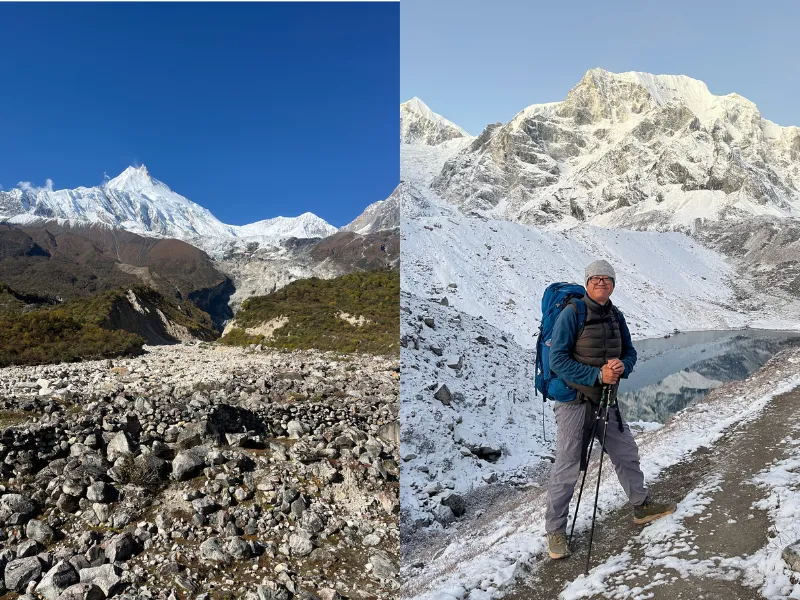
There is no exact age when the Manaslu Circuit suddenly becomes too difficult. Instead, look at your fitness, walking experience, recovery time, medical history, and how comfortable you are with long days outdoors. These things give a much better idea of how you may handle the trek.
In Your 50s
If you are in your 50s and already active, preparing for Manaslu does not have to be complicated. Regular hiking, long walks, hill walking, or even weekend walks can give you a good base.
The main goal is to get your body used to spending several hours on your feet. A trekking day can last around 6–8 hours, so it helps if this does not come as a big shock to your legs.
Start preparing around 8–12 weeks before the trek if possible. Focus on:
- Long weekend walks
- Uphill walking and stairs
- Step-ups and squats
- Core and balance exercises
- Walking with a light backpack
- Gradually increasing your walking distance
In short: If you are in your 50s, good fitness and regular preparation can give you a solid base for the Manaslu Circuit Trek.
In Your 60s
Being in your 60s does not mean you need to cross Manaslu off your travel list. However, recovery becomes more important, and you may not want to put several demanding walking days back to back.
This is where a slower itinerary can really help. Instead of worrying about how quickly you can reach the next village, focus on keeping a comfortable and steady pace. Take breaks when you need them, drink enough water, and give your body time to recover.
There is also a nice side to walking slower. You have more time to stop for tea, enjoy the mountain scenery, take photos, and talk with people along the trail. You are in the Himalayas, after all. There is no prize for arriving first.
In short: Trekkers in their 60s can consider Manaslu with good preparation, a comfortable pace, and careful acclimatization.
Can You Do the Manaslu Circuit Trek After 65?
Yes, some healthy and well-prepared trekkers can do the Manaslu Circuit Trek after 65, but planning becomes more important. Instead of simply joining a standard itinerary, it is better to build the trek around your own walking pace, fitness and recovery needs.
An itinerary of 18 days or more can give trekkers over 65 extra breathing room. You have more time to rest, adjust to altitude, and slow down if a particular day feels harder than expected.
A private guide can also be helpful because you do not have to follow the pace of a larger group. A porter is another useful option, as carrying less weight can leave more energy for the trail and the demanding Larkya La crossing.
In short: A Manaslu Circuit Trek after 65 can be possible, but extra days, careful acclimatization, appropriate medical advice, and a personalized pace are important.
What About a Manaslu Circuit Trek for a 70-Year-Old?
A Manaslu Circuit Trek for a 70-year-old needs more individual planning. A healthy 70-year-old who stays active and regularly walks may be capable of the trek, while another person of the same age may find it too demanding.
The high altitude and remote sections should not be underestimated. Larkya La reaches 5,106 meters, and the crossing involves a long day of walking. Getting medical advice before the trek is particularly sensible at this age.
Extra rest days, a private guide, porter support, and a slower pace can make the journey more manageable. Most importantly, the goal is not to keep up with younger trekkers. It is to enjoy the journey and reach the pass safely.
In short: A 70-year-old may be able to complete Manaslu, but the trek should be planned around individual health, fitness, experience, and recovery rather than age alone.
What Fitness Do Seniors Need for the Manaslu Circuit Trek?
You do not need to be a super-fit athlete to trek Manaslu after 50. But you should be comfortable walking for several hours, going uphill and downhill, and doing it again the next day. The trail is not a simple walk in the park, so having a good fitness base before you arrive will make things much easier.
Being generally healthy and being trekking-fit are also two different things. You might feel perfectly fine during your normal daily routine but find a 6–7-hour mountain day surprisingly tiring. The good news is that trekking fitness can be built slowly with regular walking and simple strength exercises.
Cardiovascular Endurance
Good cardiovascular fitness helps you walk for longer without getting overly tired or out of breath. You do not need to run marathons. Regular activities such as brisk walking, hiking, cycling, swimming, stairs, or uphill treadmill walking can all help.
Start with what feels comfortable and increase the time and distance little by little. If you normally walk for 30 minutes, do not suddenly decide to hike for five hours every weekend. Your body needs time to catch up.
Leg Strength and Muscular Endurance
Your legs will do plenty of work on the Manaslu trail. You will climb uphill, walk over uneven ground, and then use your muscles again during long descents.
Simple exercises can prepare your legs:
- Step-ups
- Squats
- Lunges
- Calf raises
- Glute bridges
- Stair climbing
Do not forget about downhill training. Going down can sometimes be harder on your knees than going up. A little strength work before the trek can make those long descents feel much more manageable.
Core Stability and Balance
Good balance is useful when walking over rocks, uneven paths and slippery sections of trail. This becomes even more important when you are tired.
You can work on balance without fancy equipment. Try standing on one leg, doing controlled step-ups, and adding simple core exercises to your routine. A few minutes regularly is better than doing a huge workout once in a while.
Flexibility and Joint Health
Your ankles, hips and legs need to move freely during long days on the trail. Gentle stretching and mobility exercises can help keep your body moving comfortably.
If you already have knee, hip, ankle or back problems, speak with a qualified health professional before increasing your training. It is much better to sort out a small problem at home than discover it halfway through the Himalayas.
Do Seniors Need Medical Clearance?
A medical check before a high-altitude trek is a sensible step for many older trekkers, particularly if you have existing health conditions. Your doctor can advise whether prolonged physical activity and travel to elevations above 5,000 meters are appropriate for you.
This is especially worth discussing if you have:
- Cardiovascular disease
- High blood pressure
- Respiratory conditions
- Diabetes
- Previous altitude-related problems
- Significant knee, hip, back or mobility issues
Do not rely only on feeling healthy. Everyday fitness is not the same thing as being prepared for a demanding high-altitude trek.
Simple Fitness Self-Check
Before heading to Nepal, ask yourself a few honest questions:
- Can I walk comfortably for several hours?
- Can I handle uphill and downhill walking?
- Can I walk several days in a row without needing a long recovery?
- Can I climb several flights of stairs at a steady pace?
- Am I comfortable walking on uneven ground?
- Can I carry a small daypack?
- Do I recover reasonably well after a long walk?
This is not a medical test, and there is no magic number that guarantees you will complete Manaslu. Think of it as a simple reality check. If several answers are "not yet," that is okay. It simply means you have something to work on before the trek.
What Are the Biggest Challenges Older Trekkers Face on the Manaslu Circuit?
For older trekkers, the main challenges on the Manaslu Circuit are altitude, long walking days, uneven trails, slower recovery, and the Larkya La Pass. None of these automatically mean you cannot do the trek, but they do mean you need to listen to your body and give yourself enough time.
As you move higher along the Budhi Gandaki Valley, the air gets thinner and walking can feel harder. Samagaon, Samdo and Dharamsala are important points where altitude becomes a bigger part of the trek. The remote nature of Manaslu is another thing to consider. Facilities are more basic than on some of Nepal's busier trekking routes, and medical help is not always close by.
Some common challenges include:
- Long walking days
- Steep climbs and descents
- Rocky and uneven trails
- Cold temperatures at higher elevations
- Changes in appetite and sleep at altitude
- Basic teahouse accommodation
- Limited medical facilities
- Needing more recovery time between walking days
- Crossing the 5,106-meter Larkya La Pass
For senior trekkers, trying to finish as quickly as possible is usually not the best approach. A steady pace, enough rest, good acclimatization, and a few buffer days can make a big difference. The mountains are not going anywhere, so there is little reason to race them.
What Does "Climb High, Sleep Low" Mean on Manaslu?
"Climb high, sleep low" means going to a higher altitude during the day and then returning to a lower place to sleep, when the route allows it. It gives your body some exposure to higher elevation without making you spend the night at the highest point you reached.
This approach can be useful in the upper Manaslu region. For example, while staying in Samagaon, you can take an acclimatization hike to a higher elevation and return to the village to sleep. Around Samdo, your guide may also plan a higher day hike depending on your condition, weather and trail conditions.
Why Is It Important for Seniors?
Age alone does not determine whether someone will get altitude sickness. A younger trekker can have problems too, while someone in their 60s may adjust perfectly well. What matters is giving your body enough time to adapt as you go higher.
For older trekkers, it is worth being patient with the process. A good acclimatization plan may include:
- Gaining altitude gradually
- Taking proper rest or acclimatization days
- Hiking higher during the day when appropriate
- Returning to a lower elevation to sleep when possible
- Drinking enough fluids and eating regularly
- Telling your guide about any unusual symptoms
- Avoiding the temptation to rush higher
And one important thing: you cannot simply train for altitude at home by being very fit. Fitness helps you handle the physical work, but your body still needs time to adjust to the thinner air.
What Is the Recommended Itinerary for Senior Trekkers?
For senior trekkers, a 16–18-day Manaslu Circuit itinerary can be a more comfortable choice than trying to finish the trek as quickly as possible. The extra days give you more time to rest, recover and adjust to the altitude. They also give you some flexibility if the weather changes, you feel more tired than expected, or a walking day takes longer than planned.
There is no need to treat the itinerary like a race. If you are in your 50s, 60s, or planning the Manaslu Circuit Trek after 65, walking at a steady pace can make the whole experience much easier. You have come to the Himalayas to enjoy the mountains, villages and trail, not just to tick off each day's destination.
Why Are Buffer Days Important for Senior Trekkers?
A buffer day gives you some breathing room when things do not go exactly according to plan. After several days of walking, you may need extra recovery time. Weather can also affect the trail, and altitude may take longer to adjust to than expected.
This extra flexibility can be especially useful for older trekkers. Instead of pushing yourself because the schedule says you have to reach the next village, you have the option to slow down and continue when your body is ready.
Buffer days can help with:
- Extra recovery after a long walking day
- Additional acclimatization if needed
- Poor weather or trail conditions
- Road transportation delays
- A slower walking pace
- Rest before crossing Larkya La
- Changes caused by altitude symptoms
You may not end up using every buffer day, and that is perfectly fine. Having them in the plan means you have options when something unexpected happens.
Can the Manaslu Itinerary Be Customized for Seniors?
Yes. Himalayan Hero can customize the Manaslu Circuit itinerary around your fitness, walking pace, available time and acclimatization needs. A trekker in their 50s may be comfortable with a regular itinerary, while someone in their 60s or over 65 may prefer more recovery time and a little extra flexibility.
A private guide can also let you walk at your own pace instead of trying to keep up with a larger group. Hiring a porter can reduce the weight you carry, leaving more energy for the long walking days and the Larkya La crossing.
If you are planning the Manaslu Circuit Trek after 65 or around 70, talk with your trekking company about your previous hiking experience, current fitness and preferred pace before booking. A good itinerary should fit the trekker, not force the trekker to fit the itinerary.
What Should Seniors Know About the Larkya La Pass?
For many trekkers, crossing Larkya La is the toughest day of the Manaslu Circuit Trek. The pass sits at about 5,106 meters, and the day usually starts early. You will climb for several hours, cross the high pass, and then make a long descent toward Bimthang.
For senior trekkers, the key is not speed. Starting early, walking at a steady pace and taking care of your energy can make a big difference. Your guide will look at the weather, snow, wind, visibility and your walking speed when planning the day. If conditions are not good, the plan may need to change.
What Is the 2 PM Rule?
The “2 PM rule” is a practical safety guideline used by some trekking teams, not a fixed government rule for every Manaslu trek. If you are moving too slowly or have not reached an important point by around 2 PM, your guide may suggest turning back or changing the plan.
The reason is simple. Weather and visibility can change quickly in the high mountains, and continuing late in the day may add unnecessary risk. Your guide will consider the current weather, trail conditions, your health and how you are progressing before making that call.
For senior trekkers, being willing to change plans can be more important than sticking rigidly to the original schedule.
How Can Seniors Make Larkya La Easier?
You cannot make Larkya La a short walk, but you can make the day more manageable with a little preparation.
- Start early and follow your guide's advice.
- Keep a slow, steady walking rhythm.
- Eat a good breakfast, even if your appetite is low.
- Drink regularly throughout the day.
- Carry only the essentials in your daypack.
- Use trekking poles, especially on uneven ground and the descent.
- Keep warm layers, gloves and other essentials easy to reach.
- Take short breaks rather than stopping for too long.
- Tell your guide if you feel unwell or notice unusual altitude symptoms.
- Do not try to match the pace of younger or faster trekkers.
And remember, reaching the top is only half the job. The descent from Larkya La can also be long and tiring, especially for your knees and legs. Saving some energy for the way down is just as important as getting to the pass.
When Is the Best Time for Senior Trekkers to Trek Manaslu?
For most senior trekkers, spring and autumn are the best times for the Manaslu Circuit Trek. The weather is generally more stable, mountain views are often clearer, and trail conditions are usually easier to manage. For older trekkers, having more predictable conditions can make a real difference, especially on the higher sections and around Larkya La.
Here is a simple month-by-month look:
What Safety Tips Should Older Trekkers Follow in Nepal?
For older trekkers, safety should be part of the plan from the beginning, not something to think about only when a problem happens. Before leaving home, check that your travel insurance covers high-altitude trekking up to the 5,106-meter Larkya La Pass, as some standard policies may not cover trekking at higher elevations. It is also sensible to get a medical check when appropriate, carry your regular medication in your daypack, and leave your itinerary and emergency contact details with family or friends at home.
Useful Safety Measures
- Choose insurance that covers high-altitude trekking and evacuation if needed.
- Carry necessary personal medication in your daypack.
- Use trekking poles for balance and uneven trails.
- Drink water regularly and eat enough during the trek.
- Use SPF 50+ sunscreen and good-quality sunglasses or glacier glasses.
- Keep warm layers easy to reach.
- Keep emergency contact details available.
- Consider a satellite communicator such as Garmin inReach in remote areas.
- Register your travel details with your embassy or relevant government travel service when available.
- Listen to your guide if weather, trail or health conditions change.
Most importantly, take altitude symptoms seriously. Headache, nausea, dizziness and unusual tiredness should not simply be ignored at high altitude. Tell your guide as soon as you feel unwell so they can assess the situation and decide whether you should rest, descend or change the plan.
Why Do Some Seniors Choose Manaslu Over Everest Base Camp?
Some older trekkers choose Manaslu because they want a quieter and more cultural Himalayan experience. The trail passes through traditional mountain communities, Buddhist monasteries and Tibetan-influenced villages, while the scenery changes as you travel higher through the Budhi Gandaki Valley. You also get impressive views of Mount Manaslu along the way.
Everest Base Camp offers a different experience, with the famous Khumbu landscape, Sherpa culture and the iconic Everest region. Manaslu is more focused on the journey through remote mountain communities and changing landscapes. For seniors who enjoy taking their time, cultural experiences and quieter trails, this difference can be an important part of choosing their trek.
What Are the Benefits of Trekking in the Himalayas After 50?
Trekking after 50 is not only about reaching a high pass. It can be a chance to spend more time outdoors, step away from your normal routine and experience places that you cannot really understand from a vehicle window. Preparing for the trek also gives you a reason to stay active through regular walking, hill training and simple strength exercises.
Then there are the small moments that stay with you: sitting in a mountain teahouse with a hot cup of tea, walking through quiet villages and waking up with Himalayan peaks outside your window. You may walk slower and take more breaks than you did years ago, and that is completely fine. The goal is not to race through the Himalayas, but to have the time to enjoy being there.
What Should Seniors Pack for the Manaslu Circuit Trek?
Senior trekkers should aim for a practical packing list rather than carrying everything they own. Keeping your personal daypack light can make long walking days much more comfortable.
Senior Trekking Checklist
- Comfortable broken-in trekking boots
- Trekking poles
- Warm down jacket
- Waterproof jacket
- Thermal base layers
- Warm hat and gloves
- Sun hat
- SPF 50+ sunscreen
- UV-protection sunglasses
- Water bottles or hydration system
- Water purification method
- Personal medications
- Basic first-aid supplies
- Headlamp
- Comfortable trekking trousers
- Warm sleeping bag suitable for cold nights
- Lightweight daypack
- Power bank
- Personal hygiene items
- Copies of important documents
- Travel insurance details
A porter can carry the larger bag, leaving you with a lighter daypack for water, snacks, clothing layers and personal items.
For the complete list, see our Manaslu Circuit Trek Packing List.
Final Thoughts
The Manaslu Circuit Trek for seniors over 50 is not about proving that age does not matter. Age matters, but it is only one part of the picture. Your fitness, health, preparation, walking pace, acclimatization and itinerary can matter much more. If you are in your 50s, 60s, or planning a Manaslu Circuit Trek after 65, taking extra time and choosing a comfortable pace can make the journey much more enjoyable. You do not have to race to Larkya La or keep up with younger trekkers. Take an extra break, stop for a cup of tea, look around at the mountains and enjoy the moments you came all this way to experience.
Maybe the dream is not just reaching 5,106 meters. Maybe it is walking through quiet mountain villages, standing beneath huge Himalayan peaks and coming home with a story you will remember for years. If you are ready to turn that dream into a real trip, Himalayan Hero can help customize the Manaslu Circuit Trek around your pace, fitness and rest needs. You can also explore the Manaslu Base Camp Trek or Manaslu Tsum Valley Trek if you want a different way to experience the region. The right trek is the one that gives you enough time to enjoy the journey, not just finish it.
Frequently Asked Questions
What is the age limit for the Manaslu Circuit Trek?
There is no general maximum age based only on age, but trekking agencies may have their own policies and medical requirements.
Can a 65-year-old do the Manaslu Circuit Trek?
Yes, a healthy and well-prepared 65-year-old may be able to complete it with proper acclimatization, a slower itinerary and medical clearance when appropriate.
Is the Manaslu Circuit Trek harder than Everest Base Camp?
It can be harder for some trekkers because of the remote terrain, long days and Larkya La Pass, but individual fitness and acclimatization make a major difference.
What is the best Nepal trek for seniors?
The best trek depends on fitness, altitude tolerance, walking experience, available time and personal interests rather than age alone.
Can beginners over 50 do the Manaslu Circuit Trek?
Yes, beginners over 50 can potentially do it, but they should prepare well, use a suitable itinerary and avoid rushing the high-altitude sections.
How hard is the Larkya La Pass?
Larkya La is one of the hardest parts of the Manaslu Circuit because it reaches about 5,106 meters and involves a long ascent followed by a demanding descent.
Should seniors hire a porter in Nepal?
Yes, a porter can be very useful for senior trekkers because carrying less weight can reduce fatigue during long walking days.
How long should seniors acclimatize before the Larkya La Pass?
A conservative itinerary should include acclimatization around Samagaon and time at higher elevations before attempting Larkya La.
What is the "climb high, sleep low" rule?
It means hiking to a higher elevation during the day and returning to a lower elevation to sleep when the itinerary allows it, helping your body adapt to altitude.
Is the Manaslu Circuit Trek suitable for someone with no trekking experience past 60?
It can be suitable for some first-time trekkers over 60, but they should have good walking fitness, obtain appropriate medical advice and choose a slower, well-supported itinerary.