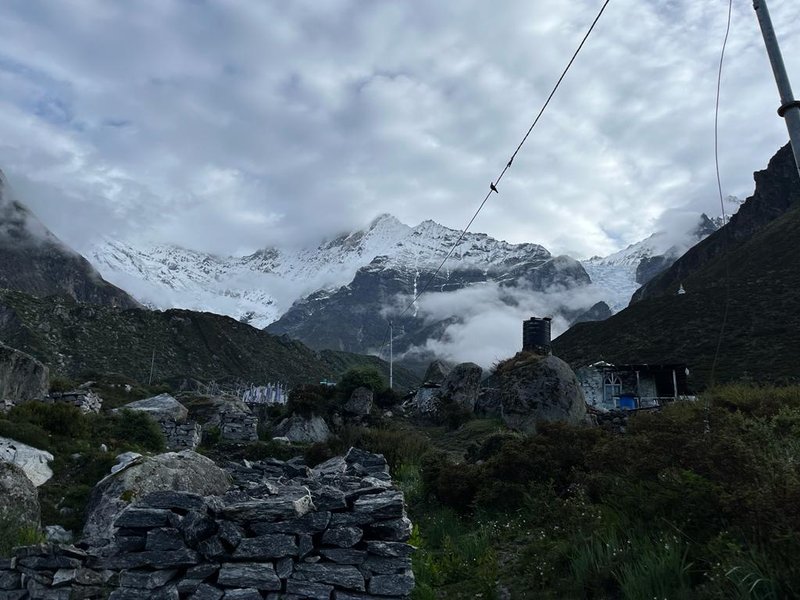
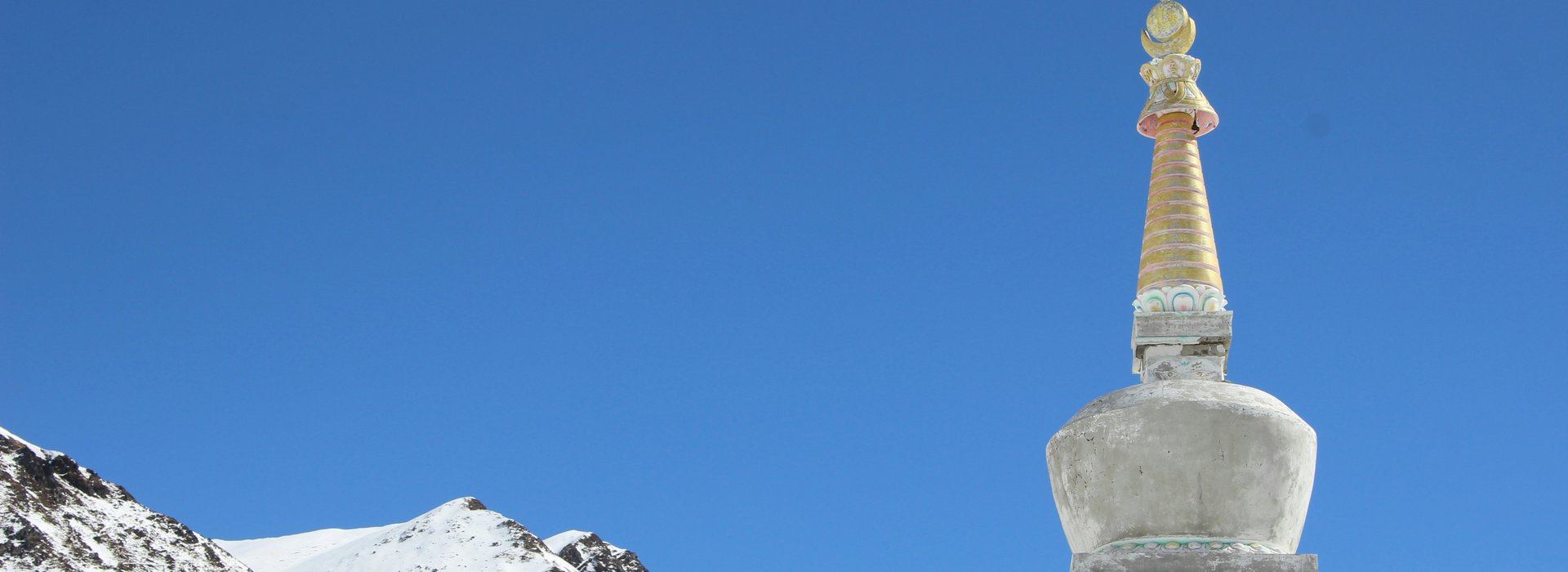
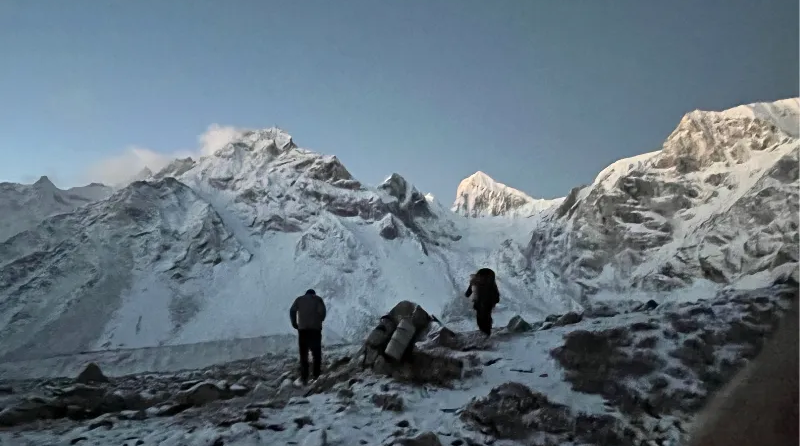
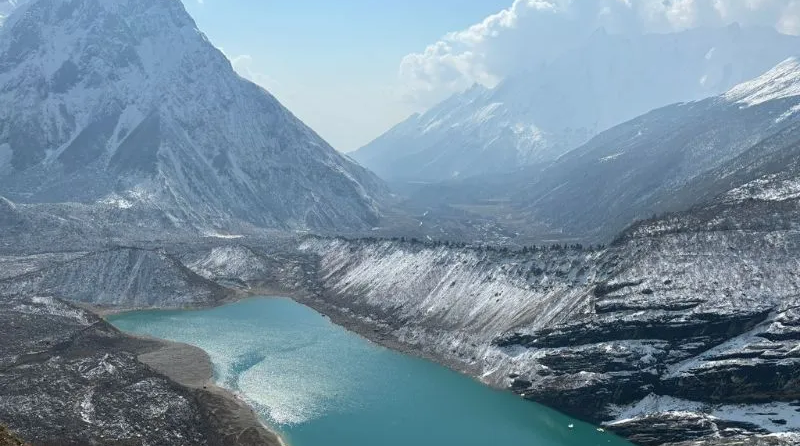
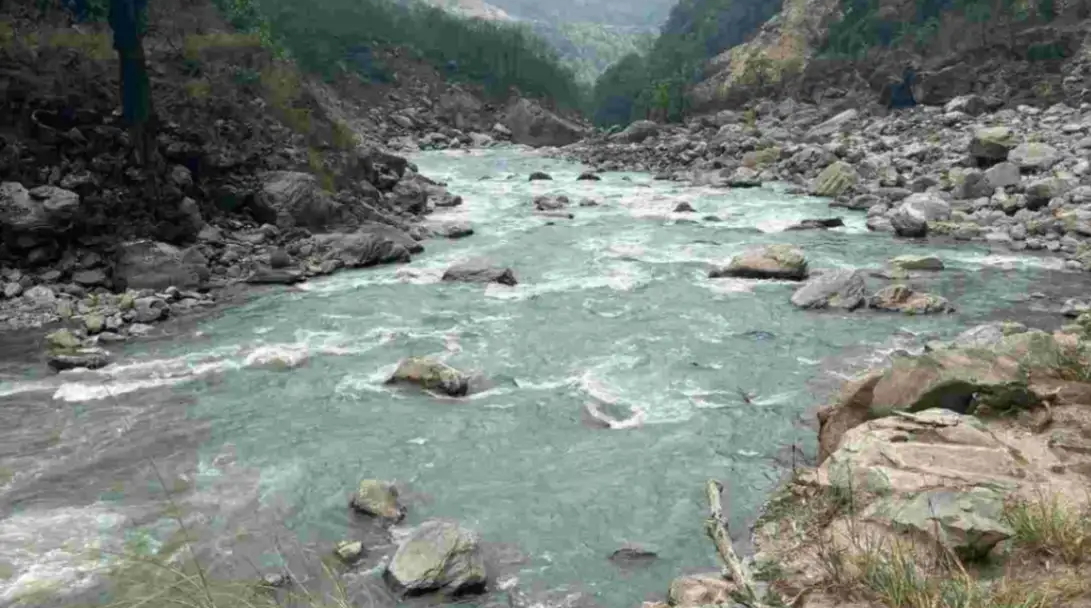
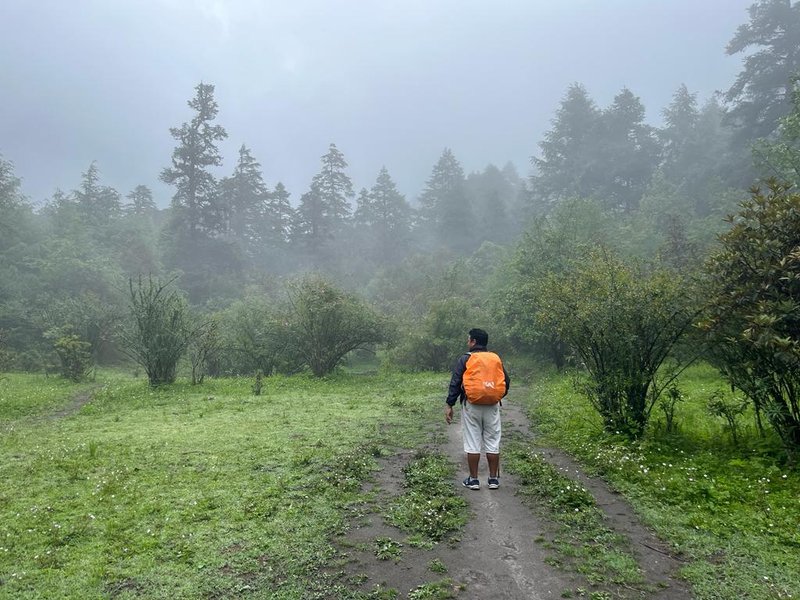
Timing your trek correctly is the single most consequential planning decision you will make for Langtang Valley. The difference between a clear autumn morning with Langtang Lirung (7,234 m) shining above Kyanjin Gompa and a monsoon week of cloud, leech-covered trails, and obscured peaks is entirely determined by when you go.
This guide covers every season, every month, and every weather variable — so you can match your travel window to the conditions that suit your specific priorities.
Quick Answer: What Is the Best Time to Trek Langtang Valley?
The best time to trek Langtang Valley is October and November for maximum visibility and stable weather, and March to May for rhododendron blooms with excellent mountain views. Both seasons offer dry trails, mild daytime temperatures, and clear views of the Langtang Himal. October–November delivers the sharpest mountain visibility of the year. March–May offers spectacular wildflower scenery at lower elevations with warm, comfortable trekking conditions.
Understanding Langtang Valley Weather
Langtang Valley's climate is driven by two dominant systems: the South Asian monsoon, which brings heavy rainfall from June through August, and the dry Himalayan winter, which brings cold temperatures and occasional snowfall from December through February.
Between these two extremes sit the two golden trekking windows — spring (March–May) and autumn (September–November) — which consistently deliver the best combination of visibility, trail conditions, and comfortable temperatures across the valley's full elevation range from Syabrubesi (1,503 m) to Kyanjin Gompa (3,870 m).
- Climate is dominated by monsoon (June–Aug) and dry Himalayan winter (Dec–Feb)
- Two optimal trekking windows: spring (Mar–May) and autumn (Sep–Nov)
- Elevation range from 1,503 m to 3,870 m creates significant temperature variation within a single day
- Weather at Kyanjin Gompa is considerably colder and more variable than at lower elevations
- Mountain visibility is the single most weather-sensitive factor for trekker satisfaction
The valley's north–south orientation creates a microclimate gradient — the lower forest zone near Syabrubesi and Lama Hotel (2,380 m) is noticeably warmer and more sheltered than the open glacial basin at Kyanjin Gompa. Always prepare for the temperature range of the highest point, not the average of the route.
Langtang Valley Trekking Seasons at a Glance
Spring — March to May: Colour, Warmth, and Great Visibility
Spring is Langtang Valley's most visually spectacular trekking season. As winter snow retreats from the lower slopes, the rhododendron forests between Syabrubesi and Lama Hotel erupt in deep reds, pinks, and whites — creating the most photogenic lower-valley trail conditions of the year.
Daytime temperatures on the trail are comfortable throughout spring, ranging from 10°C to 18°C at mid-elevations. Mornings at Kyanjin Gompa are cold (0°C to 5°C) but not extreme. The weather follows a reliable pattern: clear mornings with some afternoon cloud build-up, particularly from May onward as pre-monsoon moisture begins to influence conditions.
- Rhododendron forests in full bloom March–April between Syabrubesi and Lama Hotel
- Daytime trail temperatures: 10°C–18°C at mid-elevation
- Morning temperatures at Kyanjin Gompa: 0°C–5°C
- Clear mornings with afternoon cloud build-up, especially in May
- Moderate trail crowds — busier than winter, less congested than autumn
March is the best single month of spring — cold air from winter has cleared, snowfall above 3,500 m is minimal, rhododendrons are beginning to bloom, and trail traffic hasn't yet peaked. April delivers the fullest rhododendron bloom and warm, stable conditions. May is still viable but increasingly affected by afternoon clouds.
For a guided spring trek with everything arranged, the Langtang Valley Trek package from Himalayan Hero includes licensed guide, permits, teahouse accommodation, and transport — starting from USD 499.
Monsoon — June to August: Lush but Challenging
The monsoon season is not recommended for the Langtang Valley Trek. Heavy and persistent rainfall from June through August creates slippery trails, active leeches throughout the lower forest sections, and cloud cover that obscures the mountain views most trekkers are specifically seeking.
The landscape itself is at its most lush and green — waterfalls roar at full volume along the Langtang Khola, the forest floor is carpeted in moss and fern, and the valley's lower sections feel genuinely primordial. For trekkers who prioritise solitude and botanical scenery above mountain views, monsoon has a niche appeal.
- Heavy rainfall June–August creates slippery, leech-active trails below 3,000 m
- Cloud cover frequently obscures Langtang Lirung and the high peaks
- Landslide risk on access roads to Syabrubesi is elevated during monsoon
- Trail is at its least crowded — full solitude is easily achieved
- Lush waterfalls, moss forests, and river volume at peak — appealing for botanists
The practical risks are real: landslides can close the road to Syabrubesi, and the cloud conditions that define monsoon mean many trekkers complete the trek without ever seeing the high peaks clearly. Budget-conscious trekkers occasionally use the monsoon window for its lower teahouse prices, but most find the trade-offs unfavourable.
Autumn — September to November: The Gold Standard Season
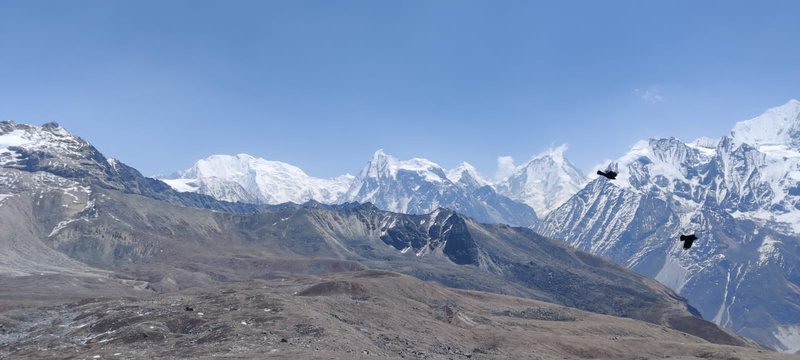
Autumn is the best overall season for the Langtang Valley Trek. Post-monsoon air is exceptionally clean — the summer rains have scrubbed the atmosphere, producing the year's sharpest mountain visibility. Langtang Lirung's summit and the glaciated northern ridgelines above Kyanjin Gompa are visible with a clarity that no other season matches.
Trail conditions are dry and firm from September onward. Temperatures are ideal for sustained trekking — cool enough to walk comfortably, warm enough to sit outside at Kyanjin Gompa without discomfort at lunch. October is the single most reliable month on the entire Langtang trekking calendar.
- Post-monsoon atmosphere delivers the year's clearest mountain visibility
- Dry, firm trail conditions throughout the valley from Syabrubesi to Kyanjin Gompa
- October daytime temps: 8°C–15°C mid-elevation; -2°C to 5°C at Kyanjin Gompa
- November cools significantly; Kyanjin Gompa nights drop to -8°C to -12°C
- Highest trail traffic of the year — teahouse booking in advance advisable
September deserves more attention than it typically receives. The monsoon clears in Langtang slightly earlier than on Annapurna and Everest routes, and September trekkers often experience excellent visibility with the trail still quiet from the summer low season. October is peak demand; book in advance. November remains excellent but requires cold-weather gear for the Kyanjin zone.
Winter — December to February: Solitude and Cold
Winter trekking in Langtang Valley is possible but demands preparation and flexibility. Daytime skies are often brilliantly clear — the Himalayan winter atmosphere delivers sharp, high-contrast mountain views on many mornings. Trail traffic drops dramatically, creating conditions that suit solitude-seeking trekkers.
The trade-off is temperature. Kyanjin Gompa nights in January and February regularly reach -15°C to -20°C. Snow above 3,000 m can accumulate and make trail sections between Ghora Tabela and Kyanjin Gompa icy and demanding without proper footwear. The road to Syabrubesi can also be affected by frost and ice on the higher sections.
- Clear, sharp mountain views on many winter days — some trekkers rate the clarity equal to autumn
- Kyanjin Gompa night temperatures: -15°C to -20°C in January–February
- Snow possible above 3,000 m from December; above 2,500 m in January–February
- Trail is at its quietest — genuine wilderness conditions achievable
- A 4-season rated sleeping bag and insulated layers are non-negotiable above 3,000 m
December is the most accessible winter month — temperatures haven't reached their minimum, snow accumulation is usually limited to above 3,500 m, and daytime trail conditions are manageable with proper layering. January and February are the coldest months of the year and suit experienced cold-weather trekkers specifically. February brings the first hints of spring — some early rhododendron species begin to bud by late February at lower elevations.
For trekkers interested in extending their winter itinerary to the sacred Gosaikunda lakes (4,380 m), the Langtang Gosaikunda Trek is best avoided in winter months when the pass conditions above Gosaikunda can be serious. Spring and autumn are the appropriate seasons for the combined route.
Month-by-Month Langtang Trekking Guide
| Month |
Day Temp (Trail) |
Night Temp (Kyanjin) |
Visibility |
Trail Condition |
Crowds |
| January |
2°C–10°C |
-15°C to -20°C |
Clear |
Snow above 3,000 m |
Very low |
| February |
4°C–12°C |
-12°C to -18°C |
Clear |
Icy above 2,500 m |
Very low |
| March |
8°C–16°C |
-5°C to -8°C |
Good |
Dry, rhododendrons |
Low–Moderate |
| April |
10°C–18°C |
0°C–5°C |
Good |
Dry, full bloom |
Moderate |
| May |
12°C–20°C |
2°C–7°C |
Moderate |
Dry, PM cloud |
Moderate |
| June |
14°C–22°C |
5°C–10°C |
Poor |
Wet, leeches |
Very low |
| July |
15°C–22°C |
8°C–12°C |
Very poor |
Wet, slippery |
Very low |
| August |
14°C–21°C |
7°C–12°C |
Poor |
Wet, improving |
Very low |
| September |
10°C–18°C |
2°C–6°C |
Very good |
Drying out |
Low |
| October |
8°C–15°C |
-2°C to 3°C |
Excellent |
Perfect |
High |
| November |
4°C–12°C |
-8°C to -12°C |
Excellent |
Clear and dry |
Moderate–High |
| December |
2°C–8°C |
-10°C to -15°C |
Very good |
Cold, some snow |
Low |
Kyanjin Gompa Weather and Temperature
Kyanjin Gompa at 3,870 m experiences a significantly harsher climate than the lower valley, and trekkers who prepare only for mid-elevation conditions frequently underestimate the cold at this altitude.
In the optimal autumn window (October–November), daytime temperatures at Kyanjin Gompa hover between 5°C and 12°C in sunshine, dropping sharply to -2°C to -12°C after sunset. Windchill on exposed sections above the valley floor — particularly on the approach to Kyanjin Ri (4,773 m) — makes perceived temperatures significantly lower than the thermometer reading.
- October at Kyanjin: Day 5°C–12°C / Night -2°C to -5°C
- November at Kyanjin: Day 2°C–8°C / Night -8°C to -12°C
- January–February at Kyanjin: Day -2°C to 5°C / Night -15°C to -20°C
- March–April at Kyanjin: Day 2°C–10°C / Night -5°C to 0°C
- Windchill on ridge approaches to Kyanjin Ri can add 5°C–8°C to perceived cold
The teahouses at Kyanjin Gompa have communal dining rooms with basic wood or yak-dung heating — the warmest place in the building. Unheated sleeping rooms require a quality sleeping bag rated for at least -10°C in autumn and -20°C in winter. This is not optional gear — it is the difference between sleeping and not sleeping at altitude.
When Do Rhododendrons Bloom in Langtang Valley?
The rhododendron bloom in Langtang Valley peaks between late March and mid-April, primarily in the temperate forest zone between Syabrubesi (1,503 m) and Lama Hotel (2,380 m). This section of the trail passes through what is part of the world's largest rhododendron forest — Langtang National Park's temperate zone is one of the most rhododendron-dense protected areas in the Himalayas.
Species bloom at different altitudes at slightly different times:
- Below 2,000 m — Lower-elevation species bloom from late February to early March
- 2,000–2,500 m — Peak bloom late March to early April (most visually dramatic section)
- 2,500–3,500 m — Higher-elevation species bloom late April to early May
- Above 3,500 m — Alpine rhododendron species bloom May to early June
The trail section from Bamboo to Lama Hotel in late March delivers the fullest concentration of red, pink, and white rhododendron canopy in the valley. This is the closest Nepal comes to the famous cherry blossom trail effect — dense colour overhead, underfoot, and on both sides of the path simultaneously.
Snow Season in Langtang Valley
Significant snowfall in Langtang Valley occurs from late November through February, primarily above 3,000 m. Kyanjin Gompa and the approach sections from Ghora Tabela upward are the most affected areas.
Light dustings at Kyanjin Gompa are possible as early as October in heavy-snow years, but these rarely accumulate to trail-blocking levels during the autumn trekking window. The risk increases sharply from November onward.
- Kyanjin Gompa: snowfall possible October onward; significant from December
- Ghora Tabela to Kyanjin section: icy conditions possible from November
- Lower trail (below 2,500 m): snowfall rare below 2,000 m even in January
- Snow typically melts from lower sections by mid-March
- Heavy snow years can keep the Kyanjin area challenging until April
Winter trekkers specifically seeking snow scenery should target January for maximum coverage at Kyanjin Gompa — the valley in full winter conditions, with snow-covered yak pastures and ice-edged streams against blue sky, is genuinely spectacular for photography.
Best Time for Photography in Langtang Valley
Photography priorities determine the optimal season differently than general trekking comfort.
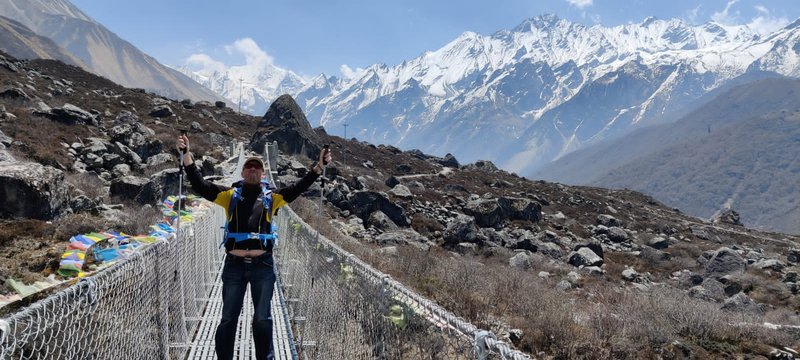
For mountain peak photography — October is the undisputed best month. The post-monsoon atmosphere delivers deep-blue skies, zero haze, and the year's highest contrast between the white snow peaks and clear sky background. Langtang Lirung's north face from the Kyanjin Gompa viewpoint in October light is as dramatic as any mountain photography location in Nepal.
For landscape and flora photography — Late March to mid-April, when rhododendron forests are in peak bloom and the lower trail is carpeted in colour. Morning light filtering through rhododendron canopy at Bamboo and Lama Hotel is uniquely soft and warm.
For snow landscape photography — January and February at Kyanjin Gompa deliver the most dramatic snow scenery, but require sunrise starts (pre-dawn cold) and cold-weather camera battery management.
- October: best for mountain peak photography — deepest blue sky of the year
- Late March–April: best for rhododendron and forest photography
- January: best for snow landscape photography at Kyanjin Gompa
- November: excellent for peak photography with winter moodiness beginning to develop
- All seasons: the Langtang Khola river is most dramatic during and just after monsoon
Best Season Based on Your Travel Style
| Trekker Type |
Best Month |
Reason |
| First-time trekker |
October |
Ideal conditions, easy planning, stable weather |
| Photographer (peaks) |
October |
Clearest skies, highest contrast, sharpest views |
| Photographer (nature) |
Late March–April |
Rhododendron bloom peak |
| Budget traveler |
September |
Low crowds, good conditions, lower teahouse prices |
| Snow lover |
January–February |
Maximum snow cover at Kyanjin Gompa |
| Rhododendron lover |
Late March–April |
Full bloom in temperate forest zone |
| Experienced cold-weather trekker |
December–February |
Solitude, clear skies, serious winter conditions |
| Solo trekker |
September or March |
Good conditions with lower crowd pressure |
| Short on time |
October |
Most reliable single window; lowest cancellation risk |
| Avoiding crowds |
September |
Post-monsoon quiet before the October peak rush |
Spring vs Autumn: Which Is the Better Season?
The most common planning debate for the Langtang trek best season decision is spring vs autumn. Here is the direct comparison.
| Factor |
Spring (Mar–May) |
Autumn (Sep–Nov) |
| Mountain Visibility |
Very good (AM) |
Excellent (all day) |
| Sky Colour |
Blue with some haze |
Deep, piercing blue |
| Trail Conditions |
Dry and warm |
Dry and firm |
| Crowds |
Moderate |
Highest (Oct–Nov) |
| Temperature |
Warmer, more comfortable |
Cooler, crisper |
| Rhododendrons |
Yes — peak bloom Mar–Apr |
No |
| Photography |
Dramatic foreground colour |
Best peak photography |
| Night Cold |
Moderate above 3,500 m |
Cold above 3,500 m |
| Best Single Month |
April |
October |
Verdict: Autumn wins for mountain views and photography of the high peaks. Spring wins for overall trail comfort, visual variety, and the rhododendron experience. Neither is objectively superior — the right choice depends on your specific priorities.
For trekkers combining Langtang with the Gosaikunda lakes or Helambu, seasonal planning becomes more layered. The Langtang vs Annapurna Base Camp comparison on Himalayan Hero includes seasonal analysis for both routes — useful if you are deciding between Nepal's major moderate treks on a timing basis.
Final Recommendation: When to Book Your Langtang Trek
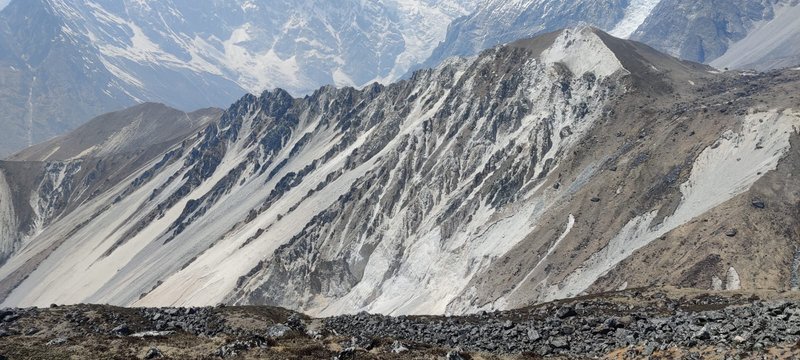
For most trekkers, October is the single safest month to commit to. It delivers the best of everything Langtang offers — clear mountain views, dry trails, comfortable daytime temperatures, and the year's most reliable weather window.
For trekkers with spring flexibility, April is the most rewarding month — the rhododendron forests below Lama Hotel are at their finest, mornings are clear, and the trail has not yet reached the late-spring pre-monsoon humidity.
For trekkers who specifically want to avoid crowds, September is underrated. The monsoon typically clears from Langtang by mid-September, leaving trail conditions that are nearly equal to October with a fraction of the traffic.
- Best month overall: October
- Best spring month: April
- Best crowd-free month: September
- Best for photography (peaks): October
- Best for photography (flowers): Late March–April
- Avoid: June, July, August
To check available departure dates for your preferred season and book your trek, the Langtang Valley Trek 8-day package includes permits, licensed guide, teahouse accommodation, and transport from Kathmandu — with departures available across all four seasons.
Frequently Asked Questions
What is the best month for the Langtang Valley Trek?
October is the best single month — post-monsoon skies are at their clearest, mountain visibility is at its peak, and trail conditions are perfect. March and April are the best spring months, particularly for rhododendron bloom and warmer trekking temperatures.
Can I trek Langtang Valley in February?
Yes, but it is only recommended for experienced cold-weather trekkers. February is one of the coldest months, with Kyanjin Gompa nights reaching -15°C to -18°C and potential snow above 2,500 m. The upside is complete trail solitude and sharp, clear mountain views on most days.
Does Langtang Valley get snow?
Yes. Significant snowfall occurs above 3,000 m from late November through February. Kyanjin Gompa and the upper trail from Ghora Tabela can be snow-covered from December onward. Light dustings at Kyanjin Gompa are possible in October in heavy-snow years but rarely affect trail accessibility during the autumn trekking window.
Is March a good time for the Langtang Valley Trek?
Yes — March is an excellent trekking month. Winter cold is receding, rhododendrons begin to bloom at lower elevations, trail conditions are dry, and crowds are moderate. March is one of the best months for trekkers who want spring scenery without the peak April crowds.
What is the temperature at Kyanjin Gompa?
Temperature at Kyanjin Gompa (3,870 m) varies significantly by season. In October (peak autumn): 5°C–12°C daytime, -2°C to -5°C at night. In January (peak winter): -2°C to 5°C daytime, -15°C to -20°C at night. In April (spring): 2°C–10°C daytime, -5°C to 0°C at night.
Is Langtang Valley crowded in autumn?
Langtang is significantly less crowded than the Annapurna or Everest circuits in all seasons. In peak autumn (October–November), trail traffic increases but remains moderate by Nepal standards. Above Lama Hotel, the trail feels noticeably quiet even in October compared to comparable sections of the ABC or EBC routes.
When do rhododendrons bloom in Langtang Valley?
The primary rhododendron bloom in Langtang Valley occurs late March to mid-April in the temperate forest zone between Syabrubesi and Lama Hotel (1,500–2,500 m). Higher-elevation species bloom progressively later — up to early May above 3,000 m.
Is monsoon a bad time to trek Langtang Valley?
Yes, for most trekkers. June through August brings persistent rain, slippery trails, active leeches below 3,000 m, and cloud cover that frequently hides the mountain views. Landslide risk on the road to Syabrubesi is elevated. Monsoon trekking suits only those who specifically prioritise solitude and lush landscape scenery over mountain visibility.