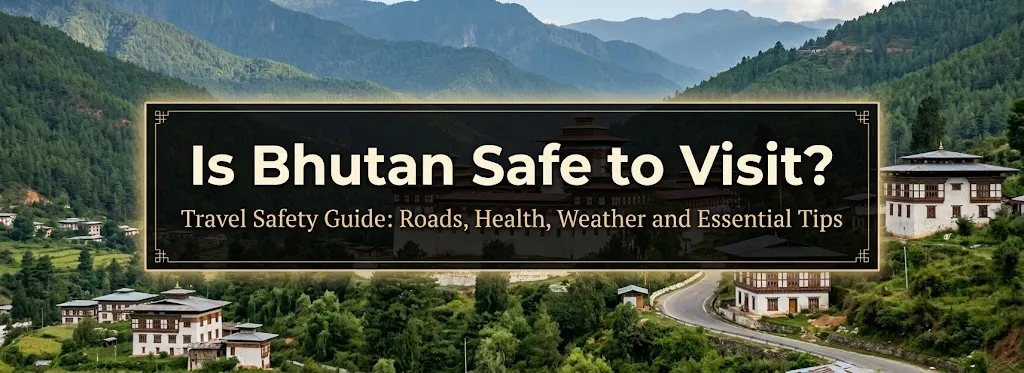
Yes, Bhutan is generally considered a safe destination for tourists, but visitors should prepare for mountain roads, changing weather, altitude sickness, and limited medical care in remote areas. Checking official travel advisories, arranging reliable transport, and choosing suitable activities can help reduce common travel risks.
Bhutan is known for its Buddhist culture, mountain scenery, peaceful towns, and traditional villages. However, conditions can change between regions and seasons, so understanding local risks is important before planning your trip.
Is Bhutan Safe to Visit Right Now?
Yes, Bhutan is generally safe for tourists, but visitors should take sensible precautions against road accidents, severe weather, altitude sickness, and limited medical access in remote areas. Bhutan attracts travellers with its peaceful towns, Himalayan valleys, monasteries, and mountain trails. However, its reputation for safety does not mean every journey is risk-free. Theft and other crimes can occur, so keep your belongings secure and choose reputable tour operators.
Your level of risk depends on your health, travel experience, destination, and season. A cultural holiday around established towns usually requires less physical preparation than a remote trek at high elevation. Before travelling, check official travel advisories, weather forecasts, and local conditions.
What Do Official Travel Advisories Say About Bhutan?
Official travel advisories provide information about crime, health services, natural hazards, local laws, and emergency assistance. They can also highlight risks that may affect travelers from a particular country.
Check these sources before booking and again shortly before departure:
Read the full guidance rather than relying only on the overall advisory level. Pay particular attention to medical care, road safety, entry requirements, local laws, and emergency contacts.
Are There Any Areas Travellers Should Avoid?
Bhutan's towns, valleys, mountain roads, and trekking areas can have different safety conditions. Heavy rainfall, snowfall, landslides, or road maintenance may temporarily affect access to certain destinations.
Before visiting a remote area, ask local authorities or your tour operator about current conditions. Avoid restricted locations, respect road closures, and change your plans if officials advise against travel.
Is Bhutan Safe for Solo Female Travellers?
Bhutan can be suitable for solo female travelers who prepare carefully and make informed choices about accommodation, transport, and activities. Planning ahead is especially useful when visiting remote valleys or travelling after dark.
Choose accommodation with reliable reviews and accessible contact details. Share your itinerary with someone you trust, keep your phone charged, and arrange transport in advance when travelling between destinations.
Can Women Travel Alone in Bhutan?
Women can visit established tourist destinations, cultural sites, and towns while taking normal travel precautions. However, independent travel arrangements may depend on current tourism rules, the destination, and the type of activity planned.
Before travelling alone, confirm accommodation and transport details, carry identification, and save important telephone numbers. If you plan to trek, check whether your route requires a licensed guide, permits, or other arrangements.
What Should Solo Female Travellers Know?
Respect local customs when visiting monasteries, temples, and traditional communities. Modest clothing may be expected at religious sites, and you should ask permission before photographing people or religious ceremonies.
When using a driver or private transfer, confirm the vehicle, driver's identity, and destination before starting the journey. If a situation makes you uncomfortable, move to a public place and contact your accommodation or a trusted local contact.
Reliable communication and transport arrangements become more important when travelling outside major towns. Keep a backup plan in case your phone loses signal or your journey is delayed.
Is It Safe to Walk Around Thimphu and Paro Alone?
Thimphu and Paro have established tourist areas where many visitors walk around during daylight. However, safety conditions can vary by neighborhood, road layout, time of day, and weather.
Stay on familiar routes, keep valuables secure, and ask your accommodation about local conditions before exploring unfamiliar areas. For late-night journeys or isolated locations, arranging trusted transport is a sensible precaution.
What Are the Main Safety Risks in Bhutan?
The most important risks for many visitors are linked to geography and travel conditions rather than crime alone. Mountain driving, severe weather, altitude sickness, and long distances from medical facilities can affect both short holidays and adventure trips.
Understanding these risks before departure helps you choose suitable transport, insurance, accommodation, and activities. Your preparations should reflect the places you plan to visit and the time of year you travel.
Crime, Theft, and Scams
Bhutan is often described as a peaceful destination, but visitors should not assume that theft or fraud is impossible. Keep your passport, money, electronics, and other valuables secure, particularly in crowded places or during transfers.
Use reputable accommodation and transport providers, and confirm the total cost of tours before paying. Be cautious about unexpected requests for money, suspicious booking messages, or offers that seem unusually cheap. For reliable information about the Bhutan crime rate, consult current official reports instead of relying on unsupported statistics. Report theft or serious incidents to the appropriate local authorities and contact your travel insurer if necessary.
Road Accidents and Mountain Driving
Mountain roads can include sharp bends, steep slopes, narrow sections, and uneven surfaces. Rain, fog, snow, and landslides may reduce visibility or make some routes more difficult to navigate.
Choose an experienced driver for mountain journeys if you are unfamiliar with local road conditions. Wear a seat belt, avoid speeding, and allow extra time for transfers because travel distances alone may not reflect actual journey times. If you are travelling between several destinations, check the route and estimated driving time before confirming your itinerary. Avoid travelling through closed or hazardous sections simply to keep to a schedule.
Altitude Sickness and Trekking Risks
Altitude sickness can affect travellers who ascend too quickly, even if they are physically fit. Early symptoms may include headaches, nausea, dizziness, unusual tiredness, and loss of appetite. Ascend gradually where possible, follow appropriate acclimatisation advice, and avoid continuing higher when symptoms develop. Seek medical advice if you feel unwell, and make sure your travel insurance covers the altitude and activities on your itinerary.
Confusion, difficulty walking, or breathlessness at rest can indicate a serious medical emergency. Seek urgent assistance and descend when it is safe to do so, following professional guidance.
Weather, Landslides, and Earthquakes
Bhutan's mountainous terrain makes weather an important factor in travel planning. Heavy rain can trigger landslides and flooding, while winter conditions can bring snow, ice, and reduced access to higher routes.
Check forecasts and official warnings before long drives or treks, and keep your schedule flexible during periods of unsettled weather. Avoid swollen rivers, unstable slopes, and roads that authorities have closed. Earthquakes are another natural hazard in the Himalayan region. Familiarize yourself with basic emergency procedures and follow instructions from local authorities if an earthquake or other natural event occurs.
Food, Drinking Water, and Common Illnesses
Changes in food, water, and daily routines can cause stomach problems during a trip. Illness may become more difficult to manage when you are staying in a remote valley or trekking far from medical facilities.
Drink treated or reliably sealed water, wash your hands before eating, and choose freshly prepared food from hygienic establishments. Carry essential medication and seek medical advice if symptoms become severe or persist. Travellers with existing medical needs should plan ahead and confirm whether appropriate medicines and healthcare services will be available along their route. Do not assume that every remote destination has a pharmacy or specialist clinic nearby.
Is Bhutan Safe for Different Types of Travellers?
Bhutan can offer different travel experiences, from cultural sightseeing to challenging mountain adventures. The right preparation depends on your age, health, mobility, travel experience, and the activities you intend to enjoy. Families may need shorter travel days, while older visitors may benefit from accessible accommodation and fewer steep walks. Solo travellers and adventure seekers should pay particular attention to communication, transport, insurance, and emergency arrangements.
Is Bhutan Safe for Families with Children?
Families can explore Bhutan's towns, cultural landmarks, monasteries, and scenic valleys. However, long drives, changing weather, and limited medical services in remote areas require additional planning when travelling with children. Choose manageable travel days, schedule regular breaks, and carry children's medicines and essential health records. Check whether accommodation and transport meet your family's needs, including suitable child restraints where available.
Before planning high-altitude hikes, consider your child's age, fitness, and health. Discuss demanding trips with a qualified healthcare professional and avoid activities that exceed your child's experience or physical ability.
Is Bhutan Safe for Older Travellers?
Older travelers can enjoy Bhutan, but the suitability of a trip depends on individual health, mobility, and itinerary. Some cultural holidays involve relatively short walks, while mountain excursions may require longer journeys and steep climbs. Choose accommodation that meets your mobility needs and allow enough time for rest between activities. If you have a heart, lung, or other relevant medical condition, seek medical advice before travelling to higher elevations.
Check the availability of medical services along your route and confirm what your insurance covers. A flexible itinerary can make it easier to adjust plans if you feel tired or conditions change.
Is Bhutan Safe for LGBTQ+ Travellers?
LGBTQ+ travellers should review current laws, official travel advice, and local social conditions before departure. Legal protections, public attitudes, and individual experiences can differ, so it is important to consult reliable and recent information. Check your government's guidance and consider privacy when choosing accommodation or sharing personal information. Look for travel providers that communicate respectfully and can answer questions about your planned activities.
Make decisions based on your own circumstances and comfort level. If you have concerns about discrimination or local laws, seek advice from trusted LGBTQ+ travel resources before booking.
Is Bhutan Safe for First-Time International Travellers?
Bhutan can suit first-time international travellers who organise their journey carefully. Confirm your travel documents, accommodation, transfers, payment methods, and any entry requirements before leaving home. Keep digital and physical copies of essential documents, and save your accommodation's address and contact details. If you are unfamiliar with mountain roads, consider arranging transport with an experienced local driver.
If you have limited time, compare our 3-night, 4-day Bhutan tour and review the travel schedule before selecting your dates. Check how transfers, sightseeing, and overnight stays fit into your available time.
Is It Safe to Travel Around Bhutan?
Travel around Bhutan can involve winding mountain roads, changing elevations, and long transfers between destinations. The most suitable transport option depends on your route, budget, travel dates, and experience with mountain conditions.
Before setting out, confirm journey times and check whether weather or road conditions could cause delays. If your itinerary includes remote valleys or trekking areas, make sure your transport and emergency arrangements are suitable for those locations.
Is It Safe to Drive in Bhutan?
Driving can provide flexibility when visiting towns, valleys, and trekking starting points. However, narrow roads, steep gradients, sharp bends, and changing weather can make mountain driving demanding for visitors who lack local experience. If you plan to drive yourself, check current driving license, vehicle, and insurance requirements. Make sure you understand the route and feel comfortable with the road conditions before starting your journey.
For many international visitors, hiring an experienced local driver is a practical alternative. A driver familiar with the route may help you manage journey times and respond to local road conditions.
Is Public Transport Safe in Bhutan?
Public transport operates on some routes, but schedules, frequency, and coverage vary. Buses may not serve every tourist attraction, remote valley, or trekking starting point, so check your options before travelling. Confirm departure times, pickup locations, ticket arrangements, and likely journey durations. Keep important belongings with you and allow extra time if you need to connect with another bus or transfer.
For a short visit from Nepal, compare our 2-night, 3-day Nepal tour to Bhutan tour and check how the transfers and sightseeing fit into your schedule. Confirm the actual itinerary and included services before booking.
Is Trekking in Bhutan Safe for Beginners?
Some walks in Bhutan may suit beginners, but longer treks and high-altitude routes require greater fitness and preparation. Terrain, weather, elevation gain, and access to accommodation can make a route more demanding than its distance suggests. Before choosing a trek, review daily walking hours, maximum elevation, accommodation availability, and access to medical assistance. Ask about required permits, guide arrangements, equipment, and evacuation procedures.
Choose a route that matches your experience rather than relying on photographs or advertised trip length. If you have little experience at altitude, seek appropriate medical and trekking advice before committing to a demanding route.
Should You Hire a Local Guide or Driver?
A local guide can help you understand Bhutanese culture, navigate planned activities, and respond to changes along your route. An experienced driver can also make mountain journeys more manageable, especially when you are unfamiliar with local roads. Before booking, confirm the provider's experience, qualifications where applicable, insurance, emergency procedures, and included services. Check current tourism and guide requirements for your particular itinerary instead of assuming the same rules apply to every activity.
If you want more time for sightseeing and travel between destinations, compare our 6-night, 7-day Nepal to Bhutan tour. Review the route, transport arrangements, accommodation, and local support to determine whether the trip suits your needs.
Is Bhutan Safe to Visit During the Monsoon and Winter?
Bhutan's weather varies with elevation and region, so seasonal safety depends on your destinations and planned activities. Rain can disrupt road travel during the monsoon, while snow and freezing temperatures may affect higher areas in winter.
Neither season is automatically unsafe for every traveller, but both can require additional preparation. Check forecasts, confirm local transport conditions, and choose activities that suit the expected weather.
Is Bhutan Safe During the Monsoon Season?
Heavy monsoon rain can cause landslides, flooding, poor visibility, and road disruptions. These conditions may lead to delayed transfers, temporary closures, or changes to planned activities. If you travel during the monsoon; check weather forecasts and local warnings regularly. Avoid flooded crossings and unstable slopes, and do not attempt to bypass road closures without reliable guidance.
Allow flexibility in your itinerary in case travel takes longer than expected. Confirm transport and accommodation arrangements again before travelling to remote areas.
Is Bhutan Safe to Visit in Winter?
Winter can bring cold temperatures, snow, and icy conditions, particularly at higher elevations. Some routes may become difficult to access, and shorter daylight hours can affect outdoor activities. Pack suitable warm layers and footwear, check local forecasts, and confirm whether your planned route remains open. If you intend to trek, select a route appropriate for winter conditions and your experience.
Remember that conditions in a lower-elevation town may differ considerably from those on a mountain pass. Do not assume that clear weather in one location means the entire route is safe.
When Is the Safest Time to Visit Bhutan?
Spring and autumn are popular travel seasons because they often offer appealing conditions for sightseeing and mountain views. However, the weather varies from year to year, and even popular seasons can bring rain, cold temperatures, or disruptions.
Choose your travel dates according to your planned destinations and activities rather than season alone. Check local forecasts and official advice shortly before departure. For a longer holiday, our 4-night, 5-day Bhutan tour package is another itinerary you can review. Check the route, travel schedule, and overnight stops to see whether they allow enough time for your plans.
Health, Travel Insurance, and Emergency Help in Bhutan
Healthcare access is an important part of travel planning, particularly if your itinerary includes remote valleys or mountain trails. Medical facilities and emergency transport may be limited outside larger towns, and reaching suitable treatment can take time.
Prepare for your health needs before departure and keep emergency details easy to access. Appropriate insurance, essential medication, and a clear plan for obtaining help can make a significant difference if something goes wrong.
Do You Need Travel Insurance for Bhutan?
Travel insurance is strongly recommended because medical treatment, trip disruption, and emergency transport can be expensive. Choose a policy that matches your itinerary rather than assuming a standard policy covers every activity. If you plan to trek or visit higher elevations, confirm that your policy covers your maximum altitude, planned activities, medical treatment, and emergency evacuation where available. Check whether search and rescue, repatriation, pre-existing conditions, and trip cancellation are included.
Standard travel insurance may exclude high-altitude trekking or helicopter rescue. Read the exclusions carefully and confirm coverage directly with your insurer before departure.
What Medical Care Is Available in Bhutan?
Medical services vary by location, and remote valleys may be far from hospitals or specialist treatment. Even a minor illness or injury can become more difficult to manage if you cannot reach medical help quickly. Carry essential prescription medicines, a basic first-aid kit, and relevant medical information. Keep your insurer's emergency contact details accessible and check whether suitable medical services are available along your planned route.
If you have an existing medical condition, discuss your travel plans with a qualified healthcare professional. This is particularly important if you intend to visit high elevations or take part in physically demanding activities.
What Should You Do in an Emergency?
If a medical or safety emergency occurs, first move away from immediate danger if you can do so safely. Contact local emergency services, your accommodation, or your tour operator and explain your location and situation.
Follow these steps:
- Move to a safer location if possible.
- Contact the appropriate emergency service or local support.
- Share your location and describe the problem clearly.
- Contact your travel insurer if treatment or evacuation may be required.
- Follow instructions from emergency responders.
Save verified emergency numbers before travelling. Mobile coverage and internet access may be unreliable in remote areas, so keep important information available offline.
What Should You Pack for a Safer Trip?
Your packing list should reflect the season, elevation, trip length, and activities you plan to undertake. Carrying the right equipment can help you manage changes in weather and avoid common problems during travel.
Essential items include:
- Passport, travel documents, and secure copies.
- Travel insurance details and emergency contacts.
- Prescription medicines and a basic first-aid kit.
- Comfortable walking shoes or suitable trekking boots.
- Warm layers and waterproof clothing.
- Sunscreen, sunglasses, and sun protection.
- A reusable water bottle and water-treatment supplies.
- A charged phone and charging equipment.
- Local currency and a backup payment method.
- Appropriate trekking equipment, if required.
Check what supplies are available at your destinations before leaving home. Do not assume that remote areas will have pharmacies, specialist equipment, or replacement items.
10 Safety Tips for Travelling to Bhutan
A few practical precautions can help you avoid common travel problems and respond more effectively when conditions change. Prepare before departure and continue checking local information throughout your trip.
- Check official travel advisories. Review current guidance for your nationality and destination before leaving home.
- Use reputable operators and drivers. Confirm credentials, prices, transport arrangements, and emergency procedures.
- Follow local guidance. Respect road closures, trekking warnings, and instructions from authorities.
- Protect your documents. Keep secure copies of your passport, insurance policy, and important travel details.
- Buy suitable insurance. Confirm medical, evacuation, trekking, and other activity coverage.
- Respect local customs. Follow religious-site rules and ask permission before photographing people.
- Practice food and water hygiene. Use safe drinking water and seek medical advice when necessary.
- Prepare for altitude and cold. Check elevation, acclimatization needs, and expected weather.
- Save emergency contacts. Keep accommodation, insurer, and local support details available offline.
- Monitor weather and transport. Adjust your plans when conditions make travel unsafe.
These precautions cannot remove every risk, but they can help you make informed decisions. Be prepared to change your itinerary if weather, health, or local conditions require it.
Final Thoughts: Is Bhutan Safe to Visit in 2026?
Bhutan can be a rewarding destination when you understand its travel conditions and prepare for the risks. Mountain roads, weather changes, altitude, and limited access to medical care are important considerations, especially when visiting remote areas.
Before departure, check official advisories, confirm transport and accommodation, and arrange suitable travel insurance. If trekking, choose a route that matches your experience and leave room in your schedule for weather-related delays.
Planning a Trip to Bhutan?
A well-planned itinerary can help you organize transport, accommodation, sightseeing, and travel time more effectively. Before booking, compare your options and check that the proposed route suits your interests, budget, and schedule.
Explore our Bhutan tour packages from Nepal to compare trip lengths and choose an option that fits your travel plans. Review the itinerary, included services, and insurance arrangements before confirming your booking.
FAQ
Is Bhutan safe to travel to?
Yes, Bhutan is generally considered safe for tourists, but visitors should prepare for mountain-road hazards, changing weather, altitude sickness, and limited medical access in remote areas. Check official travel advisories and plan transport and activities carefully.
Is Bhutan safe to visit for tourists?
Bhutan can be a rewarding destination for travellers who plan ahead and follow local guidance. Use reliable transport, protect your belongings, and choose activities that match your health and experience.
Is Bhutan safe for solo female travellers?
Bhutan can suit solo female travellers who make sensible arrangements. Choose reputable accommodation, plan transport in advance, share your itinerary, and take extra care when travelling at night or visiting remote locations.
Is it safe to travel to Bhutan right now?
Current advisories, weather, road conditions, and your itinerary determine the risks. Check your government's latest travel advice and local updates before departure, especially if you plan to visit remote areas.
Is Bhutan safer than Nepal?
There is no single answer that applies to every traveller or activity. Compare specific risks, destinations, infrastructure, and current official travel advisories rather than assuming one country is safer in every respect.
Do tourists need a guide in Bhutan?
Guide requirements depend on current tourism rules, the location, and the activity. Confirm the requirements for your itinerary before travelling, and consider a local guide for cultural insight and support with route planning.
Is Bhutan safe for American tourists?
American tourists should review the latest U.S. Department of State travel advisory and follow Bhutanese laws. They should also confirm entry requirements, arrange suitable insurance, and prepare for transport and medical needs.