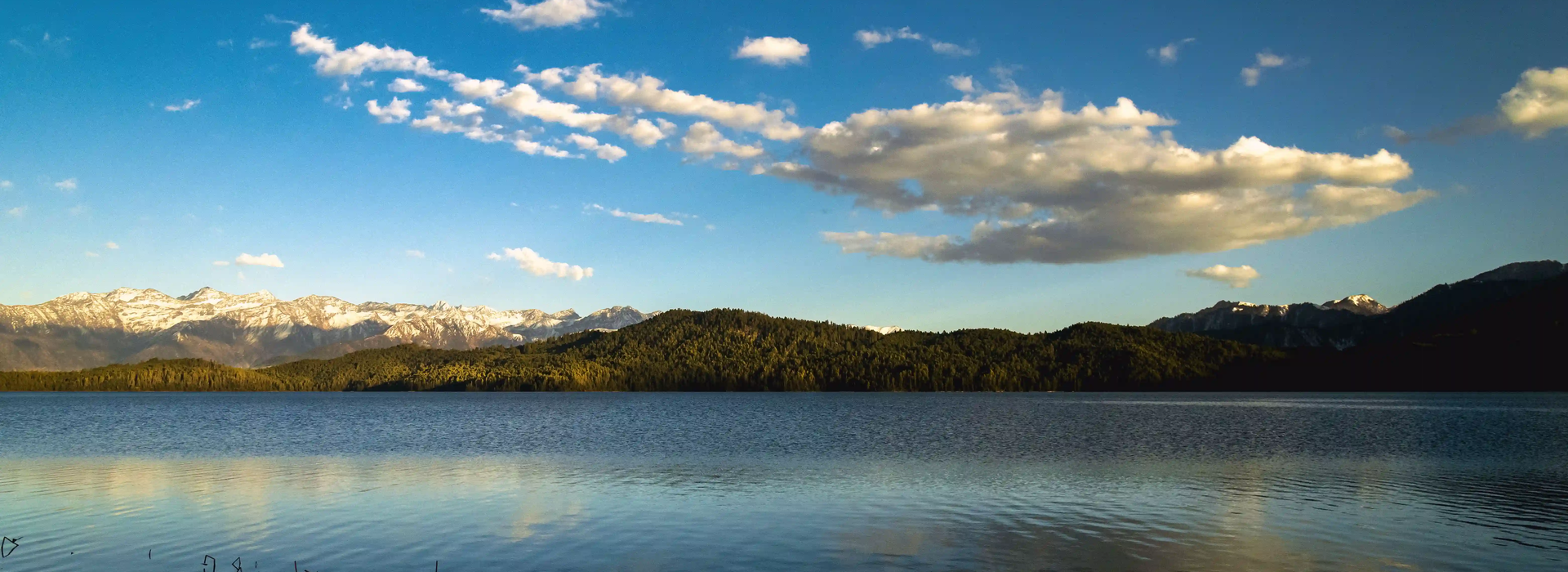
Rara Lake is not the easiest place in Nepal to reach, and that is partly why it still feels different from destinations around Kathmandu, Pokhara, and the Everest region. Rara Lake lies in the remote Karnali region of northwestern Nepal, within Rara National Park, at an elevation of about 2,990 meters. Surrounded by forested hills and rugged mountain terrain, the lake offers a quieter experience where the journey is almost as memorable as the destination itself.
Getting there requires more planning than visiting Nepal’s established tourist centers. Depending on your route, you may combine a flight, a long road journey, and a short trek or walk. Roads can be rough, weather can affect transportation, and facilities are relatively limited. But that is precisely the attraction. Rara rewards travelers who are willing to trade convenience for solitude, dramatic landscapes, peaceful trails, and the chance to experience a less-visited corner of Nepal.
Where Is Rara Lake Located in Nepal?
Rara Lake is located in Mugu District of Karnali Province, Nepal, inside Rara National Park. It lies in the remote northwestern part of the country at an altitude of around 2,990 meters. Surrounded by forested hills and rugged mountain landscapes, its remote location is one of the main reasons the journey to Rara feels so distinctive.
Rara Lake in Map of Nepal
Rara Lake sits in northwestern Nepal, within the remote Karnali region. On a map, it is far west of Kathmandu and Pokhara, making it less accessible than Nepal’s major trekking destinations.
The lake is protected by Rara National Park, Nepal’s smallest national park by area. The surrounding landscape includes forests, hills, alpine terrain, and views toward the mountains of the region.
Travelers should remember that the geographical distance does not tell the whole story. Mountain roads can be slow, flights may be limited, and transportation connections can change because of weather and local conditions.
Which District Is Rara Lake In?
Rara Lake is in Mugu District, Karnali Province, in northwestern Nepal. The lake lies inside Rara National Park and is one of the most important natural attractions in the Karnali region.
For common location questions:
- Rara Lake in which district? Mugu District
- Rara Lake is located in which district? Mugu District
- Where is Rara Lake located? Mugu District, Karnali Province, Nepal
- Which province is Rara Lake in? Karnali Province
- Which national park contains Rara Lake? Rara National Park
Mugu is known for its remote mountain geography and limited infrastructure. That isolation has helped Rara retain a quieter atmosphere compared with heavily visited areas such as Everest, Annapurna, and Pokhara.
How Far Is Rara Lake From Kathmandu?
Rara Lake is approximately 370 to 400 kilometers from Kathmandu in a straight-line measurement, but the actual journey is considerably longer. Travel time can stretch across several days because of road conditions, transportation connections, flight availability, and weather in the mountainous Karnali region.
| Starting point |
Approximate route |
Travel consideration |
| Kathmandu |
Kathmandu → Nepalgunj → western Nepal → Rara area |
Long journey with several connections |
| Nepalgunj |
Nepalgunj → Talcha or overland toward Mugu |
Common gateway for reaching the region |
| Talcha Airport |
Talcha → Rara Lake area |
Closest airport option, followed by local travel |
The key thing to understand is that Rara Lake distance from Kathmandu cannot be judged by kilometers alone. A relatively short distance on a map can translate into a much longer journey when roads are winding, rough, or affected by weather.
Talcha Airport is generally the most convenient air access point for Rara, but flight schedules can vary. Travelers should confirm current flight operations, road conditions, and local transportation before starting the journey.
How High Is Rara Lake and What Is Its Elevation?
The Rara Lake altitude is approximately 2,990 meters (9,810 feet) above sea level. Often searched as the “Rara Lake height,” this elevation places the lake well above Kathmandu and Pokhara, but below high-altitude destinations such as Namche Bazaar and Everest Base Camp. The elevation brings cooler mountain weather without extreme altitude.
Rara Lake Altitude Compared With Other Nepal Destinations
Rara Lake is high enough to feel noticeably cooler than Nepal’s lower valleys and cities, especially in the morning and after sunset. However, it is considerably lower than Everest Base Camp, so travelers should not assume that visiting Rara carries the same altitude challenges as a high Himalayan trek.
| Destination |
Approx. elevation |
| Pokhara |
~822 m |
| Kathmandu |
~1,400 m |
| Rara Lake |
~2,990 m |
| Namche Bazaar |
~3,440 m |
| Everest Base Camp |
~5,364 m |
At around 2,990 meters, Rara sits in a middle ground. The elevation is significant, but most healthy travelers can visit with sensible preparation. Temperature, physical exertion, hydration, and how quickly you gain altitude can all influence how you feel.
Does Rara Lake Have Altitude Sickness Risk?
Yes, altitude sickness is possible at Rara Lake, although the risk is generally lower than at much higher Himalayan destinations. Individual responses vary, so travelers should pay attention to symptoms such as headache, dizziness, unusual tiredness, nausea, or shortness of breath.
The biggest consideration is how quickly you ascend. Someone traveling rapidly from a low elevation may notice the altitude more than someone who has gradually gained elevation over several days.
To reduce the risk:
- Avoid unnecessary rapid ascent when your itinerary allows a slower journey.
- Stay hydrated, but do not force excessive amounts of water.
- Take it easy during the first day at higher elevation.
- Avoid heavy alcohol consumption while acclimatizing.
- Pay attention to persistent or worsening symptoms.
- If symptoms become severe, descend and seek medical assistance.
Altitude sickness should not be treated casually. Severe symptoms, including difficulty breathing at rest, confusion, inability to walk normally, or worsening headache and vomiting, require urgent attention and descent.
For most visitors, the 2,990-meter Rara Lake elevation is manageable with reasonable acclimatization and preparation.
What Is Rara Lake Famous For?
Rara Lake is famous for being Nepal’s largest lake by surface area, its remote location, and its protected setting inside Rara National Park. At about 2,990 meters, it combines a large alpine lake with surrounding conifer forests and mountain scenery, making it an important natural landmark of Nepal’s Karnali region.
Is Rara Lake the Largest Lake in Nepal?
Yes. Rara Lake is the largest lake in Nepal by surface area, covering approximately 10.4 square kilometers. Its large expanse is one of the defining features of the lake and is the reason it is widely recognized as Nepal’s largest natural lake.
The lake is roughly 5 kilometers long and 3 kilometers wide, although measurements can vary slightly between sources depending on the method used.
Its size becomes particularly noticeable when viewed from the surrounding hills. Rather than appearing like a small mountain tarn, Rara stretches across a broad basin, with the water occupying a substantial part of the landscape.
For search queries such as “largest lake of Nepal,” the concise answer is:
Rara Lake is the largest lake in Nepal by surface area, covering approximately 10.4 square kilometers.
Rara is also a protected ecosystem. The lake and its surrounding landscape are contained within Rara National Park, established in 1976 to conserve the area's forests, wildlife, and natural environment.
Is Rara Lake the Deepest Lake in Nepal?
Rara Lake is not generally identified as Nepal’s deepest lake. Its maximum recorded depth is approximately 167 meters, while its distinction is based on surface area rather than depth. This difference matters because “largest” and “deepest” describe two separate measurements.
For the common search query “deepest lake of Nepal,” it is therefore important not to confuse Rara's impressive size with the country's deepest lake.
| Measurement |
Rara Lake |
| Surface area |
~10.4 km² |
| Maximum depth |
~167 m |
| Approx. length |
~5 km |
| Approx. width |
~3 km |
In other words, Rara is Nepal's largest lake by surface area, but that does not automatically make it the deepest.
This is a useful distinction when researching Nepal's lakes because rankings can change depending on whether the measurement is surface area, maximum depth, elevation, or volume.
What Makes Rara Lake's Water and Scenery Unique?
Rara Lake is known for its clear blue water, forested surroundings, mountain backdrop, and reflections that can change dramatically with the weather and angle of sunlight. Its appeal comes from the combination of a large alpine lake and a relatively undisturbed natural setting, rather than from one landmark or viewpoint.
The surrounding forests include blue pine, Himalayan spruce, oak, and rhododendron, creating a strong contrast with the open water. On calm days, the hills and mountains can appear mirrored across the lake, while wind quickly breaks those reflections into shifting patterns.
One interesting detail is that Rara does not necessarily look identical throughout the day. The lake can appear deep blue, greenish, or darker depending on sunlight, weather, and viewing conditions. Morning light can produce a completely different scene from an overcast afternoon.
The sense of quiet is another part of Rara's character. There are no large urban settlements surrounding the shoreline and none of the dense trekking infrastructure associated with Nepal's most established mountain routes.
That matters because the experience is not simply about taking a photograph of a lake. Walking along the shore lets you see how the landscape changes from forest to open water, while the surrounding hills provide different perspectives of the same lake.
What Are the Most Important Facts About Rara Lake?
Rara Lake is Nepal's largest lake by surface area and lies at approximately 2,990 meters within Rara National Park in Mugu District. Its commonly cited measurements include a surface area of about 10.4 square kilometers, a maximum depth of around 167 meters, and dimensions of roughly 5 kilometers by 3 kilometers.
Rara Lake: Key Facts
Location: Rara National Park, Mugu District, Nepal
Province: Karnali Province
Elevation: Approximately 2,990 m (9,810 ft)
Surface area: Approximately 10.4 km²
Maximum depth: Approximately 167 m
Length: Approximately 5 km
Width: Approximately 3 km
National park: Rara National Park
District: Mugu District
Source note: Lake measurements can differ slightly among published references because of surveying methods and the way geographic features are measured. For publication, key figures should be cross-checked against authoritative references such as Nepal's Department of National Parks and Wildlife Conservation (DNPWC), Rara National Park information, and Nepal government geographic or environmental publications.
What Is the Best Time to Visit Rara Lake?
The best time to visit Rara Lake is generally spring, from March to May, and autumn, from September to November. During these periods, Rara Lake weather is usually more favorable for travel, with better visibility, manageable temperatures, and improved road conditions. October and November are particularly good for clear mountain views.
Rara Lake in Spring
Spring is one of the most rewarding seasons around Rara Lake. March, April, and May bring gradually warmer days, improving visibility, and fresh vegetation across the surrounding hills and forests.
By April and May, the landscape becomes noticeably greener, while rhododendrons and other flowering plants add seasonal color to the forest. Clearer mornings can also provide excellent views across the lake toward the surrounding mountains.
March can still feel quite cold, particularly in the morning and evening. April generally offers a more comfortable balance between cool mountain weather and pleasant daytime conditions, while May can become warmer before the monsoon arrives.
For travelers interested in photography and nature walks, spring offers an appealing combination of green forests, flowers, blue water, and relatively favorable visibility.
Rara Lake in Autumn
September, October, and November are widely considered among the best months for visiting Rara Lake. After the monsoon, the landscape remains green, while skies generally become clearer and mountain visibility improves.
October is particularly attractive because stable weather can provide crisp views of the lake and surrounding mountains. November is cooler, but often brings excellent visibility and peaceful conditions.
Autumn is also a practical choice for travelers who want to combine sightseeing with hiking. Daytime conditions are usually comfortable enough for walking, while mornings and evenings require warmer clothing.
If your priority is clear scenery and mountain photography, October and November are strong choices.
Can You Visit Rara Lake in Winter?
Yes, you can visit Rara Lake in winter, but December, January, and February require more preparation. Temperatures can fall below freezing, snow may affect higher areas, and transportation can become difficult when roads are affected by winter conditions.
The reward is a much quieter landscape. Snow-covered hills and a frozen or partially frozen lakeside environment can create a striking winter atmosphere, although conditions vary from year to year.
Winter travelers should check current road and flight conditions before departure and carry appropriate cold-weather equipment. Accommodation and transportation options may also be more limited than during the main travel seasons.
Is Rara Lake Worth Visiting During Monsoon?
Rara Lake can still be worth visiting during the June to August monsoon, especially for travelers who value greenery and solitude more than clear mountain views. However, heavy rain can create muddy or difficult roads, clouds can obscure the surrounding mountains, and flights may face weather-related delays or cancellations.
The monsoon landscape has its own character. Forests become lush, vegetation looks vibrant, and the lake can feel exceptionally quiet because visitor numbers are lower.
The trade-off is reliability. If your main goal is clear photography, long walks, or uninterrupted mountain views, monsoon is not the safest choice. If you are flexible and comfortable with changing plans, however, the season can offer a different side of Rara.
Rara Lake Weather Month by Month
Rara Lake's weather changes significantly throughout the year. The table below provides a practical planning guide rather than fixed temperature predictions, since conditions can vary with elevation, weather systems, and individual years.
| Month |
Weather |
Visibility |
Travel suitability |
| January |
Cold |
Variable |
Challenging |
| February |
Cold |
Variable |
Challenging |
| March |
Improving |
Good |
Good |
| April |
Mild |
Good |
Excellent |
| May |
Mild to warm |
Good |
Excellent |
| June |
Wet season begins |
Variable |
Moderate |
| July |
Monsoon |
Poor to variable |
Difficult |
| August |
Monsoon |
Variable |
Difficult |
| September |
Improving |
Good |
Good |
| October |
Stable |
Excellent |
Excellent |
| November |
Cool and clear |
Excellent |
Excellent |
| December |
Cold |
Variable |
Moderate |
For most travelers, April, October, and November offer the strongest overall combination of scenery and travel conditions. That said, the best month depends on what you want from the trip. Spring suits travelers who enjoy flowers and fresh greenery, autumn favors clear mountain views, winter appeals to those seeking solitude and snow, and monsoon can suit adventurous visitors who do not mind unpredictable weather.
Because Rara is remote, weather affects more than sightseeing. It can influence flights, road travel, hiking conditions, and access to supplies. Checking the forecast and transport situation shortly before departure is therefore more important here than it might be on a conventional city trip.
What Can You Do at Rara Lake?
Rara Lake offers more than sightseeing and boating. You can walk along the shoreline, explore forests inside Rara National Park, visit nearby communities, learn about Karnali’s traditional way of life, and photograph the changing light across the water. Sunrise and sunset are especially rewarding when weather and visibility cooperate.
Walk Around Rara Lake
Walking around Rara Lake is one of the simplest ways to experience the landscape without rushing it. The shoreline reveals different views as the angle changes, with forests, hills, open water, and mountain scenery appearing and disappearing along the route.
Rather than treating the lake as a single viewpoint, allow time to explore its surroundings on foot. Some sections offer open perspectives across the water, while others pass through woodland.
Wear comfortable footwear because trails and paths can become muddy after rain. Early morning is particularly pleasant for walking, when the air is cool and the lake can be remarkably still.
Go Boating on Rara Lake
Boating can be available at Rara Lake, generally through local operators, but availability depends on season, weather, lake conditions, and local operating arrangements. It should not be assumed that boats will operate every day or at every hour.
If boating is available during your visit, ask the local operator about operating conditions and safety equipment before getting on the water. Avoid boating during strong winds, storms, or visibly deteriorating weather.
A boat ride can provide a completely different perspective of Rara. From the water, the shoreline seems to unfold around you, and the surrounding hills can appear much larger than they do from land.
Explore Rara National Park
Rara Lake sits inside Rara National Park, so exploring the surrounding protected landscape is an important part of the experience. The park protects forests, alpine environments, wildlife habitats, and the lake's wider ecosystem.
The area supports wildlife including Himalayan black bear, red panda, musk deer, Himalayan goral, and several bird species, although seeing wildlife is never guaranteed.
For visitors, the forest itself is often the main attraction. Pine, spruce, oak, and rhododendron create changing scenery around the lake, while quiet trails provide opportunities for birdwatching and nature walks.
Keep a respectful distance from wildlife, avoid feeding animals, and follow park rules. In a protected area, leaving the landscape exactly as you found it is part of responsible travel.
Visit Local Villages and Experience Karnali Culture
One of the most worthwhile parts of traveling to Rara is spending time beyond the lakeshore. Mugu and the wider Karnali region have communities whose daily lives are shaped by the mountains, agriculture, local trade, and limited road access.
This is where traveling with a knowledgeable local guide can make a meaningful difference. A local trekking operator such as Himalayan Hero can help travelers understand the places they pass through rather than simply treating villages as stops between Kathmandu and Rara.
You may encounter traditional houses, agricultural fields, small local shops, and families maintaining lifestyles closely connected to the surrounding landscape. Depending on your itinerary and community arrangements, you may also have opportunities to experience local food and hear stories about life in remote western Nepal.
Food is another part of the experience. Instead of expecting a menu designed around international tourists, travelers should be prepared for simpler local meals and regional staples. Dal bhat, vegetables, potatoes, grains, and locally available ingredients are common parts of food culture across rural Nepal, although what is available around Rara can vary.
The important thing is to approach village visits respectfully. Ask before photographing people or entering private spaces, listen more than you speak, and remember that these are communities, not attractions created for tourists.
Watch Sunrise and Sunset Over Rara
Sunrise and sunset can transform the appearance of Rara Lake, particularly when the water is calm and the surrounding sky is clear. Early morning is often the better choice for reflections because lighter winds can leave the lake's surface relatively smooth.
For sunrise, plan to reach your chosen viewpoint before the sun appears. Give yourself extra time because the best light can arrive before the actual sunrise.
Sunset offers a different mood, with warmer tones spreading across the hills and water. Clouds can either hide the view or make the sky dramatically more interesting.
There is no single viewpoint that guarantees perfect conditions. Weather changes quickly in the mountains, so flexibility matters more than chasing a particular photograph.
Photography at Rara Lake
Rara is an excellent place for landscape photography because the scene changes constantly with light, clouds, wind, and reflections. You do not necessarily need expensive equipment. Good timing and patience usually matter more.
A few practical tips:
- Shoot early: Morning light is softer, and calm water can produce clearer reflections.
- Look for reflections: Position yourself where the lake occupies enough of the frame to mirror the surrounding hills.
- Watch changing light: Clouds can create patches of light and shadow across the water, sometimes producing more interesting images than bright sunshine.
- Include the mountains: A wide composition showing water, forest, and mountains gives the photograph a stronger sense of scale.
- Avoid harsh midday glare: Strong overhead sunlight can flatten the landscape and create distracting reflections on the lake.
- Carry protection for your equipment: Weather can change quickly, particularly during spring and monsoon periods.
- Do not rush: Stay in one location for a while. The same view can look completely different ten minutes later.
One of my favorite approaches to Rara photography would be to make the lake part of the story rather than the entire story. Include a trail, tree line, local structure, person, or distant ridge when appropriate. That gives the image a sense of place instead of producing another isolated postcard shot.
How Much Does a Rara Lake Trip Cost?
The cost of a Rara Lake trip depends heavily on your starting point, transportation, accommodation, group size, and whether you travel independently or with a guide. Flights can significantly increase the budget, while overland travel usually takes longer. Because local prices and transport schedules change, current rates should be confirmed before booking.
What Is Included in a Rara Lake Trip?
A Rara itinerary can include several separate costs, and knowing what is covered prevents unpleasant surprises. A package arranged by a trekking agency may combine most of these expenses, while independent travelers pay for them individually.
Typical expenses include:
- Transportation: Flights, tourist or local buses, jeeps, and transfers between transport points.
- Accommodation: Hotels, lodges, guesthouses, or basic teahouse-style stays depending on the route.
- Meals: Breakfast, lunch, dinner, tea, and other drinks.
- Guide: A licensed or experienced local guide can help with navigation, logistics, communication, and cultural context.
- Porter: Useful for travelers carrying substantial luggage during trekking sections.
- Permits: Any permits required for the route or protected areas.
- National park fees: Entry fees for Rara National Park may apply and should be checked against the current official tariff.
- Local transportation: Jeeps, local vehicles, or other transfers used around Mugu and the Rara area.
- Miscellaneous costs: Snacks, charging, hot drinks, tips, emergency transport, and personal purchases.
The biggest variable is usually transportation. A flight-based itinerary can save considerable time but may cost more, while an overland route can reduce transport costs but add long hours on mountain roads.
Rara Lake Budget Breakdown
There is no responsible single price to publish without checking current local rates. Airfares, vehicle hire, accommodation, food prices, park fees, and guide rates can change, particularly in a remote region such as Karnali.
For that reason, use the following framework and replace the blanks with current quotations or official rates immediately before publication rather than copying outdated figures from another travel website.
| Expense |
Budget option |
Comfortable option |
| Transportation |
Verify current local/airfare rates |
Verify current airfare/private vehicle rates |
| Accommodation |
Basic local lodge/guesthouse rate |
Better room or upgraded lodge rate |
| Food |
Local meals |
More meal and beverage choices |
| Guide/porter |
Shared or local guide arrangement |
Private guide and/or porter |
| Permits/fees |
Current official government rate |
Current official government rate |
| Miscellaneous |
Small personal allowance |
Larger contingency allowance |
For a commercial travel guide, I would recommend publishing agency-specific package prices separately from general travel costs. For example, if Himalayan Hero sells a Rara package, clearly state the package price, duration, inclusions, exclusions, and date of validity.
That is much more useful to readers than presenting an attractive but outdated “Rara Lake cost” figure.
How Many Days Do You Need for Rara Lake?
Most travelers should allow at least 4 to 7 days for a Rara trip when transportation connections are included. A very short itinerary may be possible with favorable flights and road conditions, but it leaves little room for delays. Longer itineraries are better for trekking, villages, and a slower experience.
Here is a practical way to think about the trip:
| Travel style |
Recommended duration |
Best for |
| Short trip |
4–5 days |
Travelers with limited time and favorable transport connections |
| Standard trip |
5–7 days |
First-time visitors who want to see the lake without rushing |
| Trekking-focused |
7–10+ days |
Hikers wanting more walking and exploration |
| Slow travel |
10+ days |
Travelers interested in villages, nature, photography, and local culture |
Short trip: This works when flights and local transportation line up well. Keep the itinerary flexible because one delay can affect the entire schedule.
Standard trip: For most visitors, this is the sensible middle ground. You have time to reach Rara, spend time around the lake, and return without turning every day into a race against the clock.
Trekking-focused itinerary: Add extra days if walking is a major reason for your visit. This gives you more opportunities to explore the surrounding landscape rather than treating Rara as a quick photo stop.
Slow travel: If your schedule allows it, staying longer can reveal a different side of Karnali. Spend time around the lake, visit communities, photograph changing light, and allow your itinerary to breathe.
Because Rara is remote, I would always build a buffer day into an important itinerary when possible. A delayed flight or difficult road is far less stressful when you are not trying to catch an international departure the following morning.
Is Rara Lake Worth Visiting?
Yes, Rara Lake is worth visiting for travelers who value remoteness, nature, and a quieter side of Nepal. It is not the easiest destination to reach, and infrastructure is limited compared with Pokhara or the Everest region. That trade-off is exactly its appeal for travelers seeking fewer crowds and a less commercial experience.
Who Will Enjoy Rara Lake Most?
Rara Lake is particularly suitable for travelers who would rather spend a morning beside a quiet mountain lake than queue along a crowded trekking trail. It suits people who enjoy the journey itself, even when roads are rough and plans need to remain flexible.
You are likely to enjoy Rara if you prefer:
- Quiet destinations: Visitor numbers are much lower than at Nepal's major tourist hubs.
- Nature: Forests, mountain terrain, wildlife, and the lake's changing landscape are central to the experience.
- Remote Nepal: Karnali offers a very different perspective from the Kathmandu-Pokhara tourism corridor.
- Photography: Reflections, forests, changing weather, and mountain light create constantly shifting compositions.
- Road adventures: The overland journey can be challenging, but it is part of the story.
- Cultural experiences: Village visits can provide insight into everyday life in remote western Nepal.
- Fewer tourists: Rara is a strong option if avoiding heavily visited destinations is a priority.
It may be less suitable for someone expecting luxury accommodation, highly predictable transport, extensive nightlife, or the polished tourism infrastructure found in Pokhara.
Rara Lake vs Pokhara
Rara Lake and Pokhara offer very different travel experiences. Pokhara is easier to reach and has extensive tourism infrastructure, restaurants, hotels, adventure activities, and transport connections. Rara is far more remote, quieter, and focused on the lake, wilderness, and rural Karnali landscape.
| Factor |
Rara Lake |
Pokhara |
| Atmosphere |
Quiet and remote |
Lively tourist city |
| Accessibility |
More difficult |
Easy |
| Scenery |
Alpine lake, forests, mountain terrain |
Lakes, hills, valleys, Himalayan views |
| Tourism infrastructure |
Limited |
Extensive |
| Activities |
Hiking, boating, nature, photography, cultural visits |
Boating, paragliding, hiking, sightseeing, adventure sports |
| Crowds |
Relatively low |
Significantly higher |
| Best for |
Nature and solitude |
Convenience and varied activities |
Pokhara is often the better choice for a first Nepal trip or travelers with limited time. Rara becomes more attractive when the goal is to get away from the established tourist circuit.
There is also a useful distinction in how you experience the landscape. Around Pokhara, mountain scenery often forms a backdrop to an active tourist city. At Rara, the landscape is the destination.
Rara Lake vs Everest Base Camp
Rara Lake and Everest Base Camp should not really be treated as competing versions of the same trip. Rara is primarily a lake and nature destination, while Everest Base Camp is a high-altitude trekking experience centered on the Himalayan landscape and the journey through the Khumbu.
| Factor |
Rara Lake |
Everest Base Camp |
| Main attraction |
Alpine lake |
Himalayan mountains |
| Elevation |
~2,990 m |
~5,364 m |
| Difficulty |
Moderate, depending on route |
Moderate to challenging |
| Tourism |
Much quieter |
Much busier |
| Main experience |
Nature and remoteness |
Trekking and high mountains |
| Altitude challenge |
Lower |
Significantly higher |
| Infrastructure |
Limited |
Established trekking infrastructure |
At approximately 2,990 meters, Rara is substantially lower than Everest Base Camp. That does not mean altitude can be ignored, but the physical demands are generally different.
Choose Rara if your priority is a remote natural environment and a large alpine lake. Choose Everest Base Camp if completing a major Himalayan trek and reaching the base camp are central to your goal.
Rara Lake vs Annapurna
Rara and the Annapurna region both offer dramatic mountain scenery, but their travel experiences are quite different. Annapurna has a much more developed trekking network, with established routes, numerous lodges, transportation options, and a wider range of itineraries.
| Factor |
Rara Lake |
Annapurna Region |
| Accessibility |
Relatively difficult |
Generally easier |
| Landscape |
Lake, forest, hills, remote mountain terrain |
High mountains, valleys, forests, villages |
| Trekking infrastructure |
Limited |
Well established |
| Accommodation |
Basic and limited in many areas |
Broad range of teahouses and lodges |
| Tourism level |
Low |
Moderate to high on popular routes |
| Trekking experience |
More remote and less developed |
Extensive choice of established treks |
| Best for |
Solitude and exploration |
Classic Himalayan trekking |
Annapurna is usually the more practical choice for someone specifically seeking a long, well-supported trekking experience. Rara is more compelling for someone who wants remoteness to be part of the adventure.
That difference can be easy to miss when comparing photographs online. A picture cannot show how long it takes to reach a destination, how frequently transport operates, or what happens when the weather changes your plans.
My Take After Seeing How Travelers Experience Remote Nepal
I would not add a personal claim about visiting Rara unless there is a documented Himalayan Hero experience or traveler case study to support it. For an authoritative article, pretending to have first-hand experience would weaken trust rather than strengthen it.
What travelers should understand, however, is that Rara can look deceptively easy in photographs. A picture shows the lake. It does not show the hours on mountain roads, changing transport arrangements, limited services, or the possibility of weather disrupting a carefully planned itinerary.
That is why local knowledge can be genuinely useful.
A good local guide does more than lead the walking route. They can help travelers understand road and transport conditions, communicate with local communities, adjust plans when weather changes, and provide context about the places they pass through.
The biggest mistake is treating Rara like a quick sightseeing stop.
If you have traveled extensively around Nepal, you probably already know that the country's most memorable journeys are not always the ones with the shortest transfer times. Rara makes that particularly obvious. The remoteness is not an inconvenience sitting outside the experience. It is part of the experience itself.
For Himalayan Hero, this section would become substantially stronger if you add a verified traveler story, guide interview, or documented trip report. A specific example, such as how a transport delay changed an itinerary or what a traveler learned from staying in a local village, would provide genuine first-hand evidence without inventing an experience.
Rara Lake Travel Tips Before You Go
Before traveling to Rara Lake, prepare for a remote destination rather than a conventional tourist stop. Pack for changing mountain weather, carry enough cash, allow extra time for transport delays, and keep your itinerary flexible. Check current road, flight, weather, and communication conditions before departure, as services can change quickly in Karnali.
What Should You Pack for Rara Lake?
Packing for Rara means preparing for cool mountain conditions, rain, limited services, and possible changes in your itinerary. Even if daytime weather feels pleasant, mornings and evenings can be cold at around 2,990 meters.
A practical packing checklist includes:
- Warm layers
- Waterproof jacket or rain shell
- Comfortable, sturdy footwear
- Sunglasses
- Sunscreen
- Reusable water bottle
- Basic personal medicines
- Power bank
- Sufficient cash in Nepalese rupees
- Passport or other personal documents
I would also consider carrying a small flashlight or headlamp, personal toiletries, extra socks, and a few high-energy snacks. Keep important documents and electronics protected from rain.
Because facilities around Rara are more limited than in Kathmandu or Pokhara, do not assume that every item you need will be available locally.
What Should You Know About Roads and Transportation?
Transportation to Rara requires flexibility. Road conditions, weather, vehicle availability, and flight schedules can all affect the journey, particularly during the monsoon and winter months.
A route that appears straightforward on a map can take considerably longer in practice. Mountain roads may be rough, traffic can move slowly, and local vehicles may not operate according to the same timetable travelers expect in major cities.
If you are flying, allow additional time between connecting flights. Weather can affect operations at airports serving the region, so avoid creating an itinerary where one delayed flight causes you to miss an important international connection.
For road travel, confirm the condition of the route shortly before departure. Local guides and transport operators can often provide more useful real-time information than an old online itinerary.
Is Mobile Network Available at Rara Lake?
Mobile connectivity around Rara Lake can be limited and variable, so travelers should not plan on having reliable high-speed internet throughout the trip. Coverage depends on the network, exact location, terrain, weather, and local infrastructure.
Nepal's major operators, including Nepal Telecom and Ncell, have expanded coverage across parts of rural Nepal, but remote mountain areas can still have weak or inconsistent signals.
Rather than relying entirely on mobile data, download maps, booking information, important documents, and other essential information before leaving a major town.
For current network availability at your exact accommodation or route, check directly with your local operator, trekking agency, or accommodation provider before departure. Coverage can change as infrastructure develops, so older travel articles should not be treated as definitive evidence.
What Are the Common Mistakes Travelers Make?
The most common mistakes at Rara usually come from planning the destination like a standard tourist circuit. The region's remoteness means small disruptions can have a much larger effect on your itinerary.
Watch out for these mistakes:
- Underestimating travel time
A route that looks short on Google Maps can take much longer because of mountain roads and transport connections. - Carrying too little warm clothing
Rara's daytime conditions can be pleasant, but temperatures can drop significantly after sunset and during colder seasons. - Assuming advertised schedules are guaranteed
Road vehicles and flights can be affected by weather, road conditions, mechanical issues, or operational changes. - Not carrying enough cash
Card and digital payment options may be limited in remote areas. Carry sufficient Nepalese currency for accommodation, food, transport, and emergencies. - Planning every day too tightly
A buffer day can save an itinerary when transportation is delayed. - Ignoring weather conditions
Check forecasts before setting out, particularly during monsoon and winter. - Treating Rara as a quick photo stop
The lake is worth allowing time for. Rushing in, taking a few photographs, and immediately leaving misses much of what makes the destination distinctive.
How Can You Travel Responsibly in Rara?
Responsible travel at Rara starts with recognizing that you are visiting a protected natural environment and living communities, not simply a scenic attraction. Small choices can reduce pressure on the lake, forests, wildlife, and local resources.
Follow these principles:
- Take your waste with you: Do not leave plastic, food packaging, batteries, or other rubbish along trails or near the lake.
- Reduce single-use plastic: Carry a reusable bottle and avoid unnecessary disposable packaging.
- Protect wildlife: Never feed animals, chase them for photographs, or disturb nesting and resting areas.
- Stay on appropriate trails: Avoid damaging vegetation or creating unofficial paths.
- Respect local communities: Ask permission before photographing people, homes, religious sites, or private activities.
- Support local businesses: Use locally owned accommodation, guides, restaurants, transport providers, and shops when practical.
- Avoid polluting the lake: Never throw waste or other materials into the water.
- Follow national park regulations: Rara National Park exists to protect the area's ecosystem and wildlife.
There is also a simple principle worth remembering: leave Rara with fewer traces of your visit than the number of photographs on your phone might suggest.
The remote character that attracts people to Rara is fragile. Responsible travel helps ensure that the quiet forests, clean landscape, local communities, and lake environment remain part of the experience for future visitors.
Planning a Trip to Rara Lake?
If Rara Lake is on your Nepal travel list, the next step is deciding how you want to experience it. You might prefer a comfortable journey with arranged transportation, a more adventurous overland route, or a longer itinerary that combines Rara with other parts of western Nepal.
Explore our Rara Lake trip options or get in touch with Himalayan Hero if you would like help planning the route around your available time, budget, and travel style. Our local team can help you prepare for changing road conditions, transportation connections, accommodation, and the practical details that matter when traveling through remote Karnali.
Rara Lake FAQ
Where is Rara Lake located?
Rara Lake is in Rara National Park, Karnali Province, Nepal.
Which district is Rara Lake in?
Rara Lake is located in Mugu District.
What is the altitude of Rara Lake?
Rara Lake sits at 2,990 meters (9,810 feet) above sea level.
Is Rara Lake the largest lake in Nepal?
Yes. Rara Lake is Nepal’s largest lake by surface area.
Is Rara Lake the deepest lake in Nepal?
Yes. Rara Lake is Nepal’s deepest lake, reaching about 167 meters at its deepest point.
How far is Rara Lake from Kathmandu?
Rara Lake is roughly 830 km by road from Kathmandu, depending on the route.
How many days do you need to visit Rara Lake?
Plan 5–7 days for a Rara Lake trip from Kathmandu.
Which month is best for Rara Lake?
October and November are among the best months to visit Rara Lake.
Can you visit Rara Lake in winter?
Yes, but winter is very cold and can bring snow and difficult travel conditions.
Is Rara Lake difficult to reach?
Yes. Rara Lake is remote, but you can fly to Talcha Airport and trek to the lake.
Is Rara Lake worth visiting?
Yes. Rara Lake is worth visiting for its beautiful scenery, peaceful surroundings, clear water, and mountain views.