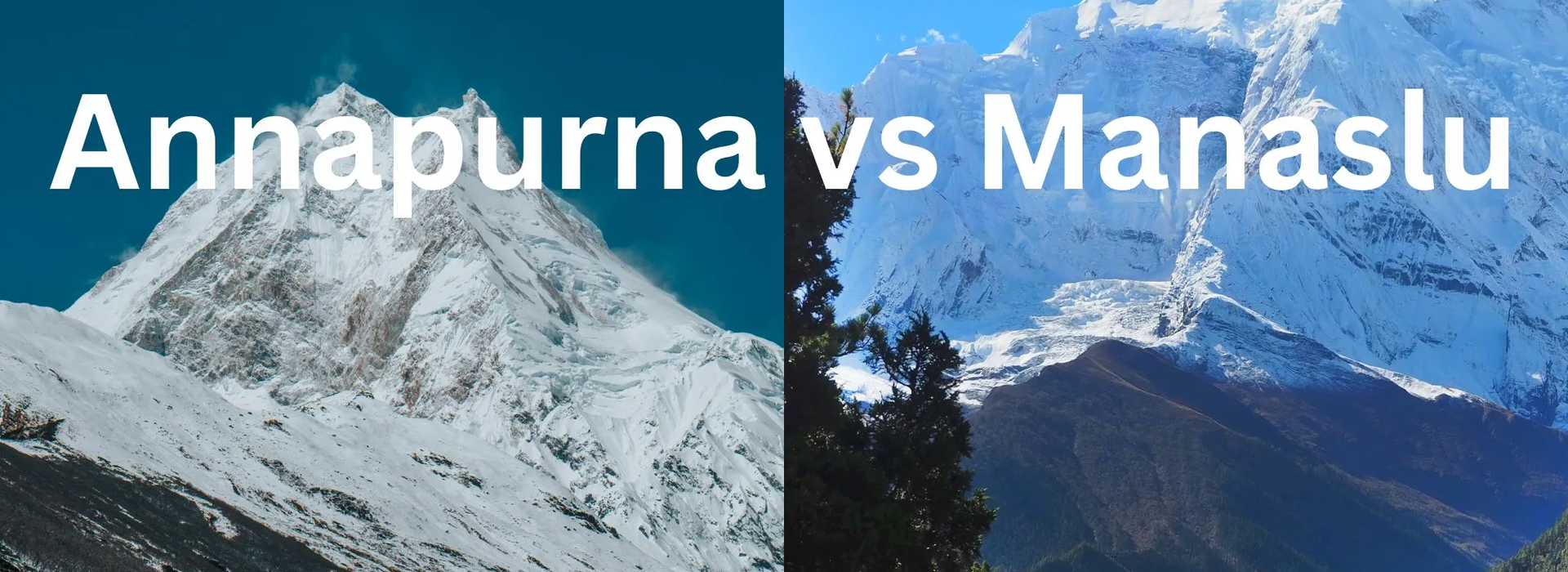
Trying to choose between the Manaslu Circuit and Annapurna can be harder than it looks. Both offer big Himalayan views, mountain villages, high passes, and a real sense of adventure, but the experience is quite different. Manaslu feels quieter and more remote, while Annapurna is easier to plan and gives you more choices along the way. And then there is Annapurna Base Camp, which can make the decision even more confusing.
In this blog, we compare Manaslu Circuit vs Annapurna across the things that actually matter when choosing a trek, including scenery, difficulty, altitude, culture, accommodation, permits, cost, trekking days, and overall experience. We will also look at Manaslu Circuit vs Annapurna Base Camp so you can see which route fits your time, fitness level, and idea of a great Himalayan adventure.
Manaslu Circuit vs Annapurna: TL;DR
The best trek depends on the type of Himalayan experience you want:
- Best for remote adventure: Manaslu Circuit, with quieter villages, fewer trekkers, and a more secluded mountain experience.
- Best for a classic circuit experience: Annapurna Circuit, with varied landscapes, established teahouses, and more flexible trekking routes.
- Best for a shorter Himalayan trek: Annapurna Base Camp, especially for travelers with limited time who want close-up views of the Annapurna range.
- More challenging overall: Manaslu Circuit, mainly because of its remote sections, demanding trekking days, and Larkya La Pass.
- Higher trekking pass: Annapurna Circuit via Thorong La, which reaches about 5,416 meters compared with Larkya La at about 5,106 meters.
- Better infrastructure: Annapurna Circuit, with more accommodation, restaurants, road access, and trekking services.
- More secluded experience: Manaslu Circuit, particularly in the upper sections.
If I had to choose, Himalayan Hero Adventures would pick the Manaslu Circuit for trekkers who want a quieter, more cultural, and adventurous experience, while Annapurna is the better choice for comfort and flexibility.
Manaslu vs Annapurna at a Glance
The Manaslu Circuit, Annapurna Circuit, and Annapurna Base Camp offer very different trekking experiences. Manaslu is more remote and culturally immersive, Annapurna Circuit is more flexible and developed, while Annapurna Base Camp is shorter and takes you directly into the mountain sanctuary. The comparison below covers the main factors trekkers usually consider before booking.
| Factor |
Manaslu Circuit |
Annapurna Circuit |
Annapurna Base Camp |
| Typical duration |
14–18 days |
12–16 days |
7–12 days |
| Highest point |
Larkya La, 5,106 m |
Thorong La, 5,416 m |
ABC, 4,130 m |
| Difficulty |
Challenging |
Moderate to challenging |
Moderate |
| Distance |
About 170 km |
About 160–230 km, depending on route |
About 70–110 km, depending on route |
| Crowds |
Relatively quiet |
Busier |
Moderate to busy |
| Permits |
Restricted-area and conservation permits |
ACAP permit and TIMS requirements |
ACAP permit and TIMS requirements |
| Guide requirement |
Required |
Not generally required |
Not generally required |
| Accommodation |
Teahouses, more basic in remote areas |
Wide range of teahouses |
Teahouses and lodges |
| Road access |
Limited in upper sections |
Extensive road access |
Road access to lower sections |
| Cost |
Moderate to high |
Moderate |
Moderate |
| Scenery |
Mountains, valleys, glaciers, forests |
Mountains, valleys, high desert, villages |
Close mountain views, forests, sanctuary |
| Culture |
Strong Tibetan influence |
Diverse Hindu and Buddhist cultures |
Gurung and Magar communities |
| Best for |
Remote adventure and culture |
Flexible classic circuit trek |
Shorter trek and close mountain views |
Overall, Manaslu is the strongest choice for solitude and a less developed trekking experience. Annapurna Circuit suits trekkers who value flexibility and infrastructure, while Annapurna Base Camp works well for those who want a shorter route without missing spectacular Himalayan scenery.
Manaslu Circuit Trek vs Annapurna Circuit Trek
Manaslu is generally the better choice for trekkers seeking a quieter, more remote, and culturally immersive experience, while Annapurna Circuit is better for travelers who prioritize infrastructure, route flexibility, easier logistics, and varied landscapes. Both are high-altitude circuit treks, but the experience on the ground is quite different.
| Factor |
Manaslu Circuit Trek |
Annapurna Circuit Trek |
| Route character |
Remote, quieter, and more adventurous |
Developed, flexible, and diverse |
| Trek duration |
Usually 14–18 days |
Usually 12–16 days |
| Highest elevation |
Larkya La, 5,106 m |
Thorong La, 5,416 m |
| Larkya La vs Thorong La |
Lower but remote and demanding |
Higher but better supported |
| Physical difficulty |
Challenging |
Moderate to challenging |
| Trail conditions |
Rougher and more varied in places |
Generally more developed |
| Road access |
Limited in upper Manaslu |
Extensive in many sections |
| Crowds |
Fewer trekkers |
Generally busier |
| Teahouses |
Basic, especially in remote areas |
More choices and better-developed facilities |
| Food and facilities |
Simple choices in remote villages |
Wider food and service options |
| Cultural experience |
Strong Tibetan-influenced culture |
Mix of Hindu and Buddhist cultures |
| Mountain scenery |
Manaslu, glaciers, valleys, forests, and high mountains |
Annapurna, Dhaulagiri, valleys, forests, and high desert |
| Remote sections |
More extensive |
Less remote because of road access |
| Transportation |
More limited and less flexible |
Easier transport connections |
| Permit complexity |
More permits and restricted-area regulations |
Simpler overall |
| Guide requirements |
Licensed guide required |
Independent trekking is generally possible |
| Flexibility |
Lower because of restricted areas and logistics |
Higher, with more route and transport options |
The biggest difference between the Manaslu Circuit Trek and Annapurna Circuit Trek is the overall trekking experience. Manaslu is quieter, more remote, and more culturally immersive, with fewer facilities and rougher sections in some areas. Annapurna is more developed, with better road access, more teahouses, restaurants, transportation options, and greater flexibility to change or shorten your route.
Both treks offer spectacular mountain scenery and a challenging high-altitude pass. Thorong La on the Annapurna Circuit is higher at 5,416 meters, while Larkya La on Manaslu reaches about 5,106 meters. Manaslu can still feel more demanding because of its remoteness and limited facilities, while Annapurna is easier to organize. Choose Manaslu for solitude and adventure, or Annapurna for comfort, flexibility, and easier logistics.
Manaslu Circuit Trek vs Annapurna Base Camp
Choose the Manaslu Circuit Trek if you want a longer, more remote journey with a high mountain pass and strong cultural experience. Choose Annapurna Base Camp if you prefer a shorter trek that takes you directly into the Annapurna Sanctuary for close views of towering Himalayan peaks.
| Factor |
Manaslu Circuit Trek |
Annapurna Base Camp |
| Duration |
Usually 14–18 days |
Usually 7–12 days |
| Trek distance |
About 170 km |
About 70–110 km, depending on route |
| Maximum elevation |
Larkya La, 5,106 m |
Annapurna Base Camp, 4,130 m |
| Difficulty |
Challenging |
Moderate |
| Elevation gain |
Greater overall |
Lower overall |
| High-pass experience |
Larkya La crossing |
No major high-pass crossing |
| Mountain views |
Manaslu, glaciers, valleys, and high peaks |
Annapurna I, Machhapuchhre, Hiunchuli, and surrounding peaks |
| Annapurna Sanctuary |
No |
Yes |
| Remote wilderness |
Strong |
Moderate |
| Villages and culture |
Strong Tibetan-influenced culture |
Gurung and Magar culture |
| Crowds |
Generally quieter |
Generally busier |
| Accommodation |
Basic teahouses in remote sections |
More developed teahouses |
| Permits |
More complex, including restricted-area requirements |
Simpler |
| Guide requirements |
Licensed guide required |
Guide not generally required |
| Cost |
Usually higher |
Usually lower |
| Best trekker profile |
Experienced trekkers seeking adventure and remoteness |
Trekkers wanting a shorter Himalayan experience |
The main difference is the type of journey. Manaslu is a true circuit around Mount Manaslu and includes the challenging Larkya La Pass, with longer walking days, remote sections, and fewer facilities. Annapurna Base Camp is an out-and-back trek into the Annapurna Sanctuary, so it is shorter, less demanding, and easier to organize.
Both offer beautiful mountain scenery, but the experience is different. Manaslu combines glaciers, deep valleys, forests, Buddhist villages, and high mountain landscapes, while ABC gives you close views of Annapurna I, Machhapuchhre, and surrounding peaks. Choose Manaslu for a remote and challenging adventure, or ABC for a shorter trek with spectacular mountain views.
Which Trek Is More Difficult?
The Manaslu Circuit is generally considered more demanding overall because of its remote sections, uneven trails, long walking days, limited facilities, and challenging Larkya La crossing. However, the Annapurna Circuit reaches a higher altitude at Thorong La, while Annapurna Base Camp is shorter and reaches a lower maximum elevation.
Manaslu Circuit Difficulty
The Manaslu Circuit requires good physical fitness and preparation, especially for the Larkya La Pass at 5,106 meters. Some days involve long hours of walking over uneven terrain, and the remote sections have fewer facilities and accommodation choices.
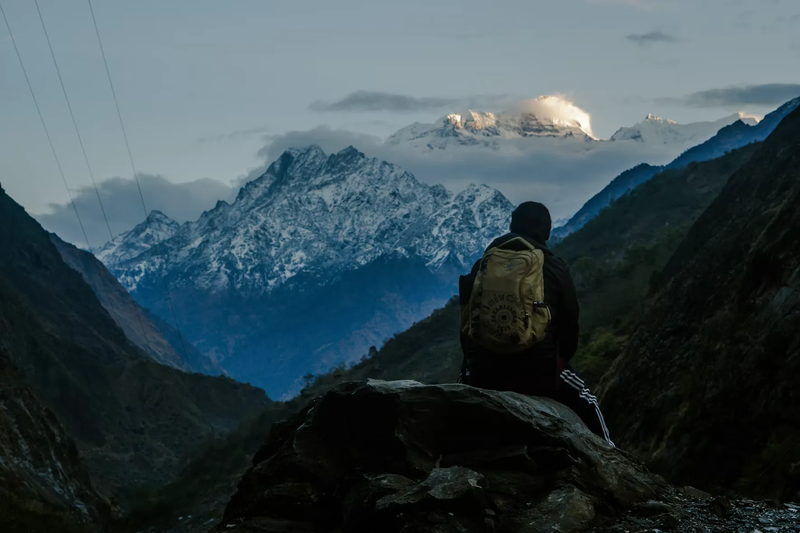
Altitude is another major concern, so proper acclimatization is important. Weather can change quickly in the mountains, and cold, snow, wind, or poor trail conditions can make some sections harder than expected.
Annapurna Circuit Difficulty
The Annapurna Circuit is also challenging, mainly because of the Thorong La Pass at 5,416 meters. However, the gradual approach to higher elevations, larger choice of accommodation, better road access, and more developed facilities can make the trek easier to manage.
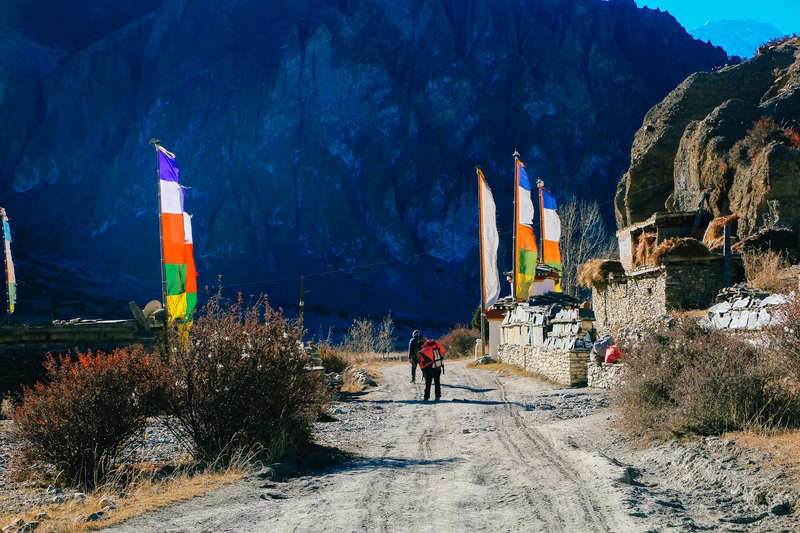
Even with better infrastructure, high altitude should not be taken lightly. Trekkers still need proper acclimatization and should watch for symptoms of altitude sickness, especially around Manang and during the Thorong La crossing.
Annapurna Base Camp Difficulty
Annapurna Base Camp is generally easier than both circuits because it reaches only about 4,130 meters and can be completed in a shorter time. However, the route has many steep stone steps and frequent ascents and descents, which can be tiring on the legs.
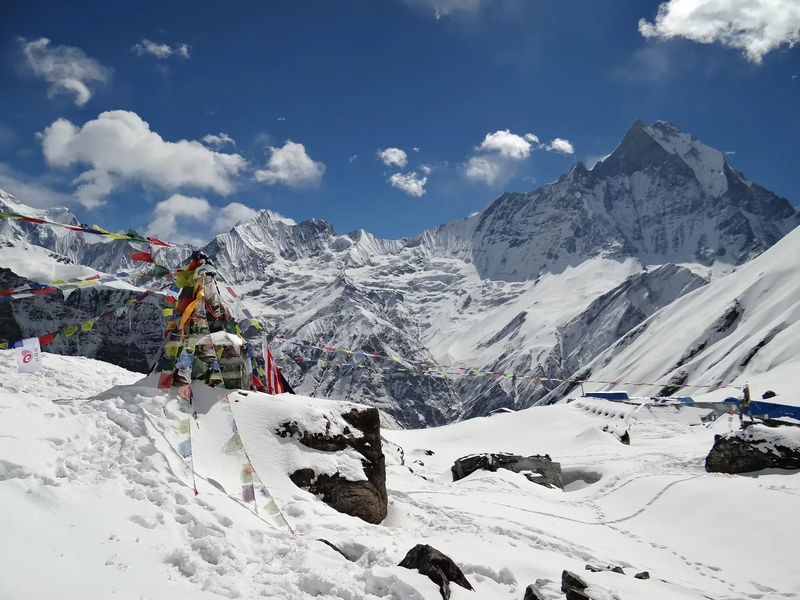
The lower altitude does not remove all risks. Cold weather, rain, snow, and rapid changes in conditions can affect the trek, so good footwear, suitable clothing, and a sensible pace are still important. Learn More about ABC Difficulty.
Which Trek Costs More?
The Manaslu Circuit Trek is slightly more expensive than the Annapurna Circuit Trek, while the Annapurna Base Camp Trek is the most affordable of the three. The difference is mainly related to permits, trek duration, route conditions, accommodation, transportation, and the level of support required.
Manaslu Circuit Trek
The Manaslu Circuit Trek costs around USD 950 to USD 1,200+ per person for a standard guided package. The starting cost of USD 950 generally covers required permits, tea house accommodation, full-board meals, a licensed guide, transportation, and applicable taxes and service charges. Personal expenses, insurance, tips, and optional services can increase the final budget.
Annapurna Circuit Trek
The Annapurna Circuit Trek costs around USD 925 to USD 1,150+ per person for a standard guided package. The starting cost of USD 925 generally includes trekking permits, accommodation, meals, a licensed guide, transportation, and government taxes. Additional spending may include porter services, insurance, personal equipment, drinks, hot showers, charging, laundry, and tips.
Annapurna Base Camp Trek
The Annapurna Base Camp Trek costs around USD 850 to USD 1,050+ per person for a standard guided package. The starting cost of USD 850 generally covers permits, tea house accommodation, full-board meals, a licensed guide, transportation, and other standard trekking services. Personal expenses, insurance, trekking gear, drinks, tips, and optional services can add to the total cost.
Cost Comparison
| Trek |
Starting Cost |
Typical Range |
| Manaslu Circuit Trek |
USD 950 |
USD 950 to USD 1,200+ |
| Annapurna Circuit Trek |
USD 925 |
USD 925 to USD 1,150+ |
| Annapurna Base Camp Trek |
USD 850 |
USD 850 to USD 1,050+ |
The Manaslu Circuit has the highest starting cost, followed closely by the Annapurna Circuit. Annapurna Base Camp is the most affordable option among the three.
Which Trek Has Better Scenery?
Manaslu offers dramatic mountain views, remote valleys, and Tibetan-influenced landscapes, while the Annapurna Circuit provides greater landscape variety. Annapurna Base Camp offers a different experience, with a shorter route leading into a spectacular mountain amphitheater surrounded by towering Himalayan peaks.
Manaslu Mountain Views
The Manaslu Circuit is known for its remote Himalayan setting and impressive views of the Manaslu massif, Himalchuli, Ngadi Chuli, and Ganesh Himal. The landscape changes from deep river valleys and forests to glacial valleys, high mountain terrain, and villages influenced by Tibetan culture.
Annapurna Circuit Views
The Annapurna Circuit offers remarkable landscape variety, from lush valleys and forests to the dry landscapes around Manang and Mustang and the high mountain terrain near Thorong La. Along the route, trekkers can enjoy views of the Annapurna massif, Dhaulagiri, Machhapuchhre, and surrounding peaks.
Annapurna Base Camp Views
The Annapurna Base Camp Trek provides a concentrated Himalayan mountain experience. The trail enters the Annapurna Sanctuary, where trekkers are surrounded by Annapurna South,Machhapuchhre, and Hiunchuli. The close-up views from the base camp create a dramatic natural amphitheater that makes this trek especially memorable.
Which Trek Is Better for You?
The best trek depends on your available time, trekking experience, preferred level of comfort, and tolerance for remoteness. Manaslu suits solitude and adventure, Annapurna Circuit offers variety and infrastructure, while Annapurna Base Camp is better for a shorter Himalayan experience.
- Choose Manaslu for fewer crowds, remote landscapes, cultural immersion, and a more adventurous trekking experience.
- Choose Annapurna Circuit for scenic variety, better infrastructure, flexible itineraries, and the experience of completing a classic Himalayan circuit.
- Choose Annapurna Base Camp if you have less time and want a shorter trek with close-up views of Annapurna, Machhapuchhre, and the surrounding mountains.
Which Trek Is Better for Beginners?
Annapurna Base Camp is generally the most approachable of the three, while Annapurna Circuit can suit fit first-time trekkers with proper preparation. Manaslu is more suitable for trekkers who are comfortable with remote trails, longer walking days, and higher-altitude environments.
- Choose Manaslu if you have good fitness and some experience with multi-day trekking, as the remote route, higher altitude, and Larkya La Pass require good preparation and confidence in mountain conditions.
- Choose Annapurna Circuit if you are a fit first-time trekker looking for a longer Himalayan adventure. Better infrastructure, more accommodation options, and flexible transportation make the route more manageable with proper preparation.
- Choose Annapurna Base Camp if you are new to Himalayan trekking or have limited time. Its shorter itinerary makes it more approachable, but the altitude still requires a steady pace, proper acclimatization, and preparation.
Which Trek Should You Book?
If you want a quieter and more remote Himalayan adventure, choose Manaslu. If you prefer better infrastructure, scenic variety, and more route flexibility, Annapurna Circuit is a strong choice. If you have less time and want close-up Himalayan views, Annapurna Base Camp is the better option.
- Choose Manaslu if... you want fewer crowds, remote mountain landscapes, Tibetan-influenced culture, and a more adventurous trekking experience. It is a good fit for trekkers who are comfortable with higher altitudes, longer walking days, and remote mountain conditions.
- Choose Annapurna Circuit if... you want a classic Himalayan circuit with changing landscapes, diverse cultures, better infrastructure, and more flexibility during the trek. It can also be a good option for fit first-time multi-day trekkers with proper preparation.
- Choose ABC if... you have limited time and want a shorter trek with impressive views of Annapurna, Machhapuchhre, and other surrounding peaks. It offers a concentrated Himalayan experience without the length of a full circuit.
Himalayan Hero Adventures Pvt. Ltd. is a local trekking company in Nepal that can help travelers choose between these routes based on their fitness level, available dates, previous trekking experience, and budget. The right route depends on the experience you want from your time in the Himalayas.
Plan Your Trek With Local Expertise
A well-planned trek can make the difference between simply completing a route and enjoying the journey. Local support can help with permits, transportation, accommodation, pacing, acclimatization, and changing mountain conditions. Private and group options also make it easier to match the trek with your experience, available time, and budget.
If you are still deciding between Manaslu, Annapurna Circuit, and Annapurna Base Camp, now is a good time to plan your route, check availability for your preferred dates, and prepare properly for the journey ahead.
FAQs About Manaslu and Annapurna
Is Manaslu harder than Annapurna?
Yes, Manaslu is generally more challenging because of its remote terrain, fewer facilities, and demanding high-altitude sections, although Annapurna also involves a difficult pass at 5,416 meters.
Which trek is better Manaslu or Annapurna?
Manaslu is better for solitude and adventure, while Annapurna is better for infrastructure, scenic variety, and route flexibility.
Can a beginner do Manaslu Circuit?
Yes, a fit beginner can do Manaslu with proper preparation and guide support, but previous multi-day trekking experience is recommended.
Can a beginner do Annapurna Circuit?
Yes, fit beginners can complete the Annapurna Circuit with proper preparation, pacing, and acclimatization.
Which is higher Manaslu Circuit or Annapurna Circuit?
The Annapurna Circuit is higher, reaching Thorong La at 5,416 meters compared with Larkya La at 5,106 meters on the Manaslu Circuit.
Is Manaslu Circuit more expensive than Annapurna?
Yes, Manaslu is slightly more expensive, with starting package costs of around USD 950 compared with USD 925 for Annapurna Circuit.
Which trek has fewer crowds?
Manaslu generally has fewer crowds than both Annapurna Circuit and Annapurna Base Camp because of its restricted-area regulations and more remote route.
Is Manaslu Circuit worth it?
Yes, Manaslu is worth it for trekkers seeking remote Himalayan scenery, fewer crowds, rich mountain culture, and an adventurous high-altitude experience.
Is Annapurna Circuit better than Annapurna Base Camp?
Annapurna Circuit is better for landscape variety and a longer journey, while Annapurna Base Camp is better for shorter trekking and close-up mountain views.
Which trek is better for a first-time trekker?
Annapurna Base Camp is generally the easiest choice for a first Himalayan trek, followed by Annapurna Circuit, while Manaslu is better suited to experienced trekkers.
How many days do you need for Manaslu Circuit?
A typical Manaslu Circuit Trek takes around 14 days, including transportation from Kathmandu, acclimatization, the Larkya La crossing, and the return journey.
How many days do you need for Annapurna Circuit?
A typical Annapurna Circuit Trek takes around 14 days, including transportation, acclimatization, the Thorong La crossing, and the return to Kathmandu.
How long is Annapurna Base Camp Trek?
A typical Annapurna Base Camp Trek takes around 12 days from Kathmandu and includes several days of trekking to and from the Annapurna Sanctuary.
What permits are required for Manaslu Circuit?
The Manaslu Circuit requires a Manaslu Restricted Area Permit, Manaslu Conservation Area Permit, and Annapurna Conservation Area Permit.
What is the best month for Manaslu and Annapurna?
October and November are generally the best months, followed by March, April, and May, for stable weather and clearer Himalayan mountain views.