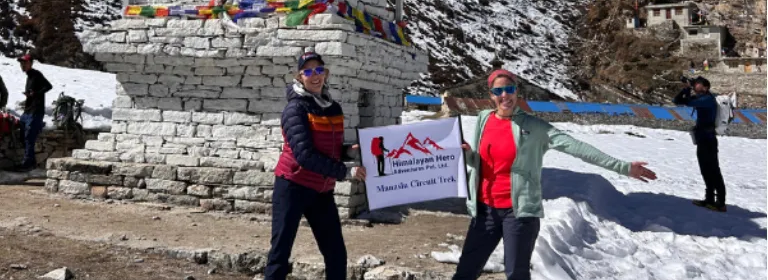
Have you ever looked at the Manaslu Circuit and wondered, “Can I really do this alone as a woman?” Yes, you can travel to Nepal alone and trek the Manaslu Circuit without joining a large group. However, because Manaslu is a restricted trekking area, you still need a registered trekking agency, a licensed guide, and the required permits.
The Manaslu Circuit is a remote high-altitude trek with long walking days, basic teahouses, changing mountain weather and the 5,106-meter Larkya La Pass. For a solo female traveler, good planning matters more than traveling with a large group. This guide explains the current permit requirements, safety concerns, accommodation, packing, seasons, costs and practical tips for trekking Manaslu with confidence.
Can a Solo Female Traveler Trek the Manaslu Circuit?
Yes, a solo female traveler can trek the Manaslu Circuit, but not as an unsupported independent trekker. The Manaslu region is a restricted area, so you need the required permits and must arrange the restricted-area trek through a registered trekking agency with a licensed guide.
This means “solo” can describe your travel style, not necessarily that you walk the trail completely alone. You can come to Nepal by yourself, choose a private trek, and have a licensed local guide accompany you on the Manaslu route.
The current 2026 permit guidance also indicates that solo trekking in the Manaslu restricted area can be arranged with a licensed guide through a registered trekking agency. Because regulations can change, confirm the current requirement with your trekking company before departure.
Is the Manaslu Circuit safe for solo female trekkers?
Yes, the Manaslu Circuit can be a safe and rewarding trek for women who are properly prepared and travel with an experienced licensed guide.
The main risks are not specific to women. They are mostly related to altitude, weather, rough terrain, long walking days and the remoteness of the route. Some sections have limited medical facilities and fewer trekkers than Everest or Annapurna.
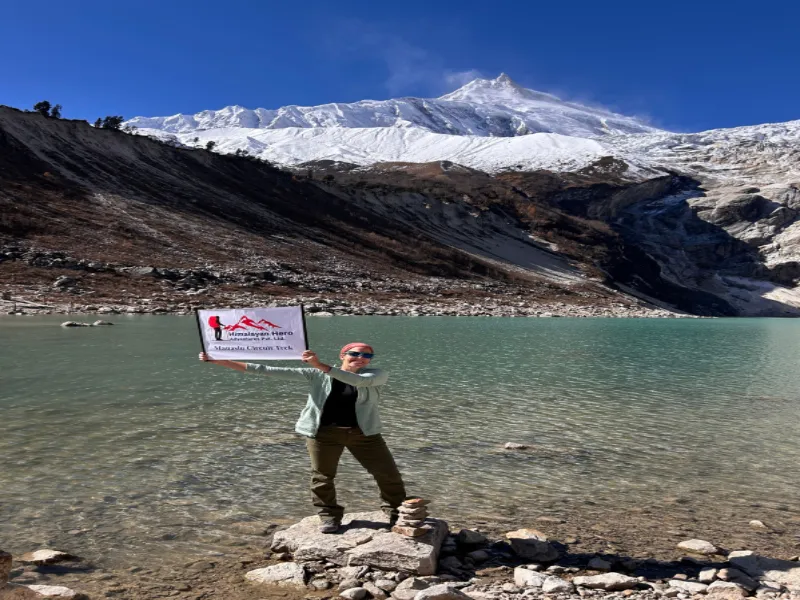
A guide can help with navigation, accommodation, communication, weather decisions and emergency arrangements. You should also have travel insurance that covers high-altitude trekking and emergency evacuation.
Can women trek the Manaslu Circuit alone without joining a group?
Yes, you can trek Manaslu without joining a larger group, provided you meet the current restricted-area requirements.
A private trek can consist of one traveler and a licensed guide. You do not necessarily need to join a group of international trekkers. This can be a good option if you prefer your own pace, more privacy or a flexible itinerary.
The important distinction is between solo travel and independent trekking. You can travel alone, but the restricted Manaslu route requires the appropriate agency and guide arrangement.
What makes Manaslu different from popular solo treks in Nepal?
The Manaslu Circuit is quieter and more remote than many of Nepal's best-known trekking routes. You encounter fewer trekkers, traditional mountain villages, Tibetan-influenced culture, suspension bridges, forests, high alpine terrain and long stretches between settlements.
The trade-off is fewer facilities. Teahouses become simpler at higher elevations, communication can be limited, and weather can change quickly.
For a solo female traveler, this makes preparation particularly important. The remoteness is part of the attraction, but it is also why the right guide and itinerary matter.
What Are the Main Safety Concerns for Solo Female Travelers on Manaslu?
The main safety concerns are altitude sickness, changing weather, difficult terrain, snow, long walking days and limited medical facilities. These risks can usually be reduced through gradual acclimatization, sensible pacing, suitable equipment and experienced local support.
The highest point of the standard circuit is Larkya La Pass at approximately 5,106 meters. The route also passes through higher villages such as Samagaon, Samdo and Dharamsala, where cold temperatures and thinner air become more significant.
Do not treat Manaslu as an ordinary sightseeing trip. You should be prepared to change your itinerary if your health, weather or trail conditions require it.
What should solo female travelers know about altitude sickness?
Altitude sickness is one of the most important health concerns on the Manaslu Circuit because the route climbs above 5,000 meters at Larkya La.
Common symptoms include:
- Headache
- Dizziness
- Nausea
- Loss of appetite
- Unusual tiredness
- Difficulty sleeping
- Shortness of breath
Mild symptoms should never be ignored. Tell your guide as soon as you feel unwell.
The safest approach is to gain altitude gradually, take planned acclimatization time and avoid pushing higher when symptoms are getting worse. If serious symptoms develop, descending to a lower elevation is generally more important than continuing with the itinerary.
A sensible Manaslu itinerary normally includes acclimatization time around higher villages such as Samagaon. Your guide should monitor your condition and help decide whether you should continue, rest or descend.
How can solo female travelers stay safe from weather and trail conditions?
Mountain weather can change quickly on Manaslu. Rain, fog, wind and snow can affect visibility and trail conditions, particularly around higher elevations.
Lower sections may involve muddy trails and landslide-prone areas during wet periods, while higher sections can become snowy and icy.
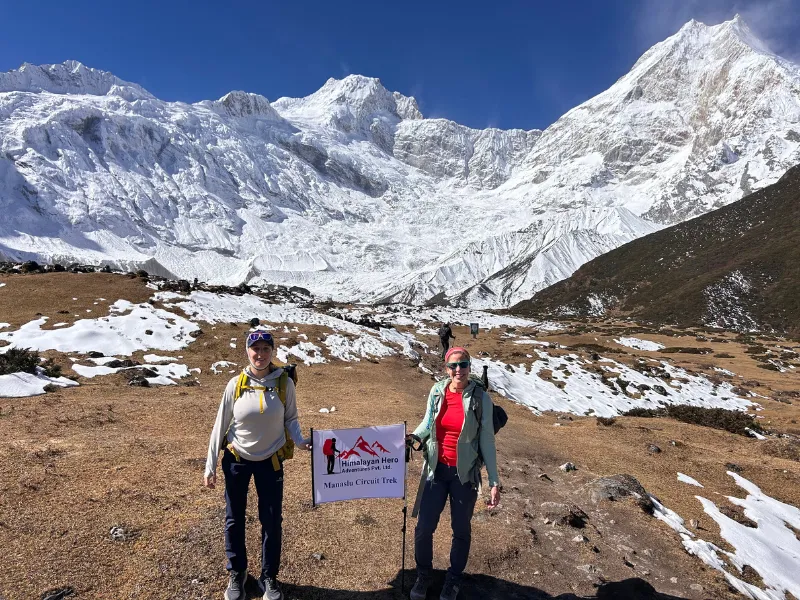
Around Larkya La, cold temperatures, strong wind, snow and reduced visibility can make the pass crossing demanding.
Useful equipment includes:
- Waterproof trekking jacket
- Warm down jacket
- Thermal layers
- Warm gloves
- Wool or thermal socks
- Reliable trekking boots
- Trekking poles
- Headlamp
- Sunglasses
- Sun protection
- Waterproof backpack cover
If your guide recommends delaying a pass crossing because of weather, take that advice seriously. A missed crossing day is better than taking an unnecessary risk at high altitude.
Why Is a Local Guide Important for Solo Female Trekkers?
A local guide provides much more than trail navigation.
On the Manaslu Circuit, a knowledgeable guide can help with accommodation, communication, weather decisions, altitude monitoring, route conditions and emergency arrangements.
This is particularly valuable when you are traveling without friends or family.
A good guide can help with:
- Navigation: Finding the correct trail when conditions are unclear.
- Accommodation: Contacting teahouses and helping secure rooms.
- Communication: Speaking with local people and lodge owners.
- Altitude monitoring: Recognizing symptoms and helping make safe decisions.
- Weather decisions: Assessing conditions before difficult sections.
- Emergency support: Coordinating assistance if you become sick or injured.
- Cultural understanding: Explaining local customs and religious practices.
- Daily planning: Adjusting walking distances when conditions change.
For a solo female traveler, the relationship with your guide also matters. A good guide should respect your personal boundaries, walking pace and preferences rather than treating the trek as a race.
Before booking, ask about the guide's experience, license, Manaslu experience and emergency training.
What Permits Does a Solo Female Traveler Need for the Manaslu Circuit?
A solo female traveler needs the same core Manaslu permits as other international trekkers. For the standard Manaslu Circuit, the main charges are:
- Manaslu Restricted Area Permit (RAP)
- Manaslu Conservation Area Permit (MCAP)
- Annapurna Conservation Area Permit (ACAP)
- Chumnubri Rural Municipality fee
If you add Tsum Valley, you need an additional Tsum Valley Restricted Area Permit.
There is not one single “Manaslu permit” covering the entire trek. The different charges exist because the route passes through a restricted area, the Manaslu Conservation Area, the Annapurna Conservation Area and Chumnubri Rural Municipality.
Do solo female trekkers need a trekking company and guide?
Yes. The Manaslu restricted area requires the appropriate agency and guide arrangement.
The updated 2026 guidance used by Himalayan Hero states that solo trekking can be arranged with a licensed guide through a registered trekking agency. In practical terms, this means a woman can trek without another trekking partner, but she still needs the agency and guide arrangement required for the restricted-area permit.
Because Nepal's trekking regulations can change, confirm the current rule with your trekking company before booking flights and finalizing your itinerary.
How Do You Get the Manaslu Circuit Trek Permits?
For most solo female trekkers, the easiest option is to have a registered Nepal trekking company arrange the permits before the trek.
The basic process is:
- Choose your itinerary: Decide whether you are doing the standard Manaslu Circuit or adding Tsum Valley.
- Send your documents: Your agency will normally request passport details, passport photographs and itinerary information.
- Arrange the RAP: The registered trekking agency handles the Manaslu Restricted Area Permit through the Department of Immigration.
- Arrange MCAP and ACAP: These can be handled as part of your trekking arrangements.
- Confirm the local fee: Ask your agency about the current Chumnubri Rural Municipality fee.
- Keep copies: Carry digital and physical copies of your passport, permits and insurance details.
- Carry cash: Keep some Nepalese rupees available for local expenses and trail fees.
It is better to arrange your permits before leaving Kathmandu rather than waiting until you reach the trail. If your flight schedule is tight, allowing a buffer day in Kathmandu is sensible.
For official information, travelers should also check current notices from the Department of Immigration, Nepal Tourism Board and relevant conservation authorities before departure.
How Should Solo Female Travelers Choose a Manaslu Trekking Company?
Choosing a trekking company is one of the most important decisions for a solo female traveler because the company will handle restricted-area logistics and provide your guide.
Look for:
- Registered Nepal trekking company
- Licensed and experienced guide
- Experience on the Manaslu Circuit
- Clear permit arrangements
- Realistic acclimatization itinerary
- Emergency response plan
- High-altitude trekking experience
- Transparent pricing
- Clear inclusions and exclusions
- Reliable communication
- Small-group or private trekking options
Do not choose an agency only because it has the lowest advertised price. Ask what is actually included.
Before booking, ask:
- Who will be my guide?
- Is the guide licensed?
- How many years has the guide worked in Manaslu?
- What permits are included?
- How many days does the RAP cover?
- Is the Chumnubri fee included?
- What happens if weather delays Larkya La?
- What is the emergency evacuation procedure?
- Is travel insurance required?
- What happens if I become sick at altitude?
You can also read our guide on how to choose the best Manaslu Circuit trek company before making your decision.
Where Do Solo Female Trekkers Stay on the Manaslu Circuit?
Most trekkers stay in local teahouses and small mountain lodges along the route.
Accommodation is basic but generally practical. Rooms commonly have beds and simple furniture, while bathrooms may be shared. Dining rooms are often the warmest area of the lodge and are used for meals and socializing.
At lower elevations, accommodation choices are usually better. As you approach higher villages such as Samagaon, Samdo and Dharamsala, facilities become more basic.
You can generally expect:
- Twin or shared rooms
- Basic beds
- Shared bathrooms
- Dining areas
- Simple meals
- Hot drinks
- Limited electricity
- Wi-Fi or mobile connectivity in selected areas
Are teahouses safe for women traveling alone?
Teahouses can be a practical and comfortable option for solo female trekkers, but normal travel precautions still apply.
Keep valuables secure, avoid leaving important documents unattended and tell your guide if you are uncomfortable with your room or accommodation.
Private rooms may be available at some lodges, but they are not guaranteed, particularly during busy trekking seasons or at higher elevations.
What should women expect at higher elevations?
Higher sections are colder and more basic.
Around Dharamsala and other high-altitude stops, you may encounter:
- Very cold nights
- Basic rooms
- Shared bathrooms
- Limited hot water
- Limited electricity
- Fewer accommodation choices
- Simple meals
A warm sleeping bag, thermal layers, headlamp and personal hygiene supplies become increasingly useful.
What Should a Solo Female Traveler Pack for Manaslu?
Packing for Manaslu means preparing for everything from warm lower valleys to freezing conditions around Larkya La.
The goal is not to carry everything. It is to carry the right equipment.
Clothing
- Moisture-wicking base layers
- Trekking shirts
- Trekking pants
- Fleece jacket
- Down jacket
- Waterproof jacket
- Thermal leggings
- Warm gloves
- Warm socks
- Hat or beanie
- Sun hat
Trekking equipment
- Comfortable trekking boots
- Trekking poles
- Sleeping bag
- Headlamp
- Backpack
- Rain cover
- Water bottles
- Water purification tablets or filter
Personal items for women
- Menstrual products for the entire trek
- Personal medication
- Toiletries
- Wet wipes
- Hand sanitizer
- Small towel
- Lip balm
- Sunscreen
- Basic first-aid supplies
Remote villages may not have your preferred personal or menstrual products, so carry enough for the entire itinerary.
For a detailed checklist, see our Manaslu Circuit Trek packing list.
What Is the Best Time for a Solo Female Trekker to Visit Manaslu?
The best periods for a solo female traveler are generally spring, from March to May, and autumn, from September to November.
These seasons usually provide better trekking conditions, clearer mountain views and more manageable weather than the monsoon and winter periods.
Is spring a good time for Manaslu?
Yes. March to May is a good season for the Manaslu Circuit.
Lower valleys become warmer, rhododendrons bloom and mountain scenery can be excellent. April and May are generally warmer than March.
However, snow can remain around Larkya La depending on winter conditions, so the pass should always be assessed according to current weather and trail conditions.
Is autumn a good time for Manaslu?
Yes. Autumn is one of the most popular seasons for Manaslu.
October is particularly attractive because post-monsoon conditions often provide clear mountain views and relatively stable weather.
September can still experience some rain early in the month, while November becomes increasingly cold at higher elevations.
The downside is that the main trekking season can also mean more trekkers and higher demand for accommodation and guides.
Can women trek Manaslu during winter or monsoon?
It is possible, but both seasons require additional caution.
Winter can bring heavy snow and freezing conditions at high elevations. The Larkya La crossing can become difficult depending on snow and weather.
Monsoon, from June to August, can bring heavy rain, muddy trails, landslides, cloud cover and transportation problems.
For a first Manaslu trek, spring or autumn is usually the more practical choice.
How Difficult Is the Manaslu Circuit for Women?
The Manaslu Circuit is a moderate to challenging high-altitude trek. It is suitable for women with good general fitness who are prepared for long walking days and altitude.
Most itineraries take around 14 to 18 days, although the exact duration depends on the route, transportation, acclimatization and itinerary design.
The most demanding section is the Larkya La crossing at approximately 5,106 meters.
You should be comfortable with:
- Walking 6 to 8 hours on many trekking days
- Steep ascents and descents
- Rocky and uneven trails
- Long mountain days
- Cold temperatures
- Basic teahouse accommodation
- High-altitude conditions
Previous high-altitude trekking experience is useful but not essential. A gradual itinerary and proper preparation are more important than trying to trek quickly.
For more detail, read our guide to Manaslu Circuit Trek difficulty.
How Much Does the Manaslu Circuit Trek Cost for a Solo Female Traveler?
The total cost depends on your itinerary, season, group size, guide, accommodation, meals and transportation.
A private trek may cost more per person because you are not sharing guide and logistics costs with several trekkers. A small group can reduce the per-person cost while still giving you companionship and professional support.
Your package may include:
- Licensed guide
- Required permits
- Teahouse accommodation
- Meals
- Ground transportation
- Trekking logistics
Always check the inclusions carefully.
Personal expenses can include:
- Snacks and drinks
- Hot showers
- Phone charging
- Tips
- Personal medication
- Travel insurance
- Extra accommodation
- Emergency expenses
The permit cost should also be checked separately because the RAP varies according to season and the number of restricted-area days.
What Should Solo Female Travelers Know Before Booking Manaslu?
The Manaslu Circuit can be an excellent choice if you want a quieter Himalayan experience, but you should understand what you are signing up for.
Keep these practical points in mind:
- Traveling alone is possible: You do not have to join a large group.
- A guide is required: Arrange the restricted-area trek through a registered trekking company.
- Permits matter: RAP, MCAP, ACAP and the Chumnubri fee should be included in your planning.
- Tsum Valley needs an extra permit: Do not confuse its RAP with the main Manaslu RAP.
- Choose your season carefully: Spring and autumn are generally the easiest seasons.
- Take altitude seriously: Larkya La reaches approximately 5,106 meters.
- Get proper insurance: Make sure high-altitude trekking and evacuation are covered.
- Carry enough cash: Remote villages may have limited payment options.
- Pack personal products: Especially menstrual supplies and medication.
- Tell someone your itinerary: Share your route and expected travel dates with someone you trust.
- Respect local culture: Follow local customs around villages, monasteries and religious sites.
- Do not rush Larkya La: Weather and altitude are more important than staying exactly on schedule.
A private guided trek can be a particularly good option for a woman who wants independence without handling the restricted-area logistics alone.
A small group may be better if you want companionship and a lower per-person cost.
What Are the Main Advantages of a Private Manaslu Trek for Solo Women?
A private trek gives you more control over your experience.
You can often discuss your preferred walking pace, rest days and accommodation preferences with your guide and agency.
The main advantages include:
- More flexible daily walking pace
- Direct communication with your guide
- Greater privacy
- Easier itinerary adjustments
- More personal attention
- No need to coordinate with a large group
However, flexibility should never mean ignoring altitude or weather. Your guide should still recommend changes when conditions make the original plan unsafe.
Is Manaslu a Good Choice for a First High-Altitude Trek?
Yes, it can be, provided you are reasonably fit, choose a sensible itinerary and have experienced local support.
Manaslu is not an easy beginner's walk. The combination of long days, remote terrain and the 5,106-meter Larkya La Pass means preparation is essential.
If you have never trekked at altitude before, allow enough acclimatization time and consider choosing a private or small-group trek where your guide can pay closer attention to your condition.
Conclusion
The Manaslu Circuit can be a rewarding adventure for a solo female traveler who wants a quieter and more remote Himalayan experience. You do not have to join a large group, but you do need to follow the restricted-area rules, arrange the required permits and trek with the appropriate licensed guide and registered agency.
The most important preparation is understanding the realities of the route. Expect long walking days, basic teahouses, changing weather and high altitude, particularly around Larkya La. Choose the right season, carry suitable equipment, get appropriate insurance and listen to your guide when conditions change.
Ready to Make Your Manaslu Trek a Reality?
Planning Manaslu on your own can feel complicated, especially when you need to coordinate permits, a licensed guide, transportation and high-altitude logistics. Himalayan Hero can help arrange the required Manaslu permits and guide and trekking services based on your itinerary.
Manaslu Circuit Trek | Explore the classic Manaslu route
Manaslu Base Camp Trek | Go deeper into the Manaslu region
Short Manaslu Circuit Trek | Have less time? Explore a shorter option
For current permit requirements, availability and the best itinerary for your travel dates, talk to the Himalayan Hero team before you book.
Frequently Asked Questions About Solo Female Travel on the Manaslu Circuit
Can a solo female traveler trek the Manaslu Circuit?
Yes. A woman can trek the Manaslu Circuit without joining another trekking partner, but the restricted-area trek must be arranged through a registered trekking agency with a licensed guide.
Is the Manaslu Circuit safe for solo female travelers?
Yes, with proper preparation and professional support. The main risks are altitude, weather, terrain and remoteness rather than gender.
Do solo female trekkers need a guide for Manaslu?
Yes. A licensed guide is required for the restricted Manaslu route under the current trekking arrangements. Confirm the latest regulation with your registered trekking agency before departure.
What permits are required for the Manaslu Circuit?
The standard Manaslu Circuit requires the Manaslu Restricted Area Permit, Manaslu Conservation Area Permit, Annapurna Conservation Area Permit and Chumnubri Rural Municipality fee.
How much does the Manaslu Restricted Area Permit cost?
For the current permit rates, the RAP is USD 100 for the first 7 days from September to November and USD 75 for the first 7 days from December to August. Additional days are charged at seasonal rates.
How much are MCAP and ACAP?
The current rates listed for foreign trekkers are NPR 3,000 for MCAP and NPR 3,000 for ACAP. SAARC nationals have lower conservation-area rates.
Is the Chumnubri fee included in the Manaslu RAP?
No. The Chumnubri Rural Municipality fee is a separate local charge and should be included when calculating your total permit budget.
Do I need a separate permit for Tsum Valley?
Yes. Tsum Valley has its own Restricted Area Permit. It is separate from the Manaslu RAP.
What is the best month for a solo female trekker in Manaslu?
October is one of the strongest choices because autumn generally offers stable weather and clear mountain views. September, November and the spring months can also be good depending on conditions.
How difficult is the Manaslu Circuit for women?
It is a moderate to challenging high-altitude trek. Good fitness, gradual acclimatization and preparation are important, particularly because Larkya La reaches approximately 5,106 meters.
How many days are needed for the Manaslu Circuit?
A typical Manaslu Circuit itinerary takes around 14 to 18 days, depending on transportation, acclimatization days and the route chosen.
What should women pack for the Manaslu Circuit?
Pack layered clothing, warm insulation, waterproof gear, reliable trekking boots, a sleeping bag, sun protection, personal medication, menstrual products, water treatment and basic trekking equipment.