How do you pack for a trek where you could be sweating on a sunny trail one day and shivering in freezing temperatures a few days later? The answer isn't a bigger backpack. It's choosing clothes you can layer, footwear you can trust, and a handful of essentials that can cope with changing weather and long days on the trail.
This blog covers a practical Manaslu Circuit packing list for 2026, including clothing, footwear, sleeping gear, trekking equipment, toiletries, electronics, and basic health supplies. You'll also find seasonal packing advice, gear recommendations for the 5,106m Larkya La Pass, and a list of things that are better left at home. The idea is simple: help you decide what deserves space in your backpack before you set off.
Why Manaslu Packing Is Different
Manaslu packing is different because the trail is less developed and there are fewer places to buy or replace things along the way. You need to carry the essentials from the start, especially warm clothes, good footwear, a sleeping bag, and basic personal items. The trek also takes you up to Larkya La Pass at 5,106m, where cold, wind, and snow can be an issue even during the main trekking seasons.
Another thing to remember is that the teahouses become more basic as you reach higher villages such as Samagaon, Samdo, and Dharamsala. Facilities are limited, so having your own warm sleeping bag, extra layers, gloves, toiletries, and other small essentials can make the nights much more comfortable. With a little planning, you can avoid carrying unnecessary stuff while still being ready for the conditions.
Layering System
The easiest way to dress for the Manaslu Circuit is to use layers. You don't need to wear every piece at once. On warmer sections, you may only need a T-shirt and trekking trousers. As you climb higher or the weather turns cold, you can add another layer.
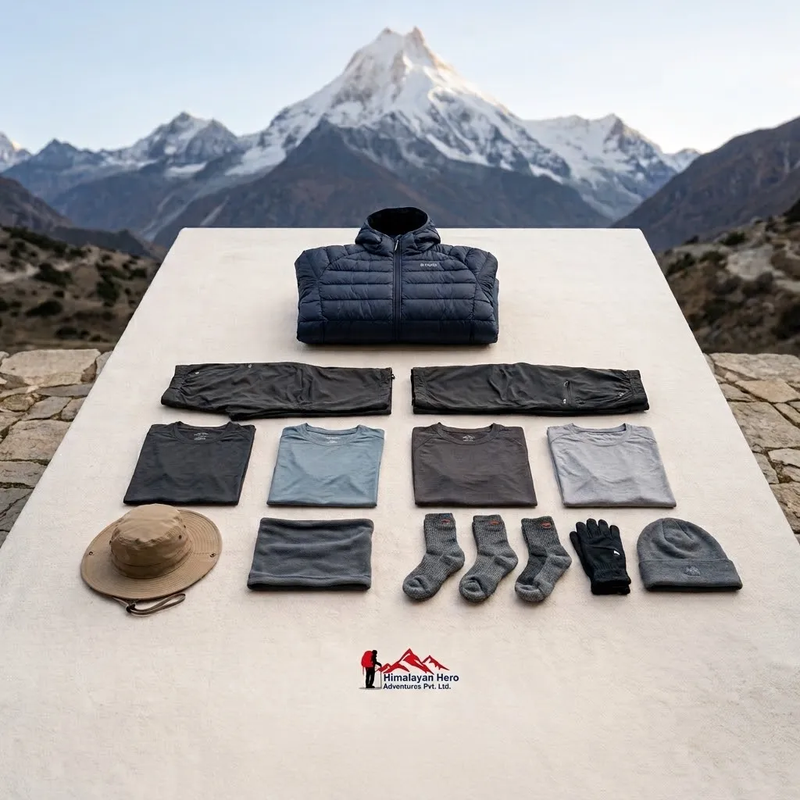
1. Base Layer: Merino Wool or Synthetic
The base layer is the first piece of clothing you wear, directly against your skin. Its main job is to move sweat away from your body and keep you reasonably dry.
For the Manaslu Circuit, good options include merino wool or synthetic fabrics such as polyester. A lightweight merino long-sleeve shirt is comfortable, resists odors, and works well in changing temperatures. Synthetic thermal tops are another good choice because they dry quickly.
For colder sections, pack thermal leggings or long johns made from merino wool or synthetic material. These can go underneath your trekking trousers when temperatures drop.
Pack: 2–3 moisture-wicking T-shirts, 1–2 long-sleeve base layers, and 1 pair of thermal bottoms.
2. Mid Layer: Fleece or Down
The mid layer provides insulation and keeps your body warm. A fleece jacket or fleece pullover is a practical choice because it is lightweight, breathable, and still works well when you're moving uphill.
For colder mornings and higher elevations, you can add a lightweight down jacket over your fleece or base layer. Down provides a lot of warmth without taking up much room in your backpack. A synthetic insulated jacket is also a good alternative, particularly in damp conditions.
You don't necessarily need several thick sweaters. One good fleece and one warm insulated jacket are usually much more useful.
Pack: 1 fleece jacket and 1 lightweight down or synthetic insulated jacket.
3. Outer Layer: Waterproof and Windproof Shell
The outer shell protects you from the weather rather than simply keeping you warm. Look for a waterproof and windproof trekking jacket that can fit comfortably over your other layers.
A waterproof shell becomes useful when rain, snow, or strong wind arrives. Waterproof trekking trousers can be worn over your normal trekking trousers when conditions get wet.
For the upper sections and Larkya La Pass, having a reliable shell is particularly important because wind can make already-cold temperatures feel much harsher.
Pack: 1 waterproof shell jacket and 1 pair of waterproof trousers.
4. Trousers: Comfortable and Quick-Drying
For everyday trekking, choose lightweight trekking trousers made from nylon or polyester. These materials are generally durable, dry quickly, and are comfortable for long walking days.
You can also pack one pair of thermal leggings for colder sections and one pair of waterproof shell trousers for rain or snow.
Jeans are best left at home. They're heavy, take ages to dry, and aren't particularly comfortable when you're walking for hours.
Pack: 2 pairs of lightweight trekking trousers, 1 thermal bottom, and 1 waterproof trouser.
5. Underwear and Socks: Don't Overcomplicate It
Choose quick-drying synthetic or merino wool underwear rather than cotton. Bring enough to stay comfortable without filling half your backpack.
For socks, look for merino wool or synthetic trekking socks with good cushioning and a comfortable fit. Avoid very thick socks if they make your boots tight.
I'd pack around 4–5 pairs of trekking socks and keep one clean, dry pair specifically for sleeping.
6. Gloves, Hat, and Buff
Your hands, ears, and neck need protection as temperatures fall.
For your hands, thin liner gloves made from synthetic or merino material are useful for everyday walking. Add insulated gloves or mittens for colder mornings and high-altitude sections.
For your head, bring a sun hat or cap for lower and warmer sections and a fleece or wool beanie for cold weather. A buff or neck gaiter is also handy for protecting your neck and face from cold wind and dust.
Why Cotton Is a Poor Choice
Cotton is comfortable, but it isn't ideal for a high-altitude trek. Once cotton gets wet from sweat or rain, it holds that moisture and dries slowly. If the temperature drops while you're wearing a damp cotton shirt, you can become uncomfortably cold.
That is why merino wool and synthetic fabrics are better choices for the Manaslu Circuit. They handle moisture better and are more suitable for long days of trekking in changing mountain weather.
Footwear & Legwear
Your feet take a beating on the Manaslu Circuit, so footwear is one area where I wouldn't try to save space or take chances. You’ll spend long hours walking over rocky trails, uneven ground, and potentially snowy sections near Larkya La.
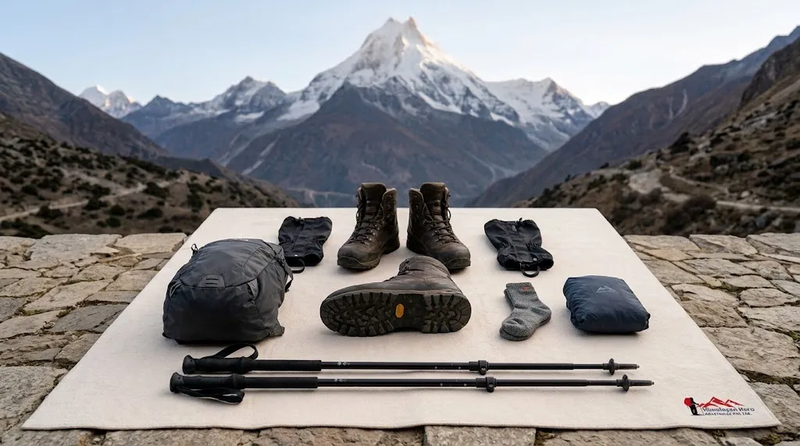
Waterproof Trekking Boots
Choose sturdy, waterproof trekking boots with good ankle support and a sole that grips well on uneven and slippery ground. Make sure they fit comfortably with your trekking socks and leave enough room for your toes to move.
Most importantly, don't bring brand-new boots straight to Manaslu. Wear them on several walks before the trek so your feet can get used to them. Even an expensive pair can cause painful blisters if you haven't broken them in properly.
Gaiters for Larkya La
A pair of waterproof gaiters can be very useful when crossing Larkya La, especially if there is fresh snow on the trail. They cover the gap between your boots and trousers, helping keep snow, mud, and small stones from getting inside your footwear.
They don't take up much room in your backpack, so I think they're worth carrying even if you don't end up using them every day.
Trekking Poles
Trekking poles are particularly useful on the descent from Larkya La, where the trail can be steep, uneven, rocky, or snowy depending on conditions. They give you extra balance and can reduce some of the strain on your knees during a long downhill section.
A pair of lightweight, adjustable trekking poles is a practical choice. You can shorten them when they're not needed and pack them away when travelling between destinations. While experienced trekkers may manage without poles, I'd still consider them an important part of Manaslu Circuit trek packing.
Sleep System
Good sleeping gear is important on the Manaslu Circuit because the nights get colder as you go higher. Teahouses provide beds, but the rooms can be cold and the bedding may be basic. A few simple items can help you stay warm and sleep better after a long day of walking.
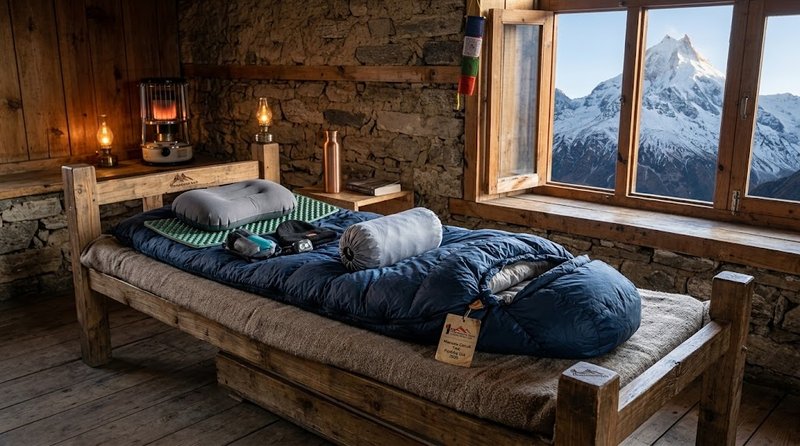
Sleeping bag: Take a warm sleeping bag rated around -15°C to -20°C for the colder parts of the trek. It will be especially useful at higher places where temperatures can fall below freezing at night. When buying one, check the comfort temperature on the label. This tells you the temperature at which the bag should feel comfortable, rather than simply looking at the lowest temperature rating.
Sleeping bag liner: A sleeping bag liner is a thin sheet that goes inside your sleeping bag. A silk or synthetic liner can help keep the inside of your bag clean and give you a little extra warmth. It is also light and easy to pack. This can be useful when staying in simple teahouses along the route.
Inflatable pillow or sit pad: A small inflatable pillow can make sleeping more comfortable, especially when the teahouse pillow is too thin or hard. If you don't want to carry a separate pillow, a small inflatable sit pad is another option. You can use it under you when sitting in the teahouse or during breaks on the trail, so one small item can have two uses.
Health & Altitude Gear
Health and altitude items are an important part of your Manaslu Circuit packing list. The trek reaches high elevations, so small problems such as headaches, dehydration, stomach issues, or blisters can become more difficult when you're far from lower villages.
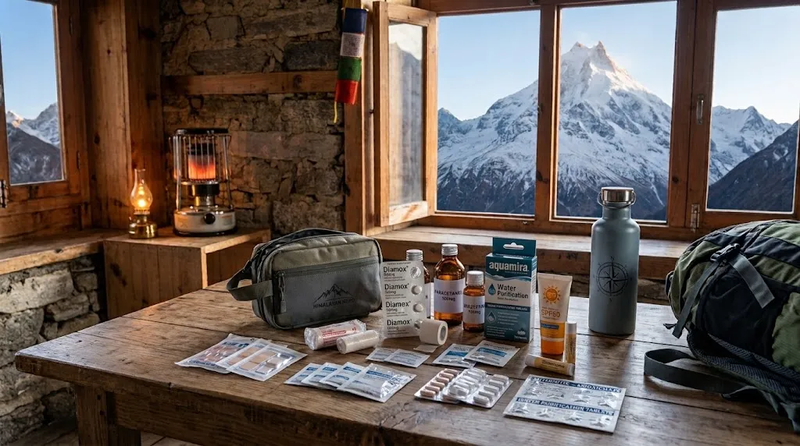
Diamox and Basic AMS Kit
Diamox (acetazolamide) is sometimes used to prevent or manage acute mountain sickness (AMS). Speak with a doctor before your trek to find out if it is suitable for you and how it should be used. You can also carry basic medicines recommended by your doctor for headaches, nausea, or other common problems. Most importantly, know the signs of serious altitude sickness and understand when you need to stop climbing or descend.
Water Purification
Carry water purification tablets, a water filter, or both so you have a safe way to treat drinking water during the trek. Water can become less convenient to buy in the higher sections, so it is better not to depend only on bottled water. A reusable bottle or hydration bladder makes it easier to carry and refill your water.
Personal First-Aid Basics
A small first-aid kit is enough for most everyday problems. Pack blister plasters, bandages, medical tape, antiseptic wipes, pain relief, and any prescription medicines you regularly use. Keep these items somewhere easy to reach rather than buried at the bottom of your backpack. You don't need to carry a full medical kit, just the basics that can help you deal with minor problems on the trail.
Documents, Permits & Money
These aren't really packing items, but they are important to arrange before starting the Manaslu Circuit. Keep your documents and cash somewhere dry and secure.
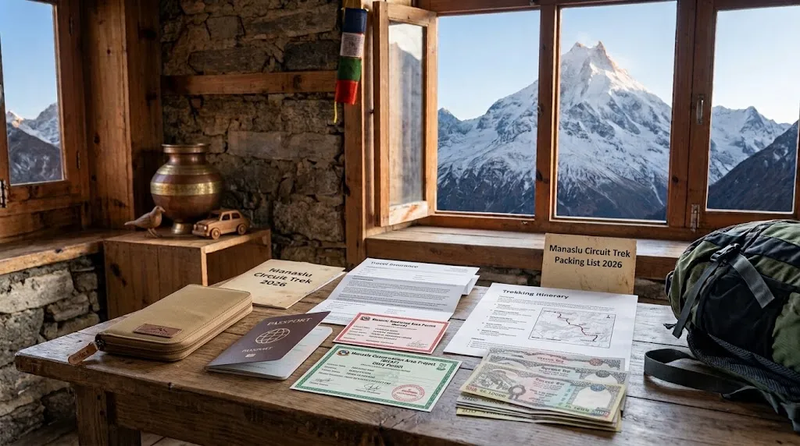
- Manaslu Restricted Area Permit (RAP): You need the RAP for the restricted section of the Manaslu region. The permit requirements and fees can change, so check the latest rules before your trek.
- Manaslu Conservation Area Permit (MCAP): The MCAP is required for trekking through the Manaslu Conservation Area. Your trekking agency or guide will usually help arrange it.
- Annapurna Conservation Area Permit (ACAP): Depending on your exact route and where your trek finishes, you may also need an ACAP. Confirm this before departure rather than assuming it is always required.
- Chumnubri Rural Municipality: The Manaslu route passes through Chumnubri Rural Municipality, officially known as Tsum Nubri Rural Municipality. Keep this name in mind when checking local route or permit information.
- Cash: Carry enough Nepalese rupees for food, drinks, showers, charging, tips, and other small expenses. ATM access becomes limited as you travel deeper into the region, so don't depend on cards.
- Cash after Machha Khola: Machha Khola is generally the last convenient place to access an ATM on the route. Withdraw enough money before continuing, and keep a small emergency amount separate from your main wallet.
What to Rent in Kathmandu vs. Buy at Home
You don't have to buy every piece of trekking gear just for one Manaslu Circuit trek. Some bulky items are easy to rent in Kathmandu, while things that affect fit, comfort, or personal hygiene are better bought before you travel.
- Down jacket: A warm down jacket is one of the easiest items to rent in Kathmandu. If you don't regularly trek in cold weather, renting can save money and space in your luggage. Check the jacket carefully before accepting it and make sure it fits comfortably over your base and mid layers.
- Sleeping bag: A warm sleeping bag is another popular item to rent in Kathmandu. Rental shops around Thamel commonly offer trekking sleeping bags in different warmth levels. If you rent one, check the temperature rating, condition, zip, and cleanliness before taking it. For the colder sections of Manaslu, make sure the bag is warm enough for your planned season rather than simply choosing the cheapest option.
- Trekking poles: These can also be rented if you don't want to buy a pair. However, if you already own lightweight adjustable poles that you like, bringing your own is often more comfortable because you're already familiar with them.
- Boots: I would buy or bring your trekking boots from home rather than renting them. Fit is too important, and you need time to break them in before tackling a long trek. A rented boot that feels fine for ten minutes in a shop may become a very different story after several hours on the trail.
- Base layers and socks: Buy these at home. These are personal items that sit against your skin, and having comfortable, familiar clothing is worth the small amount of extra luggage.
- Rain jacket and waterproof trousers: It's better to bring your own reliable waterproof layers. You already know how they fit, and you won't have to spend time searching for the right size after arriving in Kathmandu.
If you're trying to keep the budget under control, renting a down jacket and sleeping bag in Kathmandu can make sense, especially if you don't expect to use them regularly after the trek. Just don't rent something simply because it's cheap. Check the condition and temperature rating first.
Duffel Bag & Weight Limits
A duffel bag is useful on the Manaslu Circuit because most trekkers use a porter to carry their main luggage while they keep a smaller daypack with them. Keeping the two bags separate also makes it easier to access the things you need during the day without opening your entire trekking bag.
- Porter weight limit: Porters commonly carry around 10–15 kg per trekker, depending on the trekking agency and their own policies. Check the exact limit with your agency before packing. Try to keep your main luggage within the agreed weight so you don't make the load unnecessarily difficult to carry.
- Duffel bag: Put most of your clothing, sleeping bag, toiletries, and other items you won't need while walking in the duffel bag. A strong, water-resistant duffel is a good choice. You can also use waterproof packing cubes or dry bags inside to keep important items dry.
- Daypack: Keep the things you'll need during the day's walk in your daypack. This usually includes water, snacks, sunscreen, sunglasses, a rain jacket, extra layers, personal medication, a camera or phone, and some basic first-aid items.
- Keep valuables with you: Your passport, money, electronics, medication, and other important personal items should stay in your daypack rather than going into the porter-carried duffel. That way, you have them with you throughout the day.
Seasonal Packing Comparison
The best time for Manaslu Circuit Trek also affects what you need to pack. Spring and autumn are the most popular seasons, with generally better trekking conditions, while winter and monsoon can be more challenging. Your sleeping bag, insulation, rain gear, footwear, and Larkya La equipment should match the season you choose.
| Gear Category |
Spring (Mar–May) |
Autumn (Sep–Nov) |
Winter (Dec–Feb) |
Monsoon (Jun–Aug) |
| Sleeping bag |
Around -15°C |
-15°C to -20°C |
-20°C or warmer |
Around -15°C |
| Insulated jacket |
Mid-weight down |
Warm/heavy down |
Heaviest suitable down or synthetic jacket + extra mid-layer |
Mid-weight insulated jacket |
| Rain protection |
Waterproof shell |
Waterproof shell |
Waterproof/windproof shell |
Full waterproof shell + backpack cover |
| Legwear |
Trekking pants + thermal base |
Trekking pants + thermal base |
Warm trekking pants + thermal layer |
Quick-drying trekking pants |
| Footwear |
Waterproof trekking boots |
Waterproof trekking boots |
Waterproof boots + warm socks |
Waterproof boots + gaiters |
| Gaiters |
Recommended for Larkya La |
Recommended for Larkya La |
Very useful in snow |
Useful for mud and wet trails |
| Sun protection |
High |
High |
High |
Still important despite cloud cover |
| Gloves |
Liner + insulated outer |
Liner + insulated outer |
Heavy insulated gloves/mittens + liner |
Liner + light gloves |
| Extras |
— |
— |
Microspikes or crampons may be useful depending on conditions |
Extra dry bags, rain protection, and leech protection |
| Larkya La conditions |
Snow is possible |
Generally more stable |
Snow and difficult conditions possible |
Rain, clouds, and poor visibility can make crossing difficult |
Spring: March to May
Spring usually brings a mix of cool mornings, warmer afternoons, and colder conditions at higher elevations. Keep your normal layering system, but make sure you have a waterproof shell and warm gear for Larkya La. Snow can still be present around the pass, particularly earlier in the season.
Autumn: September to November
Autumn is generally the most popular period for the Manaslu Circuit. The weather is often more settled, but temperatures still become very cold at higher elevations. Don't let the pleasant conditions at lower elevations fool you—your Manaslu Circuit packing list still needs a warm sleeping bag, insulated jacket, gloves, and proper protection for the pass.
Winter: December to February
Winter requires more serious cold-weather preparation. Snow can make sections of the trail and Larkya La more difficult, and conditions can change quickly. A warmer sleeping bag, heavier insulation, warm gloves or mittens, and suitable footwear become particularly important. Depending on current trail conditions, additional traction equipment may also be useful.
Monsoon: June to August
The monsoon brings more rain, wet trails, clouds, and potentially muddy conditions. Waterproof clothing, a backpack cover, dry bags, and quick-drying clothes become much more important. Gaiters can also help keep mud and water out of your boots. Conditions around Larkya La can be unpredictable during this period, so check current trail conditions before making plans.
Bottom line: Autumn generally offers the most predictable trekking conditions, while spring can still bring snow around Larkya La. Winter calls for stronger cold-weather gear, and monsoon trekking requires much more attention to rain and trail conditions. Always check current conditions with your trekking agency or local guide before setting out, especially for the Larkya La crossing.
Downloadable Packing Checklist
Packing becomes much easier when you can tick things off one by one. Use this simple Manaslu Circuit packing checklist before leaving home and again before heading to the trail. It covers the main gear, clothing, health items, and documents you'll need.
| Category |
Item |
Packed |
| Clothing |
Base-layer tops |
☐ |
|
Thermal bottoms |
☐ |
|
Trekking shirts |
☐ |
|
Trekking trousers |
☐ |
|
Fleece jacket |
☐ |
|
Down/insulated jacket |
☐ |
|
Waterproof jacket |
☐ |
|
Waterproof trousers |
☐ |
|
Trekking socks |
☐ |
|
Warm hat/beanie |
☐ |
|
Sun hat |
☐ |
|
Gloves |
☐ |
|
Buff/neck gaiter |
☐ |
| Footwear |
Waterproof trekking boots |
☐ |
|
Camp shoes/sandals |
☐ |
|
Gaiters |
☐ |
| Sleep |
Warm sleeping bag |
☐ |
|
Sleeping bag liner |
☐ |
|
Inflatable pillow/sit pad |
☐ |
| Trekking Gear |
Backpack/daypack |
☐ |
|
Duffel bag |
☐ |
|
Backpack rain cover |
☐ |
|
Dry bags/pack liner |
☐ |
|
Trekking poles |
☐ |
|
Headlamp |
☐ |
|
Sunglasses |
☐ |
| Health |
Personal medicines |
☐ |
|
First-aid kit |
☐ |
|
Blister treatment |
☐ |
|
Sunscreen and lip balm |
☐ |
|
Water filter/tablets |
☐ |
|
Electrolytes |
☐ |
| Personal Items |
Toiletries |
☐ |
|
Quick-dry towel |
☐ |
|
Toilet paper |
☐ |
|
Hand sanitizer |
☐ |
|
Snacks |
☐ |
|
Water bottles/hydration bladder |
☐ |
| Electronics |
Phone |
☐ |
|
Power bank |
☐ |
|
Charging cables |
☐ |
|
Travel adapter |
☐ |
| Documents & Money |
Passport |
☐ |
|
Required permits |
☐ |
|
Travel insurance details |
☐ |
|
Emergency contacts |
☐ |
|
Nepalese rupees |
☐ |
Quick tip: Before closing your bag, go through the checklist once more and remove anything you haven't used on previous treks. On Manaslu, every unnecessary item becomes extra weight on your shoulders or your porter's.
Conclusion
Your Manaslu adventure starts long before you reach the trailhead. It starts with the dream of walking through quiet mountain villages, standing beneath towering peaks, and crossing the unforgettable Larkya La Pass. With the right Manaslu Circuit packing list and a little preparation, you can head into the Himalayas feeling confident and ready for the journey.
If you're dreaming about exploring Manaslu, Himalayan Hero is here to help you find the right adventure:
Have a route in mind but not sure where to begin? Call Himalayan Hero and share your trekking dream with us. We’ll be happy to help you plan the journey and take the first step toward the Himalayas.