Have you ever wondered what the tallest mountain in the world really is? Most people would answer Mount Everest, and they would be right if we are talking about elevation above sea level. But mountain height can be measured in different ways, which is where mountains such as Mauna Kea and Chimborazo enter the discussion.
In this guide, we rank the 10 tallest mountains in the world by elevation above sea level, the standard measurement used for global mountain rankings. You will find each mountain's height, location, first ascent, and trekking accessibility, along with explanations of why Everest ranks first and how K2, Kangchenjunga, Lhotse, and the other 8,000-meter peaks compare. We will also look at the difference between the highest mountain above sea level and the mountain that is technically tallest when measured from its base.
The Top 10 Tallest Mountains in the World
The top 10 tallest mountains in the world are all located in Asia, with eight of them rising in the Himalayas and two in the Karakoram. Each stands more than 8,000 meters above sea level, making them part of the world's 14 recognized eight-thousanders. Mount Everest is the highest at 8,848.86 meters, followed by K2 at 8,611 meters.
| Rank |
Mountain |
Height (m) |
Height (ft) |
Mountain Range |
Country |
| 1 |
Mount Everest |
8,848.86 m |
29,031.69 ft |
Himalayas |
Nepal/China |
| 2 |
K2 |
8,611 m |
28,251 ft |
Karakoram |
Pakistan/China |
| 3 |
Kangchenjunga |
8,586 m |
28,169 ft |
Himalayas |
Nepal/India |
| 4 |
Lhotse |
8,516 m |
27,940 ft |
Himalayas |
Nepal/China |
| 5 |
Makalu |
8,485 m |
27,838 ft |
Himalayas |
Nepal/China |
| 6 |
Cho Oyu |
8,188 m |
26,864 ft |
Himalayas |
Nepal/China |
| 7 |
Dhaulagiri I |
8,167 m |
26,795 ft |
Himalayas |
Nepal |
| 8 |
Manaslu |
8,163 m |
26,781 ft |
Himalayas |
Nepal |
| 9 |
Nanga Parbat |
8,126 m |
26,660 ft |
Himalayas |
Pakistan |
| 10 |
Annapurna I |
8,091 m |
26,545 ft |
Himalayas |
Nepal |
The remaining four eight-thousanders are Gasherbrum I (8,080 m), Broad Peak (8,051 m), Gasherbrum II (8,035 m), and Shishapangma (8,027 m). Although they fall outside the top 10, they are still among the highest mountains on Earth.
For travelers, there is an important difference between climbing an 8,000-meter peak and trekking in its surrounding region. Mountains such as Everest, Manaslu, and Annapurna can be experienced through established trekking routes without attempting their summits.
Mount Everest: The World's Tallest Mountain
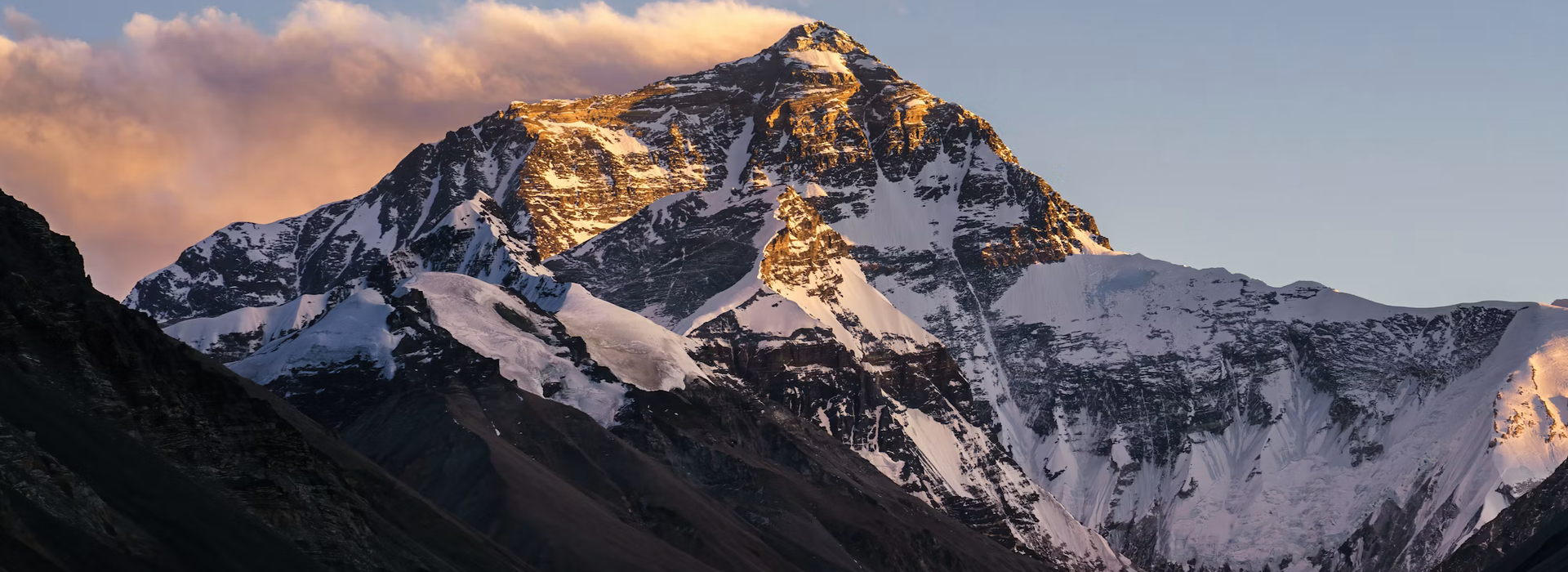
Mount Everest is the highest mountain in the world above sea level, standing at 8,848.86 meters (29,031.69 feet). It sits in the Himalayas on the border between Nepal and the Tibet Autonomous Region of China. Known as Sagarmatha in Nepal and Chomolungma in Tibet, Everest has become one of the most recognized mountains on Earth.
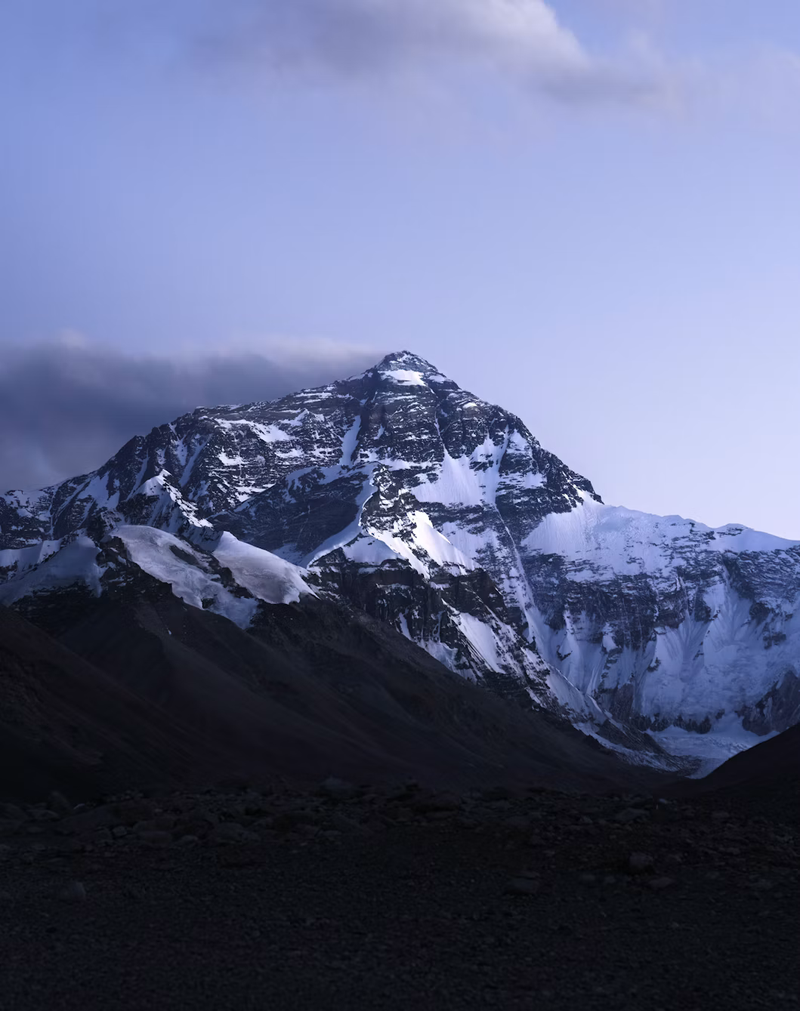
The first confirmed successful ascent was made on May 29, 1953, by Sir Edmund Hillary of New Zealand and Tenzing Norgay, a Nepali Sherpa. Their achievement marked a major moment in mountaineering history and helped make Everest a global symbol of exploration.
How Tall Is Mount Everest, Exactly?
Mount Everest is 8,848.86 meters (29,031.69 feet) above sea level. Nepal and China announced this jointly measured elevation in 2020, replacing Nepal's earlier official figure of 8,848 meters. The newer measurement includes the mountain's snow and ice cap.
Everest's height does not mean travelers need to climb to the summit to experience it. The Everest Base Camp Trek takes trekkers into the Khumbu region of Nepal, where they can see Everest and surrounding Himalayan peaks while experiencing Sherpa villages, monasteries, and high-altitude landscapes.
K2: The Second-Tallest and Most Dangerous
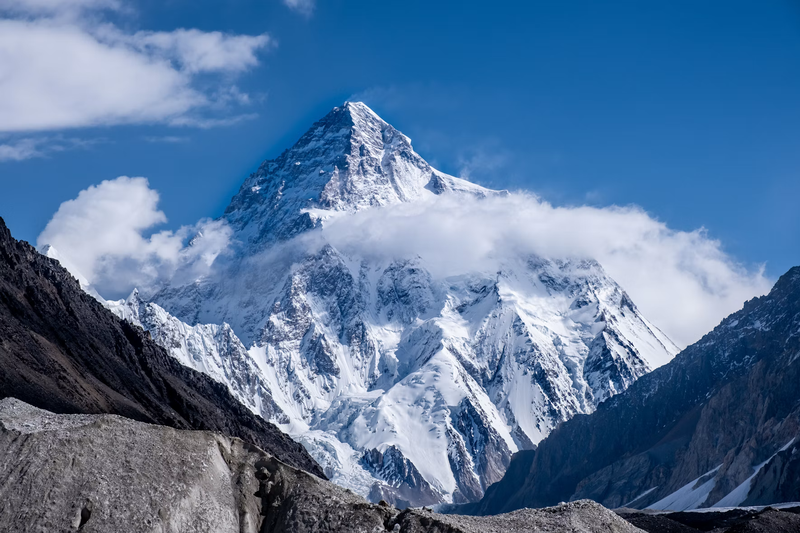
K2 is the second-highest mountain in the world, rising to 8,611 meters (28,251 feet) above sea level. It is located in the Karakoram range on the Pakistan-China border. Unlike Everest, which lies in the Himalayas, K2 is known for its steep slopes, technical climbing routes, severe weather, and demanding summit conditions.
Is K2 More Dangerous Than Everest?
K2 has historically been considered more dangerous to climb than Everest because of its steeper terrain, greater technical difficulty, unpredictable weather, and fewer opportunities for climbers to retreat safely. Its historical death rate has also been higher than Everest's, although fatality rates vary by period and by how they are calculated.
That does not mean every Everest expedition is safer. Everest also presents serious risks, including extreme altitude, avalanches, falls, severe weather, and the effects of the Death Zone above 8,000 meters. K2's combination of technical climbing and harsh conditions, however, has earned it a reputation as one of the world's most difficult major peaks.
Kangchenjunga, Lhotse, and Makalu: Nepal's Other Giants
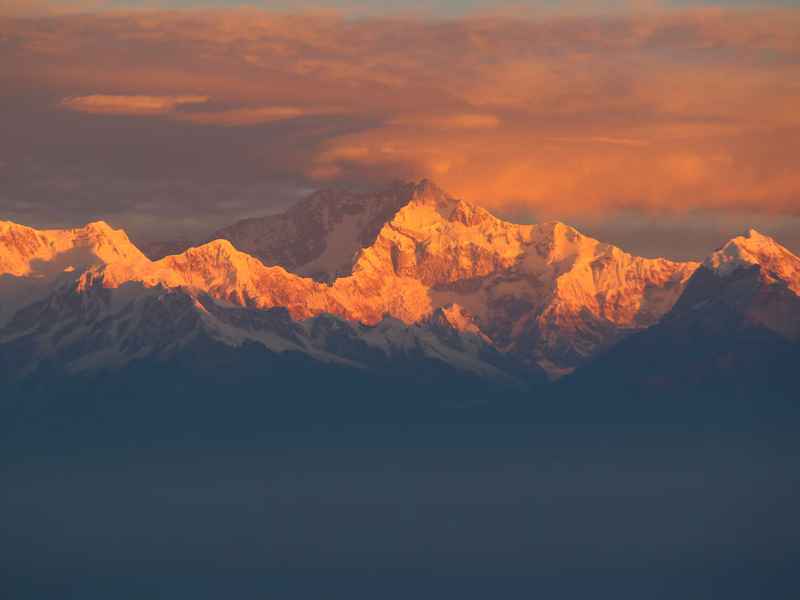
Kangchenjunga, Lhotse, and Makalu are three of the highest mountains in the world and all are closely connected with Nepal's Himalayan landscape. Kangchenjunga reaches 8,586 m, Lhotse stands at 8,516 m, and Makalu rises to 8,485 m, placing them third, fourth, and fifth on the global ranking.
Lhotse is especially close to Everest and shares the Everest massif, making it visible from several viewpoints along Everest-region trekking routes. Makalu lies farther east near the Nepal-China border, while Kangchenjunga sits on Nepal's eastern border with India. Trekkers can experience views of these giants from appropriate routes and viewpoints without climbing their summits.
For travelers exploring Nepal, these mountains also show that the Himalayas are about much more than Everest. Routes such as the Everest Base Camp Trek offer dramatic views of Lhotse and other major peaks, while dedicated Makalu and Kangchenjunga trekking routes take travelers deeper into less-developed Himalayan landscapes
“Tallest” vs. “Highest”: What Is Actually the Tallest Mountain?
The terms “tallest” and “highest” do not always mean the same thing when talking about mountains. Mount Everest is the highest mountain above sea level, but Mauna Kea is taller when measured from its underwater base to its summit. Chimborazo also reaches farther from Earth's center because of the planet's equatorial bulge.
Is Mauna Kea Taller Than Everest?
Yes, if mountain height is measured from its base to its summit. Mauna Kea in Hawaii rises about 10,200 meters (33,500 feet) from its base on the Pacific Ocean floor to its summit, although only about 4,205 meters is above sea level.
Everest, by comparison, rises 8,848.86 meters above sea level. Because the two mountains use different measurement points, Everest remains the world's highest mountain under the standard elevation measurement.
Is Chimborazo Taller Than Everest?
Chimborazo is not higher than Everest above sea level, but its summit is farther from Earth's center. This happens because Earth is slightly wider around the equator than at the poles, and Chimborazo is located very close to the equator.
So, the answer depends on how you measure mountain height:
- Highest above sea level: Mount Everest
- Tallest from base to summit: Mauna Kea
- Farthest summit from Earth's center: Chimborazo
For standard mountain rankings, however, Mount Everest remains number one because elevation above sea level is the accepted basis for comparing the world's highest peaks.
Kilimanjaro: Not the Tallest, But One of the Most Popular
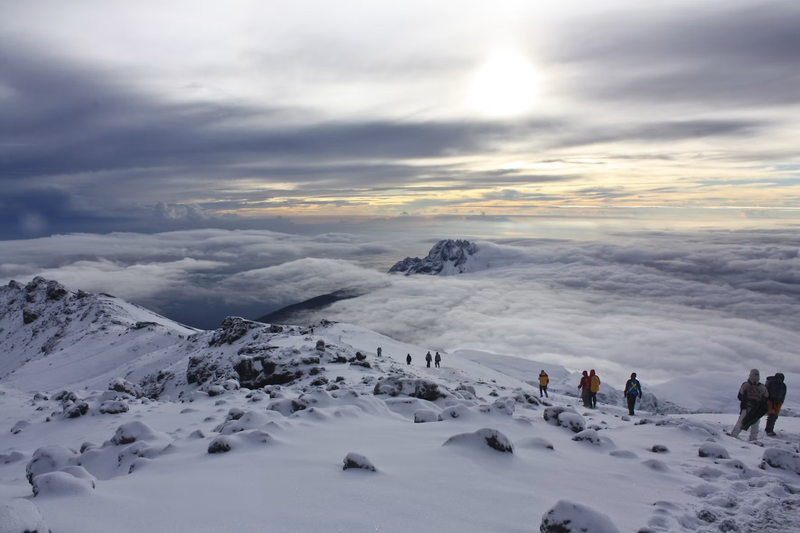
Mount Kilimanjaro is 5,895 meters (19,341 feet) high, making it much lower than Everest and outside the world's top 10 highest mountains by elevation. Located in Tanzania, it is Africa's highest mountain and one of the world's best-known trekking peaks.
Kilimanjaro is famous because it can be climbed without the technical mountaineering skills required for peaks such as Everest or K2. The routes involve long days of walking, altitude gain, cold temperatures, and changing weather, so it should not be treated as an easy hike simply because there is no technical climbing.
Can a Beginner Climb Kilimanjaro?
Yes, a reasonably fit beginner can trek to the summit of Kilimanjaro with proper preparation and an appropriate itinerary. Previous high-altitude climbing experience is not normally required, but altitude acclimatization is one of the biggest challenges.
Choosing a longer route with more gradual altitude gain can improve acclimatization. A beginner should also train for sustained uphill walking, carry appropriate clothing and equipment, and follow the guide's advice if symptoms of altitude sickness appear.
What Is Kilimanjaro's Fatality Rate?
There is no single reliable fatality rate that applies to everyKilimanjaro expedition. Published estimates vary because they use different data sources, time periods, and definitions of deaths among climbers and trekkers.
The main serious health concern is altitude-related illness, rather than technical climbing accidents. This is why a guided climb, sensible acclimatization schedule, and willingness to descend when necessary are important even on a non-technical mountain like Kilimanjaro.
Which of These Mountains Can You Actually Trek?
You can trek in the regions surrounding several of the world's tallest mountains without climbing their summits. Everest, Manaslu, Annapurna, Makalu, and Dhaulagiri all have established trekking routes or approaches. However, reaching an 8,000-meter summit is a completely different challenge that requires technical climbing skills, expedition planning, permits, and extensive high-altitude experience.
| Mountain |
Can You Trek Near It? |
Typical Experience |
| Mount Everest |
Yes |
Everest Base Camp and Everest region treks |
| K2 |
Limited |
Trekking toward K2 Base Camp |
| Kangchenjunga |
Yes |
Kangchenjunga trekking routes |
| Lhotse |
Yes |
Experienced through Everest region routes |
| Makalu |
Yes |
Makalu Base Camp Trek |
| Cho Oyu |
Limited |
Trekking in the surrounding Tibet region |
| Dhaulagiri I |
Yes |
Dhaulagiri Circuit and surrounding routes |
| Manaslu |
Yes |
Manaslu Circuit Trek |
| Nanga Parbat |
Yes |
Trekking approaches and base camp routes |
| Annapurna I |
Yes |
Annapurna trekking routes and viewpoints |
Everest: The Most Accessible Way to Experience an 8,000-Meter Giant
The Everest Base Camp Trek is one of the best-known ways to experience an 8,000-meter mountain without attempting a summit. The route passes through the Khumbu region of Nepal and offers close views of Everest, Lhotse, Nuptse, Ama Dablam, and other Himalayan peaks.
You do not need mountaineering skills to reach Everest Base Camp, but the trek still requires good fitness and preparation because of the altitude and long walking days.
Manaslu and Annapurna: Experience Nepal's High Mountains on Foot
Manaslu is the eighth-highest mountain in the world, and Manaslu Circuit Trek takes trekkers around the mountain through remote villages, high mountain landscapes, and the Larkya La pass. The route is more remote and regulated than many popular Nepal treks, so proper permits and trekking arrangements are important.
The Annapurna region also provides several ways to experience Annapurna I and the surrounding peaks. Trekkers can choose routes based on their available time, fitness, and interest, from shorter journeys to longer high-altitude circuits.
What About Kangchenjunga, Makalu, and Dhaulagiri?
These mountains can also be experienced through dedicated trekking routes, but they generally involve more remote trails and fewer facilities than the Everest and Annapurna regions. Kangchenjunga, Makalu, and Dhaulagiri are better suited to trekkers looking for quieter and more demanding Himalayan journeys.
The important distinction is simple: trekking to a mountain's base camp or through its surrounding region is not the same as climbing the mountain itself. For most travelers, trekking offers a safer and more realistic way to experience these giants.
If you want to experience one of Nepal's great Himalayan peaks without attempting an expedition, Himalayan Hero can help you choose a suitable Everest, Manaslu, Annapurna, or other Nepal trekking route based on your time and experience.
Frequently Asked Questions About the Tallest Mountains in the World
What is the tallest mountain in the world?
Mount Everest is the tallest mountain in the world above sea level. It stands 8,848.86 meters (29,031.69 feet) high and is located in the Himalayas on the Nepal–China border.
How tall is Mount Everest?
Mount Everest is 8,848.86 meters (29,031.69 feet) above sea level. This is the officially recognized elevation of the world's highest mountain.
What are the 10 tallest mountains in the world?
The 10 tallest mountains in the world, measured by elevation above sea level, are Mount Everest (8,848.86 m), K2 (8,611 m), Kangchenjunga (8,586 m), Lhotse (8,516 m), Makalu (8,485 m), Cho Oyu (8,188 m), Dhaulagiri I (8,167 m), Manaslu (8,163 m), Nanga Parbat (8,126 m), and Annapurna I (8,091 m).
What is the second tallest mountain in the world?
K2 is the second tallest mountain in the world, with an elevation of 8,611 meters (28,251 feet). It is located in the Karakoram range on the Pakistan–China border.
Which mountain is taller, K2 or Mount Everest?
Mount Everest is taller than K2. Everest reaches 8,848.86 meters, while K2 reaches 8,611 meters above sea level. K2, however, is considered one of the world's most technically difficult mountains to climb.
What is the tallest mountain from base to summit?
Mauna Kea in Hawaii is taller than Mount Everest when measured from its base on the ocean floor to its summit. Its total height from base to summit is more than 10,000 meters, although much of the mountain lies underwater.
Is Mauna Kea taller than Mount Everest?
Mauna Kea is taller than Mount Everest when measured from its underwater base to its summit. Everest is higher when mountains are ranked by elevation above sea level, which is the standard measurement for the world's highest mountains.
Which mountain is farthest from the center of the Earth?
Mount Chimborazo in Ecuador is the point on Earth's surface farthest from the planet's center. Earth's equatorial bulge gives Chimborazo's summit a greater distance from the center of Earth than Mount Everest's summit.
Is Mount Kilimanjaro the tallest mountain in the world?
No. Mount Kilimanjaro is not the tallest mountain in the world. At 5,895 meters (19,341 feet), it is the highest mountain in Africa and the world's highest free-standing mountain.
What is the tallest mountain in Nepal?
Mount Everest is the tallest mountain in Nepal. It rises to 8,848.86 meters above sea level and sits along the Nepal–China border in the Himalayas. In Nepal, it is known as Sagarmatha.
What is the tallest mountain in Asia?
Mount Everest is the tallest mountain in Asia. It is part of the Himalayan range and reaches 8,848.86 meters (29,031.69 feet) above sea level.
Which is harder to climb, Everest or K2?
K2 is generally considered harder to climb than Mount Everest. Its steep terrain, technical climbing sections, severe weather, and difficult routes make it one of the most challenging mountains for experienced mountaineers.