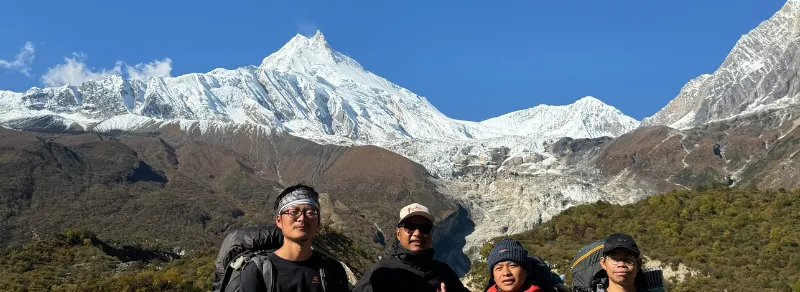
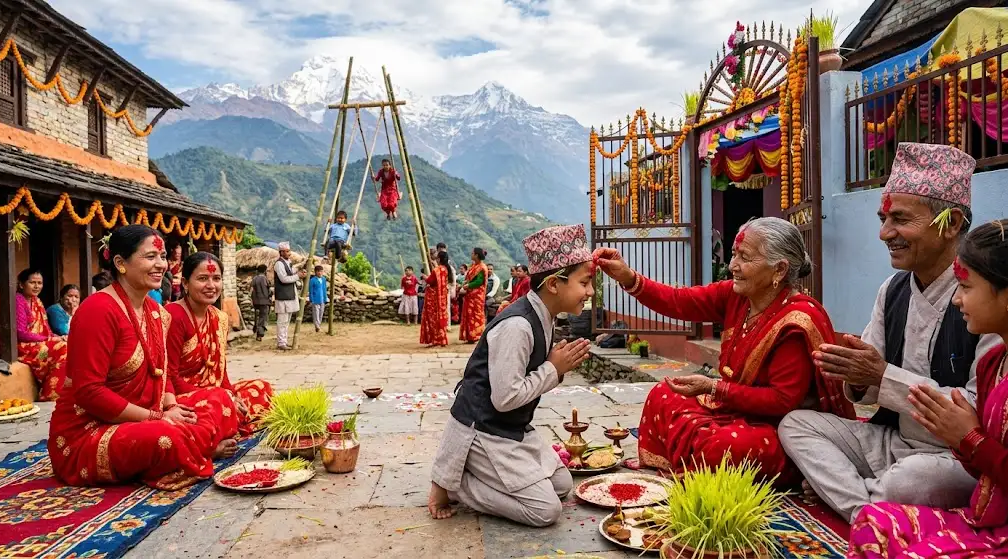
The best time to visit the Manaslu Circuit Trek is during spring (March to May) and autumn (September to November). These months usually bring clearer skies, more stable weather, good mountain views, and comfortable trekking conditions. The monsoon season can bring heavy rain and slippery paths, while winter brings freezing temperatures and snow, especially around Larkya La Pass.
In this blog, we’ll look at the best seasons for the Manaslu Circuit Trek and what you can expect during each one. You’ll learn about weather, trail conditions, mountain views, crowds, and the kind of experience each season offers, so you can choose a time that fits your plans and comfort level.
Which Season Is Best for the Manaslu Circuit Trek?
The best seasons for the Manaslu Circuit Trek are spring (March to May) and autumn (September to November). Both offer generally stable weather, clearer mountain views, and better trail conditions. Autumn is often the safest overall choice for first-time trekkers, while spring is a great option if you want warmer days and blooming rhododendrons.
The Four Seasons at a Glance
- Spring (March to May): Best – Mild days, clear mountain views, and rhododendrons in bloom make this one of the nicest times to trek.
- Summer/Monsoon (June to August): Avoid – Heavy rain, muddy trails, landslides, and leeches can make the trek difficult.
- Autumn (September to November): Best – Stable weather, clear skies, dry trails, and excellent views make this the most popular period.
- Winter (December to February): Avoid for most trekkers – Cold temperatures and snow around higher sections can make Larkya La Pass more challenging.
Manaslu Circuit Trek in Autumn (September–November) | Peak Season
Autumn is generally the best and most popular season for the Manaslu Circuit Trek. After the monsoon rain starts to clear, the weather becomes more stable, the skies are usually clearer, and the mountains come into view more often. September can still be a little unpredictable, but October and November usually bring the most reliable trekking conditions.
Weather, Visibility & Temperature
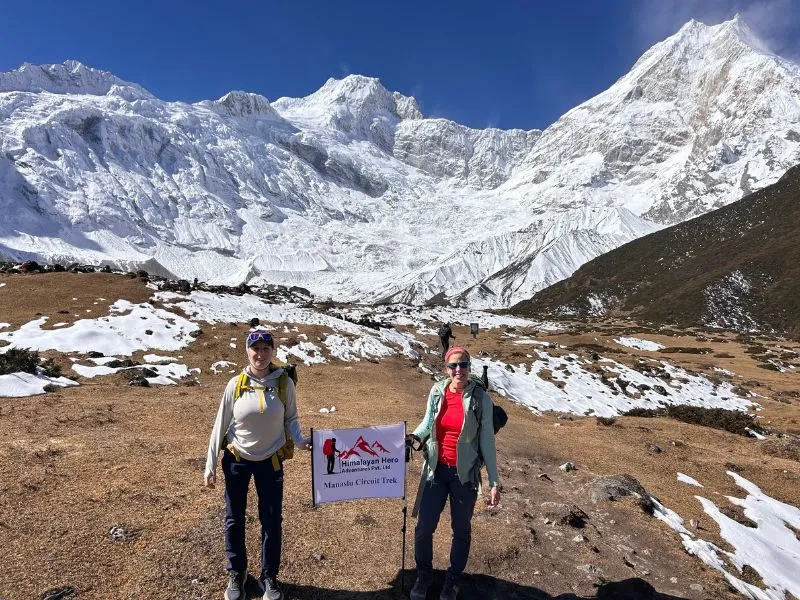
Autumn usually brings some of the most stable weather on the Manaslu Circuit. In the lower valleys, daytime temperatures can often be around 15°C to 25°C, while higher villages are much colder. Near Larkya La Pass at 5,106 meters, temperatures can drop below freezing, especially in the early morning.
The big attraction is visibility. October and early November often have clear skies, giving you excellent views of Manaslu and the surrounding mountains. September can still have some clouds and rain left from the monsoon, so the weather tends to improve as autumn moves forward.
Trail Conditions & Crowds
Trail conditions are generally good in autumn, especially from October onward. The monsoon may leave some muddy or slippery sections in September, but these usually improve as the trails dry. Autumn is also the busiest time on the Manaslu Circuit, although it is still quieter than popular routes such as Everest and Annapurna.
Since this is peak trekking season, teahouses can get busy in popular villages. Manaslu is a restricted-area trek, so the required permits and guide arrangements should be sorted out before starting the trek. Booking accommodation and transport ahead is also a good idea during October and November.
Best Window Within Autumn
October to early November is generally the best window for the Manaslu Circuit Trek. By October, the monsoon has usually cleared, the trails are drier, and mountain visibility is often excellent. Mid to late September can also work well if the monsoon has already ended.
By late November, temperatures begin to fall, particularly at higher elevations. If you prefer milder conditions and clearer views, October is probably the safest bet. If you trek in November, be ready for colder mornings and nights.
Also Read
Before packing your bag, check our Manaslu Circuit Trek Packing List to see what clothes, footwear, and essential gear you may need for changing conditions.
Pros & Cons
Pros:
- Clear mountain views and better visibility
- Stable weather, especially in October
- Mostly dry and comfortable trails
- Good conditions for crossing Larkya La Pass
- Pleasant daytime temperatures at lower elevations
- Teahouses and trekking services are fully active
Cons:
- Busiest season on the Manaslu Circuit
- Popular teahouses can become crowded
- September may still have rain and cloudy weather
- Higher elevations can be very cold
- Advance planning is recommended during peak weeks
Manaslu Circuit Trek in Spring (March–May) | Second Best Season
Spring is another excellent time for the Manaslu Circuit Trek, especially for trekkers who enjoy warmer days, fresh scenery, and fewer people than the autumn rush. The weather gradually becomes more comfortable from March, while April and May usually offer better conditions and beautiful mountain landscapes.
Weather & Scenery (Rhododendron Season)
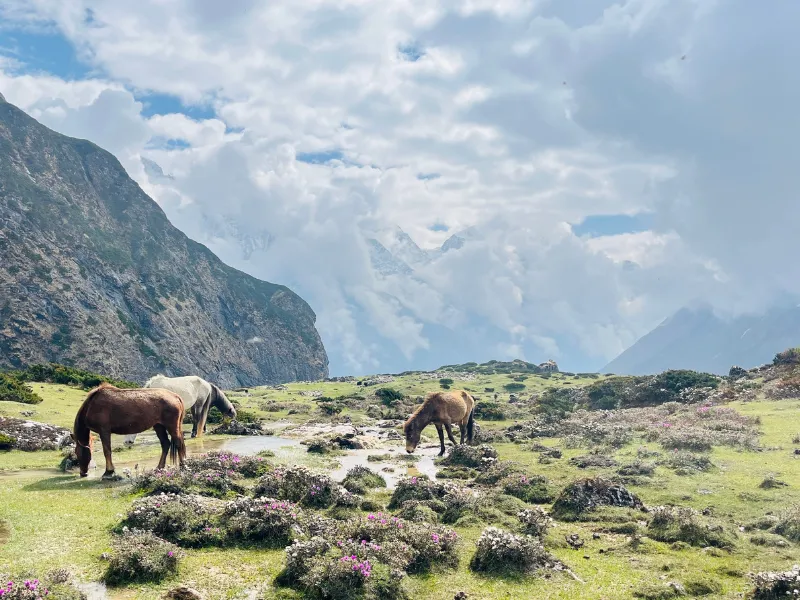
Spring brings warmer daytime temperatures compared with the colder months, although higher areas around Larkya La remain cold. March can still feel quite chilly at altitude, while April and May are generally more comfortable for walking. The skies are often clear in the mornings, but clouds can build later in the day as the season moves toward May.
One of the nicest parts of spring is the scenery. Rhododendrons bloom along many parts of the route, adding bright color to the forests and villages. Autumn is usually a little more reliable for clear mountain views, but spring gives you a different experience with flowers, greener landscapes, and gradually warming weather.
Trail & Snow Conditions on Larkya La Pass
Snow can still be present around Larkya La Pass in early spring, particularly in March and sometimes into April. This can make the crossing more difficult if there has been recent snowfall, and conditions can change quickly at 5,106 meters.
By late April and May, much of the snow has usually reduced, making the pass easier to cross in normal conditions. Still, trekkers should be prepared for snow and freezing temperatures at the pass because mountain weather doesn't always follow the calendar.
Pros & Cons
Pros:
- Rhododendrons are in bloom
- Warmer conditions as spring progresses
- Beautiful green forests and fresh scenery
- Good mountain views, especially in April
- Usually less crowded than peak autumn weeks
- Good trekking conditions in April and May
Cons:
- March can still be cold at higher elevations
- Snow may remain around Larkya La Pass
- Weather can change quickly in the mountains
- Clouds and occasional rain become more likely toward May
- Snow conditions can make the pass harder early in the season
Manaslu Circuit Trek in Winter (December–February) | Not Recommended
Winter is generally not recommended for the Manaslu Circuit Trek because heavy snowfall and freezing temperatures can make the higher sections difficult. The biggest concern is Larkya La Pass, where snow can block the route and make the crossing unsafe. Lower sections may still be possible, but conditions become much harder as you climb higher.
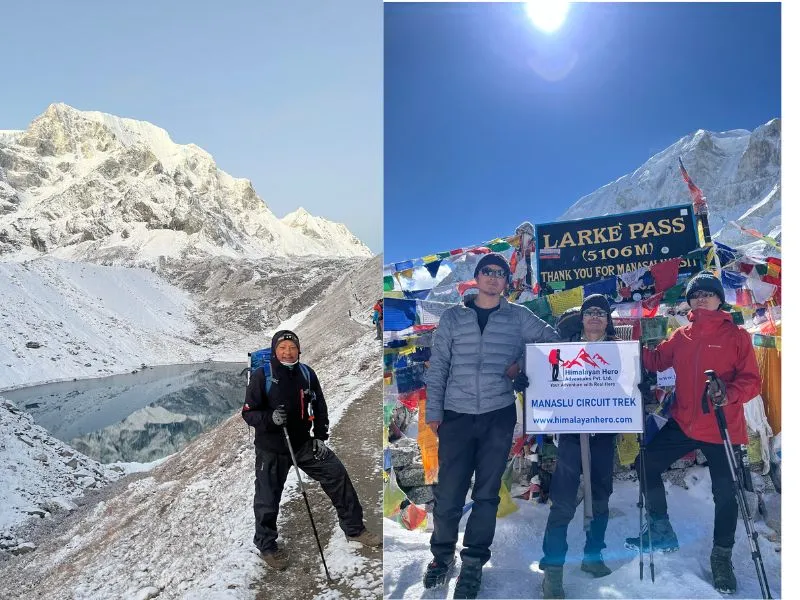
Snow Closure Risk at Larkya La Pass
The main winter problem is snow around Larkya La Pass at 5,106 meters. Heavy snowfall can cover the trail, make navigation difficult, and sometimes lead to the pass being temporarily closed or impossible to cross safely. Conditions can change quickly after a snowfall, so a route that was open a few days earlier may become difficult.
Cold Temperatures & Limited Teahouses
Winter brings freezing temperatures, particularly at higher villages and around the pass. Nights can become extremely cold, and snow or ice can make parts of the trail slippery. Many teahouses in the higher sections may close during the coldest months because there are fewer trekkers and harsh weather makes operation difficult.
Who Might Still Consider Winter
Experienced trekkers with proper winter equipment and a reliable local guide may still consider the Manaslu Circuit in winter. They need to be comfortable with snow, very cold temperatures, changing mountain weather, and possible route changes. For most trekkers, choosing spring or autumn is the easier and safer option.
Spring and autumn are generally the best seasons for the Manaslu Circuit Trek, with more stable weather and clearer mountain views. These conditions can be especially helpful for older trekkers who prefer a more predictable walking experience. If you are planning the trek later in life, our guide to the Manaslu Circuit Trek for Seniors covers fitness, altitude, acclimatization, safety, and age-specific planning.
Also Read
If you are still wondering whether the trek is right for your fitness level, our Manaslu Circuit Trek Difficulty guide explains the walking hours, altitude, Larkya La Pass crossing, and other challenges you should expect.
Manaslu Circuit Trek in Monsoon/Summer (June–August) | Why to Avoid
June to August is generally the least favorable period for the Manaslu Circuit Trek. The monsoon brings frequent rain to the lower valleys, making trails wet and slippery, while higher sections can still have unpredictable weather. The trek is possible in some conditions, but rain, damaged trails, and poor mountain visibility can make the journey much less enjoyable.
Rain, Leeches & Landslide Risk
Heavy monsoon rain can make sections of the trail muddy and slippery, especially in the lower and middle parts of the route. Leeches are also common in wet forest areas, and trekkers may need to deal with streams becoming fuller after rainfall. Landslides and falling rocks are another concern because continuous rain can loosen the mountain slopes and damage parts of the trail.
Travel conditions can change quickly during this season. A trail that was fine in the morning may become difficult after several hours of rain, so extra care is needed when walking near rivers, steep slopes, and landslide-prone sections.
Visibility & Views
Mountain views are often limited during the monsoon because clouds, mist, and rain cover the surrounding peaks. You may spend days walking through the Manaslu region without getting the clear views that make this trek so special.
There can still be short periods of clearer weather, particularly between rain showers, but you should not expect the consistently sharp mountain views that are more common in October, November, or spring.
Permit Logistics During Monsoon
Manaslu is a restricted-area trekking region, so trekkers still need the required permits and must follow the area's trekking regulations during the monsoon. A licensed guide and the required trekking arrangements are important regardless of the season.
The bigger issue in monsoon is not usually the permit itself, but the changing travel and trail conditions. Road delays, landslides, and weather-related changes can affect the journey to and from the trekking area, so it is wise to check current conditions and permit arrangements before departure.
Month-by-Month Weather & Temperature Table
Weather on the Manaslu Circuit changes a lot with altitude and season. This month-by-month guide gives a quick look at temperatures, rainfall, snow, crowds, and overall trekking conditions to help you choose the right time for your trek.
Best Time for Larkya La Pass Crossing Specifically
Larkya La Pass is the highest and most demanding part of the Manaslu Circuit, so its weather matters more than conditions in the lower valleys. The best time to cross is generally during October to early November, when snow is usually limited, visibility is better, and strong winter conditions are less likely.
Seasonal Pass Conditions
In spring, snow can remain around Larkya La, particularly in March and early April, and strong winds can make the crossing feel much colder. Autumn usually offers the most favorable conditions, with October being the most reliable month. Monsoon can bring clouds and unpredictable weather, while winter has the highest risk of heavy snow, icy trails, and extreme wind chill, which can make the pass difficult or temporarily impassable.
How Timing Affects Permits and Trekking Days
The season can affect how far in advance you should arrange your permits and how much flexibility you need in your trekking schedule. Autumn is the busiest period, so planning earlier is sensible, while winter and monsoon usually have fewer trekkers but can bring more weather-related changes.
Permit Booking Timing
For the Manaslu Circuit, the required restricted-area and conservation permits should be arranged before entering the restricted section. During the busy autumn season, it is better to arrange your permits and trekking services several days before the trek rather than waiting until the last moment.
Seasonal Fee Differences
The Manaslu restricted-area permit does have seasonal fee differences, with higher rates generally applying during the main autumn season and lower rates during other periods. The required conservation and local fees should also be checked against the current official rates before publishing, as these charges can change.
For the Chumnubri Rural Municipality fee, avoid stating a seasonal difference unless the current local authority information confirms one. If the fee is fixed, simply mention it as a separate required local fee rather than suggesting that trekking in one season costs more.
Cost vs. Conditions: Off-peak months such as December to August can have lower restricted-area permit (RAP) costs, but they also overlap with the winter and monsoon periods discussed above. Saving on permits should not be the main reason to choose a season with more difficult weather and trail conditions.
Manaslu Circuit Trek Timing vs. Other Treks
Manaslu and Annapurna Circuit have a similar best trekking window, with October to November and March to April offering some of the most favorable conditions. The Annapurna Circuit can also be suitable in other months depending on the route and weather, but Manaslu's restricted sections and Larkya La Pass make seasonal conditions especially important. You can also read our Annapurna Circuit Trek guide when comparing your options.
Conclusion
Choosing the right season can make a big difference to your Manaslu Circuit Trek. Autumn, especially October and early November, is usually the best choice for stable weather, dry trails, and clear mountain views. Spring is another great option, especially if you want warmer days and rhododendrons in bloom. Winter and monsoon are less suitable for most trekkers because of snow, cold, rain, and changing trail conditions.
If Manaslu has been on your mind for a while, don't keep it as just a dream for another year. Choose your dates, prepare for the high-altitude sections, and give yourself enough time to arrange the trek. A little planning now can save you a lot of trouble later.
Ready to Make Your Manaslu Trek a Reality?
You’ve checked the seasons, weather, and Larkya La Pass. Now it's time to choose a trek that fits your time and travel plans. Our local team can help you find the right dates and prepare for the journey.
Explore Manaslu Circuit Trek
For the classic Manaslu experience, this is a great choice if you have enough time to enjoy the full route.
Short Manaslu Circuit Trek 10 Days
Short on time but still want to experience Manaslu? This option is made for a tighter schedule.
Manaslu Circuit Trek with Serang Gompa
Want to add something different to your Manaslu journey? This trek combines the circuit with a visit to Serang Gompa.
Frequently Asked Questions
What is the best month for the Manaslu Circuit Trek?
October is often one of the best months because the weather is usually dry, stable, and clear.
Is September a good time for the Manaslu Circuit Trek?
Yes, especially later in September, when the monsoon usually starts to fade and trail conditions improve.
Is April or October better for the Manaslu Circuit Trek?
Both are good, with April offering spring flowers and October usually bringing very clear mountain views.
Can you trek the Manaslu Circuit in winter?
Yes, but winter is much colder, and snow can make Larkya La and other high sections difficult.
What is the weather like on the Manaslu Circuit in November?
November is usually dry and clear, but temperatures drop, especially at night and at higher elevations.
Is March a good month for the Manaslu Circuit Trek?
March can be good, but snow may still remain around Larkya La and the higher parts of the trail.
Is the Manaslu Circuit Trek safe during the monsoon?
June to August can be difficult because of heavy rain, muddy trails, landslides, leeches, clouds, and poor mountain views.
Which season is best for beginners and senior trekkers?
Spring and autumn are usually the best choices because the weather and trail conditions are generally more predictable.