Ever wondered what it feels like to walk beneath towering Himalayan peaks, cross a dramatic mountain pass, and spend nights in quiet villages far from the crowds? The Manaslu Circuit can feel like a dream and, honestly, the thought of altitude, unpredictable weather, and unexpected expenses can make that dream a little intimidating.
In this blog, I’ll break down the Manaslu Circuit cost for 2026 and walk you through a practical itinerary from start to finish. We’ll look at permits, transportation, accommodation, food, guides, porters, and other expenses so you can plan your adventure with fewer surprises and more confidence.
Manaslu Circuit Trek Cost at a Glance
The Manaslu Circuit Trek cost in 2026 ranges from approximately US$950 to US$2,500 per person, depending on your trekking style, itinerary, group size, season, and included services. A budget trek can be planned around US$950–$1,200, a standard experience usually falls around US$1,200–$1,700, and a premium or private trek can reach US$2,000–$2,500+.
| Cost Category |
Estimated Cost |
| Manaslu trekking permits |
US$100–$150+ |
| Guide |
US$250–$350 |
| Accommodation |
US$100–$160 |
| Food and drinks |
US$180–$250 |
| Transportation |
US$80–$150 |
| Porter |
US$180–$250 |
| Insurance and miscellaneous expenses |
US$100–$150 |
| Overall Manaslu Circuit Trek Cost |
US$950–$2,500+ |
Permit amounts are official fees and depend on the applicable trekking season. The remaining figures are estimated expenses, which vary according to trekking agencies, group size, itinerary, accommodation choices, transportation, and personal spending.
If you're planning the trek on a tighter budget, US$950 is the starting point to keep in mind. Spending closer to US$1,200 or more gives you greater flexibility, while a budget of US$2,000–$2,500+ allows for more private services, comfort, and itinerary flexibility.
Complete Manaslu Circuit Cost Breakdown
The total Manaslu Circuit Trek cost in 2026 generally ranges from around US$950 to US$2,500+ per person. The lower end is possible with a budget group trek and careful spending, while a mid-range trip with better flexibility and comfort usually costs around US$1,200–$1,700.
| Cost Item |
Budget Estimate (USD) |
Mid-Range Estimate (USD) |
| Restricted Area Permit (RAP) |
$75–$100 |
$100–$150 |
| Manaslu Conservation Area Permit (MCAP) |
$30 |
$30 |
| Annapurna Conservation Area Permit (ACAP) |
$30 |
$30 |
| Chumnubri Rural Municipality fee |
$10 |
$10 |
| Licensed guide |
$250–$350 |
$350–$500 |
| Porter |
$180–$250 |
$250–$300 |
| Accommodation |
$100–$150 |
$150–$250 |
| Food and daily expenses |
$180–$250 |
$250–$350 |
| Kathmandu to Sotikhola transport |
$20–$40 |
$40–$80 |
| Return transport |
$20–$40 |
$40–$80 |
| Travel insurance |
$80–$120 |
$100–$150 |
| Miscellaneous expenses |
$50–$100 |
$100–$150 |
| Estimated Total |
Around $950–$1,200 |
Around $1,200–$1,700 |
The Restricted Area Permit, MCAP, ACAP, and local municipality fee are the more fixed parts of the budget because they are determined by the applicable authorities and trekking season. Your guide, porter, accommodation, meals, transportation, insurance, and miscellaneous expenses can vary considerably. Group size, negotiating with agencies, trekking duration, food choices, and the season you visit can all affect the final amount.
If you're planning around the US$950 minimum, joining a group and choosing a straightforward itinerary can help keep the Manaslu Circuit Trek within that range. For a more relaxed experience, having US$1,200–$1,700 available is a safer mid-range budget.
Budget, Standard and Premium Costs
The Manaslu Circuit Trek cost in 2026 ranges from about US$950 to US$2,500+ per person. The right budget depends on how much comfort, privacy, and flexibility you want during the trek.
| Feature |
Budget Trek |
Standard Trek |
Premium Trek |
| Total price |
US$950–$1,200 |
US$1,200–$1,700 |
US$2,000–$2,500+ |
| Accommodation |
Basic teahouses, shared rooms |
Comfortable teahouses, usually shared rooms |
Better rooms where available, with added comfort |
| Guide & porter |
Group guide; porter may be shared or optional |
Licensed guide with porter service |
Private guide, porter, or dedicated support team |
| Food |
Local dal bhat, noodles, soups, and basic meals |
Wider meal choices and regular snacks/drinks |
More food choices, drinks, and additional meal options |
| Transportation |
Shared/local transportation |
More comfortable or arranged transfers |
Private or upgraded transportation where practical |
| Group size |
Larger group |
Small or medium-sized group |
Private or very small group |
| Flexibility |
Limited; follows the fixed group itinerary |
Moderate flexibility |
Highest flexibility for itinerary and services |
| Best suited for |
Backpackers and cost-conscious trekkers |
Most first-time Manaslu trekkers |
Travelers seeking privacy and extra comfort |
Budget trek: If keeping expenses low is your main priority, the US$950–$1,200 range is the place to look. You’ll generally join a group, use basic teahouses, choose standard local meals, and avoid unnecessary upgrades. It suits experienced or budget-conscious trekkers who don't mind keeping things simple.
Standard trek: A budget of US$1,200–$1,700 offers a good balance between price and comfort. You can have a licensed guide, porter support, decent teahouse accommodation, and a more smoothly organized transportation plan. For most travelers, this is the sweet spot.
Premium trek: With US$2,000–$2,500+, you can prioritize privacy, smaller groups, better transportation, additional support, and greater itinerary flexibility. This option is best for trekkers who would rather spend a little extra than worry about every dollar along the trail.
Keep in mind that premium does not mean luxury throughout the Manaslu region. This is a remote Himalayan circuit, so accommodation and facilities remain relatively basic in many mountain villages regardless of how much you spend.
What Changes the Final Cost
The Manaslu Circuit Trek cost is not a one-size-fits-all number. Even when two trekkers follow the same route, their final budgets can look quite different. Here are the main factors that can push your expenses up or down.
- Trek duration
The number of days you spend on the trail directly affects your budget. A longer itinerary means more nights in teahouses, more meals, and additional daily expenses. Adding acclimatization days can also increase the overall cost, although taking enough time at altitude is far more important than saving a few dollars. - Group size
Joining a group is usually easier on the wallet because guide and transportation costs can be shared among several trekkers. A private trek for one or two people generally costs more per person. If you're aiming for the US$950 minimum budget, a group departure is usually the more economical choice. - Peak vs. off-peak season
Spring and autumn are the busiest trekking seasons, thanks to better weather and mountain visibility. Demand for guides, accommodation, and transportation can be higher during these periods. Traveling in the quieter months may reduce some expenses, although weather conditions and trail accessibility should always come first. Your travel season can affect accommodation availability, transportation, and overall trekking conditions. October and April are generally considered among the best time for Manaslu Circuit Trek. - Guide and porter arrangement
A licensed guide is required for the Manaslu Circuit, and the way you arrange your guide affects the total package price. Hiring a private guide costs more than sharing guide services with a group. Adding a porter also increases the budget, but it can make long trekking days much easier, especially when carrying heavier gear. - Private vs. shared transport
Shared buses and jeeps are generally the budget-friendly option for getting between Kathmandu and the trailhead. Private transportation costs more but gives you greater control over departure times, stops, and comfort. If you're carefully managing a US$950–$1,200 budget, shared transportation can make a noticeable difference. - Accommodation preference
Most accommodation along the Manaslu route consists of simple teahouses and lodges. Choosing basic rooms and accepting shared facilities helps keep costs down. If you prefer better rooms, attached bathrooms where available, or more comfortable lodging, expect your daily spending to rise. - Tsum Valley extension
Adding the Tsum Valley to your Manaslu itinerary creates an entirely different budget calculation. You'll need extra trekking days, accommodation, meals, guide services, and applicable permits. It's a fantastic extension if you have the time, but it can push your trip well beyond the basic US$950 starting budget. - Personal spending
Finally, don't forget the little things. Bottled or boiled water, hot showers, charging your phone, Wi-Fi, snacks, tea, coffee, laundry, tips, and souvenirs can quietly eat into your budget. I always recommend keeping some extra cash aside rather than planning every dollar down to the last rupee.
In short, US$950 is a realistic starting point for a tightly managed budget trek, while allowing some breathing room with a US$1,200–$1,700 budget makes the journey considerably easier. Your fitness level can also affect how you plan the trek, so check our guide to Manaslu Circuit Trek Difficulty before choosing a shorter itinerary.
Manaslu Trek Permit and Guide Costs
For foreign trekkers, Manaslu permits and the mandatory licensed guide are major parts of the trek budget. Permit prices below are official fee categories, while guide and agency costs are estimates.
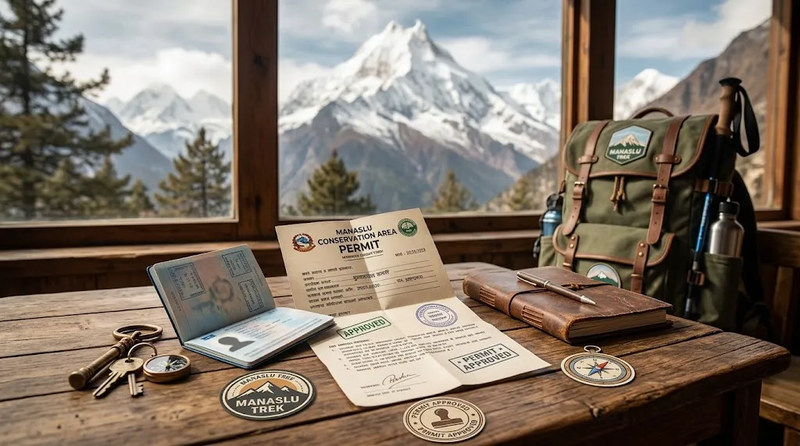
Manaslu Restricted Area Permit Cost
- September–November: USD 100 for the first 7 days + USD 15 per additional day.
- December–August: USD 75 for the first 7 days + USD 10 per additional day.
- The RAP becomes more expensive when your itinerary stays longer in the restricted area.
| Duration |
Sep–Nov |
Dec–Aug |
| 7 days |
$100 |
$75 |
| 13 days |
$190 |
$135 |
| 14 days |
$205 |
$145 |
| Permit |
Foreign Trekkers |
SAARC Trekkers |
| MCAP |
US$30 |
US$10 |
| ACAP |
US$30 |
US$10 |
MCAP is required for the Manaslu Conservation Area, while ACAP applies when the route continues toward Dharapani through the Annapurna Conservation Area.
Chumnubri Rural Municipality Fee
- Chumnubri (also spelled Chumnubiri) fee: approximately US$10
- This is a local municipal fee, separate from the Restricted Area Permit.
Tsum Valley Permit Cost
- An additional permit is required when you add the Tsum Valley restricted area.
- Seasonal rates apply.
- For planning purposes, allow around US$200–$400+ extra for the extension, including additional guide days, accommodation, food, and transport. This is an agency estimate, not an official permit fee.
Manaslu Guide and Porter Cost
A licensed guide is required for the Manaslu Circuit, so guide costs should be included when calculating your budget. A typical guide may cost approximately US$25–$35 per day, depending on experience, group arrangements, and services.
That puts the guide cost at roughly:
- 13 days: US$325–$455
- 14 days: US$350–$490
A porter generally costs around US$20–$30 per day, depending on the arrangement. Some agencies also offer a porter-guide, who combines basic guiding assistance with porter duties and can be a useful option for budget travelers.
Remember that tips are separate from wages. If you're happy with your guide or porter, budgeting a tip at the end of the trek is customary. Also check your package carefully: some agencies already include guide, porter, permits, accommodation, and transportation in their quoted trek price, so you don't accidentally count the same expense twice.
Manaslu Trek Cost Breakdown by Expense
After permits and guide services, daily trail expenses make up the largest variable part of the Manaslu Circuit Trek budget. Food, accommodation, transportation, porter service, insurance, and personal spending can change the final price depending on your itinerary and travel style.
| Expense |
Estimated Budget |
| Accommodation |
US$100–$160 |
| Food & daily expenses |
US$180–$250 |
| Transportation |
US$80–$150 |
| Porter |
US$180–$250 |
| Travel insurance |
US$80–$150 |
| Miscellaneous |
US$50–$100 |
| Estimated variable expenses |
US$670–$1,060 |
These are estimated trekking expenses, not fixed official rates. Prices can vary with trekking season, itinerary length, group size, accommodation choice, and personal spending.
Manaslu Accommodation Cost
Accommodation is usually cheaper in the lower villages and costs more as you reach higher places. Rooms are basic teahouse rooms with simple beds and shared bathrooms.
| Place |
Estimated Cost per Night |
| Machha Khola, Jagat and Deng |
US$5 to $10 |
| Namrung and Lho |
US$5 to $12 |
| Samagaun and Samdo |
US$6 to $15 |
| Dharamsala |
US$8 to $15 |
| Bhimthang and lower villages |
US$5 to $10 |
For a 13-night or 14-day Manaslu Circuit Trek, you can expect to spend about US$100 to $160 on accommodation.
Many teahouses make most of their income from food and drinks. Because of this, some lodges offer cheaper rooms when you eat your meals there. Prices can also increase during the busy trekking seasons.
Manaslu Food and Daily Expenses
Plan around US$30 to $40 per day for food and daily expenses. Food becomes more expensive at higher elevations because supplies have to travel a long way to reach the villages.
Common meals include:
- Dal bhat
- Noodles
- Pasta
- Eggs
- Pancakes
- Tea and coffee
- Soups
- Snacks
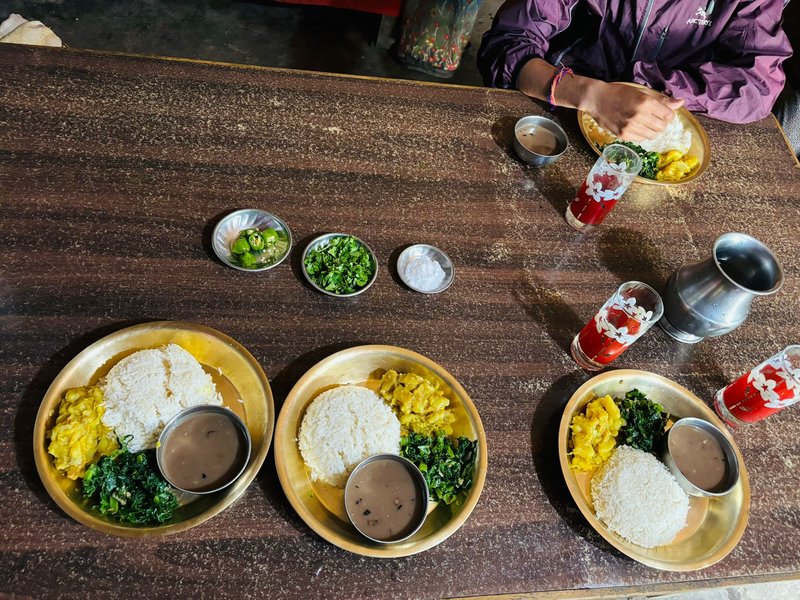
You may also spend extra money on hot showers, charging your phone, Wi-Fi, and bottled water.
For food alone, a rough estimate is:
| Trek Duration |
Food Budget |
| 13 days |
US$390 to $520 |
| 14 days |
US$420 to $560 |
Manaslu Transportation Cost
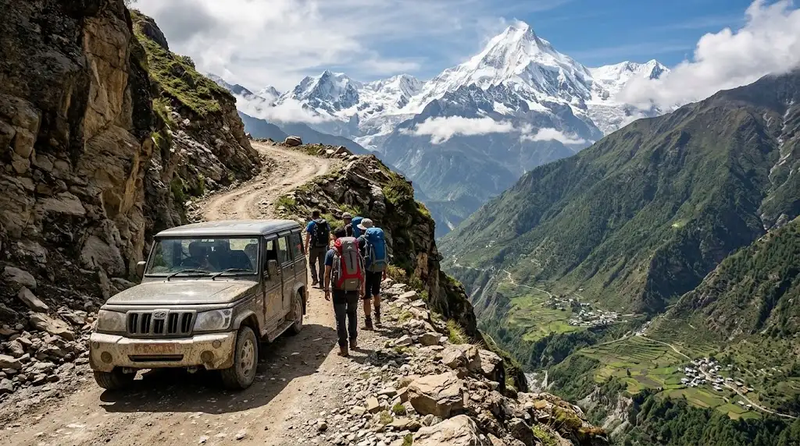
Transportation from Kathmandu to the trailhead and back is another important part of the budget. You can use a public bus, shared jeep, or private jeep.
| Transportation |
Estimated Cost |
| Kathmandu to Sotikhola by bus |
US$15 to $25 |
| Kathmandu to Machha Khola by shared jeep |
US$20 to $40 |
| Private jeep |
US$180 to $250 |
| Return from Besisahar or Dharapani |
US$20 to $60+ |
These are estimated prices. Actual fares can change based on road conditions, season, and availability.
For the Manaslu Circuit, trekkers should plan for private jeep transportation, as shared jeep services are not available for this route. A private jeep can cost around US$120–$200 or more, depending on the route, vehicle, season, and road conditions. If you are traveling with a group, you can divide the private jeep cost among your group members, making the per-person transportation cost more manageable.
Manaslu Insurance and Miscellaneous Costs
Some expenses are easy to forget when planning your Manaslu trek budget. Keep some extra money for these costs.
| Expense |
Estimated Cost |
| Travel insurance |
US$80 to $150 |
| Charging |
US$10 to $30 |
| Hot showers |
US$10 to $30 |
| Snacks and drinks |
US$20 to $50 |
| Wi-Fi |
US$5 to $20 |
| Tips |
US$50 to $100+ |
| Personal purchases |
US$20 to $50 |
| Emergency money |
US$50 to $100+ |
Travel insurance with high altitude trekking and emergency evacuation coverage is strongly recommended. Charging, showers, Wi-Fi, snacks, and personal purchases are optional. Your personal spending also includes trekking gear and clothing. Before buying everything separately, check our Manaslu Circuit Trek packing list to see what you actually need for the trail.
Manaslu Trek Cost by Nationality
Your nationality mainly affects the permit cost. Food, accommodation, transportation, and guide costs are generally similar for everyone.
| Nationality |
Estimated Total Cost |
Permit Cost |
| Non-SAARC foreign trekkers |
US$950 to $2,500+ |
Higher |
| Indian and SAARC trekkers |
US$900 to $2,000+ |
Lower for applicable permits |
| Nepali citizens |
Lower overall |
no permit needed |
The difference mainly comes from government permit rates. Trekking agency prices can also be different depending on the package.
Manaslu Cost for Indian Trekkers
Indian trekkers can benefit from SAARC rates for applicable conservation permits. The Restricted Area Permit has separate rules, so it should be calculated separately.
Indian citizens generally do not need a Nepal tourist visa for entry under the applicable rules. However, you should carry valid identification and check the latest entry requirements before travelling.
| Expense |
Estimated Cost for Indian Trekkers |
| Permits and local fees |
Depends on applicable rates |
| Guide and porter |
US$400 to $700+ |
| Food and accommodation |
US$300 to $500+ |
| Transport and other costs |
US$150 to $300+ |
| Total estimated budget |
US$950 to $2,000+ |
Manaslu Itinerary and Total Trek Cost
The Manaslu Circuit Trek itinerary can be planned for different durations depending on your time, fitness, and trekking experience. Himalayan Hero offers a 10-day Short Manaslu Circuit Trek for US$849, a 14-day Manaslu Circuit Trek for US$950, and an 18-day Manaslu Tsum Valley Trek for US$1,499. The shorter itinerary is suitable for experienced trekkers who prefer a faster pace, while the 14-day option provides a more balanced journey. The 18-day trek is ideal for travelers who want to add the remote Tsum Valley to their Manaslu adventure.
10-Day Short Manaslu Circuit Trek
The 10-day Short Manaslu Circuit Trek costs US$849 with Himalayan Hero. It is designed for trekkers with limited time who are comfortable with longer walking days. The route covers the major highlights of the Manaslu region, including Samagaun, Dharamsala, Larkya La Pass, and Bhimthang.
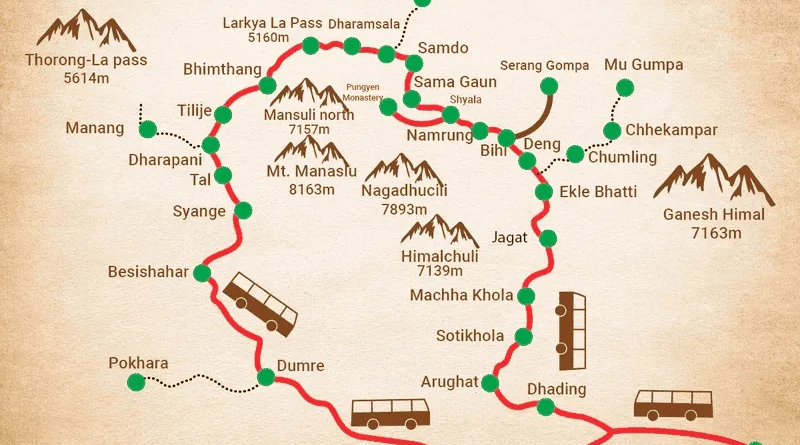
Route: Kathmandu → Machha Khola → Jagat → Deng → Namrung → Samagaun → Samdo → Dharamsala → Larkya La Pass → Bhimthang → Dharapani → Kathmandu.
11-Day Manaslu Circuit Trek
An 11-day Manaslu Circuit Trek offers slightly more time than the short itinerary and can make the journey feel less rushed. The exact cost depends on the trekking company, services, permits, transportation, and accommodation included in the package.
Route: Kathmandu → Machha Khola → Jagat → Deng → Namrung → Samagaun → Samdo → Dharamsala → Larkya La Pass → Bhimthang → Dharapani → Kathmandu.
13-Day Manaslu Circuit Trek
The 13-day Manaslu Circuit Trek provides a comfortable middle ground for trekkers who want more time on the trail. You can enjoy important stops such as Namrung, Lho, Samagaun, and Samdo before crossing the challenging Larkya La Pass.
Route: Kathmandu → Machha Khola → Jagat → Deng → Namrung → Lho → Samagaun → Samdo → Dharamsala → Larkya La Pass → Bhimthang → Dharapani → Besisahar → Kathmandu.
14-Day Manaslu Circuit Trek
The 14-day Manaslu Circuit Trek costs US$950 with Himalayan Hero. This is a balanced option for most trekkers because it allows more time for acclimatization, village exploration, and preparation for the Larkya La Pass crossing without making the trek unnecessarily long.
Route: Kathmandu → Machha Khola → Jagat → Deng → Namrung → Lho → Samagaun → Samdo → Dharamsala → Larkya La Pass → Bhimthang → Dharapani → Besisahar → Kathmandu.
18-Day Manaslu Tsum Valley Trek
The 18-day Manaslu Tsum Valley Trek costs US$1,499 with Himalayan Hero. This longer itinerary combines the Manaslu Circuit with Tsum Valley, giving you more time to experience traditional villages, Buddhist monasteries, and the quieter mountain landscape.
Route: Kathmandu → Machha Khola → Jagat → Lokpa → Chumling → Chhokangparo → Nile/Chhule → Mu Gompa → Chumling → Deng → Namrung → Lho → Samagaun → Samdo → Dharamsala → Larkya La Pass → Bhimthang → Dharapani → Kathmandu.
| Itinerary |
Duration |
Cost |
Best For |
| Short Manaslu Circuit Trek |
10 Days |
US$849 |
Experienced trekkers with limited time |
| Manaslu Circuit Trek |
11 Days |
Depends on package |
Trekkers wanting a slightly longer schedule |
| Manaslu Circuit Trek |
13 Days |
Depends on package |
Trekkers looking for a moderate pace |
| Manaslu Circuit Trek |
14 Days |
US$950 |
Most trekkers and first-time visitors |
| Manaslu Tsum Valley Trek |
18 Days |
US$1,499 |
Trekkers wanting Tsum Valley and more exploration |
Common Manaslu Cost Mistakes
Small budgeting mistakes can make your Manaslu Circuit Trek cost higher than expected. Many trekkers plan for permits, accommodation, and food but forget smaller expenses that add up during the trek.
Common Budgeting Mistakes
- Underestimating cash: ATMs are limited or unavailable in remote areas, so carry enough Nepalese cash for food, drinks, showers, charging, and emergencies.
- Forgetting tips: Guide and porter tips are normally separate from the trek price and should be included in your overall budget.
- Ignoring permit costs: Manaslu has restricted-area and conservation permits, so do not compare its permit cost with regular trekking routes.
- Comparing Manaslu with open trekking routes: Manaslu has special permit and guide requirements that can make it more expensive than unrestricted routes.
- Underbudgeting high-altitude food: Food and drinks become more expensive as you gain altitude because supplies are harder to transport.
- Assuming package inclusions: Always check whether permits, meals, accommodation, transportation, guide, porter, and other services are included before comparing package prices.
- Forgetting insurance and evacuation: High-altitude trekking insurance with emergency evacuation coverage can add to your total trip budget, but it is an important safety expense.
Manaslu Circuit Trek vs Manaslu Expedition Cost
The Manaslu Circuit Trek and a Manaslu Expedition are completely different experiences. The circuit is a trekking journey around Mount Manaslu using teahouses and established trails. Its main costs include permits, a licensed guide, accommodation, food, transportation, and optional porter service. A Manaslu expedition, on the other hand, involves climbing the 8,163-meter Manaslu summit and requires much more equipment, planning, and specialist support.
The Manaslu expedition cost, Manaslu summit cost, and overall cost to climb Manaslu can be many times higher than a circuit trek. Expedition expenses can include a climbing permit, expedition logistics, base camp setup, Sherpa support, camps, ropes, oxygen where required, technical climbing equipment, food, transportation, insurance, and summit logistics. Because expedition prices vary greatly by operator, team size, services, and climbing support, they should be treated separately from the Manaslu Circuit Trek budget.
Plan Your Manaslu Circuit With Himalayan Hero
Planning your Manaslu Circuit Trek is easier when you know exactly what your package covers. Himalayan Hero provides transparent pricing with support for permit handling, licensed guides, transportation, accommodation, and itinerary planning. Whether you prefer a short 10-day trek or a longer Manaslu and Tsum Valley adventure, you can request a personalized quotation based on your preferred dates, group size, and itinerary.
FAQs About Manaslu Circuit Cost
How much does the Manaslu Circuit Trek cost in 2026?
The Manaslu Circuit Trek costs around US$950 to US$2,500+ per person in 2026.
How much is the Manaslu Circuit permit?
The Manaslu Restricted Area Permit starts at US$75 to US$100 for the first 7 days, depending on the season, plus applicable conservation and local fees.
How much is the Manaslu guide cost?
A licensed Manaslu guide costs approximately US$25 to US$35 per day.
How much does Manaslu cost for Indian trekkers?
Indian trekkers can expect to spend around US$950 to US$2,000+, depending on the itinerary and services.
How much does Manaslu cost for Nepali trekkers?
Nepali trekkers generally pay less, with costs depending on transportation, food, accommodation, and guide services.
How much does a 13-day Manaslu Circuit cost?
A 13-day Manaslu Circuit Trek has no fixed price and depends on the package, permits, guide, accommodation, food, and transportation.
How much does a 14-day Manaslu Circuit cost?
The 14-day Manaslu Circuit Trek costs US$950 with Himalayan Hero.
How much cash should I carry for Manaslu?
Carry around NPR 20,000 to 40,000 for personal expenses and keep extra cash for emergencies.
How much does the Manaslu Tsum Valley Trek cost?
The 18-day Manaslu Tsum Valley Trek costs US$1,499 with Himalayan Hero.
How much does a Manaslu expedition cost?
A Manaslu expedition costs significantly more than the circuit because it includes climbing permits, camps, Sherpa support, equipment, and expedition logistics.
How much does it cost to climb Manaslu?
Climbing Manaslu costs many times more than trekking the circuit, with the final price depending on the expedition operator and services.